China’s bid for world domination

The rumour that China plans to dominate the world has been circulating for decades. Its isolation from the West for a significant period of time made it even easier to turn the country into a Bogey Man. Some argued that it was a misunderstood country, whilst others held firmly to the view that China could never be trusted. These days, with greater media coverage of the world’s most populous country, we perhaps have a clearer view of its ambitions, and it seems some of the old rumours contain more than a grain of the truth.

Global expansionism is one of China’s tools. John Glynn writes that Beijing’s ‘Going Global’ strategy emerged in 1999, and it signalled the end of the “Mao-era mindset of self-reliance.” China suddenly started taking advantage of a boom in world trade and global market investments. Glyn says, “The idea that one government could commandeer sub regions in Asia, Europe and Africa, which account for 64 percent of world population and 30 percent of world GDP, might sound ludicrous. But try telling this to the Chinese government.”

Glyn also warns in his article that President Xi is engaged in an ideological and economic venture, and that it is clear the country has massive global ambitions, if its investments are anything to go by: “Between 2005 and 2017, the combined value of China’s global investment in construction was $1.8Trillion.”

What does it construct? The Chinese Government is making a concerted effort to increase infrastructural, economic, and political connectivity between China and the other countries of Asia, Africa, and Europe. Glyn calls it a “Belt and Road” initiative. But as he also says, it is essentially a new Silk Road connecting China to the rest of the world.

Glyn also remarks, “While other countries find themselves consumed by petty squabbles, Beijing officials discuss square footage, potential monetary gain, and militaristic strategies.”

It has invested widely in Energy, Transport, Real Estate and Metals — the key ingredients for developing infrastructure, and this has worried the Western governments, particularly the Trump presidency. That’s why he’s so keen to buy Greenland, an island mass that is rich in rare earth metals.

It is also the case that China has been involved in lending large amounts to other countries, and some fear that part of its strategy is to saddle these countries with “unimaginable levels of debt.” Furthermore a lot of this debt is “hidden” and that is especially worrying. Hidden debt means that the borrowing isn’t reported to or recorded by official institutions. A Kiel Institute study found that other countries’ debt owed to China has soared ten-fold since 2000, and it stated, “This has transformed China into the largest official creditor, easily surpassing the IMF or the World Bank.”

Much of this money is going to emerging markets. This is not because China wants to help grow these economies, but because it allows China to put those countries in a position of “indentured servitude.”

It is also looking to expand its military bases internationally. The US defence department expects China to add military bases around the world to protect its investments in its One Belt One Road initiative. Currently Beijing currently has just one overseas military base, in Djibouti. However, officials are planning others, including one in Pakistan.

This repressive regime has global ambitions and they are closer to being a reality than ever. Can China be stopped? The answer would appear to be — NO!

Top Risks in 2019

According to the Eurasia Group, a consultancy founded by Ian Bremmer, the global geopolitical environment is right now the most dangerous that it has been for many decades. So what is likely to impact on businesses, regional economies and society during 2019? There are around 10 areas of concern for us all.

Bad Seeds

There used to be an Australian band called The Bad Seeds, but we’re not talking about them. What the term ‘bad seeds’ means in this instance, is this: decision makers are so obsessed with an array of global crises in a world without trued global leadership, that they are allowing a range of future risks to take root and germinate, but these future risks are the ‘bad seeds.’ For example, the future of the European Union, the WTO and the relationship between Russia and China are negative.

US-China relations

The US leadership used to try and keep things smoothed over, but with Trump in office that approach has been dumped. Expect to see more confrontations between the two, especially in the areas of technology, economics and security.

Cyber Power

The US is going to exert its use of cyber power more seriously this year. However, it’s likely to backfire on it rather than create a system of global deterrence.

Populism in Europe

Europe is holding elections in May and it is likely that we will see more eurosceptics win seats. We have seen the rise of eurosceptics in the last two years, the UK and Italy being two prominent examples. These populists blame Brussels for their domestic problems and now they are winning support at home by promising to flout EU rules, or leaving the EU. They will win more seats and undermine the ability of the EU to function.

US domestic politics

The government has been closed down since before Christmas 2018. This year will bring more chaos and volatility to US domestic politics.

Reduced innovation

There will be a reduced level of investment in driving technological development. Eurasia Group believes this will be driven by concerns about security, privacy and economics, as leading countries “put up barriers to protect their emerging tech champions.”

Mexico

The new Mexican president Andres Manuel Lopez Obrador –or AMLO—wishes to improve Mexico by taking it back several decades. His strategy includes more spending and poor policies that are more interventionist. While Mexico was ahead of other Latin American countries, expect to see it look more like them this year.

Ukraine

Putin wants Ukraine to be within Russia’s sphere of influence. It is likely to interfere in Ukrainian elections this year, which will pose a problem, for Ukraine and leaders in the European Union who will have to decide how to respond.

Nigeria

This year Nigeria is about to hold one of its biggest and most fiercely contended elections since the country became a democracy in 1999. Neither of the two leading candidates have anything to offer the country, or policies that will reduce its problems.

Brexit

At the time of writing, the Parliament at Westminster is about to vote on the Withdrawal Agreement negotiated by Prime Minister Theresa May. Neither those who want to leave the EU, nor those who want to remain in the EU like it. Nobody knows what will happen when the deal is most likely voted down, but it is going to be an even bigger shambles in the UK throughout 2019 and that will affect the rest of Europe as well.


Challenger banks are on the rise

Image result for banks

Challenger banks, neobanks, whatever you want to call them, have been making significant in-roads in the banking sector and are attracting large chunks of venture capital investment says KPMG. There are some subtle differences between the two: challenger banks are often established firms that compete with larger financial institutions, while neobanks tend to be completely digital and favour operating via mobile devices, but the difference between them is somewhat blurred. What they do share in common is this: “these banks don’t carry the weight of legacy technology, so they can leapfrog over traditional infrastructure and disrupt the status quo.”

Two of the most prominent – Monzo and Atom Bank—raised $93 million and $140 million respectively last year. Starling Bank, which is ‘digital-only’ is raising a further $54 million in a new funding round. These are all British startups by the way.

Why are so many challenger banks British?

The chief reason for the fact that so many challenger banks are UK-based is this: Britain isn’t as saturated with big banks and their branches as the US, so there is more opportunity for non-traditional financial institutions. Furthermore, the UK was an early adopter of digital banking, dating back to the dotcom era of the late 1990s and early 2000s. Basically, the UK has had a head start in this financial area, although it would be a mistake to think that challenger banks are a UK-only phenomenon.

Challenger banks worldwide

There are currently about 100 challenger banks worldwide: Brazil has Banco Original and Nubank, while Germany is home to SolarisBank and N26 and in Asia there is MyBank, WeBank, Timo, Jibun, K Bank and Kakao.

What advantage do challenger banks have?

They don’t have a legacy system and because most of them don’t offer a full suite of banking services they don’t have to operate within such tough regulatory environments. This means they have more freedom and flexibility, which in turn allows them to develop their customer base faster, especially in developing countries where bank branches are more rare than in the west.

What services do challenger banks offer?

Their focus is usually on niche products rather than trying to provide all the services that the big banks provide. For example, customers can open a current account with a relatively high rate of return and get loans, but they may have to go elsewhere for services such as credit cards, mortgages and wealth management. Some of the challenger banks do have banking licences, although not all follow this model.

Although challenger banks are on the rise, the old guard hasn’t disappeared just yet, and the traditional banks are aware of the threat the challengers pose and are preparing for battle. The traditional banks have the advantage of a large and well-establish customer base and strong branding that promotes trust. The challenger banks will have to earn trust. That will most likely come from the millennial generation over the next decade, because they are the group that have lost trust in the banks their parents use, and this is the audience that challenger banks will need to court if they are to become an established sector in banking.


Bill Gates: economics fit for a tech future

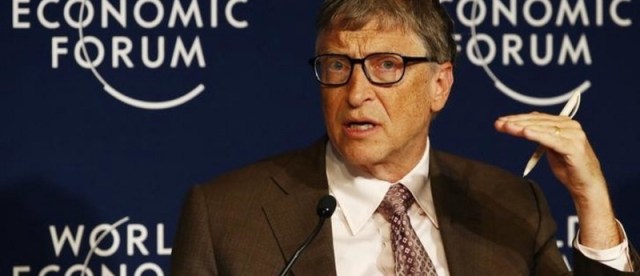
Basic economics always taught us that ‘supply and demand’ was a central feature of understanding a market. However, Bill Gates wrote in his blogrecently that “supply and demand is over” and he argued that it simply doesn’t apply to today’s economy. He also stated that politicians aren’t paying enough attention to this economic shift.

Why does he make this claim?

His reasoning is based on the fact that companies are no longer only making money by selling tangible products. Companies that supply software being one example. To develop new software, Gates points out, all of the cost is upfront, whereas a traditional manufacturer has to pay for parts and labour. When Microsoft launches a new version of a software programme, it can be copied, sold, and downloaded indefinitely for the relatively minimal costs of distribution and server space.

Gates claims that more large companies are operating without tangible products and says that digital products, which are a so-called “intangible investment,” carry new risks for businesses and investors and that this is not being accounted for in economic thinking, which still relies too much on an old model.

Capitalism without Capital

In his book “Capitalism without Capital” Gates presents the idea that developing software is a “sunk cost” because developers can’t recoup their losses the way other companies might. If you manufacture tangible products and go bust, you can sell off machinery, but a tech company doesn’t have any such assets to sell.

Gates also points out, the Gross Domestic Product (GDP), the sum of all goods and services sold in a country that is often used as a benchmark for an economy’s well-being doesn’t factor in the investment in intangible elements needed to make a product marketable, such as research and development or market research. He also suggests that didn’t matter two decades ago, but now it does because tech companies make up a bigger slice of a country’s GDP these days. And governments haven’t caught up with this fact.

Gates doesn’t offer a new economic model, but as he says: “The idea today that anyone would need to be pitched on why software is a legitimate investment seems unimaginable, but a lot has changed since the 1980s. It’s time the way we think about the economy does, too.”