The QR Code Revival

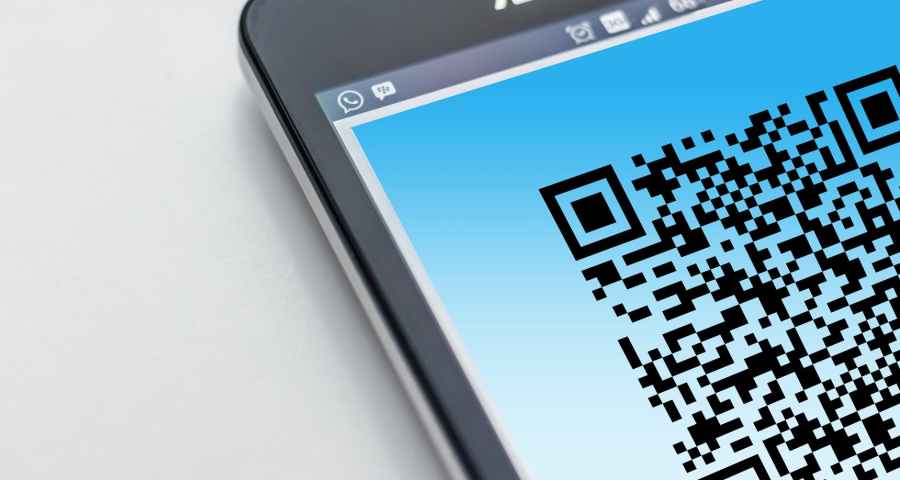
The Covid-19 pandemic has brought the QR code back to life. Once it was a growing trend, but then usage seemed to fall away almost overnight. Now, it has reappeared on restaurant tables to avoid customers touching a menu and potentially spreading the virus.

But it is not the only way in which the QR code has returned. It has resurfaced as the payment mechanism of choice for Paypal, Venmo, Square and others in the USA.

The QR code started out as a sophisticated barcode for tracking parts, but it had other uses, and in 2011 Alipay introduced it for payments. Alipay has 1.3 billion users across China and Asia, giving you an idea of its market share.

Over the last decade, China and India have seen huge increases in population size as well as aggressive growth in Internet availability and smartphone usage. These factors have created an opportunity for mobile payments where the merchant didn’t have to invest in hardware: the customer simply used their phone. The QR code played a major role in this, and emerged as the defacto payment mechanism due to its ease of implementation by the merchant. For example, in China, Alipay and WeChat QR codes can be found on every food stall, checkout lane, restaurant table, and public transportation service in the country.

In the USA, a joint venture of merchants including 7-Eleven, Best Buy, CVS, Target, and Walmart called the Merchant Customer Exchange (MCX) with its digital wallet called CurrentC seemingly brought the QR back to prominence. However, it never really took off, and Chase bought MCX, relaunching it as ChasePay

One of the key issues with QR codes for payments is that QR codes are typically less secure, but the 2017 introduction of an EMVCo specification for QR code payments was a significant step towards standardizing the code and making it more secure.

In the last six months we have seen a new focus on QR codes across the ecosystem, including that by PayPal. It was followed by Square. Then Venmo, a PayPal subsidiary released a new Credit Card that made the code a key part of the product – they printed a QR code on the physical card.

As the QR code makes its appearance in other situations, such as the aforementioned restaurants etc, it seems like perfect timing for it to also have a role in mobile payments.
Cash Is No Longer King

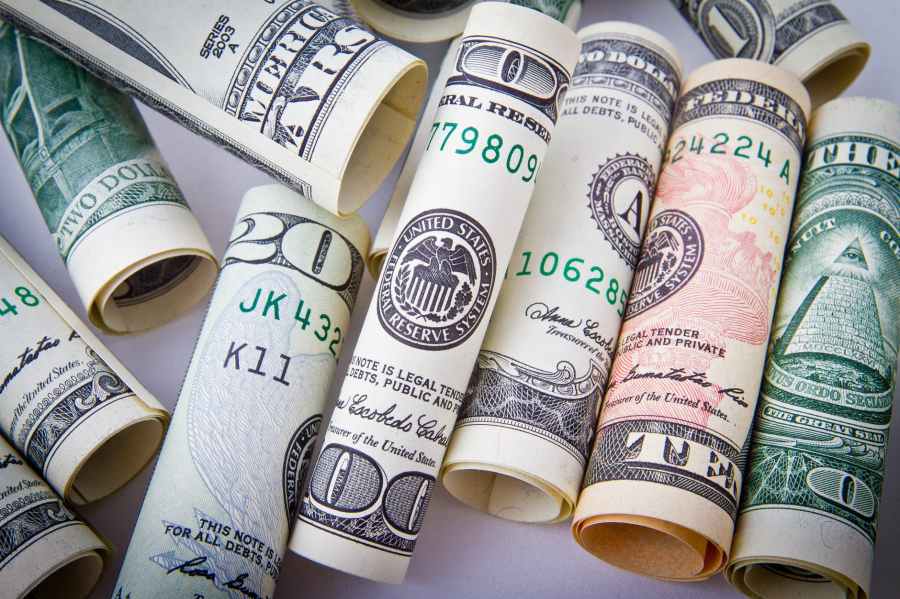
Cash has become something of a Covid-19 casualty this year. On the day-to-day level, people have been encouraged to pay with cards, because handling notes and coins is a way of transmitting the virus. The pressure on people to go cashless is facing a backlash though: When you use a card it is easy for governments and others to track your every move, whereas cash protects our privacy.

Ray Dalio, founder of investment firm Bridgewater Associates, has taken a look at cash from the investor’s perspective and warns us that it isn’t safe. In an interview with CCN, he said the high level of spending in America means the US dollar is no longer a safe investment. He isn’t the only one who believes cash is no longer a safe haven asset, and that it will perform badly compared with other asset classes, including gold, which has surged, he says, “because the market no longer believes in cash.” He also says that the Fed’s more relaxed view of inflation is another nail in Cash’s coffin.

Dalio told CNBC that cash, “ lulls investors into a false sense of security, based on the U.S. dollar’s historical role as a reserve asset.” Furthermore, according to Dalio, the Federal Reserve’s  spending spree since March has seriously weakened the value of cash.

In his view, “holding cash is equivalent to accepting a 2% annual stealth tax, as a result of inflation.” This may get worse as the Fed targets an average inflation rate of 2%. The ‘average’ Dalio says is important, because what it really means is “it will tolerate an actual rate well above 2% for considerable lengths of time.”

As a result, Dalio recommends a more diversified approach to investing: “Cash is a poor asset class … It’s a quietly bad asset class. Diversification is much better than cash.”

The market appears to agree with this, and there has been a move to other fiat currencies instead of the USD. The Euro, the Japanese yen, Chinese renminbi, and Australian dollar have all risen against the dollar, although this tide is slowly turning back in favour of USD. Plus it would appear that many investors prefer equities to cash.

One last word though. Dalio has an interest in talking down cash. His firm wants investors to pump their growing cash reserves into his fund. Even so, perhaps he does have a point, and cash will come under other pressures in the near future, such as the increased use of digital payments and cryptocurrencies, which have made substantial gains this year.

Why Bank Stocks Tanked in 2020

If there were ever an indication that the digital age is taking over in finance, it is the state of bank stocks. This year has been an extraordinary one in many respects, and the effects of the pandemic have thrown the banking sector into a quandary as fintech companies have outperformed the traditional players in he banking sector.

BNN Bloomberg’s senior anchor, Jon Erlichman, came to this conclusion after studying stock performance reports for banks, fintechs and the two largest cryptocurrencies, ETH and BTC.

A graph created by CryptoPotato, shows a YTD gain of 217% for ETH, while Wells Fargo bank shows a -58% loss. This is a massive change over a decade: “The stocks of some of the world’s largest banks were on a roll since the previous financial crisis over a decade ago. Bank of America shares had increased approximately ten-fold since 2009 to their highs in February 2020 of about $35,” writes Jordan Lyanchev. He also notes that in the same period, “Citigroup stocks went from $15 to $80, JP Morgan Chase & Co (JPM) from $20 to $140, and Wells Fargo (WFC) surged from $11 to above $50.”

What changed for banks in 2020?

The simplest answer is the Covid-19 pandemic. Even in March banks were seeing a significant slump with some losing 50% of their valuation in a matter of days. Some have regained a little of their former value, but they will still end this year in the red. And it is not just banks; Western Union and American Express have also suffered. Lyanchev notes that Warren Buffett, a major investor, sold all his bank stocks this year.

Visa and Mastercard both took a bit of a hit, but have managed to pull back into the green by small percentages. However, they must be looking at companies like PayPal and Square with a feeling of envy.

PayPal’s stocks (PYPL) started 2020 at $110 and have increased by 94% since then. It did see a collapse to $85 in March, but as we can see, it has completely turned that around. Square’s yearly gains have even seen triple-digit percentages, and it has seen a 178% growth since January 2020. Both of them are now connected with cryptocurrency: Square bought Bitcoin valued at $50 million this year, and PayPal is allowing its US-based customers to buy, sell, and store several digital assets.

The crypto markets

It is undeniable that the cryptocurrency markets also took a hit around March. Today BTC is at $13,000, but it dipped to $3,700 back then. Ethereum, now at $400 dropped to $100. Both have overcome the slump, with Bitcoin in particular being increasingly seen as a safe haven asset in the same way as gold.

Analysts are unsure exactly why Bitcoin has seen a YTD surge of 80%, and whether it can be attributed to more interest from institutional investors, the May halving or large companies investing in it. Ethereum has been riding the wave of the growing trend supporting decentralised finance, as its blockchain operates as the underlying technology behind most DeFi projects. Even though this utility has highlighted some of Etherieum’s weak points, such as high transaction fees and slow transaction rates, “none of that matters as ETH has been on a roll during most of the year, especially since the summer.” Now the second-largest cryptocurrency has become the best-performing asset, with an increase of over 200%.

What we can take away from this is that Covid-19 has driven dramatic changes that have made people become more focused on the digital world. They are looking more to online ventures and digitally transferred funds. What we may be witnessing now is the real beginning of a mass movement to an online world that will leave traditional banking behind.

The Future That is on Its Way to You!

We should be preparing for a set of major macro trends, Bernard Marr has written, after a discussion with Scott Smith of Changeist. Some of the trends already pre-dated the Covid-19 pandemic, but have been accelerated by it, and both men warn that these trends are ones we should not ignore.

Decoupled economies

According to Marr and Smith, the ‘decoupling’ of economies has been happening for around a decade. The result is a turn to nationalism in some of the world’s biggest economies, such as the USA, the UK, Brazil, Russia and India. As they say, ‘globalization is in the rearview mirror’ now, and we can expect a ‘multipolar world’ where three or four large regions with their own “distinct economies, security networks, cultures, and laws.”

Social change

Education, transportation, energy, food, and healthcare are in the midst of massive changes, much of it spurred on by the recognition that climate change is not a hoax. We are seeing a swell in the numbers of vegans and vegetarians due to livestock production accounting for 14.5% of greenhouse gases. There is also a transition to cleaner transport, and in the energy sector there is a move to meet the emissions reduction targets agreed to as part of the Paris Agreement on climate change. Covid-19 has also produced a transition to more working from home, and we are still grappling with this sudden change in our work life.

A new social contract?

The traditional social contract between citizens and government is no longer working for a significant number of individuals. Marr writes, “Societies have become divided between the haves and have nots, and any differences, whether religion, race, or sexual orientation, create chasms rather than common ground in the echo chamber of social media.” Automation threatens some workers, while the idea of a universal basic income has become a much hotter topic, as will debates about the nature of the future social contract between people, businesses and governments.

An AI reset

Currently we are seeing what is called an ‘AI reset’. The technology presents challenges that need to be carefully considered now, such as the regulatory obstacles and cost of development. On the other hand AI is accelerating and Smith believes another big wave is on the way.

Who are you?

Our personal identity would seem to be solid, yet thanks to digital technology it is varied and complex. Marr writes, “Today we have the ability to represent ourselves as a “stack” of identities that account for various affiliations, situations, values, and more.” Virtual and augmented reality has added to this ‘stacking’. As Marr says, “Given the tools at our disposal, smartphones, social media, and technology, we are free to create a digital narrative about who we are that might not match our physical world persona.”

Finally, we are facing life in a “blend of the physical, biological, and digital worlds.” The ‘new normal’ will be a combination of the physical and digital, and “Every organization must now consider how they provide products and services equally as well and complementary, whether interacting online or in the physical world.”

Some will welcome these trends, while others will be less enthusiastic. Whatever your view, it’s not difficult to see that regardless of opinion, this is our direction of travel.