Where AI Gives a Competitive Edge

Use of Artificial Intelligence (AI) is growing. According to International Data Corporation (IDC) forecast statistics, spending on the technology will reach $97.9 billion in 2023, which is two and a half times what it was in 2019.

David Schubmahl, IDC research director, said, “The AI market continues to grow at a steady rate in 2019 and we expect this momentum to carry forward,” adding, “The use of artificial intelligence and machine learning (ML) is occurring in a wide range of solutions and applications from ERP and manufacturing software to content management, collaboration, and user productivity. Artificial intelligence and machine learning are top of mind for most organizations today, and IDC expects that AI will be the disrupting influence changing entire industries over the next decade.”

Who is leading AI spending?

According to IDC: “Spending on AI systems will be led by the retail and banking industries, each of which will invest more than $5 billion in 2019. Nearly half of the retail spending will go toward automated customer service agents and expert shopping advisors & product recommendation systems. The banking industry will focus its investments on automated threat intelligence and prevention systems and fraud analysis and investigation. Other industries that will make significant investments in AI systems throughout the forecast include discrete manufacturing, process manufacturing, healthcare, and professional services. The fastest spending growth will come from the media industry and federal/central governments with five-year CAGRs of 33.7% and 33.6% respectively.”

Marianne D’Aquila, IDC research manager in the Customer Insights & Analysis department said, “”Artificial Intelligence (AI) has moved well beyond prototyping and into the phase of execution and implementation.” She also remarked, “Strategic decision makers across all industries are now grappling with the question of how to effectively proceed with their AI journey. Some have been more successful than others, as evidenced by banking, retail, manufacturing, healthcare, and professional services firms making up more than half of the AI spend. Despite the learning curve, IDC sees higher than average five-year annual compounded growth in government, media, telecommunications, and personal and consumer services.”

The biggest AI use cases

The three largest use cases for AI currently are: automated customer service agents, automated threat intelligence and prevention systems, and sales process recommendation and automation. But in the future, the use cases that will see the fastest spending growth over the 2018-2023 forecast period are automated human resources (43.3% CAGR) and pharmaceutical research and development (36.7% CAGR). However, eight other use cases will have spending growth with five-year CAGRs greater than 30%.

Where is AI investment happening?

According to IDC, the United States will deliver more than 50% of all AI spending throughout the forecast, led by the retail and banking industries. In second place is Western Europe where banking and discrete manufacturing will show the biggest demand. China will be the third largest region for AI spending with retail, state/local government, and professional services being the leading users, and Japan is another country to watch as its AI use is predicted to have a 45.3% CAGR growth in spending on AI up to 2023.

Don’t Sell Your Startup App Too Soon

Entrepreneurs love to sell an idea. Once they see that an idea has got some traction, they have a strong urge to pitch and sell it in the early stages. However, that is a mistake, as Abdo Riani explains. 

He suggests that rather than trying to sell, entrepreneurs should instead be “listening to your customers’ needs and developing deep insights that can shape your startup idea into a viable product.” He also suggests that once you can get customers asking about your value proposition, “then selling will not only be easy, it will be unnecessary.”

The steps to success

First, it is obvious that the early customers are likely to be a competitor’s customers. What they will want to know is how does your app compete on three things: cost versus value, strong brand, and or unique solution.

Riani says, “If you’re going to offer superior value at the same price, you need to figure out the problems your competitors’ customers face using those solutions.” In other words, look for the gap you can fill.

Second, discover your customers’ most urgent needs. Riani says, “A simple yet effective approach is to build a Customer Advisory Board comprised of your most engaged early buyers.” You’ll gather insights you wouldn’t get with a simple survey or interview.

He also points out: “As a rule of thumb, if customers can gain ten times more from your solution than it would cost them to cancel their existing contracts and memberships, your product becomes your most important, maybe only, sales tool.”

Third, your app solution must be irresistible to the consumer. Even though the first version of an app may not be the complete vision of what you want it to do, Riani suggests “you can focus on introducing high-impact features that delight and WOW the customer.”

You can do this even in a highly competitive market by focusing on a niche segment and tailoring the product to the needs of consumers in that sector. That alone can give your app the WOW factor.

Ultimately, the secret of success for startup app lies in “building a product customers cannot refuse to try, use, and recommend, even in the presence of solid competitors.”

If entrepreneurs follow this advice, they will have no need to sell their startup app at the beginning of its journey.

AI Speeds up Drug Design as World Searches for Covid-19 Cure

The use of Artificial Intelligence (AI) is surging, and one area in which its use is even more important in 2020 – The Year of a Global Pandemic –, is in health technology, or healthtech.

Berlin-based, non-profit think tank dGen has just released a new report, AI, Privacy, and Genomics: The Next Era of Drug Design”, which looks at the issue of privacy and access to genetic data for companies using AI to speed up and improve drug design.

With articles about work on a vaccine for Covid-19 flooding newspapers every day, most people are now more aware of the typical timelines involved in creating new drugs. They certainly don’t appear overnight: as the dGen report states, “the average drug today takes 10-12 years and cost $2 billion.” However, the arrival of the new coronavirus has forced researchers to think more in terms of 12-18 months, which is like exchanging a leisurely world cruise for supersonic flight.

Enter AI, which in 2020 is only just entering drug R&D where it is being used to test and improve candidate drugs before they can be fully accredited by regulators, such as the FDA in the USA.

But there is one area of concern: genetic information is central to many AI-enabled drug discovery startups. To expand this innovation, a number of issues with using genetic data must be resolved. The dGen report lists these as:

  • ownership
  • secure storage
  • availability to multiple research parties.

In order for all of us to accept the wider use of AI in drug design, privacy concerns must be addressed using the privacy-preserving techniques in Machine Learning. These allow researchers to process genetic material without fully revealing its source.

While this is crucial for privacy, the techniques do not address the issue of ownership, or ways to audit the system. What the dGen report proposes is a decentralised pan-European biobank network that makes information available to researchers, but all access requests have to be logged. In that way, we all know who has looked at our genetic data. Furthermore, it would allow us as individuals to grant or deny these requests and track the use of our information.

dGen’s Top Predictions for 2030

Based on better privacy-preserving technologies and an access network, dGen’s top predictions for 2030 are:

  • Better collaboration networks will emerge.
  • Genetic privacy laws will be overhauled.
  • AI will become a fundamental part of drug discovery.
  • Pharmaceutical giants won’t be toppled, but they won’t get out unscathed as biotech startups take the field.

The views of industry leaders

It is also interesting to note the responses to the dGen report from those working in AI and healthtech. The think tank interviewed industry leaders from Aidence, Gero, Alphanosos, e-Estonia, Qunatlib and Turbine amongst others.

Maxim Kholin, Gero Co-Founder said,‘We believe that AI can accelerate the drug discovery process by proper understanding of human diseases from large biomedical data. The data-driven approach should help establish the genetic determinants and molecular markers of the disease’. While, Pascal Mayer, Founder of Alphanosos, which is specialised in plant-based pharamaceuticals, told dGen: ‘While currently working really well on bacteria, we are confident AI-enabled plant-based drug discovery shall be successful in fighting viruses as well’.

This work is important for all of us who have an interest in how emerging technology can contribute to a decentralised future in Europe and what this might mean for people, society, private entities, and the public sector over the coming decades. It is, of course, of a signifiant interest to us all right now, as the search for a Covid-19 cure continues.

For a copy of the Full Report contact:

Francisco Rodríguez

francisco@dgen.org

Stop using SMS for private messages

We all need to up our online security game, which is why I read a recent article by Zak Doffman, a cybersecurity expert, with great interest. He has advised his followers to stop using Facebook Messenger and switch to WhatsApp for security reasons. This is interesting because Facebook also owns WhatsApp, but the difference between the app and Messenger is one of security.

WhatsApp has end-to-end encryption. It’s so secure that as Doffman says, “lawmakers actually want weaknesses introduced to help them investigate crimes.” And if you think that perhaps Apple iMessage and SMS—including Google Messages –are safe, then Doffman says, the answer isn’t a simple yes or no.

Most messaging from your devices is encrypted, but the security depends on who holds the encryption keys. Doffman states, “When you end-to-end encrypt data or messages, keys are only held by the two (or multiple) endpoints of that link—you and the person you’re messaging, for example.” So, with WhatsApp, it can’t read what you send, which is the bonus, and it can be trusted to keep your messages safe and secure.

By contrast, Facebook’s Messenger is not end-to-end encrypted by default. Even Facebook recommended using WhatsApp instead of Messenger. Why don’t they fix the problem with Messenger you may ask? Well, apparently it’s technically complex.

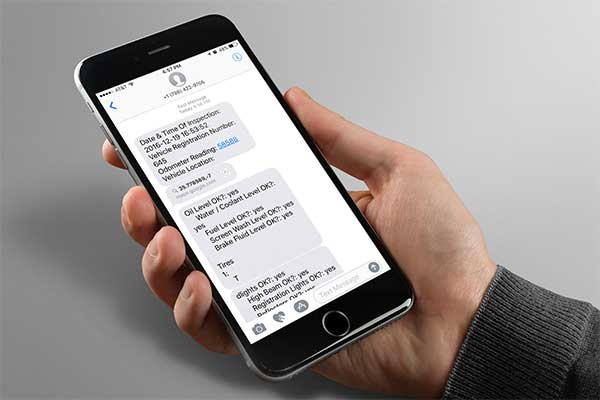
SMS messages are another issue. Did you know “When you send an SMS, while it might be secure between your phone and your network, once there it can be easily intercepted and collected?” This makes SMS child’s play for hackers who can target senders and recipients. On the other hand, SMS is available on every single phone in the world, hence it’s popularity. However, it is used for “longer messages, MMS attachments, financial details, private data, sensitive information,” and that is where problems lie.

Whichever service you use, whether Apple or Android, there are SMS messages you will need to still receive—one time security codes, for example. But beyond texts from service providers, with security codes etc, you should not use SMS for your own private messages – stick to WhatsApp, or if you want even more security, use Signal, which is the app of choice for many working in the Cybersecurity sector.