The price of lunch with Warren Buffett

The saying goes, “There’s no such thing as a free lunch,” meaning that if you’re offered something, including lunch, and you’re not picking up the bill, you will still have to ay for it in some way. I mention this because I found a story yesterday that proves the maxim.

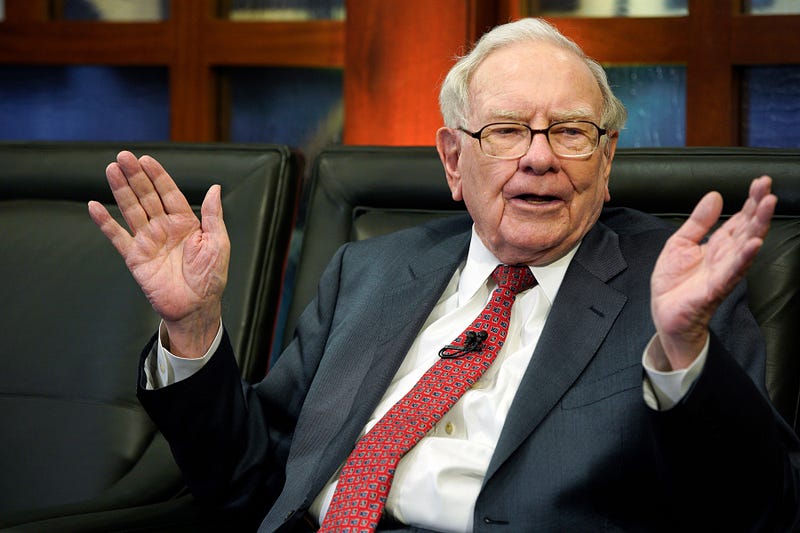
According to Francois Aure writing at CCN, Justin Sun, the founder of Tron bid $4.5 million to have lunch with the crypto hater Warren Buffett. And Buffett cannot escape this date, because Sun made the bid at Buffett’s GLIDE charity auction and won.

Four point five million dollars is a lot to pay for lunch, even if it is with the legendary billionaire and head of Berkshire Hathaway. However, we hear that Sun is going to bring a few of his blockchain pals along to the event. It sounds a bit like an ambush, but I don’t suppose too many in the crypto community will feel sorry for Warren Buffett having to dine with a bunch of people who oppose his views on crypto. Indeed, I’m sure there are many crypto supporters who would love to be able to hear the conversation.

Sun tweeted his victory at the auction: “I officially announce I’ve won the record-setting 20th-anniversary charity lunch hosted by @WarrenBuffett. I’ll also invite blockchain industry leaders to meet with a titan of investment. I hope this benefits everyone.

Sun then maximised the PR potential of this event by posting a long open letter to the crypto community via his Medium blog. In it he talks about his respect for Warren Buffett as an investor and says he hopes to persuade the seasoned investor that blockchain is the future.

In one paragraph Sun wrote: I’m a long-term believer (and certainly a big fan) of Buffett and his long-term value investing strategy. As some of you might know, the CEO of Berkshire Hathaway has said publicly; he sees no “unique value” in Bitcoin, the world’s largest Cryptocurrency. Yet, he has pointed to the potential in blockchain, the underlying technology behind all Cryptocurrency.”

As Aure writes, “Naturally, what we are all dying to know is who Mr. Sun plans to take with him.” Significantly, in his letter Sun said he may ask the community for their input and advice: “To aid in the conversation and support the overall cryptocurrency and blockchain community, I will invite several industry leaders — with your input — to accompany me to New York City for the lunch.”

Aure suggests that if Sun took John McAfee to the lunch and sat him beside Buffett the entire Internet would probably explode. There would certainly be a twitter storm at the very least.

But on a more serious note, it will be interesting to see what Buffett thinks of tron. After all he called bitcoin “rat poison squared,” so how he will respond to Tron that is worth only a few cents despite its place in the top tier of the crypto market is anyone’s guess.

Whatever happens at the lunch, it is certain that the crypto community will be looking for any crumbs of comfort from Buffett. If he says anything positive about crypto at all, it will be flying around Twitter before coffee is served.

Bitcoin gets some bling!

Image result for bitcoin

I didn’t think it was possible that bitcoin might ever be described as ‘blingy’, but over the past few days I’ve seen some news items that suggest the leading cryptocurrency is having some shine put on it by the luxury goods market and political fundraising. And I have a feeling this may just be the start.

First, Franck Muller, the high-end Swiss watch designer whose work is known for being quirky, has added cold wallet bitcoin storage to his latest watch. The Encrypta watch includes its own unique public address etched on the dial and a sealed USB containing the private key. Plus, owners will be able to add Bitcoin to their wallet and monitor their balance directly through the dial. Each model includes a dial that incorporates the QR code of Satoshi’s Genesis Block address, as well as a custom-designed “B” within an emblem of circuitry.

And just so you know, the Encrypto collection of men’s and women’s watches are advertised as costing between $10,780 and $55,880. It’s a pity they didn’t quote the price in BTC as well.

Next there is an app that supposedly makes investing in bitcoin much easier. Erik Finman, who started buying bitcoin when he was 12 and is now only 20, has designed the CoinBits app that allows users to buy fractions of a Bitcoin from spare change. The amount of the purchase is rounded up to the nearest dollar and the additional change is invested into small amounts of Bitcoin.

Last, Eric Swalwell, a Democrat and presidential candidate for the 2020 elections is accepting crypto donations for his campaign. Unsurprisingly, he is the Bay Area congressman, which puts him in close proximity to Silicon Valley and to all the crypto-relatd startups based in San Francisco. So, it makes sense that he should accept crypto. Apparently he is partnering with the White Company, a blockchain firm that will facilitate the donations and make them fully compliant with Federal Election Commission regulations.

Swalwell had this to say about crypto: “Blockchain can change the world, if we let it. So much of our public life now exists online, and there’s no reason to believe we can’t extend this further into our democracy and our economy – from exercising our right to vote, to how we look at cryptocurrency.”

Perhaps the way to encouraging mass adoption is to make bitcoin more ‘trendy’, almost a fashion accessory even. Political donations aside, the app and the watch are likely to turn up in a List of 10 Things You Must Have in some glossy magazine. Expect to see it in Vogue soon!


Why is Litecoin Doing so Well?

Today Litecoin is up 62% on the month, 24% on the week and a solid 200% on the year. Its price has dipped a tiny 2% at the time of writing, but it is still possible to say that Litecoin has been doing remarkably well during this latest surge in the crypto markets.

Litecoin began 2019 at around $30, representing a dramatic plunge in price during 2018. As ever, people are looking for explanations for this reversal of fortune. Billy Bambrough, writing at Forbes believes that it may in part be due to the upcoming halvening of bitcoin, which will happen in May next year. Halvenings always seem to trigger a price surge. The bitcoin event will result in he number of bitcoins awarded to miners for mining new bitcoin blocks will drop from 12.5 bitcoin to 6.25 bitcoin. “We are going to hoard bitcoin at this point in time,” Brian Kelly, a bitcoin and cryptocurrency fund manager told CNBC. “We’re not going to sell it. You generally have a rally a year into [a bitcoin halvening], and a year out of it. And so we’re just at the beginning of that stage […] a supply cut is generally bullish.”

A halving and more use of litecoin

Litecoin is due to halve its miner rewards in August of this year, and if the economic theory applied to bitcoin’s supply reduction due to the halvening are correct, it will also apply to litecoin, which will see its mining reward fall from 25 litecoin to 12.5 litecoin.

What has happened during previous bitcoin halvenings, which are fixed events that occur after every 210,000 blocks have been mined. For example, about one year after the first bitcoin halving event in November 2012, the bitcoin price reached what was then an all-time high of $1,000. And the 2016 halvening appeared to precipitate the bull run of 2017 when bitcoin touched almost $20,000.

But it isn’t just Litecoin’s upcoming halvening that has boosted its price. Over the last few months litecoin has gone through some technical improvements and it is being spent via Coinbase Visa cards at millions of locations worldwide. Coinbase users can choose which cryptocurrency is used on the card through a new app that supports all crypto assets available to buy and sell on the Coinbase platform. The app also offers instant receipts, transaction summaries, and spending categories, to help people keep track of their spending.

Litecoin has been seen as one of the most credible rivals to bitcoin for some time; perhaps this is the year when it finally asserts itself as a serious contender in the crypto market.

Will crypto be the new operating system for capitalism?

Over centuries systems of exchange have evolved and right now we are at the ‘money’ stage, which has been around for some time. However, I’m not alone in thinking that fiat currencies won’t rule the roost forever. Chris Herd poses some interesting questions to think about in his article” Why cryptocurrency is the Next Operating System for Capitalism,” and he starts by suggesting that although traditionalists cling on the concept of cold, hard cash, it might disappear faster than they think.

The significance of a cashless society

We are almost at the point of becoming a cashless society for a start. More people than ever do not carry cash. Herd says, “I can count on one hand the number of times I have had cash in my wallet in the last 3 years. Paper cash and metallic coins are prehistoric.” This is true for many people, especially in larger cities. To some extent how ‘cashless’ you can be does depend on where you live; it’s a lot more difficult to rely on plastic in rural areas.

That brings us to cryptocurrency as a means of exchange. When the utility of notes and coins in your pocket decreases, it will be replaced by something the majority agree is more efficient. Herd argues that while the traditionalists shout that crypto is a ‘bubble’, he argues that fiat money is also a ‘bubble’, because as we know it is not backed by anything: “its price being entirely independent and it’s valuation contingent on what we collectively believe it to be ,” as he says.

If we stopped believing in the value Euros, pounds and dollars etc tomorrow, what would they be worth? With money we are in the land of ‘trust and belief’.

Loss of trust in governments

Herd writes, “Money is, and has been for the last 30 years, an intellectual construct centred on humanities trust in Governance.” And he correctly points out that right now, our trust in governments is at an all time low. And we have a solution to our loss of trust in them — a decentralised operating system.

Herd points us to the example of Venezuela, a country in deep financial and political distress. Bitcoin has enabled its citizens to have an alternative to the crippling inflation. They have an escape route from the government monetary policy.

Herd also argues that cryptocurrency can free us from government-imposed austerity measures, which plague a number of countries. As he says, the people who caused financial collapse are rarely punished for it; as we’ve seen Wall Street bankers are Teflon coated.

Crypto will destroy fiat?

What he believes we will see, and it’s a credible argument, is that Bitcoin and Ethereum will destroy fiat money and banks as well in the same way that Amazon has decimated the high street retailers and Facebook destroyed MySpace.

He admits that capitalism isn’t going anywhere, but states: “Cryptocurrency is simply a more efficient vessel which allows for its manifest destiny to be realised.”

It’s a compelling argument in my opinion, but what do you think?