3 Reasons Jack Dorsey believes in a Bitcoin Revival

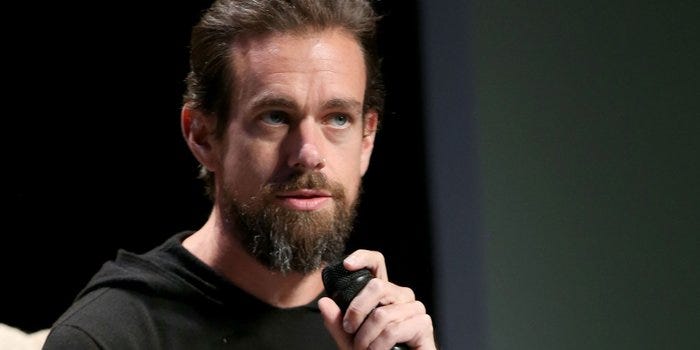
Jack Dorsey, the billionaire co-founder of Twitter and Square, is at least consistent in his support for Bitcoin. He has remained unwavering in his belief, surely earning him the title of ‘Bitcoin evangelist’.

It is hard to dismiss Dorsey’s view given that he is a successful entrepreneur, and his support for the leading cryptocurrency is music to the ears of those who share his views, but don’t have the public profile to share them with such a vast audience.

Recently Dorsey participated in a podcast, imaginatively called, “Tales from the Crypt” (perhaps they are also Edgar Allan Poe fans as it sounds like the title of one of his stories), where he talked about buying Bitcoin. He revealed that he “maximises the $10,000 Bitcoin purschase limit on Square Cash to acquire the leading cryptocurrency.” Square, in case you are unaware of it, is a payments platform with a Cash App that enables people to send money to others almost instantly. It has a merchant payment system as well and as it says on its website is, “We’re empowering the electrician to send invoices, setting up the food truck with a delivery option, helping the clothing boutique pay its employees, and giving the coffee chain capital for a second, third, and fourth location.”

What will fuel Bitcoin growth?

Since 1st March, Bitcoin has been showing growth, and another supporter of the cryptocurrency, Brian Kelly, CEO of BKCM, said he believed, “the so-called crypto winter is approaching its last phase and is slowing thawing.” Since he said this, within a week, the Bitcoin price rebounded to over $3,900 as the cryptocurrency market added $6 billion to its valuation.

Kelly explained to CNBC what was happening in terms of Bitcoin improving its fundamentals. “If you look at the number of addresses that have been created on the Bitcoin network, that’s up about 20 percent from the January lows, it’s apt highs at the levels we saw in the spring of 2018 when Bitcoin was well above $6,000. So Fundamentally, you’re starting to see improvement.

Some high profile investors and endowments have been dipping their toe into the space, add in that you’re talking about Fidelity coming out with custody this week and Jack you know, he understands the payment network.”

Kelly’s reference to Jack Dorsey brings me back to Jack’s views about what has happened. In one interview he listed the reasons for growth as “improved scalability through a second-layer scaling solution, the involvement of institutions such as Fidelity and ICE, and the overall increase in interest towards the asset class.”

Jack Dorsey’s 3 reasons for believing in Bitcoin growth

Those are the three reasons Dorsey sees a strong future for Bitcoin. And there is one other: Dorsey is also an investor in Lightning Labs and therefore has an interest in seeing the Lightning Network succeed. He has reaffirmed that Square, the $31 billion payments giant, will adopt the Lightning Network in the near-term and when it does, Dorsey could single-handedly push the adoption of the second-layer scaling solution.

Why Coinbase listing didn’t boost XRP price

There was a general feeling that when Coinbase announced it was listing XRP on its Coinbase Pro platform there would be a corresponding leap in the value of Ripple’s native token. There was some movement on the day of the announcement (25th February) with XRP shooting up by 10% in value, but that is about as exciting as it got.

Furthermore, when Coinbase then announced on 28th February that it was adding XRP to Coinbase.com, as well as the exchanges’s Android and iOS apps, the response was flat.

The analysts’ analysis

While crypto consumers might be somewhat surprised by this lack of activity, analysts were less so. According to crypto expert Charles Bovaird, writing at Forbes, several analysts were of the opinion that they had never expected anything else. Jeff Dorman, cofounder and head portfolio manager at Arca Funds told Bovaird: “I’m not surprised by the lack of price action for XRP. First, XRP has been plagued by negative press this year and as a result, the token has been lagging the broader market all year.”

Dorman also explained that the 10% rally on the 25th February had amounted to much more, because “those gains were quickly erased when the people who bought before the news sold into those buying after the news.”

Marouane Garcon, managing director of crypto-to-crypto derivatives platform Amulet, shares Dorman’s view. “I can’t say that I’m surprised by the lack of movement. Throughout this entire bear market news and public developments haven’t been able to spark any sort of uptrend.”

However, Garcon did explain what he thought would move XRP’s price — adoption. He said, “In XRP’s case, I think banks utilizing XRP in their daily operations is what’s going to move their market.”

Big announcements don’t always bear fruit for XRP

Joe DiPasquale, CEO of cryptocurrency fund of hedge funds BitBull Capital also claims that he and others have noticed something ‘interesting’ about XRP’s price movements: “We’ve noticed the market anticipate many of Ripple’s moves, resulting in what might seem as counter-intuitive pricing over major events,” he told Bovaird, adding, “For example, during both of their last two conferences, where they announced major business development deals, the price of the XRP token dropped.”

The crypto ecosystem is the ultimate decider

All the analysts seem to agree on another viewpoint, “the different digital currencies that make up the broader market tend to move in tandem.”

So, the reason Coinbase didn’t move XRP’s price upwards as much as might have been expected is down to Ripple also being subject to the waves within the larger crypto pricing ecosystem, and these don’t always work in harmony with big announcements.

Crypto businesses run away from USA

Image result for Crypto USA

The USA usually takes the lead on new technology: after all it is the land of Apple and Silicon Valley, not forgetting many innovations of the past. However, when it comes to crypto startups it appears to be driving them away, right into the arms of places like Switzerland. It is true that some of the large comaniy’s like Coinbase and Ripple Labs, who are past the startup stage, are US registered, though even Coinbase has spread its wings far beyond the United States.

Jeff Kauflin writing for Forbes recounts a very interesting story about a meeting between Republican congressman Warren Davidson and the CEO of a crypto startup in 2018. The CEO was trying to decide where to locate his company and said to the Congressman, “Look, it’s nothing personal. We just don’t trust that you guys are gonna get this done right. So we’re feeling kind of Swiss.” What he meant was that with all the uncertainty around regulations in the US, they were thinking of going to crypto-friendly Switzerland.

This uncertainty and the slowness of the US regulatory authorities are damaging everyone. As Kauflin says, “most companies that created digital tokens and sold them through ICOs assumed they wouldn’t be deemed securities.” However, once they realised that the regulators, the SEC being the main one, were thinking differently, they knew there was going to be a legal problem. This drove them away from considering locating startups in the USA.

To remedy this, Warren Davidson has introduced a new digital token bill, aimed at removing uncertainty and making the USA more appealing for crypto startups.

Caitlin Long, a former managing director at Morgan Stanley, when interviewed by Kauflin said: “Lawyers right and left were telling clients, ‘Don’t issue tokens to U.S. investors and don’t domicile in the U.S.’”

By contrast, last year Switzerland declared that some ICO tokens are not securities, which went down well with crypto entrepreneurs. So much so that about 420 crypto and blockchain startups are domiciled there. The USA has 2,100 startups, but it also has a population that is 40 times larger than that of Switzerland. Mathematics says that Switzerland is out-performing the USA as a location for technological innovation.

Davidson’s Token Taxonomy Act aims to amend the Securities Act of 1933 and the Securities and Exchange Act of 1934, “to get the regulatory certainty that I feel like the market needs.”

Under the new bill, some of the criteria for exemption from security status are: the blockchain platform the token runs on has already launched; the token’s supply can’t be controlled by a single person or group of people; once finalized, transactions can’t be altered by a single person or group of people; and the token “is not a representation of a financial interest in a company, including an ownership or debt interest or revenue share.”

If this Bill passes it will create a significant change in the US for startups and would ensure that innovation stays in the USA rather than running away to Europe.

Which would you bet on: John McAfee becoming US president, or eating his d**k on TV?

For many years when most people heard the name ‘McAfee’ the software that protected your computer from malware, viruses and Trojans came to mind. But, John McAfee, the man behind the anti-virus software business has given us an entirely different image to conjure up when the name is mentioned.

Who knew that the Anti-Virus King was such a maverick and such an enthusiastic user of Twitter? His announcement this week that he plans to run for President in the 2020 presidential campaign is not a great surprise, and if constant Twitter use is a qualification for the job (the current POTUS seems to think it is) then he might be a shoo in.

Not that John McAfee can actually step foot in the USA. He has fled the country and is sending out messages from his boat, which is somewhere in international waters so that the Internal Revenue Service can’t touch him. He hasn’t filed a tax return in years, so it’s no surprised that the IRS have come after him, especially since he keeps boasting about it. McAfee certainly doesn’t seem to have grasped the concept of ‘going under the radar’.

What else do we know about the man? Well, he’s a cryptocurrency fanatic to start with and he has made a lot of noise in the crypto world and attracted a large swathe of followers. He also has a fairly interesting backstory, including the fact that he was born in the UK, not the USA. His parent moved to Roanoke, Virginia when he was young and his father committed suicide when McAfee was 15.

His career in computing started after he took a job at a firm that coded punch-card systems. He then worked at a few Silicon Valley firms until the first major virus in PCs emerged and that’s when he started his anti-virus company. The company soon became one of the biggest of its type, but McAfee decided to retire in 1994 and keep a low profile.

His shares in the company netted him $100 million and he seemed set for a comfortable future, however in 2008, the financial collapse that affected the whole world also hit McAfee hard and he lost around 96% of his fortune.

And this is when he starts to reveal his maverick nature to a wider audience. He moved to Belize, but started to think he was being followed, and lost his connection with society for a while. He also had to flee the country in 2012 when he became a person of interest in a murder case that involved the death of his neighbour. He was then arrested in Guatemala for illegal entry and repatriated to the USA. And that’s when his love affair with crypto started.

In 2015 he started the Cyber Party and made his first attempt to run for president. He also got involved with MGT Technologies, a rather mysterious firm that was producing games, providing cybersecurity services and manufacturing some drugs. It’s an odd mix that gives off a strong smell of dodginess. He left her to become fully embroiled in the bitcoin world; the leading cryptocurrency being his favourite. He’s made numerous predictions, perhaps most famously his tweet that if bitcoin didn’t reach $1 million by the end of 2020 “I will eat my dick.” Which will happen first: will McAfee become president or will we see him cannibalise himself on Squawk Box at the beginning of 2021?