
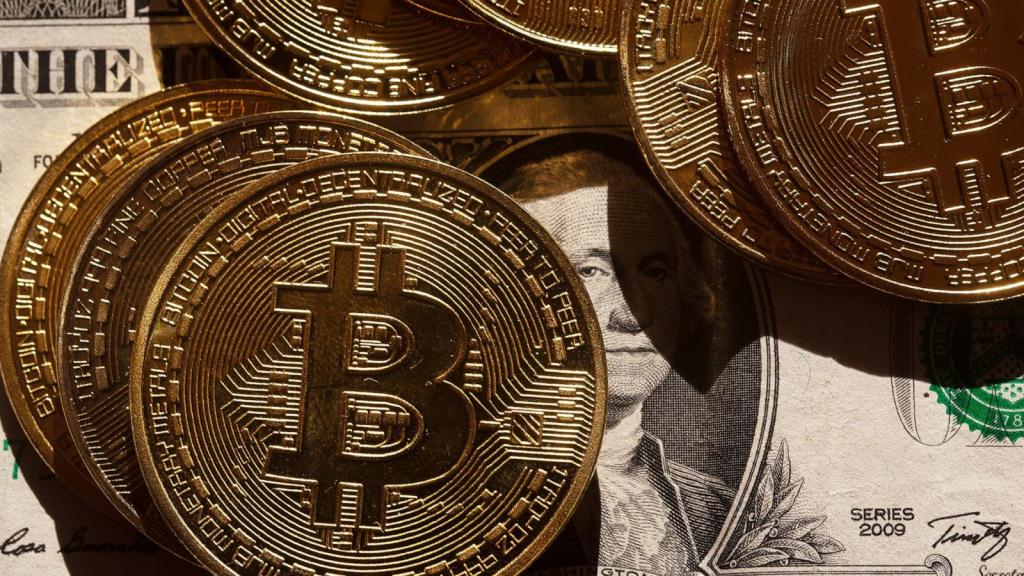
In the ever-evolving landscape of global finance, 2025 is shaping up to be a pivotal year. The institutions and instruments that once defined the economic order — from central banks and traditional banking systems to legacy payment networks — are facing increasing pressure from an unstoppable wave of innovation, decentralization, and public demand for transparency. At the heart of this shift is Bitcoin, not just as a speculative asset, but as a systemic alternative to old finance.
For Bitcoin investors, understanding this dynamic isn’t optional — it’s essential. Because as old finance loses its grip, Bitcoin isn’t just surviving the upheaval; it’s quietly thriving in the cracks of a crumbling system.
The Erosion of Trust in Legacy Institutions
Traditional financial institutions are in a slow-motion credibility crisis. This isn’t new — it’s been building since 2008. But in 2025, the trust gap has widened into a chasm. Key examples:
- Central banks are out of ammunition. After years of zero or negative interest rates and multiple rounds of quantitative easing, central banks have very little room to maneuver. Inflation targets are being missed or manipulated, and credibility is eroding fast.
- Commercial banks are losing relevance. According to a 2024 IMF report, more than 32% of global millennials no longer use traditional banks as their primary financial provider, favoring fintech apps, crypto wallets, and decentralized protocols.
- Money printing is no longer a hidden vice. In the past, monetary expansion happened in the shadows. Now, it’s in headlines. The U.S. alone increased its M2 money supply by over 40% between 2020 and 2023, fueling both inflation and public disillusionment with fiat.
- Bailouts are back — and bigger. In 2023–2025, more than 15 major financial institutions globally were propped up by government action, exposing the fragile underbelly of a supposedly “stable” system.
This climate has created fertile ground for Bitcoin — a non-sovereign, deflationary, transparent alternative.
Bitcoin’s Strategic Position in 2025
Bitcoin has matured well beyond its early “internet money” days. In 2025, it’s being viewed as:
- A hedge against fiat instability
- A strategic reserve asset for both individuals and institutions
- A neutral settlement layer in an increasingly fractured global financial system
Notable Shifts:
- Nation-state adoption is accelerating. After El Salvador and the Central African Republic, at least five more countries are now exploring partial Bitcoin integration into national reserves or payment rails.
- Institutional custody and adoption have normalized. BlackRock, Fidelity, and JPMorgan now offer integrated Bitcoin solutions. The 2024 approval of spot Bitcoin ETFs in several major economies has further legitimized exposure for traditional investors.
- Bitcoin is now part of macro conversations. Leading hedge fund managers like Stanley Druckenmiller and Ray Dalio have publicly rebalanced portfolios to include BTC — not as a fringe bet, but as a core allocation.
How DeFi and Bitcoin are Converging
While Bitcoin remains more conservative compared to the experimental energy of Ethereum-based DeFi, 2025 is seeing a convergence.
- Bitcoin-backed DeFi protocols (e.g., Sovryn, Stacks, Rootstock) are enabling lending, trading, and yield on top of Bitcoin — without requiring users to leave the Bitcoin ecosystem.
- Wrapped Bitcoin (wBTC) remains one of the most utilized assets in DeFi, proving that BTC demand extends beyond simple HODLing.
- Lightning Network usage is up over 400% year-over-year, not just for micropayments, but for cross-border B2B transfers. This reduces friction for global commerce and further reduces reliance on SWIFT and centralized rails.
Regulatory Pressure Is Backfiring
Governments have tried to “contain” Bitcoin for years — through tax policy, KYC enforcement, and headline crackdowns. But in 2025, those efforts are increasingly viewed as signs of fear, not control.
Ironies of Regulation:
- SEC lawsuits boosted decentralization. After years of litigation, crypto projects now proactively launch with better legal frameworks — while Bitcoin remains untouched, thanks to its immaculate conception and true decentralization.
- CBDCs are backfiring. Far from calming the waters, central bank digital currencies have sparked privacy concerns. As governments gain surveillance powers, citizens are shifting to Bitcoin for financial autonomy.
- Taxation is becoming unenforceable. The rise of self-custody, peer-to-peer exchanges, and global mobility has made Bitcoin taxation increasingly difficult to monitor or collect — a fact that regulators are reluctantly acknowledging behind closed doors.
Macro Forces Align in Bitcoin’s Favor
Three global trends are turbocharging Bitcoin’s narrative in 2025:
1. Deglobalization and Monetary Fragmentation
As U.S.-China tensions persist and the BRICS alliance gains influence, the world is moving toward a multipolar monetary system. In this environment, Bitcoin is the only truly neutral asset — not tied to any nation, bloc, or ideology.
2. Wealth Transfer to Gen Z and Millennials
Younger investors, who are natively digital and deeply skeptical of legacy institutions, are inheriting wealth. Surveys show over 60% of Gen Z trust decentralized money more than banks. Bitcoin is now part of retirement plans, college savings accounts, and sovereign wealth strategies.
3. Tech Integration
Big tech is bridging the final mile. In 2025:
- Apple Pay supports native Bitcoin transactions via Taproot wallets.
- Visa and Mastercard now process Bitcoin via third-party integrations.
- Tesla resumed Bitcoin payments for select markets, citing “sustainable mining improvements.”
Risks Still Remain — But They’re Changing
Let’s be clear: Bitcoin is not risk-free. But the nature of its risk is evolving.
- Volatility is declining as adoption increases.
- Network security is stronger with new mining pools and geopolitical decentralization.
- The attack surface is narrower than DeFi protocols or centralized stablecoins.
The biggest remaining risks in 2025 are political (outright bans in authoritarian states), custodial (exchange mismanagement), and user error (self-custody best practices still matter). But these are manageable risks — especially compared to the systemic risk of traditional banking collapse.
Conclusion: The Grip Is Gone — And It’s Not Coming Back
Legacy finance still has power in 2025 — but not control. The old playbook of regulation, media spin, and centralized gatekeeping is no longer working. Bitcoin has moved from resistance to resilience, from rebellion to relevance.
For Bitcoin investors, the message is clear:
This isn’t just a hedge. It’s a historical transition.
Old finance isn’t going out with a bang.
It’s losing its grip — slowly, systemically, and inevitably.
And Bitcoin is ready.
 Mehran Muslimi