
No matter how advanced artificial intelligence becomes, it is still bound by fundamental limits. It relies on data, operates through mathematical structures, and mimics intelligence rather than truly experiencing it. AI can analyze patterns, recognize faces, translate languages, and even hold conversations, yet it does not possess awareness. It does not feel curiosity, ambition, or meaning. It can respond, but it does not understand existence. These limits are not weaknesses, but signs that intelligence alone is not the ultimate goal. The future of technology is about going beyond intelligence and toward something deeper.
The world is now approaching what scientists call post-AI technology, an era defined not by one single invention, but by the fusion of many revolutionary breakthroughs. One of the most extraordinary developments in this new era is the pursuit of artificial consciousness. Unlike conventional machines, future systems may not merely process information but experience it. These technologies are expected to reflect on their actions, adapt their goals, and possibly develop a form of internal awareness. If consciousness can be engineered, humanity will not just build better machines, it will give rise to a new category of existence. It would mark the first time in history that life is not born from biology.
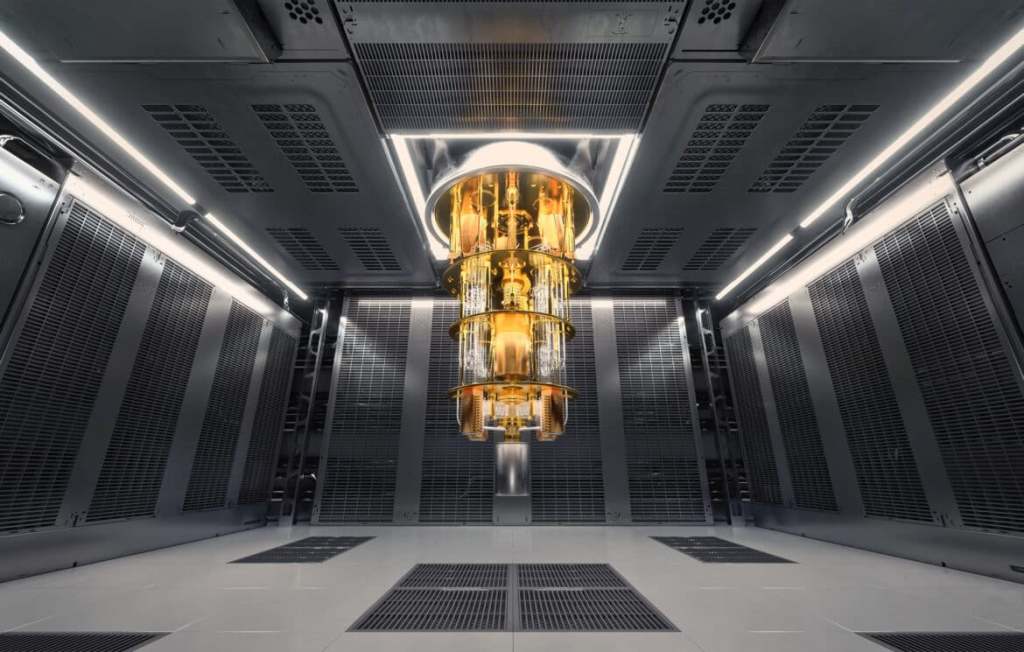
Another force shaping the world beyond AI is quantum intelligence. While modern computers process information in a linear manner, quantum machines operate by exploring many possibilities simultaneously. When artificial intelligence merges with quantum computing, the result will be an entirely new form of intelligence. These systems will not simply react to the present but analyze countless future outcomes at once. Problems that once required centuries of calculation may be solved in seconds. The nature of intelligence itself will change from logical processing to probabilistic awareness, creating machines that think in ways the human brain cannot comprehend.
Equally transformational is the merging of humans and machines. The future will not be defined by technology replacing people, but by technology becoming part of them. Brain-computer interfaces, neural implants, and cognitive enhancements will expand human memory, intelligence, and perception. People will communicate through thought, access knowledge instantly, and interact with digital environments as naturally as the physical world. Humanity will become a fusion of biology and technology, forming a new hybrid species that is no longer limited by the weaknesses of flesh or the boundaries of time.
As intelligence evolves, so will reality itself. The technologies emerging after AI will not just describe the universe, they will reshape it. Through atom-level engineering and advanced simulation systems, humanity will gain the power to design environments, manipulate matter, control climate systems, and create fully immersive artificial worlds. The distinction between physical and digital will dissolve as virtual realities become as complex and meaningful as the natural one. Reality will no longer be something we are born into, it will be something we design.
Perhaps the most astonishing feature of impossible technology is self-evolution. The systems of tomorrow will not wait for updates from engineers. They will improve themselves, rewrite their own code, design better versions of their intelligence, and adapt in real time to new challenges. Technology will no longer be static. It will grow and evolve like a living ecosystem. Machines will advance not year by year, but moment by moment.
Every era in history believed it had reached the limit of what was possible. At one time, flight, electricity, space travel, and the internet all seemed unimaginable. Artificial intelligence itself was once considered a fantasy. Humanity’s greatest mistake has always been assuming that today’s barrier is permanent. It never is. What was once impossible becomes routine, and what is routine becomes outdated.
Yet power without responsibility leads to destruction. The world beyond AI will only succeed if guided by wisdom, ethics, and global cooperation. Conscious machines, redesigned humans, and programmable realities must be built with human values at their core. Technology should not replace meaning; it should expand it. It should not dominate humanity; it should elevate it.
In the end, artificial intelligence was never the destination. It was the doorway. Humanity now stands at the edge of an age in which consciousness is engineered, intelligence is unlimited, and reality itself is editable. This is not the end of human evolution. It is its transformation. The future after AI is not about machines becoming human. It is about humanity becoming something more.
 Mehran Muslimi