The Dawn of AI and Crypto Civilization

The day after superintelligence won’t look like science fiction. It will look like software updates shipping at the speed of thought and entire industries quietly reorganizing themselves before lunch. The popular image of a single “big bang” event misses the truth: superintelligence will arrive as an overwhelming accumulation of competence—systems that design better systems, diagnose with inhuman accuracy, and coordinate decisions at a scale no human institution can rival. When optimization becomes recursive, progress compresses. What once took decades will happen in weeks.

We already have hints of this future hiding in plain sight. In 2023, DeepMind’s AlphaFold revolutionized biology by predicting the structures of more than 200 million proteins—essentially mapping the building blocks of life in a few years, a task that traditional methods could not complete in centuries. Large language models now write code, draft contracts, and discover novel materials by searching possibility spaces no human team could fully explore. Training compute has historically doubled roughly every 6–10 months during the early 2020s, far faster than Moore’s Law, and algorithmic efficiency gains have compounded that advantage. When intelligence accelerates itself, linear expectations break.

The economy the morning after will belong to organizations that treat intelligence as infrastructure. Productivity will spike not because workers become obsolete, but because one person will wield the leverage of a thousand. Software-defined everything—factories, finance, healthcare—will default to machine-led orchestration. Diagnosis rates will climb, downtime will shrink, and supply chains will become predictive rather than reactive. The center of gravity will move from labor scarcity to insight abundance.

Crypto will not be a side story in this world; it will be a native layer. Superintelligent systems require neutral, programmable money to transact at machine speed, settle globally, and audit without trust. Blockchains offer something legacy rails cannot: cryptographic finality, censorship resistance, and automated enforcement via smart contracts. When AI agents negotiate compute, data, and energy on our behalf, they will do it over open networks with tokens as executable incentives. Expect on-chain markets for model weights, verifiable data provenance, and compute futures. Expect decentralized identity to matter when bots and humans share the same platforms. Expect treasuries to diversify into scarce digital assets when algorithmic trading dwarfs traditional flows and fiat systems face real-time stress tests from machines that never sleep.

The energy footprint will surge first—and then collapse per unit of intelligence. Today’s data centers already rival small nations in power draw, yet the same optimization engines driving AI are slashing watts-per-operation each year. History is clear: as engines get smarter, they get leaner. From vacuum tubes to smartphones, efficiency rises faster than demand—until entirely new use cases layer on top. Superintelligence will do both: it will squeeze inefficiency out of the system while unlocking categories we’ve never priced before, like automated science as a service and personalized medicine at population scale.

The political impact will be just as real. States that master compute, data governance, and talent will compound their advantage. Those that don’t will import intelligence as a service and awaken to strategic dependence. Regulation will matter—but velocity will matter more. The nations that win will be the ones that regulate with a scalpel, not a hammer, pairing safety with speed. Meanwhile, crypto networks will function as jurisdiction-agnostic commons where innovation keeps moving even when borders slow.

Critics will warn about control, and rightly so. Power concentrated in any form demands constraints. Yet the greater risk is paralysis. Every previous leap—from electricity to the internet—created winners who leaned in and losers who hesitated. Superintelligence will be no different, except the spread between the two will widen overnight. The answer is not fear; it’s instrumentation. Align objectives, audit outputs, and decentralize critical infrastructure. Do not shut down the engine of abundance—build guardrails and drive.

The day after superintelligence, markets will open, packages will ship, and most people will go to work. But the substrate of reality will have changed. Intelligence will no longer be the bottleneck; courage will be. The bold will build economies where machines and humans create together, settle on-chain, and optimize in real time. The timid will debate yesterday’s problems in tomorrow’s world.

This is not a warning. It’s an invitation.

Superintelligence doesn’t replace humanity—it multiplies it. Crypto doesn’t disrupt finance—it finally makes it global, programmable, and impartial. And the future doesn’t arrive with fireworks. It arrives with results.
After AI: Humanity Rewritten

For decades, artificial intelligence was believed to be the highest achievement technology could reach. The idea that a machine could think, learn, and reason like a human once sounded like fiction. Today it is real. AI writes stories, paints art, diagnoses illness, drives cars, and assists scientists in major discoveries. However, a powerful realization is now emerging across the scientific world: artificial intelligence is not the final stage of innovation. It is only the foundation for something far more advanced. What comes next is a new technological era so powerful that it challenges our understanding of intelligence, life, and reality itself.
No matter how advanced artificial intelligence becomes, it is still bound by fundamental limits. It relies on data, operates through mathematical structures, and mimics intelligence rather than truly experiencing it. AI can analyze patterns, recognize faces, translate languages, and even hold conversations, yet it does not possess awareness. It does not feel curiosity, ambition, or meaning. It can respond, but it does not understand existence. These limits are not weaknesses, but signs that intelligence alone is not the ultimate goal. The future of technology is about going beyond intelligence and toward something deeper.
The world is now approaching what scientists call post-AI technology, an era defined not by one single invention, but by the fusion of many revolutionary breakthroughs. One of the most extraordinary developments in this new era is the pursuit of artificial consciousness. Unlike conventional machines, future systems may not merely process information but experience it. These technologies are expected to reflect on their actions, adapt their goals, and possibly develop a form of internal awareness. If consciousness can be engineered, humanity will not just build better machines, it will give rise to a new category of existence. It would mark the first time in history that life is not born from biology.
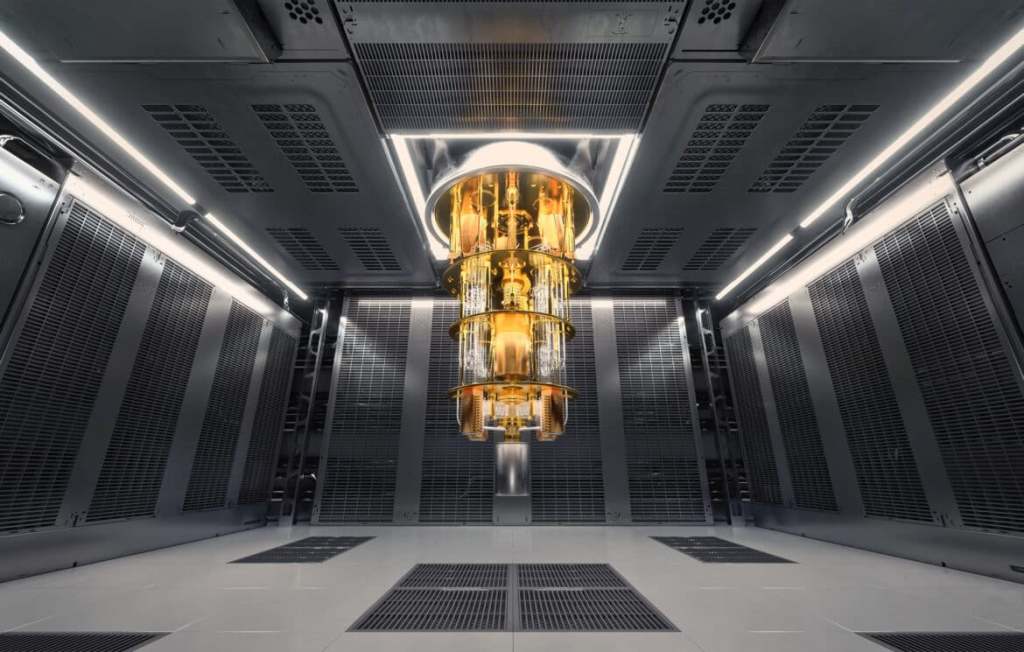
Another force shaping the world beyond AI is quantum intelligence. While modern computers process information in a linear manner, quantum machines operate by exploring many possibilities simultaneously. When artificial intelligence merges with quantum computing, the result will be an entirely new form of intelligence. These systems will not simply react to the present but analyze countless future outcomes at once. Problems that once required centuries of calculation may be solved in seconds. The nature of intelligence itself will change from logical processing to probabilistic awareness, creating machines that think in ways the human brain cannot comprehend.

Equally transformational is the merging of humans and machines. The future will not be defined by technology replacing people, but by technology becoming part of them. Brain-computer interfaces, neural implants, and cognitive enhancements will expand human memory, intelligence, and perception. People will communicate through thought, access knowledge instantly, and interact with digital environments as naturally as the physical world. Humanity will become a fusion of biology and technology, forming a new hybrid species that is no longer limited by the weaknesses of flesh or the boundaries of time.
As intelligence evolves, so will reality itself. The technologies emerging after AI will not just describe the universe, they will reshape it. Through atom-level engineering and advanced simulation systems, humanity will gain the power to design environments, manipulate matter, control climate systems, and create fully immersive artificial worlds. The distinction between physical and digital will dissolve as virtual realities become as complex and meaningful as the natural one. Reality will no longer be something we are born into, it will be something we design.
Perhaps the most astonishing feature of impossible technology is self-evolution. The systems of tomorrow will not wait for updates from engineers. They will improve themselves, rewrite their own code, design better versions of their intelligence, and adapt in real time to new challenges. Technology will no longer be static. It will grow and evolve like a living ecosystem. Machines will advance not year by year, but moment by moment.
Every era in history believed it had reached the limit of what was possible. At one time, flight, electricity, space travel, and the internet all seemed unimaginable. Artificial intelligence itself was once considered a fantasy. Humanity’s greatest mistake has always been assuming that today’s barrier is permanent. It never is. What was once impossible becomes routine, and what is routine becomes outdated.
Yet power without responsibility leads to destruction. The world beyond AI will only succeed if guided by wisdom, ethics, and global cooperation. Conscious machines, redesigned humans, and programmable realities must be built with human values at their core. Technology should not replace meaning; it should expand it. It should not dominate humanity; it should elevate it.
In the end, artificial intelligence was never the destination. It was the doorway. Humanity now stands at the edge of an age in which consciousness is engineered, intelligence is unlimited, and reality itself is editable. This is not the end of human evolution. It is its transformation. The future after AI is not about machines becoming human. It is about humanity becoming something more.

The Godfather of AI Just Called Out the Entire AI Industry — But He Missed Something Huge

When Geoffrey Hinton, widely known as the “Godfather of AI,” speaks, the tech world listens. For decades, he pushed neural networks forward when most of the field dismissed them as a dead end. Now, after leaving Google and raising alarms about the speed and direction of artificial intelligence, he’s doing something few insiders dare: calling out the entire industry that he helped create.

Hinton’s message is straightforward but unsettling. AI is accelerating faster than society can adapt. The competition among major tech companies has become a race without guardrails, each breakthrough pushing us deeper into territory we barely understand. The risks he talks about aren’t science fiction; they’re the predictable consequences of deploying powerful learning systems at global scale without the institutional infrastructure needed to govern them.

He points out that no corporation or government has a full grip on what advanced AI systems are capable of today, let alone what they may be capable of in five years. He worries that models are becoming too powerful, too general, and too unpredictable. The alignment problem — making sure advanced AI systems behave in ways humans intend — remains unsolved. And yet the world continues deploying these systems in high-stakes environments: healthcare, finance, defense, education, and national security.

But here’s the part Hinton didn’t emphasize enough: the problem isn’t just the technology. The deeper issue is the structure of the global ecosystem building it.

The AI race isn’t happening in a vacuum. It’s happening inside a geopolitical contest, a corporate arms race, and an economic system designed to reward speed, not caution. Even if researchers agree on best practices, companies are pushed to break those practices the moment a competitor gains an advantage. Innovation outpaces regulation, regulation outpaces public understanding, and public understanding outpaces political will. This isn’t simply a technological problem — it’s a societal architecture problem.

Hinton is right that AI poses real risks, but the missing piece is the recognition that these risks are amplified by the incentives of the institutions deploying it. Tech companies are rewarded for releasing models that dazzle investors, not for slowing down to ensure long-term stability. National governments are rewarded for developing strategic AI capabilities before rival nations, not for building global treaties that restrict their use. Startups are rewarded for pushing boundaries, not for restraint. No amount of technical alignment work can compensate for misaligned incentives on a global scale.

Another point Hinton underestimates is the inevitability of decentralization. The industry is rapidly shifting away from a world where a handful of corporations control model development. Open-source models, community-driven research, and low-cost compute are making advanced AI available far beyond Silicon Valley. This democratization is powerful, but it also complicates the safety conversation. You cannot regulate an industry by only regulating a few companies when the capabilities are diffusing worldwide.

Hinton calls for caution, but we also need a coherent strategy — one that acknowledges the complexity of governing a technology that evolves faster than policy, faster than norms, and faster than global cooperation. His concerns about runaway AI systems are real, but the more pressing threat may be runaway incentives driving reckless deployment.

The Godfather of AI is sounding the alarm, and the industry should listen. But we must look beyond the technology itself. AI will not destabilize society on its own. What destabilizes society is the gap between the power of our tools and the maturity of the systems that wield them. That gap is widening. And unless the world addresses the incentives driving the AI race — not just the science behind it — even the most accurate warnings may come too late.

Remember Vibe Coders? Yeah… They’re Gone

The Rise: When “Vibe Coding” Was the Future

A new buzzword took hold in 2024–25: “vibe coding” — a paradigm where non-traditional developers hand over large swathes of code generation to AI tools and simply iterate on the results. The concept gained traction fast.

Key markers of the surge:

  • Explosive valuations and funding: For example, a Swedish startup in this space was reported to be aiming for a funding round valuing it at $1.5 billion off only minimal revenue metrics. Business Insider
  • Broad adoption-linguistic hype: Vibe coding was framed as “software for anyone”, promising to democratize app creation. The term even appeared in Wikipedia as describing this new paradigm. Уикипедия
  • Velocity over discipline: A qualitative study noted the main appeal was “flow” and rapid iteration — but warned the technique often lacked reliability, specification and review. arxiv.org

So for a moment, the narrative was: “Anyone can build apps. Traditional engineering is obsolete. We just vibe-code.” The venture money, media attention, and developer conversations followed.


The Peak & the Disconnect

But as the craze peaked, cracks started to show.

🚩 Evidence of mis-alignment

  • High risk of low quality and fragility: One story reported beginner programmers using AI to “vibe-code” their way into production, only to create tangled, unreliable systems. The Economic Times+1
  • Huge valuations, low metrics: The “vibe valuation” label emerged — suggesting startups were being valued on hype rather than sustainable revenue or engineering durability. Уикипедия
  • Community push-back from engineers: On Reddit and elsewhere, experienced developers criticized the term “vibe coder” as trivialising the craft, saying: “Anyone who pastes code into production they don’t understand … is limited in applicability.” Reddit

🔍 Mis‐match of expectation vs outcome

  • The promise: speed, creativity, market disruption.
  • The reality: deployed apps with reliability issues, maintenance burdens, and product-market mismatch. “99% vibe coded platforms I have seen never gain even 100 users.” Reddit
  • The hype cycle: many non-technical founders assumed “vibe coding = startup success” and attracted capital on that basis; but the business fundamentals often weren’t there.

The Burst: Why the Bubble is Deflating

Several structural reasons underlie the collapse of enthusiasm around this wave:

1. Technical debt and code‐quality risk
When developers rely on AI to “generate” code with little oversight, problems accumulate: debugging, security, maintainability all become harder. The qualitative research found a “speed-quality trade-off paradox.” arxiv.org

2. Business model mismatch
Building apps quickly is one thing; building apps that scale, generate sustainable revenue, manage users, update and secure is another. Many “vibe coded” ventures stalled at the earliest stages because they lacked the product and market foundations.

3. Funding correction
Where valuations were soaring on promise, the absence of meaningful user traction, recurring revenue or credible technical moat began to affect investor sentiment. The “vibe valuation” label signals exactly that. Уикипедия

4. Cultural backlash and credibility gap
When engineers see “vibe coding” used as a marketing gimmick, the term loses legitimacy. The mood turned from “exciting new frontier” to “over-hyped practice lacking engineering discipline”.

“Which is wild, because the app actually works … the few users I have like it … It made me realize something: ‘vibe coding’ isn’t hated because it’s bad. It’s hated because it exposes how fragile some people’s identity is when tools start leveling the playing field.” Reddit


Bold Facts You Should Know

  • Over 25% of startups in a prominent accelerator batch reportedly had codebases that were 95% AI-generated. Уикипедия
  • Valuations soared despite shallow traction: e.g., a European “vibe coding” startup jumped fast to a $1.5 billion target with only ~US$17 million ARR in a few months. Business Insider
  • Community research found severe risks: The grey literature review shows that vibe coding accelerates prototyping, but at the cost of reliability and long-term maintainability. arxiv.org
  • Growing repair market: Professionals are now finding business in cleaning up flawed AI-generated code created by “vibe coders”. The Economic Times

Why This Matters (to Tech, to Business, to Society)

For the tech ecosystem

It warns against scale + hype = success thinking. The path to meaningful software still requires architecture, maintainability, technical debt management and engineering discipline.

For investors and founders

The bubble reminds us: Innovation is not just speed — it’s about delivering reliable, scalable value, with defensibility, product-market fit and sustainable operations. Capital pumped into form over substance risks loss.

For society and workforce

The hype around “anyone can build in minutes” is seductive — but if large parts of the future workforce are trained into “vibe coding” without deeper foundations, we could face a surplus of brittle apps, insecure systems, fragmented products and disappointed expectations.


What a Better Path Looks Like

☑️ Ground hype in fundamentals

Don’t chase “vibe coding” as a catch-phrase. Focus on metrics: users, retention, revenue, quality, security, scalability.

☑️ Mix speed with rigor

Use AI-assisted tools for prototyping and productivity, but maintain engineering standards, code review, testing, architecture for production.

☑️ Build for sustainability

Ensure you’re not just shipping the “cool app”, but building the company, the user base, the service model behind it.

☑️ Educate and upskill

If you’re adopting this paradigm (or hiring builders who use it), ensure the team understands the code, the implications, the infrastructure — not just the prompt.


Conclusion

The tale of the “vibe coding bubble” is a cautionary one. A rapid surge of optimism, techno-utopian narratives and ultra-fast prototyping morphing into inflated valuations and weak fundamentals.
Silicon Valley — and the broader AI/startup ecosystem — was enthralled by the promise of “build fast, build by AI, build without engineers”. But the result is a reality check: when the apps fail to scale, when the code becomes unmaintainable, when money meets logic, the bubble pops.

The good news: many of the tools and ideas born from this era are still valuable — AI-assisted development, rapid iteration, democratisation of creation. The key lesson is not to abandon AI coding, but to refocus it toward depth, discipline and durability.

Because what the next generation of startups needs is not the flashiness of “vibe” but the sturdiness of substance.