Stablecoins: Cop Out Or Compromise

I would call myself a cryptocurrency purist. The reasons why digital assets appealed to me in the first place are their decentralized nature and the fact that the blockchain is ‘trustless’. Furthermore, it is a riposte to the banking community, which for a very long time has controlled us all unchallenged. And then they caused a financial of the collapse of such proportions that stability was ripped away from the average citizen. People lost their jobs, their homes, and there were even worse tragedies.

So when the Bitcoin whitepaper was published in 2009, it felt like a way forward. One of the problems was that the early Bitcoin believers were perceived as being anarchic hackers and the techie equivalent of punk rockers. And yes, some of them were, but there were also technology entrepreneurs like myself who embraced its possibilities.

In the early days, the buzz suggested that the crypto revolution would be an easy process, but of course, we have discovered that it is a rocky road and we are nowhere near mass adoption a decade later. Much of this is attributed to the price volatility, the lack of opportunities to spend crypto and the opposition of regulatory bodies in numerous global jurisdictions.

Along Came Stablecoins

And then along came stablecoins. If cryptocurrency was a sport, the purists were all shouting ‘foul’ and ‘cheat’. What I want to consider in a calm way is this: are stablecoins a cop-out, because they are ‘fake’ crypto’ to some extent? Or are they a compromise that could ultimately open the floodgates to mass adoption of all forms of digital assets?

In respect of a compromise, I’d compare stablecoins to the trainer wheels on a child’s first bicycle. They help the child get used to the idea of balancing on two wheels. Eventually, these ‘stabilisers’ can be removed and the child can progress to the reality of riding a bike without them. Now, even as a purist, I can see the potential advantage of this. I recently met an economics student, a Generation Z crypto enthusiast, who is invested in a small way in digital assets. He happily extolled what he believed would be the benefits of Facebook’s Libra, as just that kind of ‘trainer crypto’ that would enable mass adoption. I don’t put this forward as a conclusive argument for this view of stablecoins, but only as anecdotal evidence about possible public feeling, especially amongst Millennials and Gen Zers.

How else might stablecoins benefit us? I looked up some expert opinion on the topic.

MakerDAO says,

“A successful stablecoin implementation would be a major catalyst for disruption to global financial infrastructure, challenging weak governments and mismanagement of national economies. Furthermore, stablecoins allow for decentralized insurance, prediction markets, transparent credit and debt markets, and create a level playing field between small and large businesses in global finance.”

If MakerDAO is correct in their assertion, then isn’t it the case that stablecoins are performing the same kind of disruptive element crypto purists believed Bitcoin would deliver?

Stablecoin As Cop Out

As you know, stablecoins are tied to fiat currencies such as USD, GBP, Euro, etc. And there are those who believe that is their fatal flaw. What they are saying is that stablecoins are only as good as the asset they are tied to, and the way in which the two assets are tethered. This is a more complex debate. But, if I can simplify it at all, I’d say this: the core problem purists see with stablecoins is that they are still centrally controlled, they can be manipulated by market forces, and they are certainly not ‘trustless’ in the same way that BTC, ETH or LTC are. Some, such as Ben Prentice argues that stablecoins will simply lead us into the same trap as the old order of fiat currencies. He writes, “I believe inflationary fiat currencies where monetary policy is decided by few individual humans is not a sound form of money.”

So, I ask you — what do you think? Do stablecoins have the potential to help people slowly adapt to the decentralized digital assets, or are they a cop out intended to ensure that fiat currencies, controlled by a global elite according to some, remain dominant in the way we make all of our financial transactions?
Cuban and Congress gang up against Libra

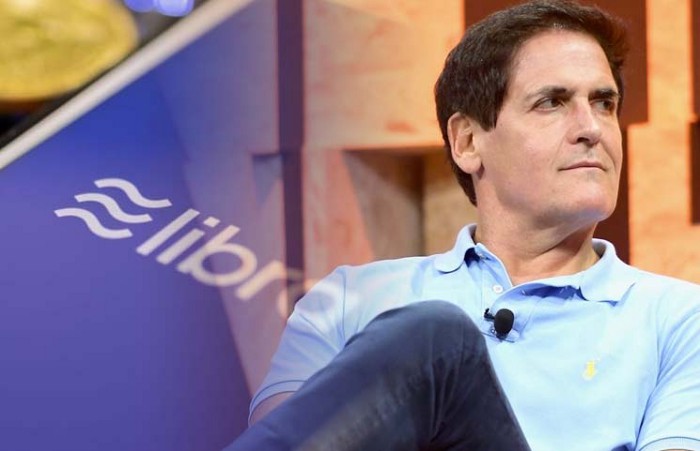
Just a few days before the Congressional hearings involving David Marcus, Facebook’s head of the Libra project, Mark Cuban, the billionaire co-host of “Shark Tank”, echoed President Trump’s tweets when he told CNBC that he “wasn’t a big fan” of Libra.

Libra is a gift to despots

There are seemingly quite a few people who agree with Cuban. He referred to the Menlo Park-based social networking company’s foray into distributed ledger tech as a “big mistake.” Most particularly he took aim at what he sees as Libra’s potential to further destabilise unstable economies and political situations worldwide. He said, “Some despot in some African country that gets really upset that they can’t control their currency anymore.” This doesn’t actually make much sense, but these days nobody seems bothered about rational statements.

Yes, Facebook is targeting the 1.7 billion unbanked people worldwide, a factor that David Marcus repeated several times during his first day of giving testimony to US Congress. The Libra Association’s white paper states: “All over the world, people with less money pay more for financial services. Hard-earned income is eroded by fees, from remittances and wire costs to overdraft and ATM charges… When people are asked why they remain on the fringe of the existing financial system, those who remain “unbanked” point to not having sufficient funds, high and unpredictable fees, banks being too far away, and lacking the necessary documentation.”

Cuban takes issue with this: he believes that Libra will unleash “reactionary impacts of extending financial access to the underrepresented.” Presumably he’s referring to that African despot again.

David Marcus is calm and collected

Meanwhile, in Washington, David Marcus looked cool as a cucumber as he took questions from a succession of senators. The primary issues for the lawmakers were those of privacy and trust. Senator Elizabeth Warren, who is crypto-unfriendly, asked about Facebook’s willingness to allow data portability: “If a Facebook user wishes to use a wallet other than Calibra, will you make it easy to allow the export of other data?” Marcus unequivocally replied, “Yes,” although he was noticeably more hesitant to respond so forcefully when asked about Messenger and Whatsapp data. Sen. Warren got her knife in some of the way when she concluded her remarks by saying, “what Facebook’s been really good at is figuring out how to monetize people’s personal data […] I am not reassured by your statement that you can not see any reason right now why there would not be any data sharing between these platforms.”

Nobody hammered bitcoin

On the bright side for crypto enthusiasts, Congress appeared to be very careful not to attack bitcoin. As Coindesk remarks, “Bitcoin was barely mentioned during the two-hour session and most of the lawmakers seemed far less concerned with the technology than with who was planning to leverage it: Facebook.” Indeed, Sen. Pat Toomey (R-Pa.) sounded bullish on blockchain in general, saying, “We shouldn’t prevent what can be a tremendous financial innovation. There is a big potential in blockchain technology.”

How’s the score looking for Facebook’s Libra as the Congressional interrogations resume today? It looks like most news outlets agree that it has the advantage, although they don’t say that in so many words. Congress appears to be more focused on the fact that it is Facebook (and Mark Zuckerberg) who is leading this project than the real potential of Libra. If another company had launched this project, perhaps Congress would be a lot less interested.

Europe Completes Its First Ever Blockchain Real Estate Sale for €6.5 Million

For some time there has been a discussion about the potential of the blockchain for real estate sales. According to a story in Forbes by Kamran Rosen, a real estate expert, the sale of the Villa AnnA in Paris has made history by “becoming the first ever European property to be sold entirely via a blockchain transaction.”

Sold at a price of €6.5 million, the luxury property is located in Paris’ Boulogne-Billancourt district. The buyers were two French real estate companies and the process involved “first transferring ownership of the building to a joint-stock company (SAPEB AnnA), then dividing the company into 100 tokens to be distributed to the owners respectively.” Rosen also explains that each token can be further broken down into 100,000 units, meaning individual shares of the building can be bought and sold for as little as €6.50.

French blockchain investment platform Equisafe managed the deal based on the ethereum blockchain, and as Rosen remarks, it is the latest of a number of property transactions worldwide using blockchain technology. Rosen reports: “Last year, a $30 million Manhattan property was also tokenized on Ethereum, and in January of this year, a luxury resort in Aspen, Colorado raised $18 million through a security token offering.”

Fractional ownership

What this Paris deal and the others illustrate is the potential of the blockchain for supporting fractional ownership. It allows the public to participate in buying small shares I luxury real estate and the property could be traded in the same way as other exchange-based securities.

Furthermore, Rosen’s research revealed that several real estate tokens are already trading on the secondary market.

Tokenising property and using the blockchain revolutionises the old-fashioned property buying and selling process. With the sale of Villa AnnA, much of the “cumbersome legal documentation involved with selling property (such as notarized deeds and proof of identity), was all encrypted and recorded on the blockchain,” Rosen states.

What we need to look at scaling the blockchain to handle real estate transactions so that the time taken and money paid that goes into the current process is greatly reduced. Rosen says, “Equisafe is going as far as to claim individuals will be able to create investor profiles and access offers in less than half an hour.” If that is true, it could have an extraordinary effect on the real estate markets globally.

The sale of the Villa AnnA is likely to be only the first of many in Europe that we’ll see!

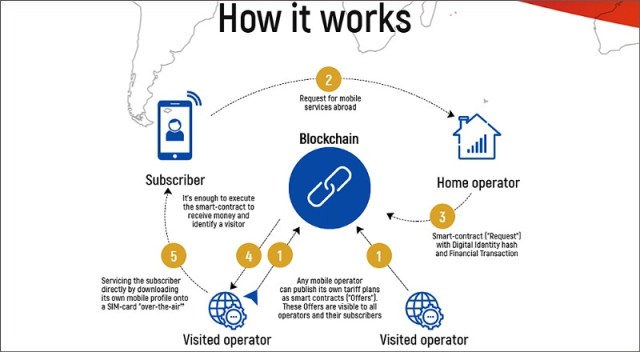
The Big Telcos Are On The Blockchain

Blockchain technology offers telecoms companies a valuable tool, and it seems that they have been quick to pick up on its value.

As Benjamin Pirus writes for Forbes, AT&T, and T Mobile are both working with the technology in various ways. Pirus writes, “Blockchain has made a name for itself as the technology underpinning bitcoin, allowing the transfer of value without middlemen. The work of these telecom giants shows that what enterprises think of as “value” is much bigger than just currency alone.”

AT& T is applying blockchain to the supply chain for its handsets. Its CEO, Andy Daudelin, told Pirus that the technology is particularly useful for handling “handset returns, upgrades and other activities seen on the supply chain.”

Daudelin explained: “AT&T’s supply chain is collaborating on a blockchain solution with a major handset OEM [original equipment manufacturer] and a handset remanufacturing supplier. The solution will ensure that only authentic, certified parts are used in the device remanufacturing process.” He added, “addingblockchain to the mix also allows for better traceability of components used in remanufactured devices.”

AT&T is also interested in the blockchain’s security aspects and it is in the process of growing its “Internet of Things [IoT] presence and solutions,” with the intention to involve smart contracts in the mix, as its VP of information security, Karthik Swarnam told Pirus. He also mentioned the potential for using blockchain in the area of “verification of device identity.” And of course for checking the software to ensure no malware is lurking. He described it as “checking on the checksums” for authentication, and the “ability to store the checksums on a blockchain, where, at the time of use, you could go ahead and check and compare and verify whether you can trust that piece of code, trust that piece of software, or not.”

Furthermore, AT& T has been developing a suite of blockchain solutions for its enterprise customers and is working with IBM, Microsoft and Amazon Web Services on this. Daudelin said: “What we do here is deliver your traditional blockchain solution. What we add to that is we’ll customize it and write the code specific to that use case, and we’ll add to that our network and IoT [Internet of Things] capabilities.”

As an example, Daudelin says that AT& T is working with a bottling company to “add notable specifics and clarity to that company’s supply chain, utilizing “IoT sensing” for its bottles.”

Furthermore, in May 2019, AT& T announced that its customers could pay their online bills with bitcoin, via bitcoin payment service BitPay.

Daudelin summed up AT&T’s general view of blockchain:

“As our world moves from highly centralized hierarchical processes to very decentralized processes, blockchain enables companies to deploy solutions that remain highly secure and that you can count on them in this very decentralized decision making the world.”

According to recent research, it appears that the telecoms sector is one where blockchain technology is going to grow at a rapid pace. A March 2019 reportfrom Infoholic Research stated: “The global blockchain in telecom market is expected to witness a CAGR [compound annual growth rate] of 77.9% to reach revenue of $1.37 billion by 2024.”

Perhaps it will get even bigger?