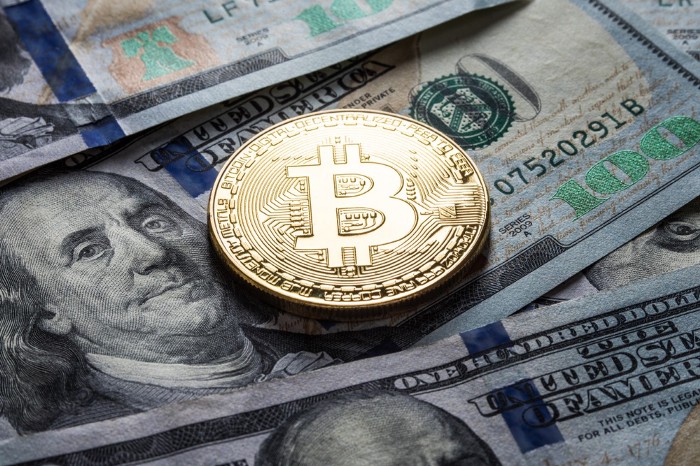
Getting to the other side of Bitcoin

Bitcoin is undoubtedly the best known digital asset, cryptocurrency, whatever you want to call it, but it is “just one asset class among many that are here to evolve financial services globally,” in the opinion of Julian Sawyer.

As Sawyer points out, blockchain technology has brought the finance sector to a crossroads, and we must now consider what the future of money is going to look like. Of course, this is a topic that has been contemplated since the birth of Bitcoin, but things have moved along since then. He says, “a myriad of outcomes is possible but one thing is for certain: The efficacy and innovation of the technology will influence well beyond traditional financial sectors.”

Arriving at maturity

Blockchain offers a faster, more efficient and more secure structure for financial transactions compared with the traditional financial system. The Harvard Business Review said, “The old financial structures] are like rush-hour gridlock trapping a Formula 1 race car. In a digital world, the way we regulate and maintain administrative control has to change.”

We have witnessed other types of technology cause big shifts in finance. For example, the credit card emerged in the 1950s, while PayPal was founded in 1998, and was very novel then. And since Satoshi Nakamoto started the blockchain revolution in 2008, around 55 out of the 100 biggest banks in the world use blockchain to some extent.

Sawyer also believes the language used around digital assets will change, because “Regulation and broad adoption will change the way the media and public perceive and talk about digital assets.” He suggests that although the ‘pop culture’ language of the crypto market, e.g. HODL, FUD etc, will stay, there will be a fusion of the languages of crypto and institutional finance that will make “a broader cohort of blockchain investors feel comfortable within the space.”

Furthermore, the industry must stop focusing on one particular use case for the technology, i.e. Bitcoin, and start talking more about money, investments, financial management and smart payments in relation to blockchain and crypto. We already know that customers are increasingly drawn to assets that have utility and can solve complex problems, not just those offering a payments platform (Bitcoin again!).

As a more sophisticated and broader audience understand the diverse applications of blockchain technology, this will instil greater confidence in it across industries, and lead to “the adoption of blockchain technology to unravel issues that no one ever dreamed could be addressed with blockchain.”

UK is the winner in European fintech funding

Perhaps this news will perk up those England supporters who are living with defeat to Italy at Euro2020, especially if they also happen to be fans of the fintech industry. The UK Fintech State of the Nation report from Innovate Finance shows that London “has cemented its position as the fintech capital of Europe,” despite the double whammy of a global pandemic and Brexit.

According to the data in the first half of 2021, the UK fintech sector raised $5.7bn. This is 34% higher than the $4.3bn raised in 2020 and breaks the 2019 record of $4.6bn.

Who benefited from this rush to invest in UK-based fintechs?

SaltPay and Checkout.com attracted the two largest deals made this year, with $500 million and $450 million respectively. At the moment these are the biggest fintech investments ever in the UK. SaltPay is focused on building a better payments system for merchants, whilst Checkout.com is a global payments platform aimed at offering more payment methods and currencies for online businesses. They’re similar but different, and it is worth noting that both aim to make life easier for merchants.

Indeed, ‘payment’ platforms appear to be dominating the sector here. But challenger bank Starling also got a hefty influx of funds ($376m) and crypto trading platform Blockchain.com received $300m. There has also been significant interest in more niche fintechs, such as Smart Pension, a pension and payroll tech provider, which received $230m, and PayFit, a platform that simplifies and automates payroll and HR processes for small and medium-​sized businesses, raised $107m. Credit-scoring specialist ClearScore raised $200m, another sizeable investment,

In 2021 the number of firms making deals of above $100m also rose from 10 in 2019 to 13 in the first half of 2021, so we can expect that figure to be much higher by the end of this year, and it will be interesting to see by just how much it grows.

Of course the USA is still ahead of the UK, but it is the only country that is. The report shows the levels of support for those other countries that come closest to the two leaders during the same time period: Brazil (40 deals and $3bn), Germany (56 deals and $2.5bn) and India (132 deals and $2.2bn).

Janine Hirt, CEO of Innovate Finance, commented: “Fintech is one of the fastest-growing sectors of our economy and has a vital role to play in the UK’s economic and business recovery. It is hugely encouraging to see evidence of this resilience and growth, particularly in light of the uncertainty and challenges brought on by 2020. Both the flow of capital and a wide talent pool are essential to maintaining the sector’s strength, and we remain committed to supporting efforts in these vital areas.”

You can read the full report here.

Smart investors check out a crypto’s utility

There are somewhere in the region of 4,000 cryptocurrencies to invest in, each representing a different blockchain project. When investment experts look at the array available, they don’t base their choice on price, they look at the utility.

When the exeperts talk about Utility, they are referring to digital tokens built on a specific blockchain ecosystem – most often based on Ethereum’s ERC-20 standard – which grants token holders certain rights. As Katharine Wooller, UK and Ireland managing director at crypto wealth-building platform Dacxi told Rich McEachran, “Any cryptocurrency is only as good as its use case.”

There is a tendency amongst investors to buy Bitcoin simply because it is the most famous cryptocurrency. But Bitcoin’s utility is limited to promoting financial inclusion and cross border payments. Ethereum on the other hand is the preferred ecosystem for building cryptocurrency projects. So, it is not hard to figure out which of the two has more long-term potential.

One of the issues facing investors, particularly retail investors, is that the digital assets they hear the most about and are therefore drawn to, are the “cryptocurrencies addressing or solving specific problems on a macro level,” says Roman Matkovskyy, an associate professor in finance and accounting at Rennes School of Business. But there are many, many more that offer solutions to more ‘micro’ questions. As Wooller says, “it’s essential to do your homework and spend time researching and analysing a coin’s long-term intended use,” usually via the project’s white paper that should be freely available online.

Of course, a coin may appear to have great utility, but that doesn’t guarantee it will be successful. What is required for that to occur, is demand for the coin’s ecosystem. Let’s not forget that there are over 2000 coins that have come and gone, their related projects dead due to lack of demand.

The meme coins, such as Dogecoin, are a good example of complete lack of utility. Yet, investors have poured money into them, resulting in a 12,000% gain for DOGE between January and May 2021. They may look good right now, but they won’t last, as they serve no purpose. Dogecoin was started as a joke, and that should really tell you all you need to know. Still, people buy DOGE because they hope for its value to skyrocket. It’s speculation rather than investment.

Where should you look for long-term investments?

For long-term gains based on utility rather than making a quick profit, experts point to Ethereum (ETH) as the top choice, because it provides a platform for developers to create apps and run them on a blockchain without the involvement of third parties.

Paddy Osborn, managing director of the London Academy of Trading, suggests three others with potential: Polkadot – a network that can support multiple different blockchains and enable them to work together; Internet Computer, which aims to disrupt the internet space by building a decentralised web platform that runs on a blockchain and vechain, which helps companies track their products safely and securely through each stage of the supply chain.

To conclude, nothing is certain, but if you’re looking for a solid, long-term investment, look for the cryptos that are showing the greatest level of user adoption and functionality.  

Panic over: it’s time to buy crypto again

June has not been a wonderful month for cryptocurrencies, but Dan Morehead, CEO of Pantera Capital, is confident that “we’ve seen the most of this panic” and that the sell-off is slowing down.

I read his newsletter published on 14th June with interest. He names three things that caused the markets to fall sharply:

  • China banning bitcoin (again)
  • Tax day
  • Elon Musk

The first point, regarding China, he says is one that happens in a cycle, as China has ‘banned’ bitcoin in 2013, 2017 and 2021. So, that’s every four years. Will they do it again in 2025? It’s hard to say, but by that time the cryptocurrency markets will look rather different one suspects. Morehead warns “Investors who sell on China “bans” usually end up bummed.”

Tax day is also something that comes around with an inevitable regularity. It is also important for crypto prices. In 2013 and 2017 when we also had spectacular bull runs, “bitcoin peaked four months before Tax Day and hit a low about a week before Tax Day.” People sell their crypto to pay their tax bills, especially when they are being asked to pay on their crypto gains. As for Elon Musk’s swivel over bitcoin, Morehead stays silent on that. He’s right, enough has been said to inflate the entrepreneur’s sense of himself as a market mover.

What Morehead does address is human behaviour and our love of acting in cycles. As he says, “Humans have an innate herd instinct.” He explains it like this:

  • It’s human nature that we want to buy when the market is surging up — when the FOMO devil is whispering in our ear.
  • When the markets are crashing – and our spouse/friends/boss are all WTF, we want to flee…we want the pain to stop..

And that is what happened in May and June. Although, Morehead does add another warning: “I could imagine that the traits we imprinted on the plains of the Serengeti might not be optimal for trading early-stage protocol tokens.”

It is worth noting that the Pantera Bitcoin Fund is the oldest cryptocurrency fund, so Morehead speaks with some authority when he says of this moment in the markets, “The volatility has presented a very compelling opportunity.  We are eager to deploy assets of the new Pantera Blockchain Fund on June 30th.”

Buy in the dip is not a new message, but when the evidence is clearly laid out, as Morehead has done, then it injects investors with renewed confidence that the panic is over and it’s time to buy. 

 Read the full Pantera Capital newsletter