Has Ethereum’s time to shine arrived?

If you compared the crypto market to the music charts, it would be fair to say that no artist has ever managed to hold the No.1 position for as long as bitcoin has. Ethereum (ETH) meanwhile, has been holding the No.2 spot for such an extended period that is was doubtful this might ever change. Until now!

Those who are ETH holders and supporters have been disappointed that this blockchain has had to be content with playing second fiddle to BTC for so long. Surely its position as the bedrock of DeFi must indicate it is no poor relation? Now it seems that ETH is on a new trajectory into the limelight, something its fans welcome.

Everybody talks about bitcoin

It is true that BTC has been most people’s entry point into crypto, with the more adventurous diversifying into ETH and other altcoins after time. As Katharine Wooller writes, “I am interested to note that most of the more vociferous fans of crypto from the traditional banking industry (i.e. Blackrock, Citi, Goldman Sachs, JP Morgan) tend to limit their comments to Bitcoin.” This is also true of the MSM, when they do write about crypto – it’s all about the bitcoin, even though the journalists assigned these stories still appear to know very little about cryptocurrencies in general.

The market tells a very different story. This year and last, ETH ‘wiped the floor’ with BTC, as Wooller says. “In 2020 the appreciation was more than double – Bitcoin’s gains were a non-too shabby-240% vs Ethereum’s stratospheric 450%.”

Furthermore, ETH has only fallen below its initial price against BTC for the first five months of its existence in 2015.

Yes, BTC’s market cap does dwarf that of ETH, but that’s not the only data to look at. Since January 2020, Bitcoin’s dominance has fallen from 69% to 56% whilst Ethereum’s has risen from 7% to 12%. 

Ethereum has a great use case

The use case is another aspect to consider. BTC has become widely accepted as a store of value and “thus heir apparent to our current economic system.” Wooller correctly states. Ethereum’s utility on the other hand is more complex, and perhaps less comprehensible for retail investors. However, its smart contracts have the powerful potential to provide us with a huge variety of innovations in finance, gambling, gaming, advertising, identity management, and supply chain. As Wooller says, “Personally, I see Ethereum’s potential market as greater than Bitcoin’s albeit hard to explain to someone new to the industry!” I think most ETH owners would agree with that.

It is time that not just the crypto media, but also the MSM, gave ETH and the Ethereum blockchain more oxygen, so that the public can understand its potential. It has an excellent spokesperson in its creator, Vitalek Buterin, unlike BTC, which only has the mythical Satoshi.

I agree with Wooller when she says, “Recently Ethereum has broken two all-time highs in quick succession this April. I would expect, therefore, in the medium term to see more investors and treasuries alike increasing their Ethereum holdings.”

It’s time to give Ethereum the limelight it deserves.
Has China really changed its tune on crypto?

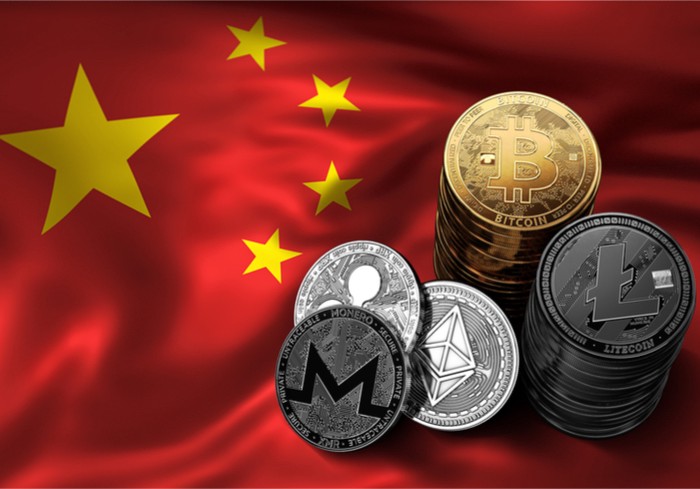
I am of course talking about China’s recent turnaround regarding cryptocurrencies. The change of tone coming from Beijing and the People’s Bank of China (PBoC), with regard to cryptocurrencies makes you pause to think, ‘What’s all this about?’

China’s central bank is now referring to bitcoin as an ‘alternative investment’, signalling something is afoot in the country that cracked down on digital assets four years ago.

Of course it is a welcome shift in perspective from the Chinese, and many are describing it as ‘progressive’. At the same time, they are closely monitoring the PBoC for signs of forthcoming regulatory changes in relation to the crypto sector.

During a panel hosted by CNBC at the Boao Forum for Asia on Sunday,

Li Bo, deputy governor of the PBOC, said, “We regard Bitcoin and stablecoin as crypto assets … These are investment alternatives.” He went on to say, “They are not currency per se. And so the main role we see for crypto assets going forward, the main role is investment alternative.” This indicates an unwillingness to see bitcoin and other similar tokens, such as Litecoin, as a means of payment, but at least it is a move towards a broader acceptance of cryptocurrencies in China.

As CNBC points out, China was once one of the world’s biggest buyers of bitcoin, before banning ICOs in 2017 and closing down crypto exchanges in the same year, both moves prompted by a perceived financial instability in the digital asset sector.

Li said, in explaining more about what he meant by calling them investment alternatives: “Many countries, including China, are still looking into it and thinking about what kind of regulatory requirements. Maybe minimal, but we need to have some kind of regulatory requirement to prevent … the speculation of such assets to create any serious financial stability risks.”

Flex Yang, CEO and founder of Babel Finance, called the comments “progressive”, while Vijay Ayyar, head of business development at cryptocurrency exchange Luno said, “I think it is quite significant and is definitely different to their previous statements or positions on public cryptocurrencies.”

When asked about what he thought had changed China’s thinking following the PBoC announcement, Ayyar said, “Governments are realizing that it is a viable and established, yet growing, asset class and need to regulate it. China regulating crypto would be another massive boost to the industry in China and globally.”

At the moment, China is still trialling its digital yuan, which will eventually replace the cash and coins in circulation, and there is a rumour that the country may wish to trial with foreign visitors to the Beijing 2022 Winter Olympics.

As with everything to do with China and finance – watch this space!

Cardano’s extraordinary 2021 success

While Bitcoin and Ethereum still hold the top spots on the crypto leader board, Cardano (ADA) was the top performer in terms of percentage gains, with a staggering 560% return in Q1. It is now the No. 5 cryptocurrency by market capitalization, according to Messari data.

ADA is the native token for the smart-contract blockchain Cardano, and its value tripled in February as traders bet on the success of the so-called “Ethererum Killers.” Ethereum as you know dominates the smart contract space and currently most DeFi projects are on its blockchain. This February success was followed by Coinbase exchange listing ADA in March, making it available to both institutional and retail members.

Significantly, Cardano became a multi-asset chain following its hard fork on 1st March this year, Named ‘Mary’, the hard fork allows users to create tokens that run on Cardano natively, just as ADA does. This is something that sparked a great deal of interest in Ethereum. When it enabled new tokens to be made on its platform, it was one of the first big use cases that caught on for Ethereum. It also made possible 2017’s multi-billion dollar initial coin offering splurge.

Enabling new tokens is a step on the path to full smart-contract functionality, so no wonder Cardano’s CEO Charles Hoskinson called the hard fork “historic.” Hoskinson, who founded IOHK, which runs Cardano, was an Ethereum and BitShares co-founder.

And, on 3rd April, IOHK announced that a further milestone had been reached with the Cardano blockchain now completely decentralized. This means that the community, or the network’s 2200 stake pool operators, are now exclusively responsible for block production on the network. To put this in perspective: Bitcoin’s blockchain, “is largely in the hands of the ten most prominent Bitcoin mining pools, which account for 85% of the network’s block production,” Samyuktha Sriram reports at Yahoo! Finance.

Do the numbers matter? Yes. Diversifying the block production across a larger number of people increases the security of the blockchain. It’s a big part of the argument for decentralisation. Cardano’s product director at IOHK, “Achieving decentralization of block production is significant not just for Cardano but also the wider blockchain industry.” The next steps for Cardano will be decentralization of the other two elements – governance and network. The governance is already in the pipeline with IOHK’s Project Catalyst, an $80 million fund that was funded by the community, which in turn votes on proposals for the improvement of the network.

Whilst Ethereum tends to dominate DeFi news, Cardano’s success in 2021 suggests that it is going to be a strong player in the smart contract sector. If you haven’t considered buying Cardano’s ADA before, perhaps now might be the right time to dip your toes in.

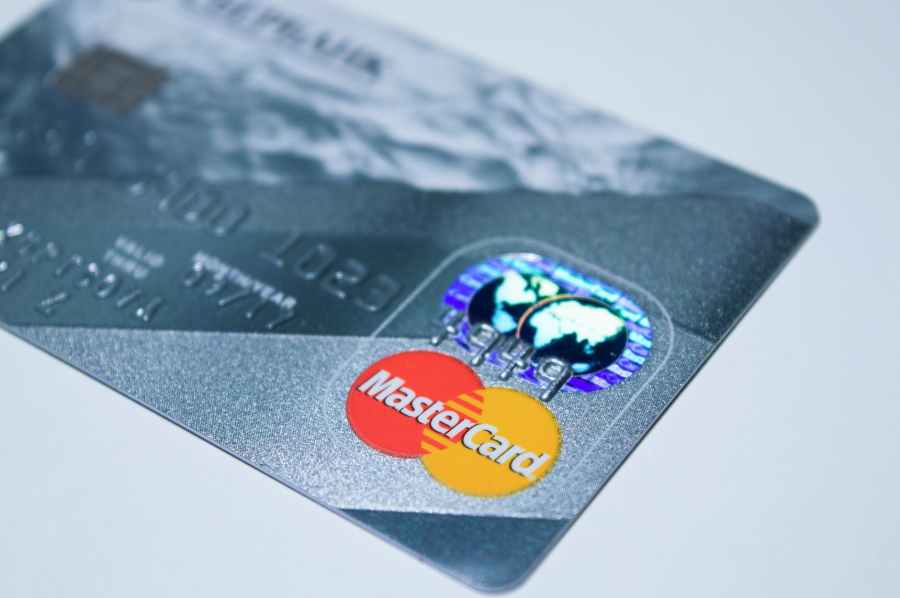
Will cryptocurrency help Mastercard to grow?

It could have been the case that Mastercard ignored cryptocurrencies and the fintech revolution in payments, but the opposite is true. As one of the leading payment networks in the world, it has instead forged relationships with startups, and even added new products to its core range.

Now, as cryptocurrencies are showing strength, Mastercard is once again demonstrating its flexibility by supporting cryptocurrencies.

According to Trevor Jennewine, Mastercard’s data reveals “as many as 20% of consumers now own cryptocurrency in certain countries,” and merchants and financial instotutions are taking notice of this. Last year Mastercard expanded its cryptocurrency programme last year, making it easier for partners to issue crypto payment cards.

In the USA, Mastercard has teamed up with Bitpay – a payment processor that allows merchants to accept digital currencies like Bitcoin at checkout – and launched a prepaid crypto card in June 202o. This card allows consumers to make in-store and online purchases anywhere Mastercard is accepted, with funds loaded from their BitPay wallet. Consumers can load their card with BTC (Bitcoin), ETH (Ethereum) and other cryptocurrencies and BitPay converts those funds into fiat currencies, such as USD, EUR and GBP.

BitPay noticed a spike in transaction in July, one month after the launch, and has recently added support for Apple Pay so that customers can use an iPhone to make contactless payments.

In Europe, Mastercard has partnered with London-based fintech Wirex to launch a crypto debit card. This is a slightly different product to the BitPay card. The Wirex product allows consumers to spend up to 18 digital and traditional currencies in real time, meaning the funds are not converted until the moment a purchase is made. Furthermore, the Wirex card also allows consumers to earn 2% cash back (in cryptocurrency) on any in-store or online purchase.

Although the products may be slightly different, the one thing they have in common is this: at some point prior to completing a transaction, the cryptocurrency is converted to a fiat currency. This means that it’s fiat currency, not cryptocurrency, that’s flowing through the Mastercard network. But that is about to change.

Mastercard’s CEO Michael Miebach recently announced plans to add digital currencies directly to the company’s network. This means no more conversion to fiat currency, which should make it easier for consumers and merchants to adopt crypto payments.

This is an important move for crypto enthusiasts, because it removes one of the biggest arguments against cryptocurrency use, i.e. they are difficult to spend. Plus, for Mastercard, it adds another form of payments to its product range, and this could be a major growth driver for the network, especially if cryptocurrencies keep gaining traction.  It also shows forward thinking on the part of Mastercard.