Don’t make these mistakes when crypto crashes

There is an air of gloom and doom in the cryptocurrency markets this week. Across the board, bitcoin and the leading altcoins are all showing a drop in price. The question for crypto owners is: what should I do now?

Reza Jafery posting on Medium talks about the need to make sane decisions when the market is in this state, saying, ” Trading or investing in cryptocurrency is a psychological war against yourself.” Indeed, investing in markets does require mental strength and self-control.

Jafery also comments that if the traditional markets require traders and investors to stay strong, then the crypto market requires “the mental fortitude of a Jedi.” This is because it is the most volatile market in existence and it is as he says, “almost completely sentiment driven.”

As a result the market’s movements don’t always make sense. It also has more retail investors than any other market. These investors aren’t professionals and they tend to be driven more by feeling of excitement about the market. For example, when there is a surge in Google searches for ‘bitcoin’, the price is typically on the rise, as the search volume actually starts to pick up just before the price goes up. Therefore the price is being driven by emotion. And as Jafery says, “To come out on top in a market driven by emotion, you have to remove emotion from your trading.” When the price falls, it is hard to stay calm, but that is exactly what you should do, because you can be confident that it will go back up again.

Another mistake that investors tend to make is trying to “catch the bottom.” This means you’re attempting to enter into a trade at a bottom of a downtrend. It’s almost impossible to execute this successfully. As Jafery suggests, “if you’re planning on entering a trade, it’s better to just get in near the bottom rather than wait.” This advice is particularly important for retail investors.

Another sensible bit of advice is this: don’t sell coins that are falling for ones that are going up. If you’ve done this, you’re certainly not alone. What tends to happen is that the minute you sell those coins that don’t seem to be performing, and probably at a loss, hoping to make a killing with some coin that is surging in price, you can bet that the coins you’ve just sold will skyrocket.

Finally, don’t keep looking at the price charts. They won’t miraculously start shooting upwards because you’re watching them. Jafery recalls what happened to him when he sat “charting” for hours on end: “When I wasn’t being productive, I was needlessly monitoring my holdings like a hawk. It made me more emotional, and it made me overtrade. Two things I now know to avoid at all cost.”

Stay calm folks and make sane decisions with your crypto holdings this week!

 

Keep big tech out of finance? Seriously!

As Off the Chain writes, this week is a big one for crypto. It may even become a defining week, when at some point we look back at its events.

The Facebook hearings in Congress play a major role in this. David Marcus has faced two different committees, neither of them over-informed about cryptocurrency in general. He sat like one man alone holding back the tide of ill-informed views held by America’s lawmakers. For example, they (and the President) are still convinced that crypto is primarily used for criminal activity, when by now we all know that cash is king in the drug world for starters.

However, while Elizabeth Warren probed the issues of privacy and trust, ever implying that it would be almost impossible to trust Facebook after the Cambridge Analytica scandal, the hearing that most concerned crypto’s supporters was that with the Banking Committee.

Old men backed by banks

As numerous journalists have noted, the average age of a US Senator is 61.8 years old, and most of them are not open-minded enough to grasp the innovations that blockchain and crypto can bring to the United States. Most of them have benefitted financially from the old system, so why change it. Who cares about the future when ‘I’m alright Jack’.

Keep Big Tech Out

These hearings were significant, but even more noteworthy was information leaked over the weekend regarding a bill that has been drafted by Congressional representatives aimed at preventing large technology companies from becoming financial institutions. It is literally titled “Keep Big Tech Out of Finance Act” and contains a number of extremely worrying statements, with potentially dangerous ramifications.

The Act targets companies like Facebook, Amazon and Uber, but totally ignores the fact that Goldman Sachs and JP Morgan are engaged in the same blockchain-related projects as the Silicon Valley boys.

And consider this: the same lawmakers who are participating in the Senate Banking Committee hearing, are some of the lawmakers who have received significant donations from the banking industry. These guys are hardly going to make changes that have a negative effect on banking.

The cost of prohibition — America loses

They are also proposing to prohibit digital currencies and this would put the United States and US-based technology companies at a significant disadvantage. There was some irony in Marcus being asked as to why Calibra had registered in Switzerland rather than the USA. There’s your answer, although Marcus simply said they were already an American company.

Several journalists have also noted that this Act proposes a daily penalty of $1 million for any tech company flouting its rules. Significantly, most observers agree that Facebook can afford to pay that fine with ease, and that they will probably just see it as the cost of doing business.

If the United States cannot get behind digital currencies it will lose out to Southeast Asia where there is widespread adoption: instead of Facebook’s Libra becoming a leader, AliPay and WeChat Pay will be the platforms used internationally.

It looks like the Big Tech companies in the US are going to have to play ball with Wall Street, something they have managed to avoid in the past. Will they abandon their attachment to liberal principles and embrace those of the less principled occupants of the Street? Let’s see. But I doubt it will be possible to keep them out of finance in the long term.

Cuban and Congress gang up against Libra

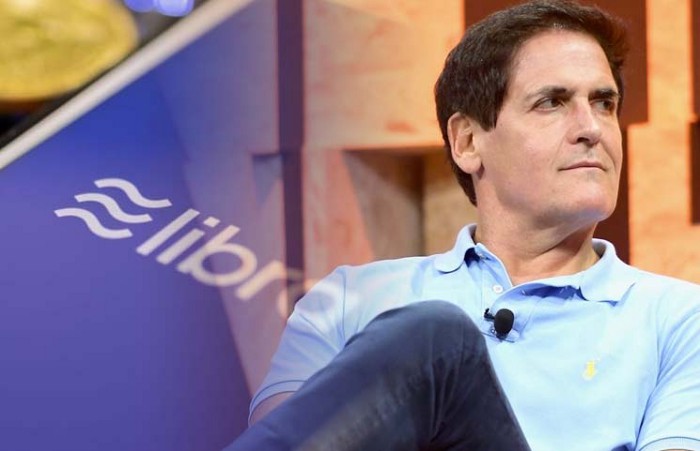
Just a few days before the Congressional hearings involving David Marcus, Facebook’s head of the Libra project, Mark Cuban, the billionaire co-host of “Shark Tank”, echoed President Trump’s tweets when he told CNBC that he “wasn’t a big fan” of Libra.

Libra is a gift to despots

There are seemingly quite a few people who agree with Cuban. He referred to the Menlo Park-based social networking company’s foray into distributed ledger tech as a “big mistake.” Most particularly he took aim at what he sees as Libra’s potential to further destabilise unstable economies and political situations worldwide. He said, “Some despot in some African country that gets really upset that they can’t control their currency anymore.” This doesn’t actually make much sense, but these days nobody seems bothered about rational statements.

Yes, Facebook is targeting the 1.7 billion unbanked people worldwide, a factor that David Marcus repeated several times during his first day of giving testimony to US Congress. The Libra Association’s white paper states: “All over the world, people with less money pay more for financial services. Hard-earned income is eroded by fees, from remittances and wire costs to overdraft and ATM charges… When people are asked why they remain on the fringe of the existing financial system, those who remain “unbanked” point to not having sufficient funds, high and unpredictable fees, banks being too far away, and lacking the necessary documentation.”

Cuban takes issue with this: he believes that Libra will unleash “reactionary impacts of extending financial access to the underrepresented.” Presumably he’s referring to that African despot again.

David Marcus is calm and collected

Meanwhile, in Washington, David Marcus looked cool as a cucumber as he took questions from a succession of senators. The primary issues for the lawmakers were those of privacy and trust. Senator Elizabeth Warren, who is crypto-unfriendly, asked about Facebook’s willingness to allow data portability: “If a Facebook user wishes to use a wallet other than Calibra, will you make it easy to allow the export of other data?” Marcus unequivocally replied, “Yes,” although he was noticeably more hesitant to respond so forcefully when asked about Messenger and Whatsapp data. Sen. Warren got her knife in some of the way when she concluded her remarks by saying, “what Facebook’s been really good at is figuring out how to monetize people’s personal data […] I am not reassured by your statement that you can not see any reason right now why there would not be any data sharing between these platforms.”

Nobody hammered bitcoin

On the bright side for crypto enthusiasts, Congress appeared to be very careful not to attack bitcoin. As Coindesk remarks, “Bitcoin was barely mentioned during the two-hour session and most of the lawmakers seemed far less concerned with the technology than with who was planning to leverage it: Facebook.” Indeed, Sen. Pat Toomey (R-Pa.) sounded bullish on blockchain in general, saying, “We shouldn’t prevent what can be a tremendous financial innovation. There is a big potential in blockchain technology.”

How’s the score looking for Facebook’s Libra as the Congressional interrogations resume today? It looks like most news outlets agree that it has the advantage, although they don’t say that in so many words. Congress appears to be more focused on the fact that it is Facebook (and Mark Zuckerberg) who is leading this project than the real potential of Libra. If another company had launched this project, perhaps Congress would be a lot less interested.

Could trade wars boost Bitcoin’s price?

You may have noticed that trade wars are trending. The US versus China being one of the biggest and most reported, but not the only one. Panos Mourdoukoutas writing at Forbes suggests that these clashes over trade could make bitcoin and the leading altcoins a “safe haven” and send their prices skyrocketing.

Once upon a time gold was a safe haven for investors at times of strife, but has lost some of its appeal due to a strong US dollar and what is called a high “carry” cost.

The US Treasury is another safe haven, but China is holding over one trillion dollars of treasury notes and if things take a further dive between Trump and Xi, then the Chinese may well decide to crash the market, using it as a weapon against the USA.

Mourdoukoutas believes that this leaves us with cryptocurrencies as the place to store money while the trade wars continue. Although, he does point out that there is a high element of risk involved in this strategy.

He also claims that other experts on the markets agree that cryptocurrencies have already been boosted by the trade war to date. Nisa Amoils, a venture capitalist with New York Angels said, “While infrastructure build-out and Facebook’s Libra have validated the space in recent months, this continues to be a macro story. The largest catalyst continues to be the deteriorating global macro backdrop, which continues to support digital assets, especially Bitcoin and to a lesser extent the innovative ‘decentralized finance’ movement occurring on top of the Ethereum protocol.”

Amoil agrees that cryptocurrencies are pushing gold into the background and that bitcoin is “digital gold”, a view held by some, but not by everyone.

Deric Scott, Vice President of Metals.com said, “Gold is universally accepted as currency around the world and has been for nearly 6,000 years. It’s tangibility and anonymity make it very appealing for people looking to retain what little shred of privacy we as a collective society still have.”

Scott also thinks that gold is superior to crypto because it doesn’t rely on the Internet, saying, “it’s a nice way to store wealth that is still accessible even when the power or Wifi is out.” It’s a point, but not one that techie people are likely to take very seriously.

Mourdokoutas also refers to the fact that central banks are getting ready for another round of easing, and that could be positive for speculative assets, including major cryptocurrencies. This could push the prices to new highs, simply because cryptocurrencies have a limited supply.

It all makes watching the trade war news even more interesting if you’re a cryptocurrency owner.