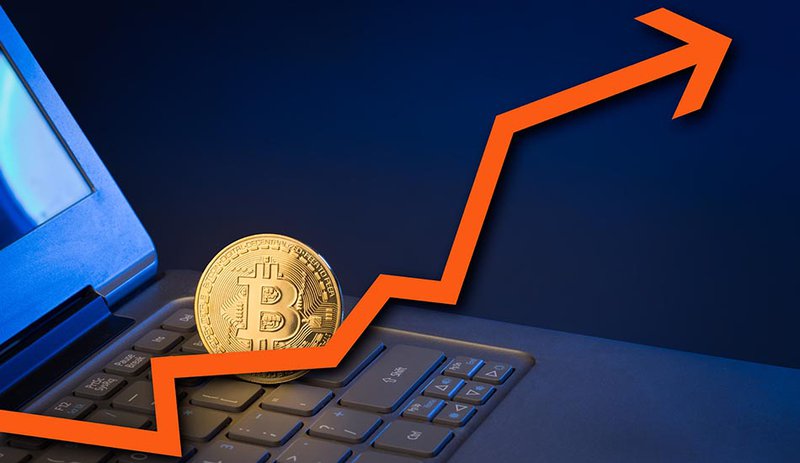
Can bitcoin clear $70k?

It was a nice surprise for bitcoin holders when the leading crypto sailed past $68k to reach a new all time high (ATH). Its market cap has also outstripped that of Tesla and Facebook. Some traders have declared it “clear for take-off” and are ready to begin a further price discovery beyond $70k.

As Cointelegraph notes, the BTC/USD pairing has enjoyed two consecutive nights of gains following a weekend of lingering around $62k. Since then it is up a total of 11.4% in just over two days.

Filbfilb, co-founder and analyst at trading platform Decentrader, commented that Bitcoin was now tackling what he called the “Great Wall of Finex”: this is a large sell wall on exchange Bitfinex around $70,000 contrasting with recent heavy whale accumulations. Indeed, according to another article in today’s Cointelegraph, the share of Bitcoin’s supply that has remained inactive for the past three months spiking to a record high of 85%, indicating that a lot of holders are intent on holding on to their BTC in hopes of even higher prices.

To the moon?

Will we see a revival of the popular bullish Twitter sentiments and a return of ‘When Lambo’? There are traders predicting $98k by the end of November. A few days ago this most would say this was impossible, but now there is less disbelief in that figure.

On the other hand, what we have seen in 2021 is relatively modest market movements compared with the patterns seen in 2013 and 2017, when the velocity of gains that followed Bitcoin’s block subsidy halvings were more sensational. The market behaviour is similar now to those two years, but it’s just a bit lower key.

Still, institutional demand shows no signs of abating ahead of a possible spot price exchange-traded fund (ETF) launching in the United States. SkyBridge Capital CEO Anthony Scaramucci, a man who is always bullish on bitcoin, said today, “$70k on Bitcoin coming up,” and indicated he is still buying it. He added, “Large institutional demand has finally arrived. Trying to get in orders before 2022.” Back in 2013 and 2017, that demand didn’t exist at the same levels as now, and as we enter an inflationary environment, Bitcoin’s appeal over gold as hedge against it received a boost overnight, its market cap hitting 10.7% of gold’s.

Furthermore, the trend of accumulation does not appear to be slowing down, with the share of supply held on centralized exchanges also dropping to a record low of 12.9% as BTC is increasingly placed into secure storage. This favours a bull market: “Until this trend changes it will continue to put upward pressure on price as demand for Bitcoin has to accept higher prices amongst the limited supply available,” says Decentrader.

Bitcoin’s three-day chart, which Decentrader holds to be an especially accurate price tool, is now bullish, indicating “a probable channel for price action, which could see Bitcoin hit $150,000 by the start of 2022.”

That would be an excellent start to the year for every Bitcoin holder.

Who is buying the doggy coins?

Almost every time one opens a crypto publication these days, there is likely to be a picture of a dog somewhere amongst the headlines. Now we know that posting images of furry friends both canine and feline is very popular on social media, but they’re apparently just as popular in the crypto sphere.

I’m talking about Dogecoin and Shiba Inu, of course. And as Lawrence Lewitinn writes at Coindesk, “Bitcoin may be the alpha dog of crypto, but for many small retail investors these days, dogecoin and shiba inu are the pick of the litter.”

Craze almost collapses Indian exchange

The buying craze for these two coins reached such a height in India, that Binance subsidiary, WazirX, India’s largest cryptocurrency exchange, suffered outages as traders jumped into the fray, buying shiba inu and stressing out the platform’s servers last Wednesday. Its CEO, Nischal Shetty tweeted that over half a billion dollars’ worth of trades were done on WazirX that day, the highest of any crypto exchange in India.

“It basically brought down our exchange,” Siddharth Menon, one of WazirX’s co-founders and its chief operating officer. ““The kind of active numbers and the active users that we saw in the last 48 hours has actually shocked us. We were not ready for it. We were all ready for the bitcoin move, but we were never ready for shiba inu.”

Menon says he suspects some kind of unit bias is at play here. What he means by this is that novice traders may jump in and buy a lot of one kind of cryptocurrency because the price of one unit of it is relatively small compared with, say, bitcoin even though one can buy the same dollar amount in bitcoin as the low-priced coin. And as Lewitinn comments, “For investors who are dipping their toes in the water with a relatively small amount of money, a low-priced coin can make one feel a little richer. For example, as of this writing, $620 buys 0.01 BTC. On the other hand, it buys about 10 million SHIB.”

Led by retail buyers

Although some who might be called ‘the smart money’ are buying dogecoin and shiba inu, they are still more interested in buying Bitcoin and Ethereum. For example, on Coinbase, the average Bitcoin trade size is hovering at around $2,000, while ETH trades average $1,600. On the other hand, the exchange sees average trades for dogecoin and shiba inu at around roughly $800.

Clara Medalie, strategic initiatives and research lead at digital asset data provider Kaiko, says, “This suggests price action is mostly retail-driven,” adding, “While average trade size isn’t a perfect gauge for institutional investment – most large traders break apart their orders into smaller sizes – we can still observe clear trends that correspond with waves of interest.”

But these meme coins also serve another purpose: they allow retail traders to test out the experience of buying, holding and selling a small amount of cryptocurrency on new platforms by placing different types of orders and seeing how they get filled – or not. They do this even though buying Bitcoin is much easier. No doubt they are encouraged by the recent story that has been widely circulated in the mainstream media about the mystery trader who bought $3,400 of SHIB last August, the month the meme coin launched, and is now a billionaire.

As with Dogecoin, tweets from Elon Musk have helped Shiba Inu’s spectacular rise, and its listing on Coinbase in June this year has also helped it.

Before anyone rushes to put all their life savings into SHIB, we have to ask ourselves if it will continue to rise in value at the same rate as it has over the last twelve months. Some analysts say it’s highly unlikely it will ever reach the $1 mark, as it can’t compete with rival Dogecoin. But if you’re a dog lover, it’s probably worth buying some, if only for the fun.

Why do people own crypto?

It’s an interesting question. Back at the beginning, when Bitcoin emerged,for some  the interest in crypto was partly a way of flipping the bird at the big banks and governments that had let the 2008 financial crash to happen, while for others the technology drew them in. But where are we at now in terms of sentiment?

A Coindesk opinion piece by Raphael Auer and David Tercero-Lucas starts by suggesting that at a time when cryptocurrencies’ market capitalizations are returning to all-time highs, it’s a good time to examine investor views, characteristics and sophistication. They ask, “Are cryptocurrencies sought out of distrust in fiat currencies or regulated finance? And who invests in cryptocurrencies?”

According to data from the “Survey of Consumer Payment Choice” (SCPC), a dataset that is representative for the U.S. population and spans the period from 2014 to 2019, the Coindesk authors say “there is no evidence to support the hypothesis that cryptocurrencies are sought as an alternative to fiat currencies or regulated finance in the U.S.” Nor do cryptocurrency investors have heightened concerns about the security of mainstream payment options, such as cash or commercial banking services.

Education level is a pointer to crypto ownership

What the research does show is that cryptocurrency is a niche market dominated by young, male, educated investors: “In fact, one of the main socioeconomic determinants of U.S. cryptocurrency investors is educational attainment.” Also, if you’re young, you’re more likely to own at least one cryptocurrency.

The pandemic effect

The pandemic appears to have been a factor in demand for crypto, and might the “recent crypto hype might have changed the composition of investors,” they ask. The “Survey of Consumer Payment Choice” for the year 2020 indicates that the pool of investors was much wider in 2020 than in 2019, and that almost 4% of U.S. citizens own at least one cryptocurrency in comparison with the 1.9% of the previous year. There is also an upward trend in the number of people who know about cryptocurrencies (more than 72% in 2020). Furthermore, the survey shows that crypto owners are less of a ‘niche group’ now, and are a better reflection of the general population. For example, more of the less educated people adopted crypto in 2020 than in 2019. The average age of cryptocurrency investors has also increased, with more of what might be considered “standard” investors becoming interested in this asset class.

Taking all this into account, it would seem that crypto ownership is not related to any growing distrust in today’s regulated financial markets. Nor are they bought as an alternative to fiat currencies or regulated finance. The main drive to buy appears to be their value as a speculation asset. “From a policy perspective, if the objectives of investors are the same as those for other asset classes, so should be the regulation,” the authors say, pointing out that as crypto goes more mainstream and investors better reflect the general population, then “a clarifying regulatory and supervisory framework for cryptocurrency markets may be beneficial for the industry in a context where cryptocurrencies are being targeted by less-educated investors and adoption is becoming widespread.”

Crypto threatens financial stability says BoE banker

Jon Cunliffe, the Bank of England’s deputy governor for financial stability has recently given a speech where he tackled the question of whether or not, “the world of ‘crypto finance’ poses risks to financial stability.” Why and how does it do that?

Cunliffe pointed out that cryptoassets have grown by roughly 200% in 2021 ($2.3 tn), and from $16 billion just five years ago. The global financial system is worth $250 trillion, to give some context. He also mentioned that the sub-prime debt market was worth around $1.2 trillion in 2008, just before the financial crisis.

His point in using this comparison was that because the crypto industry is growing rapidly and beginning to connect to the traditional financial system, and there are leveraged players emerging in a mostly unregulated space, systemic risks, while limited now, could grow very quickly.

Referring back to 2008, he reminded his audience that in the case of the sub-prime market, “the knock-on effects of a price collapse in a relatively small market was amplified and reverberated through an un-resilient financial system causing huge and persistent economic damage.” We all remember the effects.

He called for financial stability regulators to take notice, to think very carefully about what could happen and whether they, or other regulatory authorities, needed to act. However, he cautioned against over-reaction. As he said, “We should not classify new approaches as ‘dangerous’ simply because they are different.”

Indeed, he said that innovation and technology, plus new players, could tackle longstanding frictions and inefficiencies and reduce barriers to entry, and that in the past they have been key to driving improvement and to increasing resilience in financial services.

Then, what started as a speech that may have sounded gloomy to the crypto markets, Cunliffe made an important and positive statement. He said, “Crypto technologies offer a prospect of radical improvements in financial services.” But he did add a caveat, “However, while the financial stability risks are still limited, their current applications are now a financial stability concern for a number of reasons.”

He then analysed the crypto market, breaking it down into unbacked cryptoassets used primarily as speculative investments and backed cryptoassets intended for use as a means of payment, pointing out that unbacked assets make up 95% of the market, and includes Bitcoin. His concern is that the main use of unbacked cryptoassets is for speculative investment and that fewer holders now say they see them as a gamble and more see them as an alternative or complement to mainstream investment. His greatest fear appears to be that while he doesn’t believe a collapse in the crypto retail investor sector would bring about instability, the large financial institutions with exposure to crypto are another matter, such as the many crypto hedge funds. He described one scenario: “For example, a severe fall in the value of cryptoassets could trigger margin calls on crypto positions forcing leveraged investors to find cash to meet them, leading to the sale of other assets and generating spillovers to other markets.”

Ultimately, Cunliffe called for faster action on regulating the market to manage risk, saying, “Although crypto finance operates in novel ways, well-designed standards and regulation could and should enable risks to be managed in the crypto world as they are managed in the world of traditional finance.”

While he sounds positive, as ever the demand is to bring crypto more in line with traditional finance, the very thing that caused the creation of crypto in the first place, due to ‘tradition’s’ failings.