The Tech Giants Growing Behind China’s Great Firewall
The Chart of the Week is a weekly Visual Capitalist feature on Fridays.
Every day, your feeds are likely dominated by the latest news about Silicon Valley’s biggest tech giants.
Whether it’s Facebook’s newest algorithm changes, Amazon’s announcement to enter the healthcare market, a new acquisition by Alphabet, or the buzz about the latest iPhone – the big four tech giants in the U.S. are covered extensively by the media, and we’re all very familiar with what they do.
However, what is less commonly talked about is the alternate universe that exists on the other side of China’s Great Firewall. It’s there that four Chinese tech giants are taking advantage of a lack of foreign competition to post explosive growth numbers – some which compare favorably even to their American peers.
BIZARRO WORLD
Like the “Bizarro Jerry” episode of Seinfeld, the Chinese-based tech giants look recognizably familiar – but markedly different – to the ones we know so well.
ALIBABA
Likely the best known of China’s tech giants, Alibaba is the dominant online retailer in the country. The company had revenues of $25.1 billion in 2017 and is seeing that revenue grow at impressive speeds. In its most recent quarterly results (Q3, 2017), the company noted a 56% jump in revenue.
Amazon’s tough sell: Amazon does exist in the Chinese market, but it just has trouble competing with Jack Ma’s creation. Amazon has less than a 1% share of the e-commerce space in China, after a decade of trying to get a foothold. Further, Alibaba also runs AliCloud, which provides direct competition to Amazon’s AWS.
BAIDU
Baidu is the largest search engine in China and also a leading player in AI. It’s the most visited website in China, and ranks #4 globally. The company will announce 2017 annual results in the coming weeks, after reporting a 29% jump in revenue in Q3 2017.
Google’s searching for a way in: Google was blocked in China in 2010 after refusing to filter search requests. However, since then, the giant has been able to take very small steps in entering the Chinese market – even though its signature search engine is still blocked, Google now has at least three offices in the country.
TENCENT
Tencent has recently been in the news for its rapidly surging stock. The company, which owns the dominant social platform in China (WeChat), is now valued at over $500 billion. For those keeping tabs, Facebook is currently worth $550 billion.
It’s complicated: Facebook remains blocked by China, meaning that Zuckerberg and company can’t take advantage of a 1 billion plus market of people with growing buying power. Even if it found its way in, there are multiple social platforms in China and competition would be stiff.
XIAOMI
Dubbed as “China’s Apple”, Xiaomi is one of the world’s most valuable private companies. Things have been hot and cold for the ambitious smartphone manufacturer, but recently reports have surfaced that Xiaomi will IPO in the second half of 2018 for upwards of $50 billion.
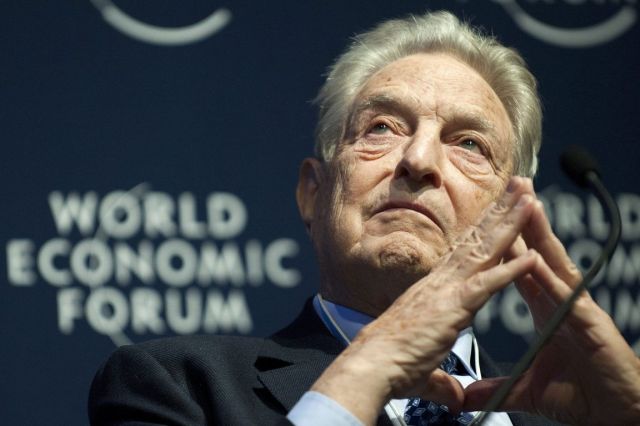
Back in January 2018, the multi-billionaire announced that cryptocurrencies were a ‘bubble’. He hasn’t been the only one to say this, of course. However, in the last week he seems to have quite radically changed his mind about this, as his ‘family office’, valued at $26 billion, has announced via Bloomberg and other media outlets, that it plans to trade digital assets.
Soros Fund Management, which is based in New York, and its macro investing division headed by Adam Fisher, got the green light internally to trade in digital currencies, although Bloomberg says he has yet to actually make a trade.
When Soros spoke at the World Economic Forum at the beginning of the year, he was scathing about crypto and claimed it could never function as a viable currency. He also said: “As long as you have dictatorships on the rise you will have a different ending, because the rulers in those countries will turn to Bitcoin to build a nest egg abroad.” This is similar to the many, many commentators on cryptocurrencies who have tried to tarnish the reputation of Bitcoin and other altcoins by connecting crypto with either the nefarious dark net, or with those who seek to beat the system in some way.
However, he didn’t predict what would happen to the cryptocurrency in the first quarter of 2018. The precipitous drop in the Bitcoin market cap sent some, like hedge fund manager Mike Novogratz, scurrying away from trading in cryptocurrency. For example, Novogratz decided against setting up a crypto fund, but has pursued links with a merchant bank that focuses on cryptocurrencies and blockchain technology ventures.
But other hedge fund managers in macro investing have been turning towards it as hedge fund profits slide. John Burbank is one example, He closed hi main hedge fund and “plans to raise $150 million for two funds investing in digital currencies,” says Bloomberg.
And Soros has been betting on cryptocurrencies, even if it is by a roundabout route. At the end of 2017, his firm acquired a large stake in Overstock.com, which is an online discount company. It accepts payment in cryptocurrencies and was the first major retailer to do so. Overstock then announced it would launch a digital currency exchange and an ICO, but this awakened the SEC last month, and it is investigating the proposals. Consequently, Overstock’s share price dropped.
Nevertheless, let’s remember that George Soros had, and still has, skin in the game, whilst warning the world that Bitcoin et al, are in a ‘bubble’.
Chief Minister Fabian Picardo kicked off the event with a simple and clear message to all those in attendance:
”Gibraltar is open for business.”
Gibraltar Ahead in the Regulatory Space
With jurisdictions around the world trying to figure out how to regulate the blockchain industry, Gibraltar has already put in place a DLT regulatory framework based on best principles and is currently looking to release new accompanying regulations that focus on token sales within the jurisdiction. A bill is expected through the Gibraltar parliament in Q2 this year showing Gibraltar to be world-leading in this space.
The Minister for Commerce, the Hon. Albert Isola, whose Ministry has been driving the fintech and blockchain agenda in Gibraltar also addressed the full conference hall onboard. When talking about the jurisdiction’s continued development, the Minister made it clear that as a government, “we are not scared of innovation.”
He added that the government is looking to continue to operate with consumer protection at the heart of what they do.
With a wide variety of speakers in attendance, the focus was well and truly on regulations for blockchain and ICO, a sector that is booming and hit an astounding $3.7bn during the course of 2017.
Gibraltar Financial Services Commission on ICO Regulations
Sian Jones and William Garcia from the Gibraltar Financial Services Commission (GFSC) also gave a talk and answered questions from the crowd. The same event last year saw the GFSC present their DLT regulatory framework to attendees and the wider world, this year it was their proposed ICO regulations.
Sian Jones emphasised that the regulator would not be regulating individual ICOs but those that brought the token sales to market, adding that “it’s not the role of the regulator to approve any individual token offerings,” rather highlighting how regulations are implemented is as important as the rules themselves.
Sian added: “We as a regulator will not be setting a single code of practice that should be set by the market.”
A lot like the Gibraltar Blockchain Exchange (GBX) with its network of Sponsor Firms, the GFSC sees this emerging market needing the creation of “authority sponsors that are accountable to us [GFSC].” This format would encompass GBX, which already comes under the scope of the DLT regulations, effectively making it an ‘Authorised Sponsor’ which could open up many pathways of opportunity for the exchange.
During the presentations Q&A, the GFSC spoke of their core desire to embed consumer protection at the heart of their work, whilst being supportive of helping grow and develop this innovative industry: “Tokens as a new asset class are isolated from financial advice, but it is right that it should be regulated for consumer protection.”
The DLT Licence Experience
In the morning of the first day, GBX CEO Nick Cowan moderated the panel “The DLT Licence Experience to Date.” Joining Nick was Joey Garcia from Isolas, Anthony Provasoli from Hassan’s and Jay Gomez from Triay & Triay.
Nick prophesied 2018 to be “the year of the regulator,” pointing out that Gibraltar has the unique first mover advantage of having a regulator that truly understands this space, and is so accessible and open to dialogue. Nick began the panel by categorising the ‘DLT licence experience’ into three distinct areas, Government & Regulators, DLT advisors such as Gibraltar’s law firms and the users of DLT licences such as GBX, each with their own distinct experience.
Joey Garcia, who was a part of the working committee regarding the original DLT framework explained the reasons for a best principles approach by stating: “Let’s build a ground-up framework that is evolutional.” Nick complimented Joey’s sentiments by highlighting the collaborative nature of the DLT framework: “There is a trinity of bodies here, government, industry and users, coming together to find a solution”
The panel concluded that although Gibraltar has been successful in locating and nurturing emerging markets, such as e-gaming, it has seen an explosive reaction to its leading role with the DLT regulation.
Anthony Provasoli pointed out “3 years ago nobody knew where Gibraltar was, but that is very different today, especially in the last 12 months.” He also highlighted his experience on the perception of Gibraltar saying: “Clients love the fact they can come and sit down with the regulators and have an open discussion.” The panel’s experience echoed the Chief Ministers opening comment that Gibraltar is open for business.
The panel also touched on the subject of Brexit in relation to Gibraltar, which despite the outcome is making strides in placing itself strategically between Britain and the rest of Europe. Joey Garcia believes that due to the global connection of blockchain and the cryptocurrency market that Brexit would not have a negative impact, by saying: “High level, I don’t think it [Brexit] will affect this space.” It is a testament to that strategic approach of Gibraltar to pioneer itself in this emerging technology and become a forerunner ahead of the Brexit transition.
Challenges in the Current Crypto Exchange Landscape
Nick later participated in a panel entitled “The Crypto Exchange Landscape for 2018” moderated by Joey Garcia with Vitaliy Kedyk of CEX, David Honeyman from Lendo, and David Gyori of Banking Reports alongside Nick. The panel discussed the challenges of AML/KYC with current cryptocurrency exchanges, with Nick detailing how the GBX intends to create a new industry standard of governance and due diligence for token sales within a rules-based system that would gain access to a large pool of KYC cleared participants.
The question of centralised vs decentralised exchanges was debated, with a consensus forming that if blockchain technology is still in its early developments, then decentralised exchanges are far off in that timescale development. With the current challenges that existing exchanges face around AML/KYC, accountability and consumer protection, decentralised exchanges would not contain a solution. Vitaliy emphasised this by saying: “Decentralised exchanges can’t deliver the real user experience” which the panel agreed that if this space is to be adopted by mainstream consumers, the user experience would be of paramount importance.
Nick was invited to close the 1st-day proceedings of the conference. He championed Gibraltar for its bold stance on the global stage as a home for those businesses that are utilising DLT technology. Mirroring the success story of GBX and its successful completion of raising $27M in the RKT token sale, with the way Gibraltar fostered the exponential growth of the e-gaming industry a parallel to what we are witnessing in the blockchain space. Nick finished by telling the packed out audience that Gibraltar is open for business and made a call out to those looking to Gibraltar as a home for the business to “give us a chance”.
Blockchain Innovation in Gibraltar and Beyond
A key moment during the 2nd day of the conference came from Philip Young, the Marketing Director of GBX. Phil gave a presentation on the Blockchain Innovation Centre (BIC) an initiative set up by the Gibraltar Stock Exchange (GSX) to help create a hub of blockchain innovation in both Gibraltar and further afield. Phil gave the three bedrock tenants that would “Educate, Inspire, Connect.” Phil spoke of the BIC’s offer of a network of experts that would help select, fund, advise and guide blockchain-based startups in Gibraltar. Additionally, Phil proposed the idea of the BIC helping to establish educational programs seeking out universities both abroad and in Gibraltar to encourage collaborations.
Despite the heavy wind and rain hammering the Rock of Gibraltar, attendance was still high over the two-day event, with great networking opportunities between the panels and presentations. It was encouraging to see that more than 180 of the 300 attendees had travelled to Gibraltar for the event demonstrating that Gibraltar is quickly establishing itself as a global hub for all things crypto & blockchain.
The last few weeks have seen the forces of Big Finance arranging in battle formation to take on what its ‘generals’ see as the usurper forces on the blockchain.
FUD spreading media
From the initial rumours and misinterpretation of crypto-related announcements from the Far East, the FUD (Fear, Uncertainty, Doubt) statements coming from the international economic summit at Davos to the loud-mouthed Augustin Carstens of the Bank for International Settlements, the institutional forces have been set on destroying Bitcoin and the other coins on the blockchain. It is nothing less than a declaration of war, and those of us who believe in blockchain technology knew it would come one day. How could it not? The blockchain is a threat to the status quo enjoyed by governments and financial institutions since the Medicis got into banking.
Carstens, appropriately portrayed as a ‘fat bastard’ in Cointelegraph, called Bitcoin, “a combination of a bubble, a Ponzi scheme and an environmental disaster.” And he is one of the bankers screaming for more regulation. Of course they want to regulate cryptocurrency. Anything which is outside their control and which might put a dent in their resources is an enemy that must be executed or at least imprisoned. Because that is what regulation will effectively do: it will suck all the revolutionary qualities out of the blockchain and its crypto progeny until its potential to change the world is put back in the box and locked away for good.
It’s a ‘Criminal’ Currency
He’s not the only one who bleats on about the use of cryptocurrency for criminal activities. The mainstream media and the voices it chooses to publish, also keeps coming back to this time and again, demonstrating a massive lack of imagination, not to mention a real paucity of knowledge about the use of cryptocurrency. But, it’s easy to spot why they focus on this: they want to scare the average Joe away from crypto. Perhaps they missed the memo that showed less than one percent of Bitcoin transactions are involved with money laundering. In fact, the big banks handle more dirty money than the blockchain. But, the media doesn’t let that detail get in the way of the ‘criminal’ story.
The Control Freaks
Of course, the FUD coming from the Big Finance forces is emanating from their collective fear of losing control of the established financial system. Without that, how will they line their pockets? It is unthinkable to them that ‘the people’ might have access to an alternative resource that endangers the use of fiat currency. Big Finance may claim that they want regulation in order to protect ‘us’, but those of us who have been supporting blockchain achievements for many years, know that it is the ideology behind the blockchain that instils a terrible fear in the central and national banks.
Two years ago they didn’t care about Bitcoin, neither did the mainstream media; it was for geeks, not for ordinary citizens. But the crypto events of 2017 spurred them into action. A force was coming that had the potential to “replace the current model based on FIAT money and tax collection and change the current economic power system, which earns profits with financial services, interests and transaction fees,” as Abel Colmenares wrote in Cryptocoin News.
Fear is the weapon
Now we can expect crypto regulation to be the buzz topic at the next G20 summit in Argentina, as France and Germany have already announced their intention to push for global Bitcoin regulation. The French Finance Minister, Bruno Le Maire said: “We have a responsibility towards our citizens to explain and reduce the risks.” Lobbyists at the International Monetary Fund are keen to make sure the IMF is on board with ‘world governance’ for cryptocurrencies. All of the arguments in favour of this focus on spreading fear about the new digital currencies without any regard for the benefits it brings.
Paul Gordon, in an article published by Steemit, summed up why Big Finance is waging war against the blockchain: “Cryptocurrencies create two of the most dangerous potentials for individuals and free associations. They create the potential for anonymity and they significantly increase the ability of individuals and free associations to become self-reliant.”
So, far we have just experienced the first skirmish. This may be a protracted war, and whilst the Blockchain Forces may need to rally more troops, the odds are in favour of it winning. Because Big Finance needs the blockchain to evolve, more than people need centralised financial services. This is a war against liberty – which side are you on?



 Mehran Muslimi