Can Google Plex win over banks and consumers?

It’s only a matter of days since I wrote about the relaunch of Google Pay. Now I turn my attention to Google Plex. With a beady eye on the way traditional banks are lagging in the mobile banking stakes, it has come up with a solution that enables the old boys to keep pace with the fintech challengers, or at least that is what it appears to promise.

Ron Shevlin quotes some observations from the Snark Tank, such as this summary of the Google Plex pitch: “You’re lagging in technology. Your current vendors are years behind. Consumers think you’re irrelevant. We’re hip, we’re cool, we have all the latest technologies, and boy have we’ve got data! Come partner with us on our new checking account!”

And to some extent the potential customers are buying it. Shevlin says “three big banks, four community banks, two credit unions, and two digital banks” have announced that they have formed partnerships with Google to use the Google Plex checking account tech in 2021.

Now let’s go back to Google Pay. Google Plex will be integrated into the app, which now has three new components.

First, it has a P2P and retail payments component that essentially mimics the Venmo model. This will allow users to, “Set up group payments, put multiple people in a chat and let them send and request money from each other. It will also track who has and hasn’t paid their share and let you tap a button to pester them,” according to The Verge.

Users can also use tap-to-pay, which is pretty old hat now, except that Google has added two new features – ‘Get gas’ and ‘Order food’. Apparently the latter refers to a food ordering system that will work with more than 100,000 restaurants. And consumers will be able to use the ‘get gas’ tab to pay for gas and parking via the app in 30,000 locations.

The ‘Explore’ feature will allow Google Pay app users to browse aggregated merchant offers, and they can receive merchant offers based on their spending activity. It sounds a little like Google ads and Facebook advertising all over again.

There’s also an ‘Insights’ tab which is described by Shevlin as “Google’s version of a personal financial management (PFM) tool,” similar to those available on other digital banking platforms.

Why is Google likely to win over banks to using Google Plex: It’s quite simple: Google has access to more data than any bank; Goggle has more merchant relationships, and it has more tech resources.

Of course, while the traditional banks might see Google’s offer as the fast and easy way to catch up with digital challengers, there is one critical factor to consider: will the consumer want a Google checking account?
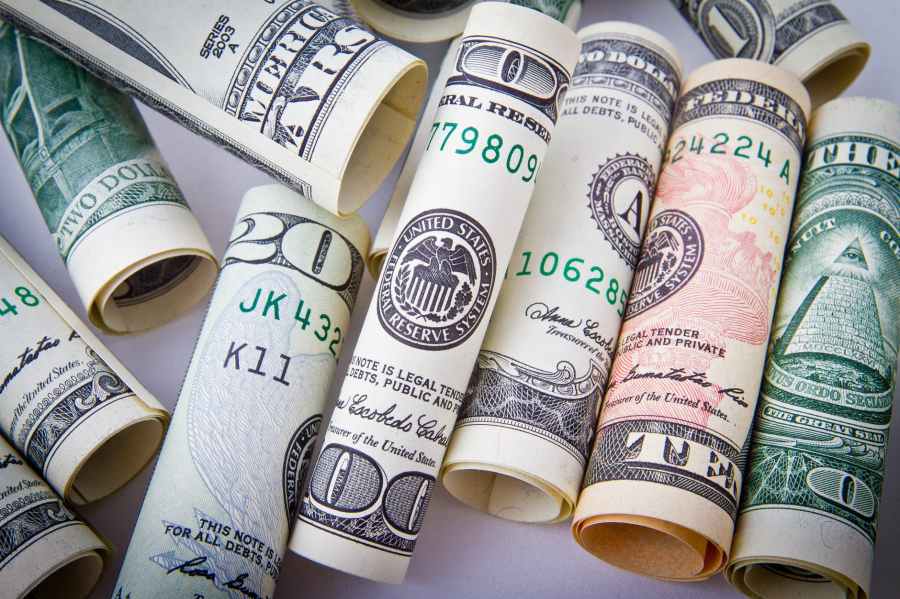
Cash Is No Longer King

Cash has become something of a Covid-19 casualty this year. On the day-to-day level, people have been encouraged to pay with cards, because handling notes and coins is a way of transmitting the virus. The pressure on people to go cashless is facing a backlash though: When you use a card it is easy for governments and others to track your every move, whereas cash protects our privacy.

Ray Dalio, founder of investment firm Bridgewater Associates, has taken a look at cash from the investor’s perspective and warns us that it isn’t safe. In an interview with CCN, he said the high level of spending in America means the US dollar is no longer a safe investment. He isn’t the only one who believes cash is no longer a safe haven asset, and that it will perform badly compared with other asset classes, including gold, which has surged, he says, “because the market no longer believes in cash.” He also says that the Fed’s more relaxed view of inflation is another nail in Cash’s coffin.

Dalio told CNBC that cash, “ lulls investors into a false sense of security, based on the U.S. dollar’s historical role as a reserve asset.” Furthermore, according to Dalio, the Federal Reserve’s  spending spree since March has seriously weakened the value of cash.

In his view, “holding cash is equivalent to accepting a 2% annual stealth tax, as a result of inflation.” This may get worse as the Fed targets an average inflation rate of 2%. The ‘average’ Dalio says is important, because what it really means is “it will tolerate an actual rate well above 2% for considerable lengths of time.”

As a result, Dalio recommends a more diversified approach to investing: “Cash is a poor asset class … It’s a quietly bad asset class. Diversification is much better than cash.”

The market appears to agree with this, and there has been a move to other fiat currencies instead of the USD. The Euro, the Japanese yen, Chinese renminbi, and Australian dollar have all risen against the dollar, although this tide is slowly turning back in favour of USD. Plus it would appear that many investors prefer equities to cash.

One last word though. Dalio has an interest in talking down cash. His firm wants investors to pump their growing cash reserves into his fund. Even so, perhaps he does have a point, and cash will come under other pressures in the near future, such as the increased use of digital payments and cryptocurrencies, which have made substantial gains this year.

Why Bank Stocks Tanked in 2020

If there were ever an indication that the digital age is taking over in finance, it is the state of bank stocks. This year has been an extraordinary one in many respects, and the effects of the pandemic have thrown the banking sector into a quandary as fintech companies have outperformed the traditional players in he banking sector.

BNN Bloomberg’s senior anchor, Jon Erlichman, came to this conclusion after studying stock performance reports for banks, fintechs and the two largest cryptocurrencies, ETH and BTC.

A graph created by CryptoPotato, shows a YTD gain of 217% for ETH, while Wells Fargo bank shows a -58% loss. This is a massive change over a decade: “The stocks of some of the world’s largest banks were on a roll since the previous financial crisis over a decade ago. Bank of America shares had increased approximately ten-fold since 2009 to their highs in February 2020 of about $35,” writes Jordan Lyanchev. He also notes that in the same period, “Citigroup stocks went from $15 to $80, JP Morgan Chase & Co (JPM) from $20 to $140, and Wells Fargo (WFC) surged from $11 to above $50.”

What changed for banks in 2020?

The simplest answer is the Covid-19 pandemic. Even in March banks were seeing a significant slump with some losing 50% of their valuation in a matter of days. Some have regained a little of their former value, but they will still end this year in the red. And it is not just banks; Western Union and American Express have also suffered. Lyanchev notes that Warren Buffett, a major investor, sold all his bank stocks this year.

Visa and Mastercard both took a bit of a hit, but have managed to pull back into the green by small percentages. However, they must be looking at companies like PayPal and Square with a feeling of envy.

PayPal’s stocks (PYPL) started 2020 at $110 and have increased by 94% since then. It did see a collapse to $85 in March, but as we can see, it has completely turned that around. Square’s yearly gains have even seen triple-digit percentages, and it has seen a 178% growth since January 2020. Both of them are now connected with cryptocurrency: Square bought Bitcoin valued at $50 million this year, and PayPal is allowing its US-based customers to buy, sell, and store several digital assets.

The crypto markets

It is undeniable that the cryptocurrency markets also took a hit around March. Today BTC is at $13,000, but it dipped to $3,700 back then. Ethereum, now at $400 dropped to $100. Both have overcome the slump, with Bitcoin in particular being increasingly seen as a safe haven asset in the same way as gold.

Analysts are unsure exactly why Bitcoin has seen a YTD surge of 80%, and whether it can be attributed to more interest from institutional investors, the May halving or large companies investing in it. Ethereum has been riding the wave of the growing trend supporting decentralised finance, as its blockchain operates as the underlying technology behind most DeFi projects. Even though this utility has highlighted some of Etherieum’s weak points, such as high transaction fees and slow transaction rates, “none of that matters as ETH has been on a roll during most of the year, especially since the summer.” Now the second-largest cryptocurrency has become the best-performing asset, with an increase of over 200%.

What we can take away from this is that Covid-19 has driven dramatic changes that have made people become more focused on the digital world. They are looking more to online ventures and digitally transferred funds. What we may be witnessing now is the real beginning of a mass movement to an online world that will leave traditional banking behind.

Covid has created more fintech billionaires

Fintechs have done extremely well out of the Covid crisis. The lockdowns have forced more people to turn to online for financial products, as well as day trading as a way of creating an income at a time when jobs are disappearing.

Afterpay is one example. It is an online service that allows shoppers from the USA, the UK, Canada, Australia and New Zealand to pay for small items, such as clothing in instalments over a six-week period. It’s an online version of the catalogue shopping that was so popular in the 1970s and 80s that allowed mostly women to clothe their families by paying for the items over a period of time. Now it’s in a digital format and not connected solely to a small selection of businesses.

Afterpay is only five years old, but the pandemic has made its founders billionaires, even though at the start of the crisis its shares tanked. Now its shares have increased in value tenfold thanks to a surge in online retail sales. For example, in the second quarter of 2020 it handled transactions worth $3.8 billion, an increase of 127% over the same quarter in 2019.

Who else has benefited? Chime, a digital bank, Robinhood, the stock trading app and Swedish fintech Klarna. And then there are those platforms such as Zoom and Slack which have enjoyed a boom due to the increase in working from home.

Others have not been so fortunate. The Lending Club, which offers personal loans to high-risk customers has laid off 30% of its staff, and On Deck, a lender specialising in small business loans has been sold off in a fire sale.

Victoria Treyger, a general partner who leads fintech investing at Felicis Ventures, commented to Forbes: “Consumer fintech adoption was already strong pre-pandemic, especially among the 20s to early-40s age group,” adding, “The pandemic has become a growth rocket, fuelling the rapid acceleration of adoption across all age groups, including 40- to 60-year-olds.”

Fintech payment providers are amongst those benefiting most thanks to the rise in online spending and home delivery services. Marqueta is one of those. It is a specialised payments processor providing a service to Instacart and others. It is discussing an IPO valued at $8 billion, which is four times its valuation in March 2019.

Credit card spending is down, as large-ticket items such as holidays were effectively cancelled for 2020. Instead, debit card payments are up. This is good for fintechs, as they primarily offer debit cards. For example, Chime, based in San Francisco, used the US government stimulus package to its advantage. In advance of he $1,200 government-stimulus checks started hitting Americans’ accounts, it loaned customers that money to the tune of $1.5 billion. Its CEO said, “Following the stimulus advance, we had the largest day for new enrolments in the history of the company.” It also has a new valuation of $14.5 billion, and “venture capitalists are valuing the company at 24 times its revenue.”

While this year has proved to be a great one for fintechs and other online platforms, there is one thing to consider: will consumers keep up the habit their online shopping habits in 2021, because a lot is riding on that for the fortunate fintechs.