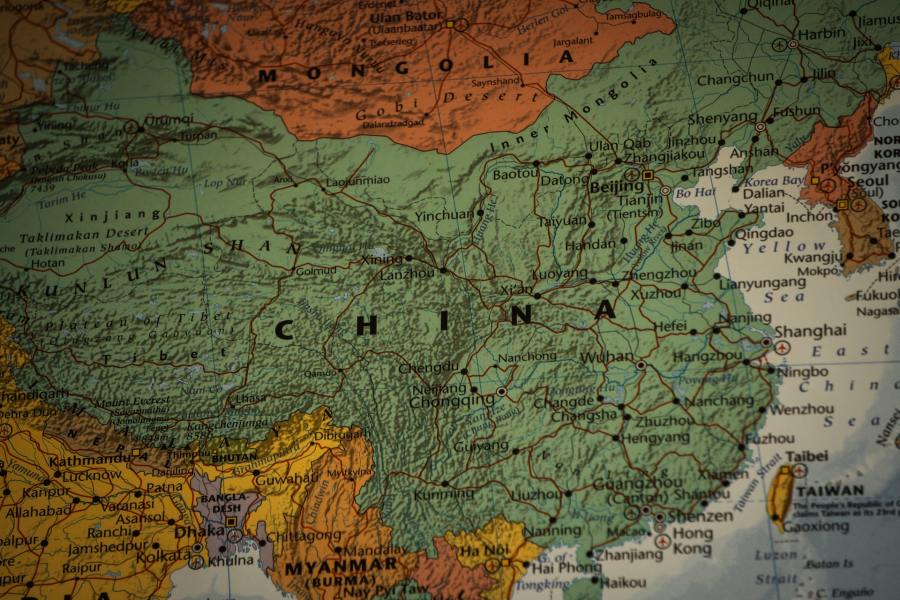
China’s alarming plan for tech dominance

China has been using robotics in its manufacturing for quite some time, and it has some very powerful AI tools as well that automate processes in its factories. This is going to push other countries to match China, particularly the USA.

However, while America may be regarded as a world leader in tech, China’s President Xi has a plan to take that role for his country, and ensure that China is not using US-made tech either.

In an article published by the South China Morning Post, in May of 2020, President Xi presented his vision for China and his goal of achieving global tech supremacy by 2025. This is an extract from the piece:

“Beijing is accelerating its bid for global leadership in key technologies, planning to pump more than a trillion dollars into the economy through the roll-out of everything from next-generation wireless networks to artificial intelligence (AI).

In the master plan backed by President Xi Jinping himself, China will invest an estimated 10 trillion yuan (US$1.4 trillion) over six years to 2025, calling on urban governments and private hi-tech giants like Huawei Technologies to help lay 5G wireless networks, install cameras and sensors, and develop AI software that will underpin autonomous driving to automated factories and mass surveillance.

The new infrastructure initiative is expected to drive mainly local giants, from Alibaba Group Holding and Huawei to SenseTime Group at the expense of US companies. As tech nationalism mounts, the investment drive will reduce China’s dependence on foreign technology, echoing objectives set forth previously in the “Made in China 2025”programme. Such initiatives have already drawn fierce criticism from the Trump administration, resulting in moves to block the rise of Chinese tech companies such as Huawei.”

Tim Bajarin in Forbes, asks us to consider Xi’s use of the term, “tech nationalism.” He explains that Xi plans to “nationalise everything in China so it is the main provider of goods, services and tech-related products to China itself.” He wants China to be completely self-sufficient in tech by 2025, and nationalised tech will “receive a huge financial boost from China’s $1.4 trillion dollar fund.”

In early September former Google CEO Eric Schmidt commented that China’s leadership in AI posed a security threat and could lead to “high-tech authoritarianism” worldwide.

According to Bajarin, the US government is aware of the problem, but so far nobody knows exactly what actions it might take. Will it counter China’s influence by remaining a tech powerhouse, or what? If China is successful in fulfilling Xi’s vision, then it is also likely that “there could be a time when products we get from China are no longer available to the west.” Currently, China is still committed to globalisation, so its products will continue to reach us, but if it scales back on that, then those products will need to be sourced elsewhere. The question is, where might that source be? It is time the USA and any other countries likely to be negatively affected by a lack of good from China form a plan – the clock is ticking!
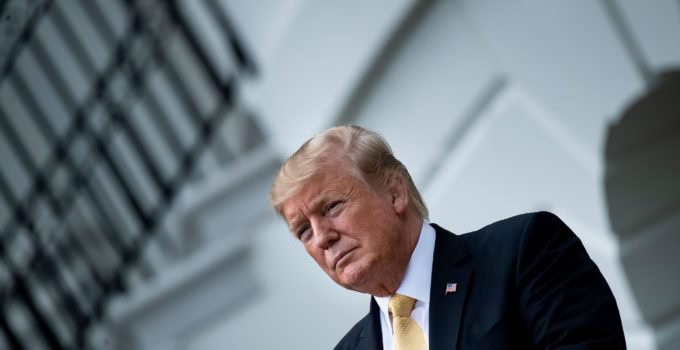

Trump pushes China to the limit

Never mind Mueller’s report, Trump has his sights set on China this week, and as usual he has been tweeting about it. On 6th May he tweeted: “The United States has been losing, for many years, 600 to 800 Billion Dollars a year on Trade. With China we lose 500 Billion Dollars. Sorry, we’re not going to be doing that anymore!”

The President appears to be determined to escalate the US-China trade war and it appears to be ‘personal’, although he portrays it as a move in the national interest. He’s raising the trade tariff on Chinese imports to 25% this Friday, a large hike up from 10 percent.

Trump says that Chinese exports to the USA worth $200 billion will be slapped with this tariff. Furthermore, the same tariff will be imposed on other Chinese goods worth $325 billion, which are currently untaxed.

What effect has the announcement had?

Obviously there have been more than a few very miffed Chinese. And Chinese investors had a wobble, because they dumped stocks following the announcement. As a result, China’s major stock indexes plunged by the highest level since February 2016. Stock indexes also took a beating: the Shanghai Composite Index and the CSI 300 index fell by over 5 percent. Ken Cheung, senior Asian FX strategist at Mizuho Bank in Hong Kong told Reuters, “The market is re-pricing the situation, as investors had thought trade negotiations were coming to an end.”

Why escalate a trade war now?

Trump’s decision to raise the tensions between two of the world’s biggest economies came at a moment when the US economy is in boom mode. As Mark Emem writes at Forbes: “The non-farm payrolls jobs report which was released Friday indicated that the unemployment levels had fallen to 3.6 percent. This was the lowest figure since 1969.”

Some commentators have suggested that the positive state of the US economy has led the President to believe that the country is in such a strong position that he has the upper hand in any trade negotiations. One Twitter user, Jim Cramer tweeted: “Is this the art of the deal? Or a recognition that our economy is stronger than theirs is and we don’t need them???”

And to quote Trump from his book “The Art of the Deal”: “MY STYLE of deal-making is quite simple and straightforward. I aim very high, and then I just keep pushing and pushing and pushing to get what I’m after.”

As Emem writes, Trump smells blood, because China has more to lose than the USA, therefore Trump is following his own philosophy of simply piling on the pressure wherever he can. It was thought that a trade deal between the two countries would have been agreed by the end of this week, but that looks unlikely now. And unless they agree a deal on 9th May, China will have to start paying the higher tariffs from the following day. That doesn’t leave much time for the negotiations, which are supposed to start on 8th May.

Will the talks collapse due to Trump’s game play, or will he get what he wants from China? We don’t have to wait long to find out.

Top Risks in 2019

According to the Eurasia Group, a consultancy founded by Ian Bremmer, the global geopolitical environment is right now the most dangerous that it has been for many decades. So what is likely to impact on businesses, regional economies and society during 2019? There are around 10 areas of concern for us all.

Bad Seeds

There used to be an Australian band called The Bad Seeds, but we’re not talking about them. What the term ‘bad seeds’ means in this instance, is this: decision makers are so obsessed with an array of global crises in a world without trued global leadership, that they are allowing a range of future risks to take root and germinate, but these future risks are the ‘bad seeds.’ For example, the future of the European Union, the WTO and the relationship between Russia and China are negative.

US-China relations

The US leadership used to try and keep things smoothed over, but with Trump in office that approach has been dumped. Expect to see more confrontations between the two, especially in the areas of technology, economics and security.

Cyber Power

The US is going to exert its use of cyber power more seriously this year. However, it’s likely to backfire on it rather than create a system of global deterrence.

Populism in Europe

Europe is holding elections in May and it is likely that we will see more eurosceptics win seats. We have seen the rise of eurosceptics in the last two years, the UK and Italy being two prominent examples. These populists blame Brussels for their domestic problems and now they are winning support at home by promising to flout EU rules, or leaving the EU. They will win more seats and undermine the ability of the EU to function.

US domestic politics

The government has been closed down since before Christmas 2018. This year will bring more chaos and volatility to US domestic politics.

Reduced innovation

There will be a reduced level of investment in driving technological development. Eurasia Group believes this will be driven by concerns about security, privacy and economics, as leading countries “put up barriers to protect their emerging tech champions.”

Mexico

The new Mexican president Andres Manuel Lopez Obrador –or AMLO—wishes to improve Mexico by taking it back several decades. His strategy includes more spending and poor policies that are more interventionist. While Mexico was ahead of other Latin American countries, expect to see it look more like them this year.

Ukraine

Putin wants Ukraine to be within Russia’s sphere of influence. It is likely to interfere in Ukrainian elections this year, which will pose a problem, for Ukraine and leaders in the European Union who will have to decide how to respond.

Nigeria

This year Nigeria is about to hold one of its biggest and most fiercely contended elections since the country became a democracy in 1999. Neither of the two leading candidates have anything to offer the country, or policies that will reduce its problems.

Brexit

At the time of writing, the Parliament at Westminster is about to vote on the Withdrawal Agreement negotiated by Prime Minister Theresa May. Neither those who want to leave the EU, nor those who want to remain in the EU like it. Nobody knows what will happen when the deal is most likely voted down, but it is going to be an even bigger shambles in the UK throughout 2019 and that will affect the rest of Europe as well.


Challenger banks are on the rise

Image result for banks

Challenger banks, neobanks, whatever you want to call them, have been making significant in-roads in the banking sector and are attracting large chunks of venture capital investment says KPMG. There are some subtle differences between the two: challenger banks are often established firms that compete with larger financial institutions, while neobanks tend to be completely digital and favour operating via mobile devices, but the difference between them is somewhat blurred. What they do share in common is this: “these banks don’t carry the weight of legacy technology, so they can leapfrog over traditional infrastructure and disrupt the status quo.”

Two of the most prominent – Monzo and Atom Bank—raised $93 million and $140 million respectively last year. Starling Bank, which is ‘digital-only’ is raising a further $54 million in a new funding round. These are all British startups by the way.

Why are so many challenger banks British?

The chief reason for the fact that so many challenger banks are UK-based is this: Britain isn’t as saturated with big banks and their branches as the US, so there is more opportunity for non-traditional financial institutions. Furthermore, the UK was an early adopter of digital banking, dating back to the dotcom era of the late 1990s and early 2000s. Basically, the UK has had a head start in this financial area, although it would be a mistake to think that challenger banks are a UK-only phenomenon.

Challenger banks worldwide

There are currently about 100 challenger banks worldwide: Brazil has Banco Original and Nubank, while Germany is home to SolarisBank and N26 and in Asia there is MyBank, WeBank, Timo, Jibun, K Bank and Kakao.

What advantage do challenger banks have?

They don’t have a legacy system and because most of them don’t offer a full suite of banking services they don’t have to operate within such tough regulatory environments. This means they have more freedom and flexibility, which in turn allows them to develop their customer base faster, especially in developing countries where bank branches are more rare than in the west.

What services do challenger banks offer?

Their focus is usually on niche products rather than trying to provide all the services that the big banks provide. For example, customers can open a current account with a relatively high rate of return and get loans, but they may have to go elsewhere for services such as credit cards, mortgages and wealth management. Some of the challenger banks do have banking licences, although not all follow this model.

Although challenger banks are on the rise, the old guard hasn’t disappeared just yet, and the traditional banks are aware of the threat the challengers pose and are preparing for battle. The traditional banks have the advantage of a large and well-establish customer base and strong branding that promotes trust. The challenger banks will have to earn trust. That will most likely come from the millennial generation over the next decade, because they are the group that have lost trust in the banks their parents use, and this is the audience that challenger banks will need to court if they are to become an established sector in banking.