Why I’m a Fintech entrepreneur

I’m a serial entrepreneur who believes in leveraging my many years at a senior level in IT into new opportunities as they arise. I have designed a VOIP system that led the vanguard in this field, developed a Global SIM solution on a travel platform and created a unique platform for online advertising using a ‘One Click Solution’. I’ve also worked on mobile/web apps based on proximity and geofencing.

With my extensive IT experience, it seemed logical to me, as well as exciting, to move into Fintech, particularly the development of new platforms based on the blockchain. This is the field that really inspires me, because I see so much potential in the whole world of the blockchain technology.

Fintech-2 (1)

What is Fintech?

Some people still aren’t sure what Fintech is when I talk about it. I define it as the segment of the technology startup scene that is disrupting sectors such as mobile payments, money transfers, loans, fundraising and even asset management. It’s a growing business: a recent report by Accenture found that “global investment in Fintech has skyrocketed from $930 million back in 2008 to over $12 billion by the beginning of 2015.” And, in terms of regions where Fintech has made the most gains, Europe is leading the way, according to Accenture.

As I said, my special area of interest is in the blockchain and how that can disrupt specific financial areas, such as money transfer, personal loans and fundraising for business startups.

Crowdsourcing and fundraising for startups

For example, Initial Coin Offerings, or ICOs as they are usually called, have made it possible for new businesses and some well-established entrepreneurs as well to raise the funds to take a product to market within a matter of weeks, or minutes in some cases. These ICOs use a combination of crowdsourcing (or some call them crowdsales) and the blockchain technology to raise the money. In the past it typically took months of presentations to venture capitalists and banks before funds were available to take a business forward – now an ICO cuts through all that red tape and the investors in the ICO, which can be anyone, not just accredited investors, can make a return on their investment. You could say that ICOs bring power to the people and allow everyone an opportunity to get involved in investing.

Fintech offers efficiency and lower costs

Fintech also allows businesses to work in more efficient and less costly ways. The major banks are slowly, but surely realising that blockchain products like Ethereum and Ripple can enable them to work faster and smarter and reduce costs. Ripple, for example, has been designed to replace the bank Swift system for international transfers. Instead of it taking days to send money from one country to another, it can happen in minutes.

The Ethereum platform

Ethereum is also of particular interest to a wide range of businesses because its platform includes a ‘smart contract’. Unlike a ‘physical’ contract, the smart contract is programmed in a way that removes any chance of fraud or third-party interference. Its role will become even more prominent as new startups begin to demonstrate the agility of using the Ethereum platform in a traditional market.

What’s next?

Right now I’m working on a project that taps right into a market that has been in existence every since man created money as an exchange for goods. The blockchain is undoubtedly the next step for this particular market, and as an entrepreneur with the right background to understand the technology, I simply had to get into Fintech. I’ll be writing more about this entire field over the coming weeks, so stay tuned to discover more about it and my specific project.



The Cloud is the Future

Cloud storage is an interesting phenomenon. For anyone who is unsure about what the ‘cloud’ is, put simply it is a means of storing and accessing data and programmes on the Web, freeing up space on computer hard drives. It is easy to understand its advantages, especially for businesses that need to store large amounts of data.

cloud-computing-1050x700

Cloud computing is big for business

And, to date, it is largely businesses and government-based organisations that use cloud computing. For example, over 60% of firms use the cloud for their IT-related operations and it is increasingly chosen by healthcare providers to store images from CT scans, MRIs and the like. Education services, the financial sector and even the construction industry are also using the cloud because it is efficient and it adds a valuable mobile access to information element.

Consumers slower to adopt the cloud

However, it must also be said that whilst corporate entities have adopted the cloud, it has been more difficult to engage the average computer user. There is a reason for this, and it is not because the individual doesn’t understand the cloud; it is because there are fewer ways for them to access cloud computing. For example, business customers can choose from a range of cloud computing systems, whilst the consumer only really has Google Drive, Apple iCloud and Amazon Cloud Drive to choose from, but this might change if they were made more aware of the advantages of the cloud for the personal user.  Sometimes we are not even aware that we are using the cloud, but every time you consult a Google Map, or download a coupon, you are accessing cloud storage of information.

Multi-cloud trend expands the industry

Economically the cloud is important. Seagate, a cloud solutions business, estimated in 2013 that the U.S. market for cloud related equipment, i.e. servers, storage, networking hardware and high-speed links, would be worth around $79 billion in 2018. In 2017, Gartner says it will be worth $240 billion in 2018, much of this due to the growth in the use of multi-cloud services. This is a new and growing trend, where a business uses as many as four cloud computing providers. There are good reasons for this; it reduces vulnerability. Organisations prefer a multi-cloud strategy to avoid any “keeping all your eggs in one basket” problems that could leave them vulnerable to a variety of issues, such as cloud data centre outages, bandwidth problems and vendor lock-in.

And a report by Ovum suggest that 25 percent of European “are unhappy with their cloud service provider largely due to poor service performance, weak service-level guarantees and a lack of personalised support.” However, a lot of work is being done on rectifying these issues and streamlining the transference of data storage between multi-cloud systems.

One hint we have that multi-cloud environments are the future comes from Google, which has recently purchased Orbitera, a platform that supplies multi-cloud commerce. Although, Google still faces stiff competition from Amazon Web Services in this arena, but it is clear that ‘cloud wars’ may be coming simply because businesses want to avoid being locked in to one vendor. Increased competition will be good news for the businesses looking for flexibility and cost savings, as well as better cloud computing solutions,

The cloud is growing fast – you only have to look at the revenues for Amazon Web Services, Microsoft and Google in early 2017 to realise that despite cynicism from some analysts, the cloud is an IT sector that is going to shape the future.


The craze for ICOs explained

Initial Coin Offerings, which are usually referred to as ICOs, are the hottest trend in the financial world. This is the amazingly innovative tool that businesses are using to raise funds rather than use the more traditional routes of banks and venture capital.

ICOs are proving especially popular with startups as a way to raise cash for projects, because it is more democratic, transparent and faster. It also uses a digital currency or a token, which is a term you’ll hear used by companies launching ICOs.

ico

Tokens or digital coins

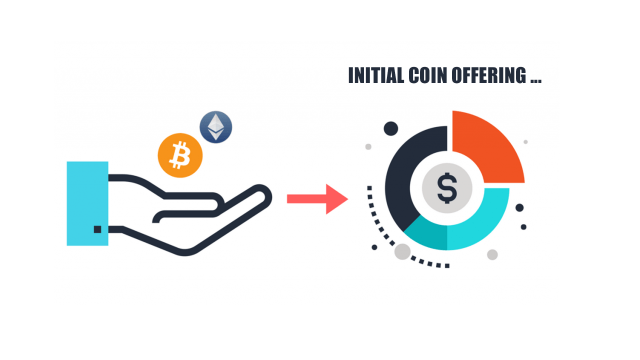
So, how do they do it? An ICO typically involves selling a new digital currency, or token at a discount. When the cryptocurrency succeeds and appreciates in value, the investor has made a profit. These tokens are often exchanged against digital currencies like Bitcoin or Ethereum and the new tokens can easily be sold and traded on existing cryptocurrrency exchanges.

Ripple and Ethereum set the trend

The first cryptocurrency to employ an ICO was Ripple, which is a payment system that promises to supplant the current SWIFT transaction procedure used by international banking. Its developers issued 100 billion XRP tokens, and the sale of these funded the development of the Ripple system, which is now finding traction with major banks.

The most prominent ICO, however, has been Ethereum. In mid-2014 the Ethereum Foundation sold ETH coins against a 0.0005 Bitcoin value for each one. This gave them nearly $20 million, which served as the capital base for the development of Ethereum, which is one of the biggest newcomers to the blockchain.

2017 – The Year of the ICO Trend

But 2017 is the year that ICOs really took off. And just to show you how hot the ICO trend is, look at these two examples: Gnosis raised $12 million in 10 minutes, and a new web browser, created by the founder of Mozilla, raised $35 million in 30 seconds. Yes, that’s right, not even one minute.

We are seeing new ICOs being announced every day. For example, a hotel booking company based in Bulgaria that will use blockchain to save its customers from paying expensive booking fees is promoting its LOK tokens via social media. It has the potential to become the next Booking.com, and if it does, then the people who have bought the LOK tokens at the pre-sale price, which is discounted, will stand to make an excellent profit. Just look at the figures for Ethereum and Gnosis and you will get a good idea of just how big these ICOs go, and how fast.

For example, if you had bought ETH, the Ethereum ICO coin, when it was sold at 0.0005 Bitcoin and that value is now 0.05 Bitcoin., you would have made substantial gains. Successful, ICOs can provide gains to their investors of anything from 100 to 500 per cent.

We’ll be bringing you more information about ICOs and how they use smart contracts, another blockchain innovation that is set to enter the mainstream thanks to Ethereum. This is truly an exciting time for startups, because ICOs offer a truly revolutionary way to raise funds for a business dream.


Initial Coin Offerings – the hot new trend

Everybody is talking about Initial Coin Offerings or ICOs. Whether it is the expert analysts or the mainstream newspapers, there is a buzz around issuing new digital coins. And no wonder – startups around the world are raising hundreds of millions of dollars through ICOs.

shutterstock_665273755

Richard Kastelstein, a partner at Cryptoassets Design group, which helps companies launch ICOs, told Business Insider in July 2017 that half a billion dollars had been raised since the start of the year. It’s a sensational sum of money, given that ICOs didn’t even exist five years ago.

Raising millions in minutes

And, get this, Gnosis, a prediction market for digital currency Ethereum raised $12 million in 10 minutes in April this year. Brave, a new web browser started by the founder of Mozilla, raised $35 million in 30 seconds by selling ‘Basic Attention Tokens’.

April 2017 is being cited as the month that ICOs really caught fire and financial experts believe they will get bigger and bigger. So, how do you set up an ICO?

Setting up an ICO

It’s quite simple really. To raise money through an ICO, a company issues a new digital currency that can either be spent within its ecosystem, a bit like Disneyland dollars, or used to power part of the business, like the fuel you put in your car. And as one ICO expert pointed out: “With tokens/digital coins you can get thousands of engaged supporters who are extremely motivated to see your company succeed.”

Foe example, Jan Isakovic, CEO of ICO platform Cofound.it has a token that is used on its platform by all the startups applying to join the platform. He raised $14.8 million in June this year through an ICO and this is funding the construction of a platform to connect ICO-funded companies with experts who can help grow their business.

Better than venture capital

Isakovic prefers ICOs because of poor experiences with the more traditional ways of raising funds, such as venture capital. As he says, this method is slow and startups don’t always get the support they need, but with an ICO, the funding comes in fast and all the people who put their money into it are engaged and energised to make it work.

Setting up an ICO is relatively simple, and most companies use the Ethereum blockchain network that allows people to write ‘smart contracts.’ Isakovic explains: “A smart contract is effectively a piece of software, a piece of code. In our smart contract, it says we are selling 125 million tokens, our cap is at 56,000 Ether or something. The ICO lasts until the cap is reached or until four weeks is done. Calculate the contribution and then send tokens. It’s two or three pages of programme and Ethereum does everything else.”

ICO exchanges

And there is another advantage: unlike buying shares in an early stage company, investors in ICOs can trade the coins almost immediately on a number of exchanges, rather than waiting for a company to list on a stock market. This attracts investors looking to make money, and this is pushing up valuations.

When you look at kript.io, a decentralised mobile app and social network for investing and trading in ICOs, you realise the phenomenal array of investment opportunities that are available, the simplicity of the concept and its security, because the Ethereum platform used for ICOs has proved itself to be bomb proof.

A booming market

The market capitalisation for cryptocurrencies has been steadily growing since the beginning of 2017; in fact it has multiplied by 1.5 times. Without doubt blockchain technology is going to be the future of the financial market and ICOs are going to play a massive role in fund raising. ICOs really are the trend to watch.