The Ultra-Rich Know What’s Coming: What Billionaires’ Behavior Signals About the Future

If the world burned tomorrow, most people would turn on the news.
The ultra-rich would head straight for the bunkers they already built.

For years, billionaires were obsessed with Mars colonies, metaverses, and the next big moonshot. But something has shifted. Their behavior is no longer driven by flashy ambition — it’s driven by caution. And in their world, caution is rarely for nothing.

Look closely at what they’re actually doing. Jeff Bezos has been liquidating billions in Amazon stock, even as the company continues strong. Elon Musk has repeatedly cashed out Tesla shares despite claiming unshakable confidence in the company. Google’s founders, once famous for holding tight through every storm, have quietly sold off major stakes. These aren’t panicked moves — they’re strategic. The richest people in the world are prioritizing liquidity, not loyalty. Money you can move is more valuable than money trapped inside a volatile future.

At the same time, the wealthiest are no longer buying luxury — they’re buying resilience. Mark Zuckerberg’s Hawaii compound is rumored to include secure underground areas, and it’s not the only one of its kind. New Zealand officials have publicly complained about billionaire land grabs fueled by interest in remote safety havens. Private islands, secured estates, hardened shelters — these are not status symbols. They are continuity plans.

And while the public is encouraged to build stock portfolios and “trust the system,” the ultra-rich are buying the system’s fundamentals. Farmland. Water rights. Critical infrastructure. Supply chain choke points. Bill Gates has quietly become the largest private farmland owner in the United States — not for fun, and not for scenery. Food and water are power in a future defined by scarcity.

They are acting like the next decade will not look like the last.

Not because they have a secret prophecy. Because they have the best data on the planet — from geopolitical threat forecasting to climate trend modeling to macroeconomic stress indicators. They see pressure building in every direction: automation threatening jobs faster than new ones appear, global supply chains stretched to breaking, political institutions struggling to contain polarization and distrust, and climate events shifting from rare to routine.

Stability was a privilege of the past. Volatility is what’s next.

Your financial advisor tells you to buy the dip. Billionaires are making sure they don’t fall with it. They aren’t scared of losing wealth — they’re scared of losing control, safety, and autonomy. So they’re preparing for a future where those things are no longer guaranteed by governments, markets, or society.

The truth is simple: the ultra-rich aren’t smarter, just earlier. They act before everyone else realizes what’s happening. If their behavior looks unusual, it’s because the future they see coming isn’t business as usual.

Most people will wait to react until the headlines make the danger obvious. The people with the most to lose — they’re reacting now.

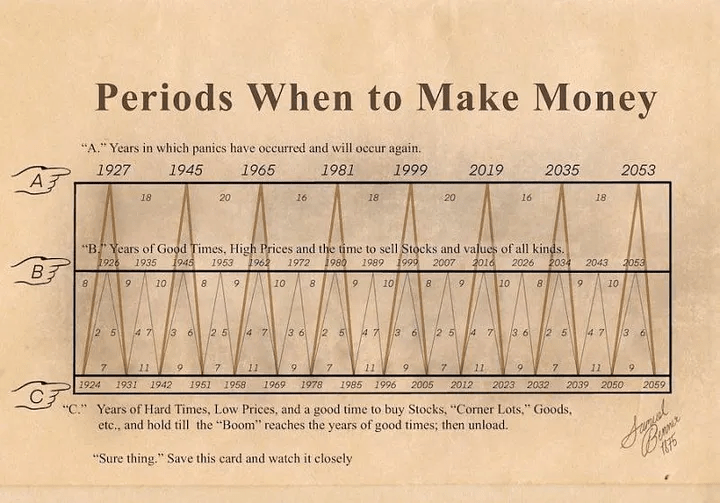
The 150-Year Market Map That Predicted Every Crash — Including What’s Next in 2025

Markets feel chaotic in the moment. Crashes seem sudden, bubbles look irrational, and recoveries often appear like miracles. But history tells a different story: financial markets move in cycles—predictable, almost rhythmic patterns that have repeated for over 150 years.

What if I told you there’s a map—a historical blueprint—that not only explains every major boom and bust but also gives us strong clues about where we’re heading in 2025?


The Cycles Hidden in Plain Sight

When you zoom out far enough, short-term noise disappears, and long-term patterns emerge. Economists and historians have tracked several recurring cycles, but three stand out:

  • Kondratiev Waves (40–60 years): Long cycles driven by technological revolutions and infrastructure buildouts. Steam, railroads, electricity, oil, the internet—all sparked massive booms, followed by crashes.
  • Kuznets Cycles (15–20 years): Linked to investment in housing, demographics, and migration.
  • Juglar Cycles (7–11 years): Classic business cycles of expansion and recession.

Overlay these cycles on a 150-year market map, and something fascinating happens: the Great Depression (1929), Dot-Com Bust (2000), Global Financial Crisis (2008), and even the COVID crash (2020) all align almost perfectly with these waves.

History may not repeat exactly, but it certainly rhymes.


Every Crash, Every Time

  • 1929 Crash & Depression: The end of a Kondratiev wave powered by industrial expansion.
  • 1970s Stagflation: A cycle peak fueled by post-WWII rebuilding, ending in inflation and oil shocks.
  • 2000 Dot-Com Bubble: A tech-driven Kuznets-Juglar alignment that snapped under its own weight.
  • 2008 Financial Crisis: A Kuznets housing cycle collapse, amplified by financial engineering.
  • 2020 Pandemic Shock: An external trigger landing right at the tail of a Juglar cycle.

The map isn’t magic—it’s math + psychology. Human behavior (fear, greed, over-confidence) drives markets the same way it did a century ago. Combine this with debt cycles, demographics, and technology shifts, and the rhythm becomes clear.


So What About 2025?

If history holds, 2025 looks like the intersection of two powerful forces:

  1. Debt & Liquidity Squeeze
    The last decade was defined by cheap money and explosive debt. Rising interest rates now act as a global stress test. Historically, debt bubbles unwind painfully—2025 could mark the breaking point.
  2. Tech Hype vs. Reality
    AI, blockchain, and green tech are driving a new Kondratiev-style boom. But every tech revolution has its bubble phase before real adoption matures. The “AI everything” narrative feels eerily similar to the 1999 internet euphoria.
  3. Geopolitical Fractures
    Major wars, supply chain realignments, and the de-dollarization trend are reshaping global finance. History shows that market shocks often align with geopolitical stress.

Put simply: the 150-year map suggests that 2025 won’t be just another year—it could be the pivot point of the next great reset.


How to Think About It

The point isn’t doom-scrolling or fear. It’s preparation.

  • Crashes aren’t endings—they’re transitions.
  • Every market bust of the last 150 years created the foundation for the next growth wave.
  • The winners aren’t those who avoid volatility but those who understand it and position wisely.

If the map is right, 2025 may bring turbulence—but also once-in-a-generation opportunities.


Final Thought

The 150-year market map isn’t a crystal ball. It’s a reminder that cycles, not randomness, drive history.

We’ve seen this movie before—every crash, every recovery, every new boom. And if the patterns hold, 2025 could be one of the most decisive chapters yet.

The real question isn’t whether the storm is coming. It’s whether you’ll be prepared to navigate it.

AI Is the Key to Surviving Supply Chain Challenges in 2025

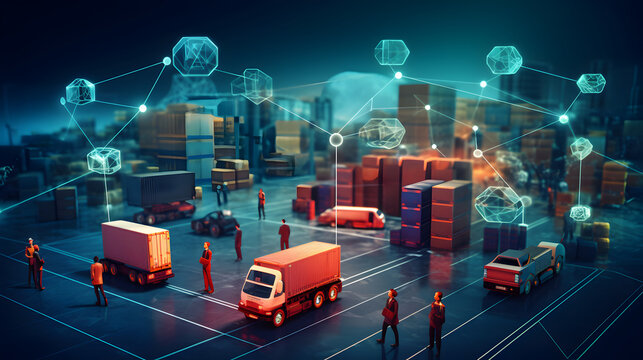
The global supply chain landscape is constantly evolving, with disruptions becoming more frequent due to economic shifts, geopolitical tensions, and unforeseen crises such as pandemics and natural disasters. As we move into 2025, businesses must embrace cutting-edge technologies to navigate these challenges. Among these technologies, Artificial Intelligence (AI) stands out as the most transformative tool in ensuring supply chain resilience, efficiency, and adaptability.

The Growing Complexity of Supply Chain Challenges

Supply chains today are more interconnected than ever before, spanning multiple countries and involving numerous stakeholders. However, they also face increasing risks:

  • Global Disruptions – Trade wars, political instability, and pandemics have exposed the vulnerabilities of traditional supply chains.
  • Demand Volatility – Unpredictable consumer behavior and shifting market demands make forecasting increasingly difficult.
  • Labor Shortages – Workforce availability remains a critical challenge, exacerbated by automation and changing job landscapes.
  • Logistics Bottlenecks – Port congestion, rising shipping costs, and transport inefficiencies continue to plague global trade.

To address these issues, businesses must leverage AI-driven solutions to enhance agility and mitigate risks proactively.

How AI is Revolutionizing Supply Chains

1. Predictive Analytics for Demand Forecasting

AI-powered predictive analytics enables businesses to anticipate demand fluctuations with greater accuracy. Machine learning models analyze vast datasets, including market trends, economic indicators, and historical sales, to optimize inventory levels and minimize stockouts or overstock situations.

2. Real-Time Visibility and Monitoring

AI-enhanced supply chain management platforms provide real-time tracking of goods, offering end-to-end visibility. This level of transparency helps businesses detect potential disruptions early and adjust their strategies accordingly.

3. Intelligent Automation in Warehousing and Logistics

  • Robotic Process Automation (RPA) streamlines order processing and reduces manual errors.
  • Autonomous Vehicles and Drones optimize last-mile delivery, reducing transit times and costs.
  • Smart Warehouses use AI-driven robots to manage inventory efficiently, improving overall supply chain performance.

4. Risk Management and Resilience

AI-driven risk assessment tools analyze geopolitical, economic, and environmental factors, enabling businesses to proactively address vulnerabilities. Machine learning algorithms identify patterns that indicate potential disruptions, allowing for contingency planning before issues escalate.

5. AI-Driven Supplier Relationship Management

By analyzing supplier performance, AI can help businesses make data-driven decisions about procurement strategies. AI-powered negotiation tools optimize supplier contracts, ensuring cost-effectiveness and efficiency.

The Future of AI in Supply Chain Management

As AI continues to evolve, it will unlock even greater efficiencies in supply chain management. Future advancements may include:

  • Hyper-Personalized Logistics – AI-driven solutions tailored to individual customer needs, improving satisfaction and retention.
  • Blockchain and AI Integration – Combining AI with blockchain enhances supply chain security, reducing fraud and improving traceability.
  • Quantum Computing for Complex Decision-Making – Emerging quantum technologies will further enhance AI’s capabilities in solving complex supply chain challenges.

As we approach 2025, AI is no longer a luxury but a necessity for businesses aiming to survive and thrive in the face of supply chain challenges. By leveraging AI-driven insights, automation, and risk mitigation strategies, companies can build more resilient and efficient supply chains. The businesses that embrace AI today will be the ones that lead the market tomorrow, ensuring long-term sustainability and competitive advantage in an increasingly uncertain world.

Ready or Not, Disruptive AI Is Here to Stay: Embracing the Future of Technology

In the realm of technological advancement, few innovations have garnered as much attention and excitement as Artificial Intelligence (AI). Once confined to the realm of science fiction, AI has rapidly evolved into a disruptive force reshaping industries across the globe. From healthcare and finance to education and entertainment, the transformative potential of AI is undeniable. In this comprehensive article, we will explore the far-reaching impact of AI, the challenges it presents, and the opportunities it offers for individuals, businesses, and society as a whole.

The Evolution of AI: The journey of AI from concept to reality has been marked by significant milestones and breakthroughs. Initially conceived as a theoretical concept in the 1950s, AI has since evolved into a multifaceted field encompassing various subfields such as machine learning, natural language processing, computer vision, and robotics. Advances in computing power, data availability, and algorithmic sophistication have fueled the rapid progress of AI, enabling applications that were once thought to be the stuff of science fiction.

Applications of AI Across Industries:

  1. Healthcare: AI is revolutionizing healthcare by enabling early disease detection, personalized treatment plans, and medical image analysis. Machine learning algorithms analyze vast amounts of patient data to identify patterns and predict health outcomes, leading to improved diagnosis and treatment.
  2. Finance: In the financial sector, AI is driving innovation in areas such as algorithmic trading, fraud detection, risk assessment, and customer service. AI-powered chatbots and virtual assistants are enhancing customer engagement and streamlining processes, while predictive analytics are helping investors make data-driven decisions.
  3. Education: AI-powered adaptive learning platforms, personalized tutoring systems, and virtual classrooms are transforming education by catering to individual learning styles and providing personalized learning experiences. Intelligent tutoring systems leverage AI algorithms to assess student performance and deliver targeted feedback and instruction.
  4. Entertainment: AI is reshaping the entertainment industry through personalized content recommendation systems, predictive analytics, and virtual reality experiences. Streaming platforms use AI algorithms to analyze user preferences and behavior to recommend relevant content, while AI-driven chatbots and virtual characters enhance user interaction and engagement.

Challenges and Considerations: While the potential benefits of AI are vast, the technology also presents significant challenges and considerations that must be addressed:

  1. Ethical and Societal Implications: AI raises important ethical questions regarding data privacy, algorithmic bias, and job displacement. Concerns about the misuse of AI, the erosion of privacy rights, and the exacerbation of social inequalities must be addressed through robust regulatory frameworks and ethical guidelines.
  2. Bias and Fairness: AI algorithms can inadvertently perpetuate bias and discrimination if trained on biased data or flawed assumptions. Addressing algorithmic bias requires careful data collection, preprocessing, and algorithm design to ensure fairness and equity in AI systems.
  3. Transparency and Accountability: The opaque nature of AI algorithms raises concerns about accountability and transparency. Users must be able to understand how AI systems make decisions and the potential implications of those decisions on their lives and livelihoods.
  4. Security and Robustness: AI systems are vulnerable to attacks and exploitation by malicious actors. Ensuring the security and robustness of AI systems requires rigorous testing, validation, and cybersecurity measures to mitigate potential threats and vulnerabilities.

Opportunities and Future Outlook: Despite the challenges, the future of AI is filled with promise and potential. By embracing AI responsibly and ethically, we can unlock its full potential to drive positive change and improve lives globally. Key opportunities and trends in the future of AI include:

  1. Continued Innovation: AI will continue to evolve and advance, leading to new breakthroughs and applications across industries. Emerging technologies such as quantum computing, federated learning, and neuromorphic computing will further accelerate the pace of AI innovation.
  2. Human-AI Collaboration: The future of AI will be characterized by increased collaboration between humans and machines. AI systems will augment human capabilities, enabling individuals to perform tasks more efficiently and effectively.
  3. Ethical AI Development: There will be a growing emphasis on ethical AI development and deployment, with stakeholders across academia, industry, and government working together to establish guidelines and standards for responsible AI use.
  4. Societal Impact: AI will have profound implications for society, transforming the nature of work, education, healthcare, and governance. It is essential to consider the broader societal impact of AI and ensure that its benefits are equitably distributed.

In conclusion, AI is poised to usher in a new era of technological innovation and disruption. Ready or not, AI is here to stay, and its impact will only continue to grow in the years ahead. By embracing AI responsibly and ethically, we can harness its transformative potential to address some of the most pressing challenges facing humanity and create a brighter, more equitable future for all.