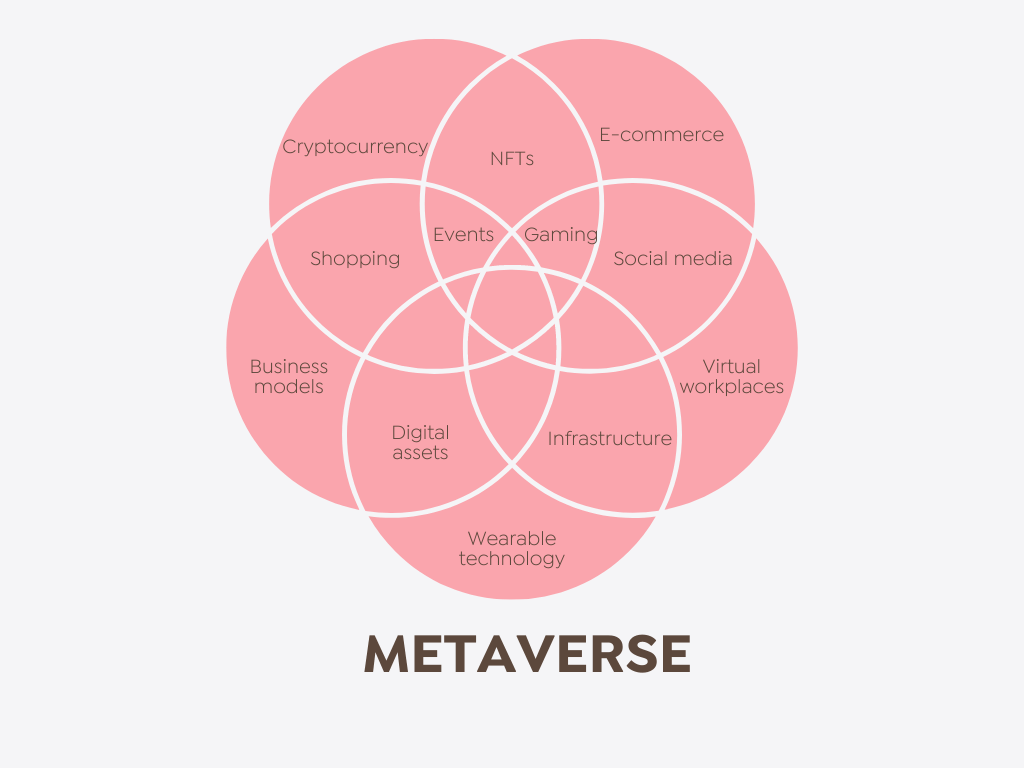
Metaverse Impact on cyber security

The Metaverse is a virtual space where users can interact with each other and digital objects in a three-dimensional environment. As the Metaverse continues to grow and evolve, it will have a significant impact on cybersecurity. Here are some potential ways the Metaverse could impact cybersecurity:

1. Increased cyber attacks: As more users join the Metaverse, it becomes a more attractive target for cybercriminals. The Metaverse will likely have many valuable digital assets, such as virtual real estate, in-game items, and cryptocurrency, making it an enticing target for theft and fraud.

2. New types of cyber threats: The Metaverse will introduce new types of cyber threats, such as virtual identity theft, social engineering, and virtual asset theft. These threats will require new security measures and strategies to mitigate.

3. Cross-platform security risks: The Metaverse is likely to span multiple platforms, including virtual reality, mobile devices, and traditional desktops. This creates new security risks, as vulnerabilities in one platform can potentially compromise the security of the entire Metaverse.

4. Greater emphasis on privacy: The Metaverse will likely involve the collection and sharing of vast amounts of personal data. This creates privacy concerns, particularly if the Metaverse is owned by a centralized entity that controls access to the virtual space.

5. New security challenges for developers: Developing applications for the Metaverse will require new security considerations. For example, developers will need to ensure that virtual assets are secure, that user data is protected, and that applications are not vulnerable to exploits or hacking.

To mitigate these risks, it will be important for metaverse developers to prioritize cyber security as they design and develop these technologies. They must also work with security experts to identify and address potential vulnerabilities and ensure that users have the necessary tools to protect their privacy and digital assets. Additionally, governments and regulatory bodies must develop clear guidelines and regulations for the use of metaverse technologies to promote cyber security and protect users.

Here are some tips to help you guard against cybersecurity assaults in the Metaverse:

· Use strong passwords and multi-factor authentication: Always use strong passwords and enable multi-factor authentication whenever possible. This can help prevent unauthorized access to your accounts and protect your personal data.

· Be cautious of suspicious links and emails: Don’t click on links or download attachments from unknown or suspicious sources. These can be used to install malware or steal your personal information.

· Use anti-virus and anti-malware software: Install anti-virus and anti-malware software on your devices to help detect and remove malicious software.

· Be mindful of what you share: Be careful about what personal information you share online, including in the metaverse. Avoid sharing sensitive information such as your home address, phone number, or social security number.

· Use a virtual private network (VPN): Consider using a VPN to encrypt your internet connection and protect your online activities from prying eyes.

· Stay informed: Keep up to date with the latest cyber security threats and trends in the metaverse. This can help you stay one step ahead of potential attackers and protect yourself more effectively.

Did you like this post? Do you have any feedback? Do you have some topics you’d like me to write about? Do you have any ideas on how I could make this better? I’d love your feedback!

Feel free to reach out to me on Twitter!
Deepfake impact on cyber security

Deepfakes can have a significant impact on cybersecurity as they can be used to spread misinformation and deceive people, making it difficult to identify legitimate information and actions. Here are some ways deepfakes can impact cybersecurity:

1. Phishing attacks: Deepfake technology can be used to create convincing voice or video messages that appear to come from a trusted source, such as a company executive or a colleague. Attackers can use these deepfakes to trick individuals into sharing sensitive information or performing actions that could compromise their organization’s security.

2. Social engineering: Deepfakes can be used to impersonate individuals, such as celebrities or public figures, and manipulate public opinion or incite political unrest. These types of deepfakes can be used to spread disinformation or influence public perception, potentially causing social or political chaos.

3. Identity theft: Deepfake technology can be used to create convincing video or audio recordings that appear to be from a legitimate source. Attackers can use these deepfakes to impersonate individuals and gain access to sensitive information or financial accounts.

4. Cybercrime: Deepfakes can be used to create convincing fake identities or fake credentials that can be used to carry out cyberattacks. This can make it more difficult to track down attackers and prevent future attacks.

5. Reputation damage: Deepfakes can be used to damage an individual’s reputation or the reputation of an organization. For example, attackers can create fake videos or audio recordings of an individual saying or doing something inappropriate or illegal, causing damage to their personal or professional reputation.

Overall, deepfakes pose a significant threat to cybersecurity, and it is essential to stay vigilant and use appropriate security measures to protect against these types of attacks.

To defend against deepfake attacks, organizations can use a variety of strategies, including:

· Training employees to recognize deepfakes and to verify the authenticity of information before acting on it.

· Using advanced technologies, such as blockchain or cryptographic signatures, to verify the authenticity of information.

· Monitoring social media and other online platforms for signs of deepfake activity.

· Developing policies and procedures for responding to deepfake attacks, including reporting them to law enforcement and conducting an internal investigation.

· Be vigilant: Be aware of the possibility of deepfake attacks and keep an eye out for any suspicious videos or images that seem to be too good to be true. Be especially cautious when sharing content that seems unusual or out of character for the person depicted.

· Use authentication tools: Consider using authentication tools such as digital signatures or watermarking to verify the authenticity of the content. These tools can help to confirm that the video or image is legitimate and hasn’t been altered.

· Educate yourself: Learn how deepfake attacks work and how to recognize them. By educating yourself on the latest techniques used by attackers, you can better protect yourself against these types of attacks.

· Verify sources: Always verify the source of any videos or images before sharing or publishing them. This can help to prevent the spread of fake content.

· Use machine learning tools: Use machine learning tools to detect deepfake attacks. There are a growing number of tools available that use AI to identify and flag deepfake content.

· Build awareness: Raise awareness of the dangers of deepfake attacks and educate others on how to recognize and defend against them. The more people know about these attacks, the less likely they are to be successful.

Did you like this post? Do you have any feedback? Do you have some topics you’d like me to write about? Do you have any ideas on how I could make this better? I’d love your feedback!

Feel free to reach out to me on Twitter!

State of Crypto 2023 by Andreessen Horowitz

There has been so much happening in the crypto scene. There has been a fluctuation in the prices, wrangles in regulation, etc. This inspired the crypto VC firm Andreessen Horowitz, AKA a16z, to give a crypto market report early this month.

The report started with an overview of the current state of the crypto market, which is characterized by crypto companies collapsing, crypto cycle, crypto regulation, and decentralization.

According to the report, most of the setbacks in the industry are caused by centralization. Centralization happened for selfish reasons, as some entities wanted to maximize the crypto market cycle gains. The solution to this is decentralization.

The second part of the report talks more about crypto market cycles. A positive feedback loop causes crypto market cycles. When the prices go up, it increases the interest rates, which leads to new ideas and projects, making the price go up again. There have been four crypto market cycles so far. The crypto market cycles happen every four years, just like Bitcoin halving.

The report’s authors talk about the different layer cryptos and how to layer two cryptos are gaining a lot of traction. Almost seven percent of all Ethereum fees are on L2s.

Ethereum was highlighted for reducing its energy use by 99.9% by changing its consensus from proof of work to proof of stake.

They reviewed the rising popularity of zero-knowledge proofs, NFTs, and the growth of web3 gaming which has yet to be nearly as impacted by the crypto bear Market. Participation in DAOs has also steadily increased, but this might not necessarily be a bullish sign.

The report discusses the three proposed crypto regulations, including the bipartisan crypto bill by Senator Cynthia Lamas and Kirsten Gillibrand, seven pending crypto cases, including the SEC’s case against Ripple, and three proposed crypto rules, including the SEC’s crypto custody rule.

In the report, there was a highlight on crypto market metrics. It includes the number of active developers, smart contracts, the number of crypto-related academic publications, and the number of people looking for crypto-related jobs.

Crypto adoption indicators include the number of active crypto wallet addresses, the number of crypto transactions, the number of transaction fees paid, the number of mobile crypto wallet users, the amount of trading volume on decentralized exchanges, NFT buyers, and stablecoin trading volume.

What is next?

According to the report, crypto adoption may be likened to internet adoption in the mid-90s. If it takes the same path, crypto will hit 1 billion users in 2031. This will, however, be dependent on crypto regulation and education. Some of the expectations the authors of the report have include:

1. Web 3 will grow. They expect the best web3 products and protocols to be developed during the remaining part of the crypto bear market.

2. Smart contract security will improve. This will lead to more crypto development.

3. Zero-knowledge proofs will continue to become more popular. This makes sense considering institutional investors require Financial privacy, which is something that zero-knowledge proofs can provide.

4. Big Tech will continue to take greater control of the Web 2 internet, and this will highlight the importance of Web 3.

5. Web3 gaming will become more popular. People adopt crypto for speculation, necessity, or entertainment. The entertainment part is growing.

6. There will be more crypto-specific hardware, particularly for zero-knowledge proofs.

7. Decentralized social media will become popular due to issues with centralized social media.

8. Light clients will enable mobile devices to become more involved in crypto infrastructure. This will mean bringing more crypto to mobile devices.

9. There will be new kinds of community governance in DAOs.

10. Governments will pass bipartisan crypto regulations. The crypto regulations will not only be in the US but in other countries too.

11. Non-speculative crypto use cases will emerge.

12. Hiring treasury management and sustainable funding will be a focus for DAOs. This is a subtle reference to a new crypto niche called ReFi or Regenerative Finance, which involves investing in tokenized carbon credits.

What does the a16z report mean for the crypto market?

The report gives a lot of insights into what institutional investors think of the crypto market. Since they are the dominant share, they impact the market. Factors such as crypt regulation and decentralization are important to investors, affecting the entire market. This can help us know what to expect in the future and plan accordingly.

Did you like this post? Do you have any feedback? Do you have some topics you’d like me to write about? Do you have any ideas on how I could make this better? I’d love your feedback!

Feel free to reach out to me on Twitter!

Is AI a Conscious Technology?

In 2023 there has been so much hype about AI and how it can make work easier. AI has advanced such that it can drive cars, recognize voices or even compose music. Initially, people used AI in many ways, but they didn’t realize it. For instance, voice search and applications such as Siri have been there for a while. Surprisingly, many people needed to be made aware that it uses AI technology.

How does the human mind compare to AI?

One advantage of AI is that it can efficiently process complex information. Its downside is that it never does it consciously. On the other hand, the human brain can process complex information but does it consciously.

The fact that the human mind can generate subjective experiences is one thing AI will never beat. There’s likely no such thing as artificial consciousness.

AI consciousness research

There has been plenty of research that has been done regarding consciousness.

Ned Block, for instance, found out that consciousness is grounded in biology, and thus, synthetic systems such as AI cannot have absolute consciousness.

On the other hand, Cambridge believes that biological brains are not necessary for consciousness; thus, engineered solutions such as AI can still attain consciousness. Cambridge believes that engineered conscious AI is on its way and will be available by the end of the century.

Dr. Tom McClelland, a lecturer at Clare College, believes that both parties are wrong about consciousness as most people do not know much about consciousness.

Human consciousness is mysterious in a way. Cognitive neuroscience can tell what exactly is going on when you read an article, such as your perception, understanding, evaluation, etc. It, however, cannot tell your conscious experience. Is that consciousness?

Then neural patterns typically occur when you process information consciously, but there’s no distinction between conscious and unconscious neural processes.

If humans understand what makes us conscious, it’s possible to know whether AI has what it takes.

What makes us conscious is the integration of information in the brain. And if that’s the case, then AI can undoubtedly be conscious.

If humans are conscious because of neurobiology, no programming will make AI conscious. The problem is we are still determining if it is true.

When we know the limitations of human understanding, we can see the possibility of AI consciousness.

AI must be treated like any other tool if it does not have subjective awareness.

It’s still unclear whether AI is conscious or not. What options do humans have?

1. Assume AI is not conscious

Even though AI systems are getting more complex and sophisticated by the day, we should not consider them when making moral decisions.AI is a product of unconscious processes and should be treated that way.

2. Assume AI is conscious and treat it with caution

That means we should assume that sophisticated AI is sentient. This may, however, come with an ethical disaster. We might use valuable resources

but still risk our morality.

Since there are pros and cons to both approaches, it is better to take precautions until you clearly understand the consciousness

When proposing a global moratorium on creating artificial consciousness, Thomas Metzinger argues that if we wait to understand consciousness fully, we might wait for a very long time. This may deny the world the benefits of sophisticated AI technology. He believes that even with the moratorium, there is a risk of having conscious AI. There is also a chance that conscious AI is already here.

What does the future hold?

There is a need for philosophers and cognitive scientists to work on consciousness, but there is unlikely they will get a solution now. People should reflect on why they value consciousness. Are subjective experiences really worth it?

Undoubtedly, if conscious AI is not here already, it will be soon.

AI being conscious does not stop the technology from breaking barriers and causing an impact. AI will only improve with time, with more adoption expected in the market.

Did you like this post? Do you have any feedback? Do you have some topics you’d like me to write about? Do you have any ideas on how I could make this better? I’d love your feedback!

Feel free to reach out to me on Twitter!