Navigating Tomorrow’s Sales Landscape: 7 Disruptive Technologies Set to Redefine Sales by 2027

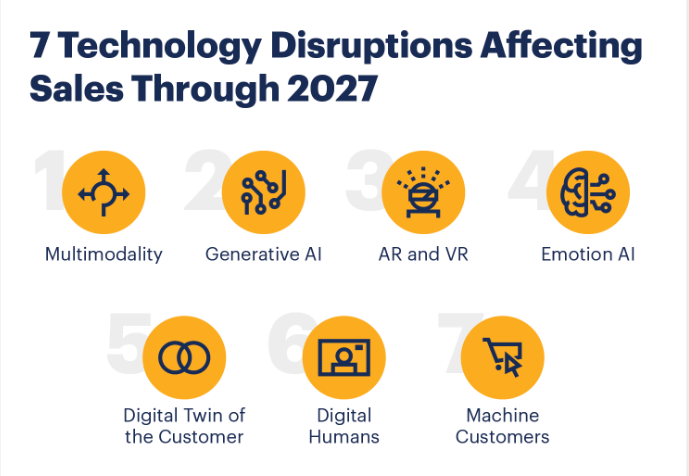
In the fast-paced world of sales, staying ahead of the curve is crucial. As we look ahead to the next six years, several emerging technologies are poised to disrupt and revolutionize the sales landscape. From artificial intelligence to blockchain, these innovations promise to reshape the way businesses approach selling, creating new opportunities and challenges. Let’s delve into the seven key technologies set to make a significant impact on sales by 2027.

  1. Artificial Intelligence and Machine Learning: The integration of AI and machine learning is set to transform sales processes. From predictive analytics that forecast customer behavior to AI-driven chatbots providing real-time support, these technologies enhance efficiency, personalization, and overall customer experience.
  2. Augmented Reality (AR) and Virtual Reality (VR): AR and VR technologies are breaking down barriers in product demonstrations and virtual shopping experiences. Sales professionals can create immersive presentations, allowing customers to visualize products in their own space, ultimately influencing purchasing decisions.
  3. Blockchain in Sales: Blockchain’s decentralized and secure nature is revolutionizing transactions. Smart contracts streamline agreements, reduce fraud, and enhance trust between parties. In sales, blockchain ensures transparency in the supply chain, reducing complexities and mitigating risks.
  4. Internet of Things (IoT): The IoT is enabling smart, connected devices that offer valuable data insights. In sales, IoT devices can provide real-time information on product usage, allowing businesses to tailor their offerings and services to meet customer needs more effectively.
  5. Voice Technology: With the rising prevalence of virtual assistants and voice-activated devices, sales strategies are adapting to cater to voice searches and commands. Optimizing content and sales processes for voice technology is becoming imperative for reaching tech-savvy consumers.
  6. Predictive Analytics: Leveraging big data and advanced analytics, predictive analytics models forecast customer behaviors, preferences, and market trends. Sales teams armed with predictive insights can make informed decisions, personalize interactions, and proactively address customer needs.
  7. Robotic Process Automation (RPA): RPA streamlines repetitive tasks, allowing sales teams to focus on more complex, strategic activities. Automating mundane processes enhances productivity, reduces errors, and accelerates the sales cycle.

As we approach 2027, the convergence of these disruptive technologies will undoubtedly reshape the sales landscape. Adapting to these changes and integrating them strategically into sales processes will be paramount for businesses aiming to stay competitive in an ever-evolving marketplace. Embracing innovation and staying informed about these technological shifts will empower sales professionals to navigate the future successfully.

Did you like this post? Do you have any feedback? Do you have some topics you’d like me to write about? Do you have any ideas on how I could make this better? I’d love your feedback!

Feel free to reach out to me on Twitter!
Navigating the Path to Becoming a Data Scientist: A Comprehensive Guide

In the fast-evolving landscape of technology and business, the role of a data scientist has become increasingly vital. These professionals bridge the gap between raw data and actionable insights, driving informed decision-making and innovation. If you’re aspiring to become a data scientist, here’s a comprehensive guide to help you navigate this exciting and dynamic field.

1. Master the Basics:

The foundation of data science lies in programming languages such as Python, R, and SQL. These tools are the building blocks for data manipulation, analysis, and visualization. Invest time in understanding their nuances and functionalities.

2. Embrace Statistics:

Statistics forms the backbone of data science. Develop a strong understanding of statistical concepts to derive meaningful insights from data. This knowledge will aid in making informed decisions and crafting robust models.

3. Dive into Machine Learning:

Explore the vast landscape of machine learning (ML) algorithms. Familiarize yourself with supervised and unsupervised learning techniques. Hands-on experience with ML frameworks like TensorFlow or Scikit-Learn will deepen your understanding.

4. Data Wrangling:

Learn the art of data wrangling — the process of cleaning, preprocessing, and organizing raw data into a usable format. This skill is crucial for handling real-world datasets and extracting valuable information.

5. Visualization Magic:

Data visualization is a powerful storytelling tool. Master visualization libraries like Matplotlib, Seaborn, or Tableau to effectively communicate your findings. A compelling visualization can make complex data accessible and understandable.

6. Stay Curious:

The field of data science is ever-evolving. Stay curious and keep abreast of the latest trends, tools, and methodologies. Follow influential figures in the data science community, read research papers, and engage in continuous learning.

7. Build a Portfolio:

Create a portfolio showcasing your data science projects. Include detailed explanations of the problems you tackled, the methodologies you employed, and the insights gained. A strong portfolio is your professional showcase and a testament to your skills.

8. Network:

Join data science communities online and offline. Attend meetups, conferences, and webinars to connect with professionals in the field. Networking not only provides valuable insights but can open doors to opportunities.

9. Soft Skills:

In addition to technical skills, develop soft skills such as effective communication and problem-solving. Data scientists often need to convey complex findings to non-technical stakeholders, making these skills invaluable.

10. Lifelong Learning:

Embrace a mindset of continuous improvement. The data science field is dynamic, with new technologies and methodologies emerging regularly. Stay adaptable and be willing to learn throughout your career.

Embarking on the path to becoming a data scientist is a challenging yet rewarding journey. By mastering the basics, embracing continuous learning, and building a diverse skill set, you’ll be well-equipped to make a significant impact in the world of data science. The future is data-driven — are you ready to shape it?

Did you like this post? Do you have any feedback? Do you have some topics you’d like me to write about? Do you have any ideas on how I could make this better? I’d love your feedback!

Feel free to reach out to me on Twitter!

Interoperability: Addressing the Key Blockchain Challenge in a Fragmented Web3 World

In the burgeoning landscape of Web3, the potential for decentralization, transparency, and innovation is vast. However, this rapidly evolving ecosystem faces a significant hurdle: interoperability. As blockchain technology progresses, the challenge of interoperability stands as a critical barrier in the path towards a unified and functional Web3.

Web3, powered by blockchain technology, champions decentralization, offering a framework where data is distributed and decentralized applications (dApps) thrive. While this heralds a new era in technology, the diversification of blockchain networks has resulted in a fragmented environment. Numerous blockchains, each with distinct protocols, smart contract capabilities, consensus mechanisms, and functionalities, contribute to this fragmentation.

The lack of interoperability between these diverse blockchains inhibits seamless communication and exchange of data and assets. It restricts the potential for these blockchains to interact cohesively and limits the overall efficiency and utility of the Web3 ecosystem.

Imagine a scenario where different blockchains resemble isolated islands, each with its unique set of rules, unable to communicate or transact with one another. This segregation limits the potential of blockchain technology to transform various sectors, such as finance, supply chain management, healthcare, and more.

Addressing this challenge is imperative for the advancement and widespread adoption of Web3. To achieve a more interconnected and functional Web3, initiatives focusing on interoperability are emerging:

  1. Cross-Chain Communication Protocols: Various projects and protocols are striving to create interoperability solutions, allowing different blockchains to communicate and share data effectively. Protocols such as Polkadot, Cosmos, and ICON are working on establishing networks that facilitate communication and data transfer between blockchains.
  2. Interoperability Standards: Efforts are underway to establish interoperability standards that can be adopted across different blockchains. These standards would enable seamless interaction and data exchange between various blockchain networks, fostering a more cohesive ecosystem.
  3. Bridge Technologies: Bridge technologies aim to create connections between different blockchains, allowing for the transfer of assets and data across these networks. These bridges serve as conduits, enabling interoperability and enabling diverse blockchains to collaborate.
  4. Universal Decentralized Protocols: The development of universal protocols that transcend the limitations of individual blockchains is crucial. These protocols should support interoperability, allowing for the transfer and exchange of assets and data in a trustless and decentralized manner.

Achieving interoperability in the Web3 landscape will pave the way for a more interconnected and efficient ecosystem. It will unlock the full potential of blockchain technology by enabling seamless communication, data transfer, and collaboration between different networks. Interoperability is not merely a technical challenge; it is a fundamental step towards realizing the transformative power of Web3 across multiple industries.

As the Web3 journey progresses, efforts to bridge the gap between these isolated blockchain networks are fundamental. By fostering interoperability, the vision of a more unified, transparent, and efficient decentralized web becomes a tangible reality. The evolution of Web3 will significantly benefit from a cohesive, interoperable ecosystem, unlocking its full potential for widespread adoption and transformative impact.

Did you like this post? Do you have any feedback? Do you have some topics you’d like me to write about? Do you have any ideas on how I could make this better? I’d love your feedback!

Feel free to reach out to me on Twitter!

AI and Crypto Could Achieve So Much More Together

AI and crypto, two transformative technologies in their own right, have been making waves individually, but the fusion of these innovations holds the potential for groundbreaking developments that could reshape industries and redefine paradigms. This article will delve into the synergies between AI and crypto and explore the possibilities and potential they hold together.

The Intersection of AI and Crypto

AI’s Role in Crypto:

Artificial Intelligence, with its machine learning and predictive analytics, has found diverse applications within the crypto landscape:

  1. Trading and Analysis: AI algorithms analyze vast amounts of data to predict market trends, optimize trading strategies, and execute trades more efficiently.
  2. Fraud Detection: AI-driven systems detect fraudulent activities and enhance security within cryptocurrency transactions.
  3. Blockchain Optimization: AI contributes to enhancing blockchain systems by improving consensus mechanisms, scalability, and smart contract efficiency.

Crypto’s Impact on AI:

Cryptocurrencies and blockchain technology have influenced the evolution of AI:

  1. Decentralization and Data Privacy: Blockchain technology enables secure, decentralized data storage, preserving privacy and providing reliable data sources for AI algorithms.
  2. Tokenization and Incentives: Cryptocurrencies offer incentives, fostering the development of AI models and datasets, creating a new marketplace for data exchange.

Potential Collaborations and Synergies

Smart Contracts and AI Oracles:

AI-driven oracles in smart contracts could introduce dynamic, data-driven contracts that respond to real-world events. This fusion could optimize contract execution and reduce reliance on manual intervention.

Decentralized Autonomous Organizations (DAOs) and AI:

Integrating AI within DAOs could enhance decision-making processes and governance structures. AI could provide analytical insights to assist in decentralized decision-making within these organizations.

Predictive Analytics in Crypto Markets:

AI’s predictive capabilities could offer valuable insights in understanding and forecasting crypto market trends, enhancing trading strategies, risk management, and investment decisions.

Challenges and Ethical Considerations

Data Quality and Bias:

Ensuring high-quality data is crucial for AI models, and within the crypto space, data transparency and accuracy pose challenges. Addressing biases in cryptocurrency data is essential to avoid skewed predictions.

Regulatory and Security Concerns:

The fusion of AI and crypto raises regulatory challenges concerning security, privacy, and legal compliance. Balancing innovation with regulatory standards is crucial to navigate potential legal obstacles.

Ethical AI Usage:

AI applications within crypto, especially in trading and investment, must prioritize ethical considerations to prevent manipulative or exploitative practices.

Future Prospects and Innovations

AI-Driven Personalized Finance:

Tailored financial services utilizing AI could emerge within the crypto ecosystem, offering customized investment advice and personalized financial solutions.

Blockchain Interoperability and AI Integration:

Developments in interoperability protocols could facilitate the integration of various blockchains, enabling AI applications to function across multiple platforms.

Decentralized AI Networks:

Decentralized AI networks utilizing blockchain could offer secure, collaborative platforms for AI development, fostering collective innovation and data sharing.

The convergence of AI and crypto presents an exciting frontier for innovation, yet it demands careful considerations in terms of ethics, regulations, and technological advancements. While the amalgamation offers immense promise, navigating the complexities of these technologies will be essential in realizing their full potential. As both AI and crypto continue to evolve, the collaboration between these two disruptive technologies could herald a new era of innovation, transforming industries and empowering novel applications that could drive substantial societal and economic changes.

Did you like this post? Do you have any feedback? Do you have some topics you’d like me to write about? Do you have any ideas on how I could make this better? I’d love your feedback!

Feel free to reach out to me on Twitter!