3 Reasons Jack Dorsey believes in a Bitcoin Revival

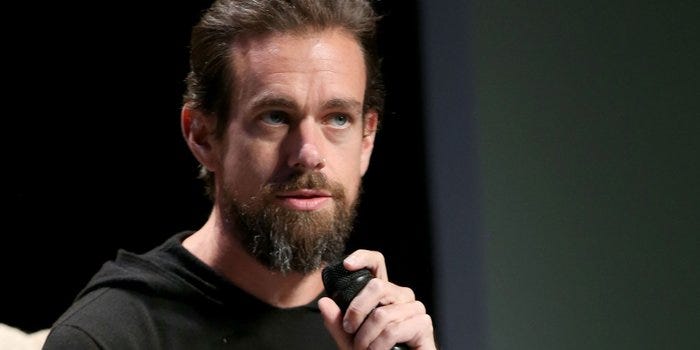
Jack Dorsey, the billionaire co-founder of Twitter and Square, is at least consistent in his support for Bitcoin. He has remained unwavering in his belief, surely earning him the title of ‘Bitcoin evangelist’.

It is hard to dismiss Dorsey’s view given that he is a successful entrepreneur, and his support for the leading cryptocurrency is music to the ears of those who share his views, but don’t have the public profile to share them with such a vast audience.

Recently Dorsey participated in a podcast, imaginatively called, “Tales from the Crypt” (perhaps they are also Edgar Allan Poe fans as it sounds like the title of one of his stories), where he talked about buying Bitcoin. He revealed that he “maximises the $10,000 Bitcoin purschase limit on Square Cash to acquire the leading cryptocurrency.” Square, in case you are unaware of it, is a payments platform with a Cash App that enables people to send money to others almost instantly. It has a merchant payment system as well and as it says on its website is, “We’re empowering the electrician to send invoices, setting up the food truck with a delivery option, helping the clothing boutique pay its employees, and giving the coffee chain capital for a second, third, and fourth location.”

What will fuel Bitcoin growth?

Since 1st March, Bitcoin has been showing growth, and another supporter of the cryptocurrency, Brian Kelly, CEO of BKCM, said he believed, “the so-called crypto winter is approaching its last phase and is slowing thawing.” Since he said this, within a week, the Bitcoin price rebounded to over $3,900 as the cryptocurrency market added $6 billion to its valuation.

Kelly explained to CNBC what was happening in terms of Bitcoin improving its fundamentals. “If you look at the number of addresses that have been created on the Bitcoin network, that’s up about 20 percent from the January lows, it’s apt highs at the levels we saw in the spring of 2018 when Bitcoin was well above $6,000. So Fundamentally, you’re starting to see improvement.

Some high profile investors and endowments have been dipping their toe into the space, add in that you’re talking about Fidelity coming out with custody this week and Jack you know, he understands the payment network.”

Kelly’s reference to Jack Dorsey brings me back to Jack’s views about what has happened. In one interview he listed the reasons for growth as “improved scalability through a second-layer scaling solution, the involvement of institutions such as Fidelity and ICE, and the overall increase in interest towards the asset class.”

Jack Dorsey’s 3 reasons for believing in Bitcoin growth

Those are the three reasons Dorsey sees a strong future for Bitcoin. And there is one other: Dorsey is also an investor in Lightning Labs and therefore has an interest in seeing the Lightning Network succeed. He has reaffirmed that Square, the $31 billion payments giant, will adopt the Lightning Network in the near-term and when it does, Dorsey could single-handedly push the adoption of the second-layer scaling solution.


Why Coinbase listing didn’t boost XRP price

There was a general feeling that when Coinbase announced it was listing XRP on its Coinbase Pro platform there would be a corresponding leap in the value of Ripple’s native token. There was some movement on the day of the announcement (25th February) with XRP shooting up by 10% in value, but that is about as exciting as it got.

Furthermore, when Coinbase then announced on 28th February that it was adding XRP to Coinbase.com, as well as the exchanges’s Android and iOS apps, the response was flat.

The analysts’ analysis

While crypto consumers might be somewhat surprised by this lack of activity, analysts were less so. According to crypto expert Charles Bovaird, writing at Forbes, several analysts were of the opinion that they had never expected anything else. Jeff Dorman, cofounder and head portfolio manager at Arca Funds told Bovaird: “I’m not surprised by the lack of price action for XRP. First, XRP has been plagued by negative press this year and as a result, the token has been lagging the broader market all year.”

Dorman also explained that the 10% rally on the 25th February had amounted to much more, because “those gains were quickly erased when the people who bought before the news sold into those buying after the news.”

Marouane Garcon, managing director of crypto-to-crypto derivatives platform Amulet, shares Dorman’s view. “I can’t say that I’m surprised by the lack of movement. Throughout this entire bear market news and public developments haven’t been able to spark any sort of uptrend.”

However, Garcon did explain what he thought would move XRP’s price — adoption. He said, “In XRP’s case, I think banks utilizing XRP in their daily operations is what’s going to move their market.”

Big announcements don’t always bear fruit for XRP

Joe DiPasquale, CEO of cryptocurrency fund of hedge funds BitBull Capital also claims that he and others have noticed something ‘interesting’ about XRP’s price movements: “We’ve noticed the market anticipate many of Ripple’s moves, resulting in what might seem as counter-intuitive pricing over major events,” he told Bovaird, adding, “For example, during both of their last two conferences, where they announced major business development deals, the price of the XRP token dropped.”

The crypto ecosystem is the ultimate decider

All the analysts seem to agree on another viewpoint, “the different digital currencies that make up the broader market tend to move in tandem.”

So, the reason Coinbase didn’t move XRP’s price upwards as much as might have been expected is down to Ripple also being subject to the waves within the larger crypto pricing ecosystem, and these don’t always work in harmony with big announcements.

How AI can help you

Artificial Intelligence (AI) is operational in a lot of services these days, from automating processes to delivering a pleasing customer experience online. It is something we are living with and come to accept.

As Jim Sinur argues in his Forbes article, “How can AI help me?” we all have “to deal with living with AI,” and we also have to figure out how to make the best of AI in our lives. Sinur asks, “Will it be like other technology that I have to learn to for life success or will it be more like a person that I have to get along with to thrive in the future? Will AI make our lives better or should we be practicing for those apocalypse scenarios I keep reading about?” How many of us have even raised these questions?

AI can do the drudge work

Of course, responses depend on the individual’s life circumstances. For example, if you are an employee, AI has the potential to do the drudge work, leaving you free to do the more meaningful, creative tasks. And AI can assist you with that. This is a more positive view of Ai in employment and is the opposite of the scenario in which AI and robots will steal all the jobs. Sinur says, “I see AI giving us an edge in boosting our ability to consume and leverage knowledge on a grand scale even outside of our native skillsets, culture bases, and language capabilities,” and this view creates a vision of an exciting future relationship with AI.

A more personalised customer experience

Consumers can also benefit from an enhanced relationship with AI. Sinur points out an important factor that should encourage us as consumers to welcome AI: “With the advent of customer journeys, combined with AI, the complexities and company needs can fade in the background while customer needs are being represented within organizational systems, interfaces, and constraints.” The potential to offer a more personalised customer service is vital, as it is becoming evident that the consumer wants to come first more than ever, and is not prepared to kow-tow to the needs of the business. What is happening in the banking sector is a good example of this: younger customers are gravitating towards neobanks precisely because they offer a personalised service.

AI — your personal assistant

And AI can help us develop personal skills and become a more global citizen. In the case of multi-cultural interactions, AI can help us with language translation and to avoid subtle cultural errors. It may help us to be better communicators in any number of settings and it could even be a life coach and personal trainer.

I agree with Sinur that as it develops we will see that AI adds value to our lives, and that there is so much further to go with it. One day we will be amazed that we were ever afraid of this dynamic technology.

Facebook and Telegram move in on crypto

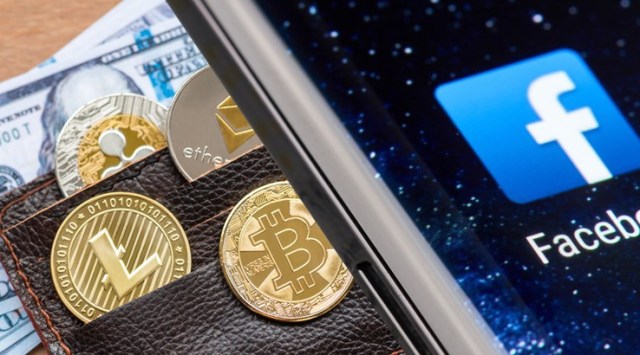
Although it has taken Internet messaging giants a while to join the cryptocurrency scene, it was inevitable that they would become involved at some point. So, it’s no surprise to see a New York Times article by Nathaniel Popper and Mike Isaac discussing how “Facebook, Telegram and Signal, are planning to roll out new cryptocurrencies over the next year that are meant to allow users to send money to contacts on their messaging systems, like a Venmo or PayPal that can move across international borders.”

Facebook’s secretive actions have been much discussed in the last few weeks, as they have been employing blockchain engineers and crypto experts, and has been in talks with crypto exchanges, but as yet haven’t revealed their precise plans. It is believed that Facebook is working on a token for Whatsapp that would allow users to send the tokens to other users almost instantly.

Telegram, the messenger channel used by numerous crypto-related projects, is also working on a digital asset in some form. Meanwhile, Signal, which is a specialist messaging service used by technology specialists and those working on privacy issues, is also said to have a token in the works.

The messenger app advantage

The advantage companies like Facebook and Telegram have over bitcoin and other cryptocurrencies is this: they already have millions and millions of users; Telegram has 300 million worldwide and Facebook has billions. In other words they have a global reach that the crypto projects as yet don’t have and as a result Facebook and Telegram can make the digital wallets used for cryptocurrencies available, in an instant, to hundreds of millions of users.

Eric Meltzer, co-founder of a cryptocurrency-focused venture capital firm, Primitive Ventures, remarked, “It’s pretty much the most fascinating thing happening in crypto right now. They each have their own advantage in this battle, and it will be insane to watch it go down.”

Regulations may be problematic

However, the likes of Facebook and Telegram may face the challenge that existing crypto platforms know all too well — the issue of regulations. Popper and Isaac state that the messaging companies are likely to face many of the same regulatory and technological hurdles that have kept bitcoin from going mainstream

Will it be a crypto token or a stablecoin?

It is likely that Facebook will opt for a stablecoin solution, although it is rumoured that its token will be pegged to a basket of currencies rather than just the US dollar. This will make the token unattractive to speculators, but attractive to consumers who would be able to use the token to pay for goods knowing that it has a stable value. Furthermore, as Popper and Isaac suggest, “Facebook could guarantee the value of the coin by backing every coin with a set number of dollars, euros and other national currencies held in Facebook bank accounts.” As Meltzer say, it is going to be exciting to watch how it plays out with Facebook and Telegram.