How DNS works …!

DNS, which stands for Domain Name System, is a fundamental protocol that enables users to access websites and other internet services using human-readable domain names like “example.com” instead of numeric IP addresses (e.g., 192.0.2.1). Understanding how DNS works is essential for anyone using the internet, as it plays a critical role in translating domain names into IP addresses, allowing the internet to function in a user-friendly manner.

Here’s a simplified explanation of how DNS works:

  1. Domain Registration: The process begins when someone registers a domain name through a domain registrar. This unique name is associated with one or more IP addresses where the website or service is hosted.
  2. DNS Records: After registering a domain, the domain owner sets up DNS records on a DNS server. These records contain information about the domain, such as the authoritative name servers responsible for the domain and the corresponding IP addresses associated with the domain name.
  3. Resolving a Domain: When a user enters a domain name in their web browser, their device needs to find the corresponding IP address to establish a connection with the website. The device first checks its local cache (memory) to see if it has recently resolved the domain. If the information is not in the cache or has expired, the device initiates a DNS query.
  4. DNS Query: The DNS query is sent to a recursive resolver (typically provided by the user’s ISP or a public DNS service like Google’s 8.8.8.8). The recursive resolver does not have the answer but will find it for the requesting device.
  5. Iterative Resolution: The recursive resolver starts the process of iterative resolution by first querying the root nameservers. The root nameservers know the IP addresses of the Top-Level Domain (TLD) nameservers (e.g., .com, .org, .net).
  6. TLD Nameservers: The recursive resolver then queries the appropriate TLD nameserver for the domain extension (e.g., .com) to get information about the authoritative nameservers responsible for that specific domain.
  7. Authoritative Nameservers: Once the recursive resolver obtains the IP addresses of the authoritative nameservers, it queries these nameservers directly.
  8. DNS Response: The authoritative nameservers respond with the correct IP address for the requested domain, and this information is passed back through the recursive resolver to the user’s device.
  9. Local Cache Update: The recursive resolver stores the IP address in its local cache for a specified time (TTL – Time To Live). This cache helps speed up future queries for the same domain and reduces the load on the DNS infrastructure.
  10. Establishing Connection: Armed with the correct IP address, the user’s device can now establish a connection with the web server hosting the requested website or service.

Overall, DNS acts as the “phone book” of the internet, translating easy-to-remember domain names into the numerical IP addresses necessary to locate and communicate with web servers. This process happens automatically and in the background every time you access a website, send an email, or perform any online activity using domain names.

Metaverse Unleashed: 6 Industries Embracing New Opportunities and Experiences

The metaverse is indeed reshaping customer and employee experiences across various industries. Gartner’s projection of 30% of companies having meta-ready products and services by 2026 highlights the growing momentum in this area. The convergence of technologies like AR, VR, and AI is driving transformative changes, simplifying business processes, enhancing decision-making, and revolutionizing customer interactions.

The metaverse allows companies to create immersive virtual experiences that go beyond traditional boundaries. Customers can now engage with products and services in virtual environments, opening up new avenues for customization, personalization, and exploration. From virtual shopping experiences and interactive gaming worlds to virtual classrooms and training simulations, the metaverse is redefining how we learn, work, and play.

While discussions on the social and legal implications of the metaverse are ongoing, its potential to turn virtual experiences into tangible products and create new business opportunities is undeniable. The metaverse offers a glimpse into a future where digital interactions blend seamlessly with our physical world, unlocking novel ways to connect, collaborate, and innovate.

As companies continue to embrace the metaverse, we can anticipate further advancements and exciting developments that will shape the future of industries and the way we experience products and services.

Here we explore six key industries:

  1. Gaming and Entertainment: The metaverse provides immersive gaming experiences, virtual reality (VR) worlds, and interactive social platforms, creating new avenues for game developers, content creators, and virtual events.
  2. Fashion and Retail: The metaverse offers virtual fashion experiences, digital clothing marketplaces, and virtual try-on technologies, allowing brands to engage with customers in innovative ways and explore virtual commerce.
  3. Education and Training: The metaverse enables virtual classrooms, interactive simulations, and virtual training programs, enhancing remote learning, professional development, and immersive skill-building experiences.
  4. Real Estate and Architecture: The metaverse allows for virtual property tours, architectural visualization, and collaborative design spaces, transforming the way properties are showcased, designed, and sold.
  5. Healthcare and Telemedicine: In the metaverse, virtual healthcare consultations, medical training simulations, and telemedicine services can provide access to remote healthcare, training, and patient experiences.
  6. Advertising and Marketing: The metaverse introduces new advertising formats, immersive brand experiences, and interactive product placements, creating unique opportunities for marketers to engage with audiences in virtual environments.

These industries are just a glimpse of the wide-ranging impact the metaverse can have. As the concept of the metaverse evolves, more industries are likely to explore and capitalize on the opportunities it presents.

Did you like this post? Do you have any feedback? Do you have some topics you’d like me to write about? Do you have any ideas on how I could make this better? I’d love your feedback!

Feel free to reach out to me on Twitter!

Where are we on the Dollar CBDC?

The US dollar is a strong currency, and due to its dominant position in the market, it has been considering the introduction of a dollar Central Bank Digital Currency (CBDC).

The government has been closely studying this option, and it might take a while before the US finally joins the CBDC bandwagon. The implementation of a US dollar CBDC would have significant implications for both global financial stability and the US financial power.

The Federal Reserve is determined to strengthen the US dollar and is actively exploring various avenues to enhance its superiority.

The idea of launching a US-based CBDC originated in September 2022 when the White House released a framework discussing the regulation of digital assets. The Federal Reserve recognizes the innovation that digital assets bring as a form of money. However, they also acknowledge the associated risks that could leave customers vulnerable.

The primary objective of the CBDC is to offer people the option of a digital currency backed by the Federal Reserve. The decision to pursue a dollar CBDC will be influenced by long-term geostrategic positioning.

Lawmakers are currently deliberating whether a CBDC is a viable option or not. The Treasury recently confirmed that technological development of a CBDC is underway and should be subject to approval by policymakers.

The US digital dollar will function as a legal tender, and users will have the flexibility to convert it into other forms of central bank assets, such as fiat money or reserves. The CBDC will operate similarly to cryptocurrencies and stablecoins. The key motivation behind the digital dollar is to promote an inclusive financial system that can be accessed by unbanked populations and reduce transaction costs.

Despite the numerous advantages of the CBDC, the US dollar CBDC may destabilize private sector lending.

Nevertheless, the main goal of the CBDC is to complement fiat currencies issued by the central bank and be accessible to everyone, thereby offering a competitive payment system and fostering financial inclusion.

There are specific requirements that must be met before the US Federal Reserve officially launches the CBDC, including:

1. It must benefit US households, businesses, and the economy at large.

2. It must yield these benefits more effectively than traditional money.

3. It will complement, not replace, fiat currency.

4. It must protect consumer privacy.

5. It should receive support from critical stakeholders.

Advantages of CBDCs include:

● Facilitating cheap cross-border payments.

● Lowering transaction costs.

● Increasing financial inclusion.

● Providing the public with access to Central bank funds.

However, there are some disadvantages to consider as well:

● It may compromise the current safety and stability of the financial system.

● It may reduce the effectiveness of monetary policy implementation.

● Privacy and data protection issues are challenging to address.

● Operational resilience and cybersecurity may become problematic.

The development of CBDCs around the world is progressing, with 11 countries having already implemented CBDCs and up to 114 countries exploring the possibility. These 11 countries are primarily island nations like the Bahamas, Antigua, and Jamaica. The adoption and circulation of CBDCs will depend on the transparency of their development process.

China is already working on a CBDC that it believes will compete with the US dollar. They aim to create a digital Yuan that is secure, private, and interoperable. China’s digital Yuan has gained significant popularity in the market and appears to be poised for a strong position.

By the end of 2022, all G7 economies had considered the development of a CBDC. Countries like China, Canada, France, India, and South Korea are at the forefront of these efforts.

Did you like this post? Do you have any feedback? Do you have some topics you’d like me to write about? Do you have any ideas on how I could make this better? I’d love your feedback!

Feel free to reach out to me on Twitter!

EU Moves Closer Towards AI Regulation

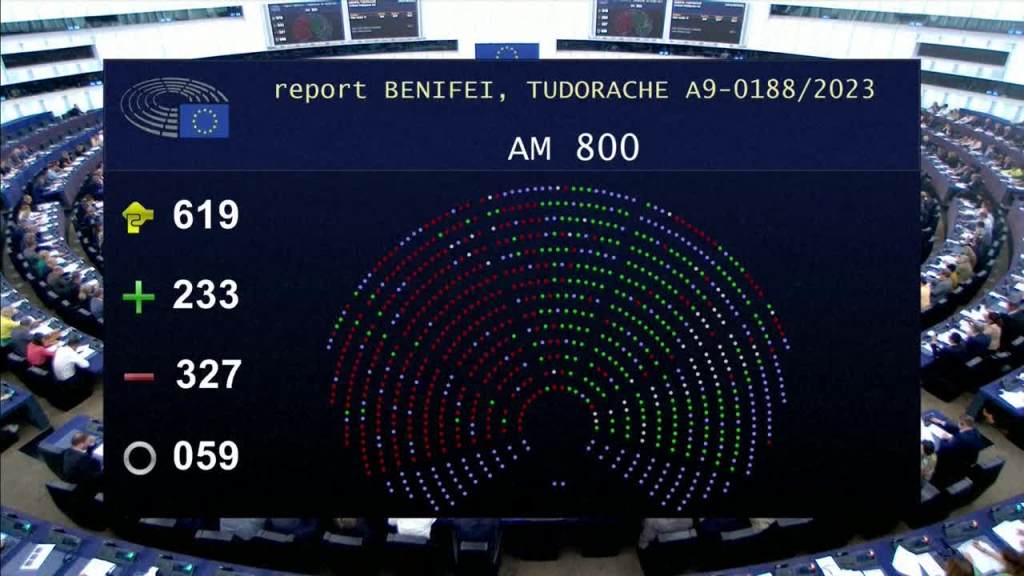
There is no doubt that AI is rapidly expanding its presence in various areas, prompting the EU to take decisive steps towards AI regulation. The EU AI Act was approved by the parliament on Wednesday,14th June and is expected to become law by the end of this year.

The EU AI Act will serve as a comprehensive guideline for the use of AI in the workplace, positioning the EU as one of the world leaders in AI regulation.

Recently, the EU voted to exempt draft language on generative AI regulation, bringing the new AI Act closer to becoming law. However, before it becomes a law, it needs approval from the main legislative branch. Given the EU’s history of prompt actions, there is optimism that the Act will soon gain legal status.

While the impending enactment of the act is a positive development, there have been concerns regarding the draft language of the regulation, particularly in areas like enhanced biometric surveillance, emotion recognition, predictive policy, and generative AI like ChatGPT.

Regarding generative AI, it is a broad and significant aspect that cannot be overlooked, as it can profoundly impact various aspects of society, including elections and decision-making.

The EU AI Act classifies AI applications into four categories based on risk: little or no risk, limited risk, high risk, and unacceptable risk. Examples of little or no risk applications include spam filters and game components, while limited risk applications encompass chatbots and minor face rules and guidelines. High-risk applications involve areas like transportation, employment, financial services, and other sectors impacting safety. Unacceptable risks refer to applications that threaten people’s rights, livelihoods, and safety.

According to the EU AI draft regulation, any organization or individual utilizing generated content must disclose it to the user. Although many companies and businesses are integrating AI into their systems, adhering to the regulation may present challenges.

The official proposal for the Act was made in April 2021 and has undergone several amendments since then. It is yet to undergo negotiation between the Parliament, European Commission, and the council of the European Union, with the final agreement expected by the end of the year.

The implications of the EU AI Act extend beyond Europe, with major AI companies like OpenAI, the creator of ChatGPT, expressing concerns about complying with the regulation. Companies like Google and Microsoft, which invest heavily in AI, have also shown signs of disapproval. However, the EU AI Act aims to mitigate the risks associated with AI to ensure that its benefits outweigh the adverse effects.

AI Limitations

As per the EU AI regulations, there are limitations on what AI can do, particularly in areas posing risks to people’s safety. These areas include:

● Biometric identification systems

● Biometric categorization systems using sensitive characteristics

● Predictive policing systems

● Emotion recognition systems in law enforcement, border management, the workplace, and educational institutions

● Untargeted scraping of facial images from the internet or CCTV footage to create facial recognition databases

High-Risk AI

According to the EU AI Act, high-risk AI is when AI poses a threat to people’s health, safety, fundamental rights, or the environment, such as using AI to influence voters and election outcomes.

To operate in the EU, AI companies must adhere to transparency requirements and take precautions to prevent generating illegal content. However, the use of copyrighted data may present challenges at present.

Did you like this post? Do you have any feedback? Do you have some topics you’d like me to write about? Do you have any ideas on how I could make this better? I’d love your feedback!

Feel free to reach out to me on Twitter!