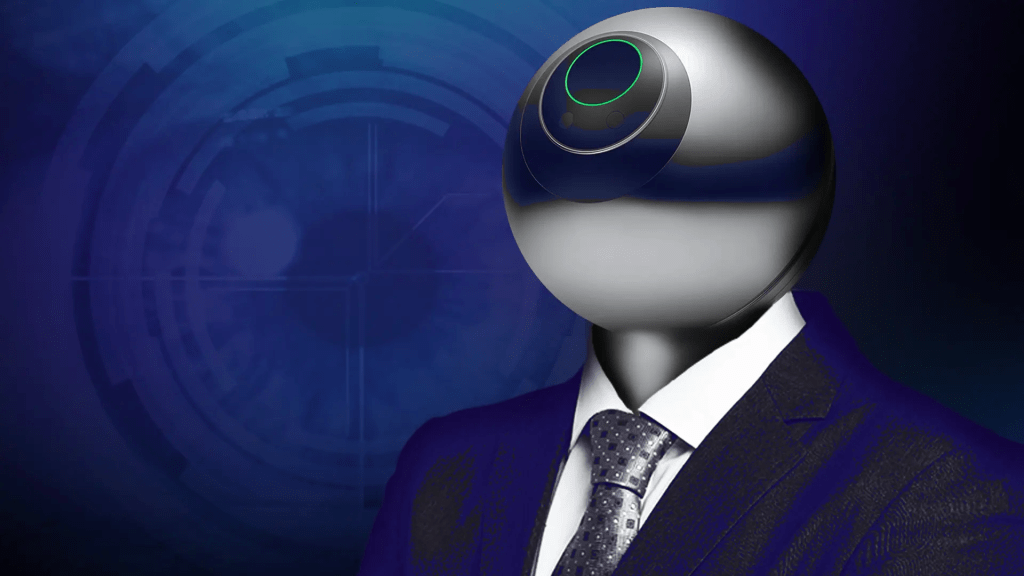
Will the Worldcoin’s SDK take over biometrics?

Worldcoin has a new idea of providing proof of personhood in the entire world with the release of its software development kit and updated protocol.

The project aims to lower the number of fake social media accounts to prove whether you’re chatting with a human or a chatbot. This will help in reducing fraud and helping people to be confident in their dealings on the internet.

Discord was the first platform to enjoy the integration of Worldcoin. Discord users can sign in with a world ID which helps to prove they are human and gives them special privileges.

Contrary to expectation, the protocol and world ID do not give proof of who a person is. Since no biographic information is collected, it has no way to prove the person using it is the same one who did the registration. It can only prove that one is a human and not a bot.

There have been many controversies regarding the project, with some considering it a scam experiment that would exploit vulnerable people. There are so many loopholes in the project.

The rollout of Worldcoin

World coin has so far registered up to 1.36 million individuals. The project used the strategy of scanning the iris of people in the communities in the world. It started in Indonesia and spread to other areas.

Although it started with 250 custom-built iris-scanning orbs, it has expanded to 50,000 scanning devices.

The central vision of Worldcoin as a cryptocurrency is to create a world where everyone has an equal chance to redistribute wealth. With this, there was a need to verify whether an individual had already been registered. This inspired the team to introduce iris scanning for more accuracy.

Upon registration, users were promised 25 Worldcoins once the cryptocurrency launched. Although the project’s goal is to go worldwide, some places have restrictions, such as Cuba; some US states, such as Illinois, Texas, Washington, Portland, Oregon, Maryland, and Baltimore, are not allowed to be part of the project.

Controversies about the projects

The IEEE Spectrum did an experiment and realized that World ID would be much bigger than cryptocurrency. The IEEE argues there has been little transparency regarding the project and how everything will be launched.

According to research done by MIT, there have been cash bribes and payments to local officials to promote signups to the platform. In the rollout of the project, more personal details were collected than those that were promised. It means they are capturing more biometrics than they had promised.

Dr Maggie Cheeseman from Mineiro Central Technology and Democracy argues that Worldcoin is one of the many scam experiments worldwide.

Another controversy is that the latest SDK release on the protocol does not mention Worldcoins.

The company is currently looking for a $120 million investment at a valuation of $3 billion before it goes public in the last quarter of the year.

World ID integration

The Worldcoin and World ID are intertwined and work hand in hand.

To get started, a user will need to download the World app. The app will be rolled out in 50 countries apart from the UK. The app will generate a private key for the world ID. A user will then need to go through two levels of verification, which will be linking a mobile number or undergoing an iris scan for both eyes using the chrome effect Orb.

When you go to an Orb, it uses biometrics to determine whether you have previously verified or not a world ID. If you have not, it will stamp the passport. And when you use the World ID, take that passport to show the page with a stamp that will prove that you’re unique and one of the World IDs.

It, however, does not reveal any other personal information about yourself. This is not the same as biometrics; you must verify personal identification at every point.

When the Orb captures the iris, it creates an iris hash and sends it to the Worldcoin public key to store in its central database. If it gets into the database and there’s a duplicate, the region registration is rejected. If not, the IRIS will be added to the public key and enter the Worldcoin blockchain. The iris code cannot be deleted from the system.

According to the head of product Tiago Sada, the passport stamp is just a stamp, and it’s not linked to a person’s biometrics. It is just proof that a unique person on the world ID private key. It proves that the owner has a unique World ID but does not reveal any further information on who they are.

A smartphone acts as a private key for more security. The new users who use a desktop will still be redirected to the smartphone.

Although getting a world ID is not complicated, it takes a while to reach an Orb. This is because when you download the World app, it will generate a random private key, which will continue as your World ID.

There is a low level of verification as you need to verify your mobile number, and for further modification, you will need to visit Orb.

Worldcoin partnered with Twilio to do telephone number checks for more security. This allows developers to use signals such as phone number verifications in addition to the iris code.

As a rule of the app, you need to have biometric verification to use the features of the app.

Personhood versus identity

As mentioned earlier, there are no biographic details captured on registration. The goal of World ID is to prove personhood/individuality. Other biographic details such as name and age have to be added through other integrations if there’s a need.

According to Sada, it’s not an issue if the current system does not prove that the unidentified user is the same one who initially registered on the platform. They are working on how to avoid the duplication of the iris.

Did you like this post? Do you have any feedback? Do you have some topics you’d like me to write about? Do you have any ideas on how I could make this better? I’d love your feedback!

Feel free to reach out to me on Twitter!
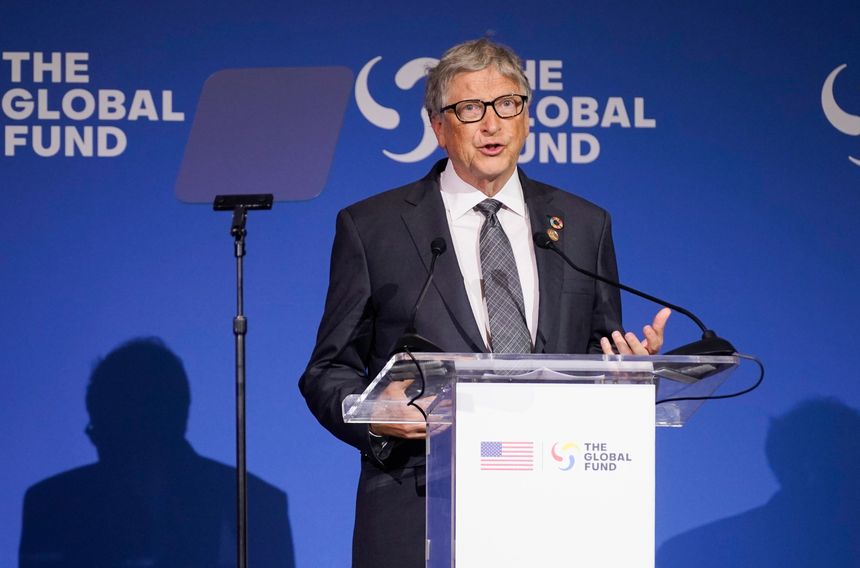
Health and Education to benefit from rise of AI ,says Bill Gates

At the beginning of the year, Chat GPT brought a lot of buzz to the market. This has seen more people adopt AI for their day-to-day activities.

Bill Gates recently drafted a seven-page letter addressing AI and its possibilities for the future. The Microsoft co-founder published a letter that the age of AI has begun. AI is a good way of solving inequities in the world.

He believes AI can solve problems in three primary industries: healthcare, education, and productivity. The letter was published the same day Google released its AI chatbot bird which joins chat GPT and many other AI softwares.

Even though Bill Gates talked about many benefits of technology in the letter, he also underlined the risks of the technology, such as being misused by humans. The letter discusses how AI will revolutionize and increase productivity while addressing global inequalities, especially in developing countries. Health and education are the main areas that need AI, as there are insufficient workers to meet the demand. Billy Gates also believes the two will significantly help reduce inequity.

Productivity

According to Bill Gates, AI will help do basic everyday activities, such as administrative tasks, increasing productivity. In his opinion, when AI is integrated into digital tools such as Microsoft Office, it can help write and manage emails. It can also support different people in a company, such as sales and administration, to do repetitive tasks. Tasks such as handling documents, creating content, arranging data, etc., can be handled by AI, helping them to focus on more productive tasks.

AI is likened to having an assistant helping you to do different tasks. In the future, it will be like a digital personal assistant that will be able to read your emails and know the tasks you have at hand. It will help you in scheduling and communications. All you will have to do is to train it.

An increase in productivity will free up society as people will have the freedom to focus on other things and increase work-life balance.

Health care

AI will be a real game changer for the healthcare industry. For instance, it can speed up the healthcare process by doing tasks such as filing insurance claims, doing paperwork, and analyzing doctor reports.

In developing countries, AI can help healthcare workers be more productive. It can also aid in treating those who do not live near health facilities. They can do triage and get advice on how to deal with their situation.

AI is commonly used for analyzing medical data and drugs and in the supply chain of medicine and medical equipment. Billy Gates believes that AI will lead to medical breakthroughs as it will accelerate data analysis to understand complex systems. This will help identify the source of diseases and design of drugs. There are already some companies using the technology to design cancer drugs.

It will commonly be used to predict diseases and different medications’ side effects. AI can also be used for automatically calculating the dosage required.

When it comes to crops and livestock, AI-generated insights can help design seeds suitable for certain climates and help develop vaccines for the animals.

AI will aid in advising farmers on best practices based on the soils and conditions in their area.

Education

Technology has brought many changes in the education sector, and AI will even accelerate it further.AI will change how teachers and students operate.

Teachers will have to adapt according to the changes. AI will help deliver content according to a student’s learning style and stage in the learning process. This will help to keep students engaged and love learning.

It will also help plan educational content and assess student’s comprehension of the topics. Even though AI will play a significant role in education, it will never replace teachers.

It will help low-income students access education and improve their skills, especially in maths. He believes that when students are good in math, it allows them to be good in other areas.

It will also help students with writing essays and doing different assignments.

Even though AI is going to bring so many changes, it will have to be trained to be able to work efficiently. It may have to learn different languages in some areas to deliver what is required.

AI will foster innovation and will get more intelligent with time.

As much as AI is intelligent, it comes with many risks. In most cases, it is not able to understand a human context. It also has issues with abstract reasoning; hence it is likely to give you wrong math answers. AI can also be used for malign purposes. As the technology evolves, there are chances the risks will be solved.

Did you like this post? Do you have any feedback? Do you have some topics you’d like me to write about? Do you have any ideas on how I could make this better? I’d love your feedback!

Feel free to reach out to me on Twitter!

Mehran Muslimi to feature as Speaker at the 6th Gulf Congress on Cyber Security

One of the largest tech events in the Gulf, the 6th Gulf Congress on Cyber Security, is set to be held on May 9th, 2023, in Dubai, UAE. The event is expected to attract a large number of participants from various industries, including banking, finance, insurance, healthcare, and technology. This global event provides a platform for participants to share their experiences and insights on different aspects of cybersecurity, including challenges, best practices, and emerging trends.

The event will have several keynote speakers who are experts in the field of cybersecurity. Some previous speakers who have graced this event include Hamad Al Khatheri, who is the Chief Cyber Security Officer in the Saudi Government and H.E. Dr. Mohamed Hamad Al Kuwaiti, the head of Cyber Security in the UAE. This year’s speakers include notable figures like Tony Hasek, Goldilock CEO, Hesham Saad from Microsoft and Mehran Muslimi, a renowned fintech and blokchain consultant.. Mr. Muslimi is a well-known name in the fintech industry and has been instrumental in the development of several blockchain-based financial solutions. His talk is expected to cover the latest developments in blockchain-based cybersecurity solutions and their potential to address the growing threat of cybercrime.

The event will have several panel discussions where experts will discuss topics such as supply chain and cloud security, virtual reality, deep fake, and forensic and cybercrime. The panel discussions will provide a platform for participants to ask questions and engage in discussions on various cybersecurity-related topics.

Overall, this congress is a melting pot for top companies and professionals who have an interest in cybersecurity. Some of the global companies that have actively supported this congress are General Electric, Huawei, IBM, and Armis. The 6th Edition of the Gulf Congress is set up by Agora Group, a company based in the UAE, which focuses on connecting companies to the Arab and African markets.

Did you like this post? Do you have any feedback? Do you have some topics you’d like me to write about? Do you have any ideas on how I could make this better? I’d love your feedback!

Feel free to reach out to me on Twitter!

Best countries to move to as a digital nomad that is crypto and tax-friendly

1. Dubai

Dubai has Vara, Virtual Assets Regulator Authority, that governs crypto. It issues licenses for those dealing with crypto in the country and gives virtual assets service providers clear rules on the operation.

Dubai is tax efficient as there is no tax on personal income or capital gains. Businesses making more than 375 000 Dirham, about $100 000, will have to pay a corporation tax of 9%, which is okay.

Dubai is safe, which is excellent for women and kids.

It has world-class public infrastructure. The broadband speed is perfect for remote workers. There is a high concentration of wealth though the cost of living is high.

The country has a great time zone that works well with other time zones.

Even though it has excellent weather, the heat becomes unbearable 3–4 months a year.

2. Puerto Rico

It’s a territory in the US; hence it is excellent for US citizens or those with a US visa. US citizens living in the territory can be exempted from federal tax, capital gains and dividend taxes. US citizens get tax residence status when they live on the island for 183 days a year. It is an excellent option for US citizens as they can legally enjoy zero tax.

In terms of crypto, the country is subject to US laws and thus could be challenging to do a crypto startup.

There is natural beauty, great beaches and an incredible temperature. The only con is the hurricanes.

It has poor infrastructure and electricity problems. For Example, during Hurricane Maria, the island did not have electricity for weeks. They also need reliable internet hence may not be great for those who rely on online work like trading.

The cost of living there is lower than in the US and other Caribbean islands.

There is a fair amount of crime though it is lower than in the US.

3. Portugal

It is a favourite destination for many digital nomads.

For a long time, Portugal has been the only country in Europe offering tax-free capital gains for crypto. Last year, the government introduced a 28% capital gains tax on crypto gains made within one year.

Portugal is the most affordable country in western Europe. It has an excellent climate as it is warm most of the year. The more you head to the south of Portugal, the warmer it gets.

Portugal is safe, with low crime rates compared to other European countries.

Most Portuguese speak some English; hence it will still work for you if you don’t speak Portuguese, but it will be great to learn it.

There is a lot of bureaucracy when dealing with the government.

If you are from the EU, you can move to Portugal easily. If not, there are various options, e.g. the freelance visa, which is ideal for digital nomads.

When it comes to crypto regulations, Portugal follows the EU regulations.

4. Costa Rica

It has some of the most breathtaking natural beauty in the world, with many biodiversities. There are beautiful beaches, forests, mountains etc. It has excellent weather with temperatures of about 22–26 degrees Celsius year-round.

It is forward-thinking when it comes to crypto regulation. Bitcoin and crypto are regarded as regulated payment methods in the country. It is easier for companies and individuals to do businesses related to crypto. Bitcoins in cold storage and mining get tax exemption.

It is a tax-friendly country; you are exempted from taxes if you live in Costa Rica but earn income outside Costa Rica.

Costa Ricans are very friendly, and most of them speak basic English.

Costarica is affordable by European or American standards.

Costa Rica is one of the safest countries in Central America.

The infrastructure in the country can be unreliable, that is, the internet.

There is a digital nomad visa for remote workers.

5. Malaysia

Malaysia is an excellent option for those who want to live in Asia but can’t afford the high entry barriers in Singapore or the high cost of living.

The tax regime in Malaysia is like that in Costa Rica, i.e. foreign sourced income is not taxed. There is no capital gains tax unless it is Malaysian property.

Malaysia is affordable compared to other countries in the region.

Nearly everyone speaks English.

Malaysia is tropical though there is monsoon and high humidity.

Regarding safety, it is safer than most but less secure than Singapore.

Malaysia is known for crazy drivers leading to high accident rates.

The main disadvantage is the high tax on imported goods; if you prefer western goods, they will be expensive.

When looking for the best countries to move to, it is also essential to consider the most sustainable banks to work with. Triodos Bank from the Netherlands is one of the most sustainable banks operating in most European countries. If you are considering moving to Portugal or another European country, it may be a great option to bank with.

The Netherlands boasts several sustainable banks, such as Rabobank and ING bank.

The Standard Chartered UK bank is long-serving many countries and aims to balance financial performance while caring for the environment.

Other sustainable banks include Nordea and Swedbank from Sweden, KFW from Germany, DBS Bank in Singapore, and BNP Paribas and Crédit Agricole from France.

The best part of working with sustainable banks is that you are sure that environmental, social and governance (ESG) factors are prioritized in their operations and investments.

Did you like this post? Do you have any feedback? Do you have some topics you’d like me to write about? Do you have any ideas on how I could make this better? I’d love your feedback!

Feel free to reach out to me on Twitter!