Crypto’s positive reaction to Biden’s executive order

Although there has been a slight pullback in the crypto market since yesterday, and watching it daily is like some version of the game Snakes and Ladders/Chutes and Ladders, there has been a positive response to the Biden administrations executive order. The order “will require U.S. federal agencies to create a regulatory framework for digital assets, as well as explore a future digital dollar,” Cointelegraph reports.

For example, Coinbase surged up 10.5% at market close, and Microstrategy posted a 6.4% gain. Exchange traded funds (ETFs) also experienced a renewed positive view of crypto, with ProShares Bitcoin Strategy ETF gaining 10% and Valkyrie Bitcoin Strategy ETF closing up 10.3%.

Mining companies had some of the biggest gains following the executive order. Riot Blockchain Inc. shares shot up 11.2% and Marathon Digital Holdings Inc. were up by 13.5%.

Tom Miitchelhill comments that while the crypto market is used to volatility, “these are unusually volatile moves on traditional markets.” However, before everyone gets to excited, let’s remember that Coinbase “is still down nearly 48% from its direct listing price in April last year.” And Bitcoin, although it initially racked up a 9% price increase when details of the executive order were leaked, it then retraced its steps sometime after.

Why so much positivity about the US order? Mitchelhill says, “the executive order was considered by most investors to be if not a net positive for the crypto industry, at least a lot less bad than had been feared.”

One reason is that President Biden has positioned the rise of digital assets as, “an opportunity to reinforce American leadership in the global financial system and at the technological frontier.” And whilst nobody knows exactly what sort of regulatory measures may be expected, the general view is that the US government is being ‘constructive’. It also potentially means “that the executive order will potentially work to expand the adoption of virtual currencies within the U.S. financial system.”

US Treasury Secretary, Janet Yellen, commenting on it, said: “President Biden’s historic executive order calls for a coordinated and comprehensive approach to digital asset policy. This approach will support responsible innovation that could result in substantial benefits for the nation, consumers and businesses.”

There are of course divisions in the crypto community over it, but it will be interesting to see how this plays out and who it benefits in the long term.
Crypto isn’t an escape route from sanctions

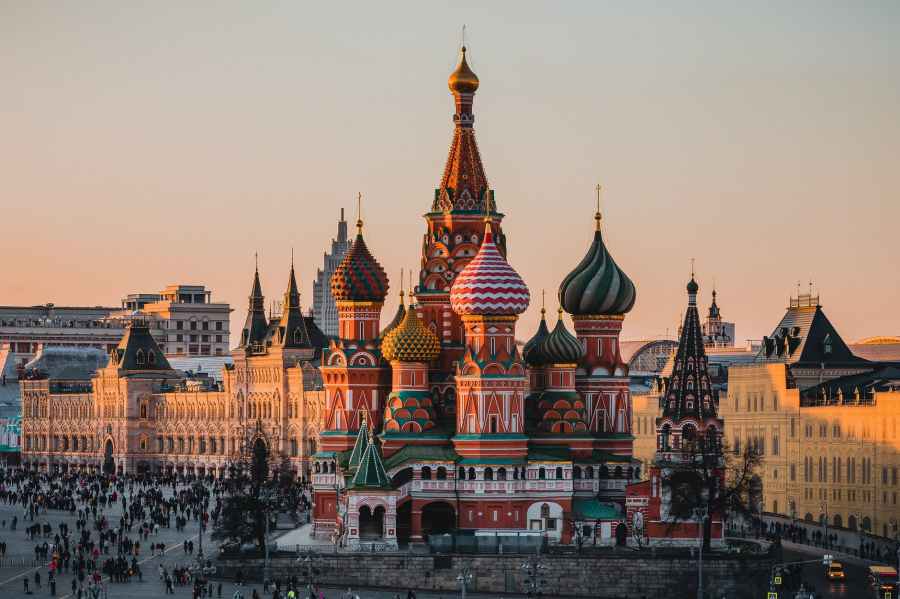
“Why doesn’t Russia just use Ripple if it can’t use SWIFT?” a young person asked me the other day. He is not alone in thinking that cryptocurrencies are a ‘workaround’ for Russia as it faces heavy economic sanctions. Indeed, with decentralization being a core value of crypto, it does seem that it should be a solution, but of course the reality is actually much, much different.

The reality is that crypto exchanges have far too much to lose if they allowed huge movements of crypto into the Russian Federation. Nobody wants to penalise the ordinary Russian person with crypto, and we have seen many of them protest about the Kremlin’s actions. Still, the authorities are on the look out for any infringements.

FinCEN sends a message to exchanges

For example, the United States Financial Crimes Enforcement Network, or FinCEN, a bureau of the Treasury Department, has warned financial institutions to consider crypto as a possible means Russia may attempt to use to evade sanctions. They have sent out a warning to US-based financial institutions “with visibility into cryptocurrency” (eg Coinbase) to report any activity that could be considered a potential way for Russia to evade sanctions.

Biden to sign crypto executive order

President Biden is about to sign an executive order on cryptocurrencies this week, outlining his administration’s view of the sector, and it is thought this has been brought forward as a result of the invasion of Ukraine. The Ukrainian minister of digital transformation, Mykhailo Fedorov has directly appealed to crypto exchanges on social media, urging them to block addresses of Russian users. Cointelegraph reports “many exchanges including Binance and Kraken have said that they will not unilaterally act to block ALL users in Russia from accessing their coins unless there were a legal requirement for them to do so.”

But the exchanges are taking action – because they must!

A view from the crypto exchanges

Changpeng Zhao, CEO of Binance, have taken to Twitter, to explain that since banks follow the sanctions rules, then so do cryptocurrency exchanges.

Brad Garlinghouse, CEO of Ripple, also slammed the allegations that Russia may use cryptocurrencies to get around economic sanctions. And he explains why it is wrong to think exchanges might be able to wriggle around the law. As he points out, worldwide crypto trading platforms rely on a variety of banking partners. These banks and crypto trading platforms would risk losing their licenses if a blocked country or individual breaks through all necessary security measures to conduct transactions on these platforms. That is why there are very stringent KYC and AML policies in place.

And Brian Armstrong of Coinbase has also weighed into the debate, saying that cryptocurrencies are not a way to evade sanctions, because “every United States firm must comply with the law; it makes no difference whether they engage in dollars, crypto gold, real estate, or any other type of non-financial asset.”

Ultimately, the reason Ripple or other cryptocurrencies won’t really help Russia is this; blockchains work on an open ledger, so any illegal transaction would be even more traceable than cash, gold or other assets.

The financial sector needs AI

How can artificial intelligence (AI) support banking services, and are banks looking at it favourably, are two of the questions that Insider Intelligence’s AI in Banking report sets out to answer. In response to the second of those questions, it appears that 80% of banks are highly aware of the potential benefits presented by AI.

The scope of possible uses for AI and machine learning in finance stretches across business functions and sectors. At present, the technology is being widely used in upgrading customer services, looking at new ways of segmenting clients in order to offer more bespoke products, as well as fraud prevention and loan assessment, and there are many more opportunities to expand it.

In customer services, banks now use AI-based chatbots in order to provide customer services and support on a 24/7 basis. The bots, as many of you have probably experienced, have been ‘taught’ to answer basic customer questions via an instant messenger interface. They are able to provide fast and relevant information and support to each user and drive tailored interactions, and the more sophisticated the chatbots become, it is anticipated that customer satisfaction will rise in tandem.

Client segmentation is an interesting one. It divides bank customers into groups based on common characteristics, such as demographics or behaviours. Here, AI can seek out patterns within client data quickly and on a huge scale, creating outputs that would otherwise be unachievable through manual means, or at least would take an exceedingly long time to process if humans were performing the task.

In loan assessment and fraud prevention, AI also uses its pattern recognition skills to search out irregular transactions that would otherwise go unnoticed by humans but may indicate the presence of fraud. In this respect, AI is a great tool for banks to assess loan risks, detect and prevent payments fraud and improve processes for anti-money laundering. For example, Mastercard’s Identity Check solution developed in Dublin, uses machine learning capabilities to verify more than 150 variables as part of the transaction process to help reduce fraud, thus giving merchants more confidence.

These examples are just the beginning of how AI can benefit finance, although it is important to consider that with increased use, it is imperative that controls on how AI is set up and applied are put in place to ensure systems are robust, fair and safe. For example, an AI tool that has not received the necessary guidance and proper training can output responses that lead to unknowingly biased decisions, with potentially damaging consequences.

It is essential that responsible governance of solutions plays an important role in the successful deployment of AI. It is only by keeping models tight to their tasks and free of bias and error that banks can be sure of the best results for all.

Bitcoin flippens the Rouble

On 1st February, Russia’s central Bank reported that the country’s money supply was 65.3 trillion roubles, worth approximately $629 billion. Now that Bitcoin has broken through the $41,000 resistance point, its market cap has surpassed that of the Russian currency.

According to data from CoinMarketCap, Bitcoin’s market cap surged to $780 billion on Monday, 28th February, as the price increased by 5.7%. It now stands at over $43,000, an increase of around 13%.

It’s not difficult to see how this occurred. Due to the economic sanctions hitting Russia in response to its invasion of Ukraine, Russia’s Central Bank was forced to raise interest rates to 20%, sending the rouble into freefall. As the deeper sanctions, including the exclusion from SWIFT, hit Russian markets on Monday, the value of the rouble started its decline and has continued to lose its spending power by 30% due to inflation. 

At the same time, United States dollar-pegged stablecoin Tether witnessed a spike of over 30% in five days against the Russian rouble, and data from crypto exchange Binance shows that the rouble is undergoing inflation as the USDT/RUB trading pair — for the first time in history — crossed 105 roubles. Prior to the spike, the USDT/RUB pair maintained a comparatively steady market price below 80 roubles.

Russian and Ukrainian residents rush to crypto exchanges

Meanwhile in Russia and Ukraine, residents seem to have driven trading activity up on exchanges, possibly over concerns about the stability of their countries’ respective fiat currency. Another factor in this is Ukraine’s call for Ukraine’s cryptocurrency donations to help the government and the people. And, on the first day of the invasion, 24th February, Cointelegraph reported that the Ukraine-based crypto exchange Kuna had around $4.4 million in total trading volume of all tokens over a 24-hour period.

Crypto and NFTs come to Ukraine’s rescue

For Ukrainian citizens fleeing the country, the financial situation is perilous. As one tweeted, “My Ukrainian cards don’t work anymore, although I am safe in Kazakhstan. Crypto is the only money I still have, and today I can say without exaggeration that BTC, ETH and NFT are going to save my life while I can’t come back home.”

Prominent crypto entrepreneurs have also been active. FTX CEO Sam Bankman-Fried was one of the first to offer monetary support to FTX traders from Ukraine by giving all of them FTX $25 each.

As he said, “Do what you gotta do.”

Other support for Ukraine has come from feminist band Pussy Riot. Its new UkraineDAO immediately attracted thousands of followers on Twitter. It is collaborating with PleasrDAO, the DeFi collective, and Trippy Labs, an NFT studio. The UkraineDAO is an NFT drop of the Ukrainian flag, with tokens issued and all proceeds raised donated to organizations supporting the people of Ukraine. The minting price will be set at 0.08241991 as a tribute to Ukraine’s Declaration of Independence on Aug. 24, 1991.

With Bitcoin surging it would seem that an appetite for risk has returned to the crypto markets after a bumpy February, although it is difficult to say whether this is a short-term move or if it could herald a return the all time highs seen last year. Aside from that, it is also interesting to watch crypto’s role in this conflict and observe how that plays out.