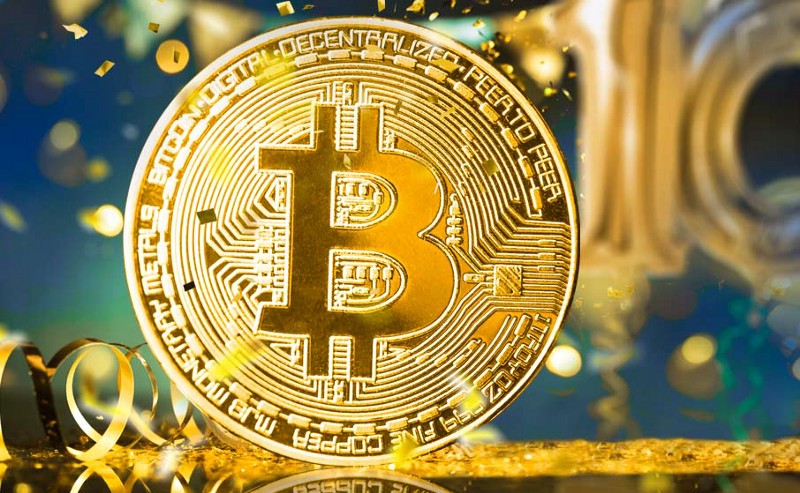
Kraken issues warning about Bitcoin ATMs

A recent report from Kraken Security Labs reports that a “large number” of Bitcoin ATMs are vulnerable to hacking. They say it is because the admin have never changed the default admin QR code.

The ATMS in question are those in the General Bytes BATMTwo ATM range, which the report says have “multiple hardware and software vulnerabilities.” The Kraken blog post added, “Multiple attack vectors were found through the default administrative QR code, the Android operating software, the ATM management system and even the hardware case of the machine.”

All a wannabe hacker needs to do, according to Kraken, is find the administrative QR code, then they can approach any of the ATMs and compromise it. The blog also looks at BATMtwo’s lack of secure boot mechanisms, as well as “critical vulnerabilities” in the ATM’s management system.

The Kraken team also discovered that they were able to gain full access to the Android operating system behind the BATMTwo ATM by simply attaching a USB keyboard to the machine, and warned that “anyone” could “install applications, copy files or conduct other malicious activities.”

To be fair to General Bytes, they have reportedly already alerted ATM owners to the vulnerabilities, due to the fact that Kraken alerted them about the vulnerabilities back in April 2021. In a statement General Bytes said, “Kraken Security Labs reported the vulnerabilities to General Bytes on April 20, 2021, they released patches to their backend system (CAS) and alerted their customers, but full fixes for some of the issues may still require hardware revisions.”

General Bytes ATMs have 6391 ATMs installed worldwide. The majority are in the USA and Canada (5,300), with Europe only having 824 of their machines. The Czech-based company has around 22.7% of the crypto ATM market, which is significant.

As we know there are people in this world who will try any type of scam, and Bitcoin ATMs have featured previously. In Toronto, the police alerted the public to a series of “double-spending” transactions at crypto ATMs in the city that fetched $150,000 worth of funds over a 10-day period. This is a scam where the perpetrator cancels a transaction before the ATM can confirm it, but as the machine has already dispensed the money anyway, the scammer gets to keep it.

As with any ATM, users need to be ever vigilant, because the more crypto ATMs there are, the harder they will work on trying to rob them, and in ways we haven’t even seen yet.

DeFi will disrupt banks

Mark Cuban, the billionaire investor who is bullish on cryptocurrency and blockchain, has been telling CNBC that DeFi apps will challenge the traditional banks. Moreover, he believes that if banks weren’t so slow to embrace change, then they wouldn’t be facing this issue.

He particularly enthusiastic about the lending and borrowing aspects of DeFI. He said, “It’s a hassle to borrow money from a bank, and the foundational DeFi benefit is that it simplifies borrowing for personal purposes.” It also “allows anyone with funds to be a lender as well,” which is another plus.

As many of you will know, DeFi applications aim to recreate the traditional financial system and make it more accessible to a wider customer base. They are cryptocurrency based and the majority run on the Ethereum blockchain. Through DeFi lending, users can lend their cryptocurrency, just as a traditional bank does fiat currency, the difference being that the person lending the crypto earns interest on it.

In the traditional banking world, when a bank makes a loan, it is using the liquidity available from all the accounts it manages, yet none of the liquidity providers reap any rewards, only the bank does. DeFi changes that.

Furthermore, with DeFi, the barrier to entry is low for the borrower. The opposite is true for traditional banks. As CNBC says, “In most cases, the only requirement to take out a DeFi loan is the ability to provide collateral with other crypto assets.”

Cuban said, ″[B]usinesses, decentralized or otherwise, tend to benefit when they offer customers the path of least resistance to get what they want and/or need.” He added an important point: “DeFi is not monolithic. It’s competitive. It will evolve to meet customer needs.” Banks, it appears, are not doing that.

And yet they could have. On this subject, Cuban commented, “Banks could have simplified/automated to the point that DeFi wasn’t needed. They didn’t. They are so stuck in legacy [operations] they are disrupted by simple fintech.” 

Although banks are averse to change, DeFi will not wipe them from the face of the earth, but DeFi applications will still disrupt the traditional space.

Of course there is a downside with DeFI. For example, when you use a DeFi app, there’s no regulations or insurance in place, and “due to the volatile nature of cryptocurrency, investors would need to be comfortable with large swings in price.”

Looking ahead, Cuban predicts the “big players” in DeFi will “welcome regulation” since it will “allow the industry to grow and still have a Wild West aspect,” he said.

The rising demand for altcoins and DeFi

One of the effects that DeFi had had on the cryptocurrency market is to increase investor interest in altcoins, or as some are calling them, “next-gen tokens”.  As the sector matures, and as crypto buyers understand more about the market, there is not so much a movement away from Bitcoin, as a growing belief in the altcoins.

Altcoins have finally emerged as an important element of the market at large. According to Cointelegraph, “ quick look at data available on Google Trends shows us that searches related to the term “Ethereum killer” have been soaring over the past 90 days,” indicating a growing interest in altcoins, especially those that support DeFi functions and smart contracts.

Examples of the more sought after altcoins are Cardano (ADA), Solana (SOL), Polkadot (DOT) and Terra (Luna). Solana had a particularly good run recently, with it managing to withstand a substantial market sell-off. In more recent days, Solana experience a 17-hour outage, which the network attributed to a denial-of-service attack carried out by bots. Its price went bearish since posting an all-time high of $213 on 9th September, but SOL had pulled back by 39% to sit at $128.87 on 22nd September. Cardano has also been able to record substantial profits, posting numbers of +70% and +1,200% over the last 90 and 180 days, respectively. Obviously nearly all cryptos have taken a knock this week, but the YTD numbers still look great for those who have owned any of these altocins for a while.

Antoni Trenchev, managing partner and co-founder of lending platform Nexo, believes there is a growing institutional demand for coins such as SOL and LUNA. The evidence to back this up is there: both coins have been able to make their way into the list of top 15 cryptocurrencies by total market capitalization.  Trenchev told Cointelegraph:

“This is a reflection of companies going deeper into crypto. Over the first two months of 2021, major institutions like BlackRock, Square and MicroStrategy were only just dipping their toes into Bitcoin. Now they’ve tasted its benefits and are looking to harness the untapped potential of up-and-coming blockchains and DeFi coins that could yield higher returns.”

He also suggested that while the crypto market may currently be in the midst of an alt-season, there is something different this time round, and that is the fact that there is more stability in the price of Bitcoin and Ethereum. As Cointelegraph points out, institutional traders flocked to SOL as demand for BTC and ETH appeared to plateau. As a result, at the beginning of September, “SOL-centric investment products represented a whopping 86.6% of the total weekly inflows into the crypto investment market.”

Furthermore, SOL’s combined investment products witnessed inflows in excess of $49.4 million between 6-10 Setember, and SOL enjoyed a 275% week-over-week increase in its value. And for the fourth consecutive week, demand for different altcoins has quite easily exceeded that of BTC products.

Kadan Stadelmann, chief technical officer of end-to-end blockchain infrastructure solutions provider Komodo, commented that rising demand for undiscovered projects is nothing new for the crypto market. However, what separates the present from previous cycles is the sheer amount of capital flowing in from institutions. 

Stadelmann had another interesting point to make: “Hundreds of DeFi projects are flying under the radar. Many of these projects have solid technology and can gain upward price momentum once institutions recognize their potential.” That’s good news for fintechs using DeFi!

Bitcoin is ‘safer’ in a stock market crisis

Apart from the fact that Bitcoin is not integrated with traditional finance, it also has another trick up its sleeve: it can’t be forcibly sold to cover your financial losses in other markets. This is very good news should there global stock markets collapse.

We know that Bitcoin’s price is volatile. This is because there is what Marcel Pechman calls “the discrepancy of its use cases.” Some see it as a store of value, others as a tech project or a type of software and network.

The stories about Bitcoin’s potential change over time. El Salvador’s BTC adoption should show us how the Lightning Network performs, with the Layer 2 scaling solution allowing instant and very cheap transfers. Pechman says, “As these narratives about Bitcoin shift over time, so does BTC’s correlation to traditional assets,” gold being one that has attracted special mentions. For example, the March 2020 crash caused devastation in almost every asset class, but during the six or seven months that followed, recovery was virtually identical for gold and Bitcoin.

BTC also appeared to “mimic the Hong Kong stock market”, Pechman points out, if you follow the Hang Seng Index. However, will it succumb to the Hang Seng downward movement seen in the past 90 days? Pechman suggests it might be better to decouple it from the Hang Seng now and allow Bitcoin to continue being “a safe haven amid a general correction.”

Due to the recent disastrous results for China’s Evergrande Group that forced the company to postpone payments over its debt, which is in the range of $300 billion, analysts are concerned this could severely impact the broader market. As we have seen over the weekend, almost all cryptocurrencies have taken a dive. The crash in May this year was also due to China, in this case the banning of crypto mining.

Bitcoin has never faced a major economic crisis, largely because it was created in response to the previous one. Now there could be one that puts the $250 trillion-plus global debt markets at risk. Could Bitcoin survive this?

Pechman says: “Until Bitcoin becomes fully entrenched in financial markets and accepted as collateral and deposits, the mid-term systemic risk for the cryptocurrency is lower than the traditional market.”

In this case, having Bitcoin could save the day if the global stock markets crash, and because it has an edge over traditional markets like commercial real estate, stocks, and bonds. That’s worth thinking about.