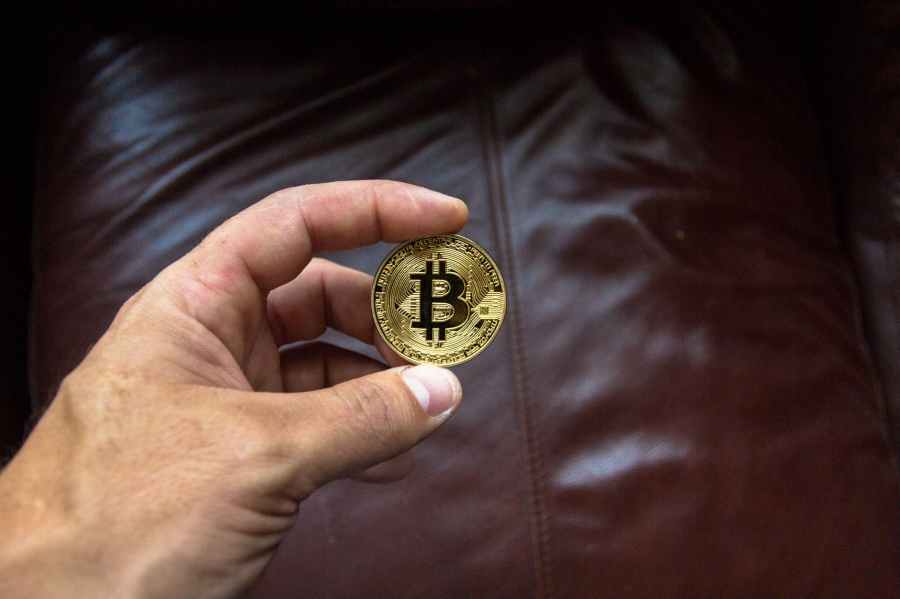
European Commission causes crypto shock!

Early yesterday, the European Commission regulators declared that they were “banning anonymous cryptocurrency wallets” as part of a money laundering crackdown. The shockwaves rippled through the markets and probably caused some near heart attacks for a few crypto holders.

Thankfully, it soon became clear that the EU had not been quite clear about the substance of its proposed regulation. It is one of four proposals intended to “to strengthen the EU’s anti-money laundering and countering terrorism financing (AML/CFT) rules,” as its press statement says.

The statement also says:

“At the heart of today’s legislative package is the creation of a new EU Authority which will transform AML/CFT supervision in the EU and enhance cooperation among Financial Intelligence Units (FIUs). The new EU-level Anti-Money Laundering Authority (AMLA) will be the central authority coordinating national authorities to ensure the private sector correctly and consistently applies EU rules. AMLA will also support FIUs to improve their analytical capacity around illicit flows and make financial intelligence a key source for law enforcement agencies.

In particular, AMLA will:

  • establish a single integrated system of AML/CFT supervision across the EU, based on common supervisory methods and convergence of high supervisory standards;
  • directly supervise some of the riskiest financial institutions that operate in a large number of Member States or require immediate action to address imminent risks;
  • monitor and coordinate national supervisors responsible for other financial entities, as well as coordinate supervisors of non-financial entities;
  • support cooperation among national Financial Intelligence Units and facilitate coordination and joint analyses between them, to better detect illicit financial flows of a cross-border nature.”

Unfortunately, Mairead McGuinness, the EU Commissioner for Financial Services, tweeted that the measure “will ban anonymous crypto wallets and make sure that crypto-asset transfers are traceable.” But, as David Z Morris writes, “The statement from McGuinness is straight-up FUD.”

The EU is not proposing a ban on anonymous wallets; instead it is proposing tighter rules on money service providers, such as exchanges or custody services. Morris explains, “In short, the ban would impact the crypto equivalent of Swiss bank accounts, not the use of crypto as cash.”

What Morris also pointed out is important: media outlets reported McGuinness’s tweet without checking the veracity. As a consequence crypto prices slumped, although they have recovered since. However, he does say, and this is important: the EU knows it can’t ban anonymous wallets, so why would a Commissioner tweet misinformation? He suggests, “by obfuscating the difference between custodial wallets and self-custody software, they may hope they can mislead some portion of the public into thinking that custodial accounts are the only kind that exist.”

The upshot of all this is “if you’re willing and able to self-custody, which you should be doing anyway, you can still hold and spend crypto anonymously.

Europe and UK offer fintechs a strong base for success

Don’t let the current crypto market news depress you; things are not as bad as they seem, especially if you are able to look at the bigger picture around cryptocurrencies.

According to media reports, in April 2021, the cryptocurrency market topped $2 trillion of valuation for the first time, and Bitcoin’s market value was sitting at 1.15 Trillion dollars. Bitcoin registered a crucial growth in the last six months, equivalent to a 450 percent rise, and Bitcoin and Ethereum have also been witnessing huge rallies this year.

Add into this mix the fact that cryptocurrency has rapidly gained popularity and has begun affecting the economy of some countries and you have a promising outlook.

An interesting report IBS Intelligence shines a light on the European fintechs that are doing well, as does an article in today’s Guardian that reveals a growing level of value in the UK’s digital finance industry, which has just passed a “multibillion-pound peak of investor interest.”

IBS Intelligence claims that the four fintechs currently performing well across Europe are Luno, Wirex, Ziglu and Bitcoin Suisse – two of them (Luno and Ziglu) are London based.

Luno is a global cryptocurrency co-founded by CEO Marcus Swanepoel and CTO Timothy Stranex. Its products and services aim to make it safe and easy to buy, sell, store and learn about cryptocurrencies like Bitcoin and Ethereum. Last year, the Securities Commission (SC) of Malaysia gave Luno its approval to operate as a recognised market operator (digital asset exchange), and the fintech now has hubs in Singapore and Cape Town. It has grown significantly in recent years, with nearly 400 employees and more than five million global customers spanning over 40 countries.

Wirex is already well known. It is a digital payment platform and regulated institution that developed a contactless payment card giving users the ability to seamlessly spend crypto and traditional currencies in real life.

Ziglu was founded in London in 2018 and is a cryptocurrency venture that aims to offer exchange services at interbank rates and at the same time, facilitate the purchasing of cryptocurrencies through various exchange platforms. It has a Peer-to Peer payment app that enables Ziglu customers to instantly send or receive any currency from any contact within the challenger’s community. Significantly, the founders of this enterprise come from Starling Bank, one of the strongest British challenger banks.

Bitcoin Suisse is a Swiss-based financial services and technology services provider that offers trading, brokerage, storage, staking, collateralized lending, and crypto financial solutions. Payments supplier, Worldline recently entered into a partnership with Bitcoin Suisse in a bid to provide crypto payment services to Swiss merchants and consumers.

Meanwhile in the UK, Revolut confirmed last week that it had raised another $800m from big investors including the Softbank Vision Fund, taking its valuation to $33bn. It came just weeks after Wise, the forex transfer business listed on the London Stock Exchange for £9bn.

There is, the Guardian reports, a high level of private investor interest in fintechs. “I’m very positive that we will see additional and similar success stories in the UK coming down the track,” said Janine Hirt, chief executive of the UK’s fintech lobby group Innovate Finance. She added, “British fintech firms continue to attract huge amount of international investment, second only to the US,” largely because most business is done in English, it has access to top tier universities, a diverse talent pool and has strong support from regulators and government.

Brexit may be a deterrent for European talent wishing to work in British fintechs, but the sector is working hard to push the government to secure greater access to international markets for UK fintech firms – particularly a post-Brexit EU – in a way that will make it easier for them to go global. That seems likely to happen given the UK and Europe’s glowing future outlook for fintechs.

Over 50% of world will use mobile wallets by 2025

Boku, a mobile payments company, has recently published a study indicating that more than half the world’s population will be using a mobile wallet by 2025. At the moment mobile wallet usage is at around the 2.7 billion mark, but in four year’s time it could be 4.8 billion.

Usage is growing fastest in Southeast Asia, which has shown a 25.5% CAGR and an expected overall growth of 311% in the next five years. E-commerce is driving this growth alongside app such as Grab and Gojek, and the biggest rise in numbers of users is in the Philippines and Indonesia.

Southeast Asia is followed in growth terms by Latin America, Africa and the Middle East. Growth is particularly high in those areas where wallets offer access to financial services for the unbanked. In Africa and the Middle East, usage of mobile wallets is expected to grow by 166% and 147%, respectively, by 2025. Growth in both these regions is being catalysed by the increasing usage of mobile money services, such as M-Pesa, which are offering improved access to e-commerce.

In those world regions where people already have relatively easy access to financial services, such as in North America and Western Europe, the growth in mobile wallet use is much slower. Uptake is only expected to be 65% (North America) and 50% (Western Europe) by 2025.

Nevertheless, markets such as the UK are seeing a spike in card-based mobile wallets, due to the adoption of contactless spurred on by the pandemic, and Boku believes that three quarters of Europeans will be using a digital wallet by 2025.

“We are witnessing a paradigm shift in payments driven by mobile wallets,” says Jon Prideaux, CEO at Boku. “Mobile wallets have lowered the barrier to making digital payments and ushered billions of new consumers into e-commerce. These consumers are not in North America or Western Europe, they are in emerging markets, and while they don’t have credit cards, they overwhelmingly have mobile wallets. For global merchants, mobile payment acceptance is not about accepting one type of mobile wallet or another, but ensuring that consumers in every market will have the required selection on payment types in order to monetize transactions.”

UK is the winner in European fintech funding

Perhaps this news will perk up those England supporters who are living with defeat to Italy at Euro2020, especially if they also happen to be fans of the fintech industry. The UK Fintech State of the Nation report from Innovate Finance shows that London “has cemented its position as the fintech capital of Europe,” despite the double whammy of a global pandemic and Brexit.

According to the data in the first half of 2021, the UK fintech sector raised $5.7bn. This is 34% higher than the $4.3bn raised in 2020 and breaks the 2019 record of $4.6bn.

Who benefited from this rush to invest in UK-based fintechs?

SaltPay and Checkout.com attracted the two largest deals made this year, with $500 million and $450 million respectively. At the moment these are the biggest fintech investments ever in the UK. SaltPay is focused on building a better payments system for merchants, whilst Checkout.com is a global payments platform aimed at offering more payment methods and currencies for online businesses. They’re similar but different, and it is worth noting that both aim to make life easier for merchants.

Indeed, ‘payment’ platforms appear to be dominating the sector here. But challenger bank Starling also got a hefty influx of funds ($376m) and crypto trading platform Blockchain.com received $300m. There has also been significant interest in more niche fintechs, such as Smart Pension, a pension and payroll tech provider, which received $230m, and PayFit, a platform that simplifies and automates payroll and HR processes for small and medium-​sized businesses, raised $107m. Credit-scoring specialist ClearScore raised $200m, another sizeable investment,

In 2021 the number of firms making deals of above $100m also rose from 10 in 2019 to 13 in the first half of 2021, so we can expect that figure to be much higher by the end of this year, and it will be interesting to see by just how much it grows.

Of course the USA is still ahead of the UK, but it is the only country that is. The report shows the levels of support for those other countries that come closest to the two leaders during the same time period: Brazil (40 deals and $3bn), Germany (56 deals and $2.5bn) and India (132 deals and $2.2bn).

Janine Hirt, CEO of Innovate Finance, commented: “Fintech is one of the fastest-growing sectors of our economy and has a vital role to play in the UK’s economic and business recovery. It is hugely encouraging to see evidence of this resilience and growth, particularly in light of the uncertainty and challenges brought on by 2020. Both the flow of capital and a wide talent pool are essential to maintaining the sector’s strength, and we remain committed to supporting efforts in these vital areas.”

You can read the full report here.