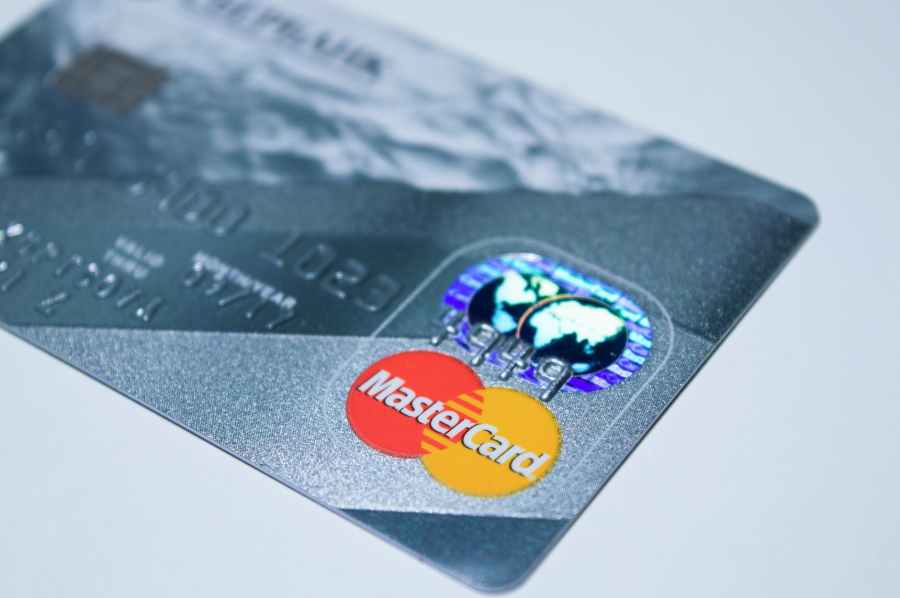
Will cryptocurrency help Mastercard to grow?

It could have been the case that Mastercard ignored cryptocurrencies and the fintech revolution in payments, but the opposite is true. As one of the leading payment networks in the world, it has instead forged relationships with startups, and even added new products to its core range.

Now, as cryptocurrencies are showing strength, Mastercard is once again demonstrating its flexibility by supporting cryptocurrencies.

According to Trevor Jennewine, Mastercard’s data reveals “as many as 20% of consumers now own cryptocurrency in certain countries,” and merchants and financial instotutions are taking notice of this. Last year Mastercard expanded its cryptocurrency programme last year, making it easier for partners to issue crypto payment cards.

In the USA, Mastercard has teamed up with Bitpay – a payment processor that allows merchants to accept digital currencies like Bitcoin at checkout – and launched a prepaid crypto card in June 202o. This card allows consumers to make in-store and online purchases anywhere Mastercard is accepted, with funds loaded from their BitPay wallet. Consumers can load their card with BTC (Bitcoin), ETH (Ethereum) and other cryptocurrencies and BitPay converts those funds into fiat currencies, such as USD, EUR and GBP.

BitPay noticed a spike in transaction in July, one month after the launch, and has recently added support for Apple Pay so that customers can use an iPhone to make contactless payments.

In Europe, Mastercard has partnered with London-based fintech Wirex to launch a crypto debit card. This is a slightly different product to the BitPay card. The Wirex product allows consumers to spend up to 18 digital and traditional currencies in real time, meaning the funds are not converted until the moment a purchase is made. Furthermore, the Wirex card also allows consumers to earn 2% cash back (in cryptocurrency) on any in-store or online purchase.

Although the products may be slightly different, the one thing they have in common is this: at some point prior to completing a transaction, the cryptocurrency is converted to a fiat currency. This means that it’s fiat currency, not cryptocurrency, that’s flowing through the Mastercard network. But that is about to change.

Mastercard’s CEO Michael Miebach recently announced plans to add digital currencies directly to the company’s network. This means no more conversion to fiat currency, which should make it easier for consumers and merchants to adopt crypto payments.

This is an important move for crypto enthusiasts, because it removes one of the biggest arguments against cryptocurrency use, i.e. they are difficult to spend. Plus, for Mastercard, it adds another form of payments to its product range, and this could be a major growth driver for the network, especially if cryptocurrencies keep gaining traction.  It also shows forward thinking on the part of Mastercard.

What’s the difference between gold and Bitcoin?

The answer to that question is simply this: Bitcoin (BTC) is more of a medium of exchange than gold. It stands to become the medium of commerce on the Internet, something that gold will never be.

The Lightning protocol, built to scale transactions on the Bitcoin blockchain, makes online payments to merchants possible via the Visa network, and as I’ve written about earlier this week, Mastercard is going crypto-friendly for payments as well.

Then there is PayPal’s acquisition of Curv, the Israeli startup developing crypto asset custody technology. PayPal is already allowing its US account holders to buy crypto, and while it might be that the PayPal purchase of Curv has more to do with support for Bitcoin as an investment, it is impossible to forget that e-commerce is its main reason for existing. So, there is probably something more afoot than at PayPal, and we may have to wait a while to find out more about its next strategy for crypto.

Galen Moore at Coindesk has taken a look at Bitcoin’s place in e-commerce from two perspectives: its actual use in commerce, and a macroeconomic indicator that highlights one of the ways in which bitcoin is nothing like gold.

First, the Lightning protocol allows for faster and cheaper Bitcoin transactions, and its data is a “good proxy for interest in using bitcoin for everyday commerce,” Moore writes. At the moment, the metrics show Bitcoin’s use in commerce on the internet, remains stuck at a ceiling set in 2019 to stand at about 0.008% of bitcoin’s free-float supply (a Coin Metrics measure of bitcoin held by addresses active within the past five years).

This favours those who see Bitcoin’s use in commerce as negligible, such as U.S. Treasury Secretary Janet Yellen, who said, “I don’t think that bitcoin … is widely used as a transaction mechanism. To the extent it is used I fear it’s often for illicit finance.” That old chestnut!

Moore points out the $100 bill is hardly used in commerce either – a bit like the €500 note that is so rarely seen it was at one time referred to as a ‘Bin Laden’. The Federal Reserve says “Larger denominations such as $100 notes are often used as a store of value, which means they pass between users less frequently than lower denominations.” Indeed the estimated lifespan of the average $100 note is 22.9 years, nearly three times the lifespan of a $20 bill. Yet, the $100 bill is a popular product, with an estimated $1.42 trillion worth of $100 bills in circulation, more than seven times that of the commerce-friendly $20 bill. 

But you can’t compare Bitcoin with lower value dollar bills: it is more like the $100 note, because investors hope that Bitcoin will become like that large denomination bill, to be both a bearer instrument and a store of value. Moore says, “Like the $100 note, bitcoin isn’t valuable necessarily because it is spent, but because it could be spent.” And in this way, it is nothing like gold at all.

A look at the Money-verse in 2028

Today money is going through an evolutionary process as I write. The choices the finance sector, and the consumer, make today will shape the future of money, and we can already see that the world’s sovereign currencies are under siege from cryptocurrencies and stablecoins.

Bitcoin has not yet brought about the massive revolution that some expected on the one hand, but on the other, if “governments and central banks can’t offer a sound version of the sovereign money for the digital age, their downfall could be tragic,” Marcelo M Prates writes at Coindesk.

Prates envisages a ‘ future fantasy’ scenario in 2028 that may become reality. Amongst other things he sees, “ see drones dropping bags of money in the neighborhoods most affected by the latest cyber-attack on the e-Gov platform.” Regardless of whether the attack is foreign or domestic, “nobody can transfer digital dollars or even check their FedAccount balance.”

In his view, this kind of disaster could happen if the government decided not to offer an offline account option. Why not? The government might believe “people would finance domestic terrorism with an offline FedCoin that could be transferred from person to person without identification.”

As a result, every time the e-Gov platform is attacked, the government has to send out bags of old dollar bills so that people can make payments.

There may also be a global Big Tech Alliance offering its own digital asset that launches before a government-backed one, and it could potentially result in a fall in demand for dollars, especially if inflation is rising at a record pace.

Governments will have to deal with the fallout from the huge expansion in spending during 2020. Nations’ debts will be soaring, and it’s foreseeable that printing more money might well become a response.

Banks will also be affected if an organisation, such as Prates’ Big Tech Alliance offers customers a compelling reason to empty deposits in traditional banks, and use it for the consolidation of other debts, thanks to favourable loans. The result would possibly be multiple bank closures.

This entire scenario is likely to happen due to central banks’ ambivalence about digital currencies. In Prates’ world, “Many believe that the breaking point came when the government insisted on having exclusive control over the digital ID scheme created to provide every American citizen and corporation with a single digital identity. The goal was to keep track of the vaccination progress amid different coronavirus variants and better target the relief money sent monthly.” However, centralization is rejected, as it “was seen as a further step toward the growing surveillance state.”

What is clear, even now, is that the technology available makes a multi-faceted Money-verse entirely possible, because as Prates says, “Money does not need to be controlled by a government or limited to a sovereign territory anymore.”

Central banks need to get their digital strategy right, or face the consequences in the not too distant future.

Our Bitcoin price obsession ignores its real value

As Bitcoin hovers around $50,000, expert thoughts have moved on to $100,000 as if this is Bitcoin’s next great milestone. But, as Tim Denning observes, this obsession with Bitcoin’s value to owners really misses the point.

Sure, if you bought Bitcoin a few years back, you’ll be delighted if it hits $100,000, but this Is not the end game of the leading crytocurrency. As Denning says: “Bitcoin isn’t an investment. Bitcoin isn’t a get-rich-quick scheme. Bitcoin is a different way of thinking.”

What we should be focusing on is mainstream adoption regardless of the daily price. Because when that happens it will signal that society has moved from a centralised model to a decentralised one. Bitcoin has no country, no government, and no office. There is no single owner of Bitcoin, and if you don’t like Bitcoin, it doesn’t care, because it’s just a algorithm that couldn’t care less about your criticisms.

Instead, Bitcoin is a quiet protest about inequality. It is above all honest. It is a true democracy.

The existing financial system excludes millions of people, and people want that to change, so they are waking up to the ways in which digital assets, such as Bitcoin and Litecoin, which are on blockchains designed for payments, are offering financial inclusion worldwide. That’s why so many people are talking about the topic and coming around to the idea of cryptocurrencies.

Let’s remember that we are still at the early evolutionary stage of Bitcoin and other cryptocurrencies. A lot of things could happen to any one of them. Denning even suggests it could get wiped out. How? Who knows, but such a thing has happened to tech companies in the past.

In a way, Bitcoin’s birth was an accident. Its mysterious creator/s were inspired as banking plunged the world into financial chaos. Nobody outside of the small community of crypto fans paid much attention to it until 2017 when it hit its first ATH. Governments could have banned it then, but didn’t, and it would be pretty much impossible for them to ban it now. The arrival of institutions in Bitcoin trading has protected the asset, besides the protest at such a move would be truly global, and probably led by Elon Musk.

The Bitcoin price barely matters at all: more importantly, Bitcoin is an idea that challenges the social view of ownership. Denning says: “When ownership changes, everything changes. Be open to the inevitable change coming. That’s the point of Bitcoin that seems to be missed.”