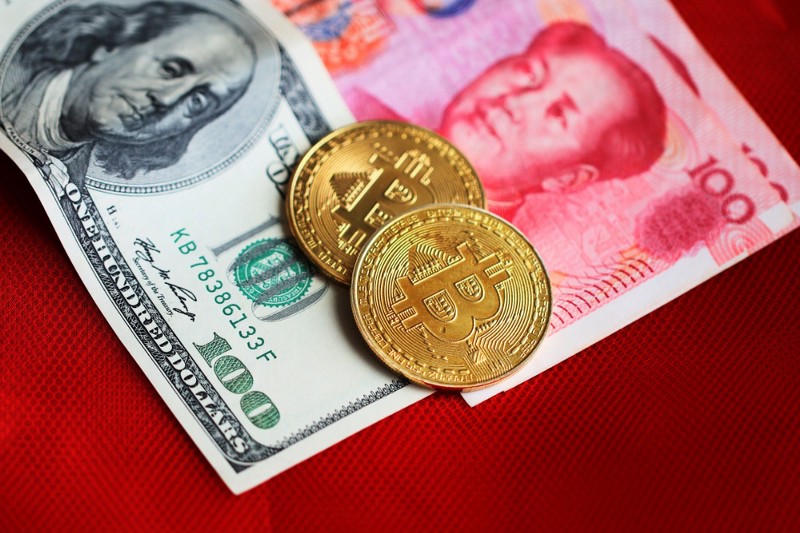
Young consumers want more crypto banks

It very much looks like crypto banks are going to kill off the traditional high street bank, the ones that only deal in fiat currencies anyway. Mark Binns, writing for Cointelegraph, predicts that in less than three years, “a younger generation of banking customers won’t do business with a traditional fiat bank unless it offers access to crypto.”

Kraken, the San Francisco-based exchange, has already managed to acquire a bank charter, which means it is now able to offer its existing customers a range of banking products in addition to its cryptocurrency exchange. It is working with Silvergate Bank in the USA, to offer SWIFT and FedWire funding options, and as Binns says, we are likely to see more partnerships like this in the future, because they are offering what a new swathe of customers are asking for.

Binns points out that Silvergate appears to be ahead of the curve with this. It has 880 digital asset companies on its client list, and they have deposited in excess of $1.5 billion. Although this is small change in the banking world, it is a strong start in meeting a market that is dynamic and developing.

Binna says: “Consumers will soon define a “full service” bank as one that offers financial services in both crypto and fiat. The time to start acquiring the necessary tools of the crypto banking trade is right now. Banks need to start adapting or get left behind. Make no mistake about it.”

Making the change

If the existing banks are going to compete with crypto banks they will need some new tools to do this?

First off, they need blockchain forensics tools. There has for some time been the suspicion that a blockchain can conceal secrets. In fact, it is much easier to investigate activity on a blockchain than it is fiat currencies. It is certainly possible to uncover the origins of transactions. To do this, a bank will need “blockchain explorers and risk scoring tools.” These already exist, and enable “investigators to follow digital paper trails across addresses, wallets, transactions, blockchains and other digital entities, using techniques like clustering and heuristics.” As Binns remarks, fiat currency is still the currency type of choice for money laundering. Contrary to popular belief, it is more difficult to launder money via a blockchain.

Offering DeFi products is another area for traditional banks to consider. As Binns says, “decentralized finance sector of cryptocurrency holds virtually endless promise.” However, these are unlikely to attract the average ban customer for some time yet, although crypto enthusiasts are pretty excited about the potential of the DeFi market.

Banks need to speed up their response to cryptocurrencies or find they have to close. It isn’t a case of wait and see any more, and they should be taking action immediately, before the likes of Kraken and the other promising projects offering multicurrency accounts that combine crypto and fiat currencies overtake them. Furthermore, with Christine Lagarde, president of the European Central Bank, announcing that she expected a decision on issuing a digital Euro to come in early 2021, it is clear that digital currencies are here to stay. Those who thought crypto was a fad that would disappear are going to be very disappointed.

The practical uses of AI and 5G

There has been, and continues to be, a lot of talk about the advantages of artificial intelligence (AI) and 5G. Not everyone is convinced, and there is a swathe of people who fear both technologies, although often for different reasons. Perhaps they would be more convinced about their benefits if they grasped the practical uses.

Smart automation is one of them. Automation’s aim is to reduce human error, as well as maximise productivity. In the case of ‘smart automation’, AI provides the ‘smarts’ by analyzing a series of tasks and streamlining them. By combining this with 5G, mobile service providers would be able to “offer simpler activations, higher performance and the rapid deployment of new services, according to Will Townsend and Moor Insights. This would increase revenues and provide an enhanced user experience, thanks to more reliable network connections.

Townsend also believes that AI would “enable network operators to move from reactive to proactive issue resolution.” The technology would allow them to evaluate huge amounts of data when troubleshooting any network anomalies, while “5G should enable networks to better handle these predictive functions’ complexity and support significantly more connected devices.” Townsend also thinks, “one of the most significant impacts of AI in mobile networks will be the reduction of subscriber churn.” That is interesting, as building and retaining a customer base is critical for telecoms companies.

Both AI and 5G will undoubtedly speed up digital transformation in businesses. The need for this has become more apparent in 2020, with legions of employees working from home. As a result, the networks have been under significant pressure “from a scalability, reliability and security perspective.” What has ensued is connectivity infrastructure providers are embracing AIOps for its potential to supercharge DevOps and SecOps.

Lastly, AI and 5G in both the consumer and enterprise markets will vastly transform the user experience. For example, “AI has the potential to reduce the number of subscriber service choices, presenting the most relevant ones based on past behaviour,” Townsend says. This will in turn build greater loyalty among subscribers, as well as more monetization opportunities for the operator.

In conclusion, there is a great deal of synergy between AI and 5G. It will mean mobile networks are not simple the means of access to data. AI promises to also “improve new device provisioning, deliver high application and connectivity performance, accelerate digital transformation and provide exceptional user experiences.” As Townsend says: it’s a win-win for everyone.

Biden’s win boosts global stock markets

In the few days following the US election cut off date, stock markets hovered in an indecisive way, following the ups and downs of the counted votes. One minute it looked like Biden was winning, then trump, then Biden, until finally we knew it was definitely Biden who won. And that is when the world’s stock markets broke out of a stranglehold and shot upwards, with Japan’s stock market hitting its highest level in almost three decades. It wasn’t the only one: the FTSE 100 also saw a surge on Monday after the president-elect was declared on Saturday.

Billionaire hedge fund manager, Leon Cooperman, spoke to Jonathan Ponciano at Forbes. Cooperman is a Biden voter, and while he is not particularly bullish about the long-term health of the US economy, he believes the short-term will be favourable for stocks. He says that this will be the case, even if the results are challenged, which is already an ongoing battle.

Cooperman also suggests that with Biden in the White House and Congress split, as well as the Federal Reserve keeping interest rates low, are all positive points, especially when combined with the prospect of a vaccine to tackle the pandemic, and another stimulus bill becoming law.

On Wall Street in the long term he is decidedly more bearish. He points to the US government’s debt of $27 trillion, up nearly five times on 20 years ago. It more than doubled in the last decade due to coronavirus spending and Trump’s tax cuts.

It is interesting that Cooperman is still pursuing growth stocks. For example, Alphabet, Google’s parent company, Amazon, Microsoft and Facebook are in his portfolio. His view on these is, as he told Ponciano. he’s not buying, “but not selling, either,” and called them “better than gold.” He also offers some tips on less expensive stocks, citing Cigna, one of his favorites, Navient, Spectrum and General Motors as “having good stories.”

His main complaint is that there is too much debt in the system: ”There’s a long-term consequence to what’s going on; there’s just too much debt in the system. . . . I’m assuming in the next 12 to 18 months something will happen that changes this Goldilocks environment, and it will force the hand of the Fed.” 

Cooperman emphasized looking at how many investors are now back to eyeing the prospects of additional fiscal stimulus, vaccine development, as well as any decision by the Federal Reserve to raise interest rates once again, as being the things to watch.

How AI could have saved our sanity in the US election

I’m not quite sure where you would have to live to have avoided the US elections this week. The trailer for it has been running for months, and the polls hyped a clear Democrat win. As we wait for the final count, with no Blue landslide in sight, there must be so many people scratching their heads, wondering why it is that political pollsters always seem to get it so wrong.

Mark Minevich’s article in Forbes takes a look at the issue, and starts by asking why do countries still use antiquated voting systems, which one of the candidates constantly insists is fraudulent, but only if the votes are going against him mind!

As he points out, Artificial Intelligence (AI) offers us the means to “make every election day going forward safe, efficient, and most importantly, secure.” It would remove the long lines of voters waiting to cast their vote, and no dependence on mail-in votes. Instead we would have instant results that are 100% accurate.

Several AI products are already available that could have been deployed, such as FiscalNote. Its AI platform is primarily use for policy insights. It could be leveraged, Minevich says,  “for voter education where a voter communicates the kinds of policy that will affect them and their families.”

With voter education also in mind, iSIdeWith is another AI tool that “gives citizens an opportunity to better educate themselves on which candidate more aligns with their personal views.” With citizens assaulted by so many news stories, and it being harder to separate the truth from disinformation, it is hard to know what to believe. This platform could assist with helping voters decide on what is fact and what aligns with the world they want to vote for.

Foreign interference has been a theme in the US news since the 2016 election. However, scholars at New Jersey Institute of Technology, Princeton University and New York University have developed an AI tool that “can predict when inflammatory social media posts are coming from foreign Internet trolls.” This is ideal for social media platforms seeking “to weed out and eliminate foreign trolls attempting to provide disinformation to potential voters,” as Minevich says.

And then there is the voting itself and the count: a slow process in the US. KCore uses AI to predict elections worldwide. It analyses “real-time social media to give a quicker and remarkably accurate method of predicting election trends.” This could be used to predict voter turnout, thus ensuring election officials are properly prepared, and the count is more efficient.

There are several other AI platforms available that are ready to be used in the election sphere. Minevich believes that if these tools were in place, we’d see much higher turnouts and more people engaged with the democratic process. Society and the state would benefit from better voter education that leads to greater engagement. Perhaps the USA will get its voting system right next time by using AI, although its pollsters will still probably provide them with false hope or a feeling of sinking depression in the run-up.