Is Jack Dorsey a Bitcoin hero?

Jack Dorsey is a curious character. The combination of his business success with a somewhat eccentric lifestyle pretty much guarantees media and public interest in him. He may not be as well known as Mark Zuckerberg, but he’s probably more easily identifiable by the public than the Google guys for example. Plus, he does often look as if he might have had a lead role in Pirates of the Caribbean, or some other Hollywood production. However, what in my opinion is most interesting about him is the role he has played in promoting cryptocurrency, particularly Bitcoin.

Dorsey is not only a co-founder of Twitter, he also launched Square, a mobile payments company that is hot on crypto. Dorsey is known to be a massive Bitcoin supporter, and has vowed to help Bitcoin develop as a global currency though Square. However, he is not a Bitcoin bull — he has a diverse crypto portfolio and is always upfront about that. Square’s spokesperson told Forbes, “it’s “only a matter of time until instant, low-fee bitcoin payments are as common as cash used to be.”

And to speed this along, Dorsey’s Square Crypto division is working on a kit that should help to integrate the Lightning Network with Bitcoin wallets. Lightning is a layer-two solution built on top of the Bitcoin network that makes payments faster and cheaper, and speed and cost are key elements of taking Bitcoin mainstream.

Until now there has been a problem with scaling Bitcoin for everyday payments, and this has slowed down adoption. Dorsey wants to supercharge the leading crypto’s throughput, which is why Square announced its Lightning Development Kit (LDK) to coincide with the World Economic Forum in Davos, although it was definitely no coincidence.

As Gerelyn Terzo writes at CCN, “What Dorsey’s crypto division plans to do is give developers greater flexibility with Bitcoin and Lightning technology that in a nutshell comes down to streamlining bitcoin wallets.”

Essentially, the Lightning Network can potentially process millions of transactions per second, which is massive compared with Visa’s 45,000 transactions per second.

Dorsey deal with the volatility issue

Improving the speed and cost of Bitcoin transactions is one thing, but merchants are reluctant to accept the cryptocurrency because of its volatility. Dorsey and Square have a solution for that as well.

Square has been granted a patent that enables users to conduct fiat-to-crypto transactions. The customer can pay in bitcoin and the merchant can instantly convert it to U.S. dollar or any currency.

Basically, Dorsey is laying the foundations of an infrastructure for widespread Bitcoin use, because with instantaneous payments that can be converted into any currency, both customers and merchants have no reason to deny Bitcoin as a payment option.

If Dorsey and Square achieve this, they will surely be hailed as Bitcoin heroes. Unless you’re a Bitcoin hater!
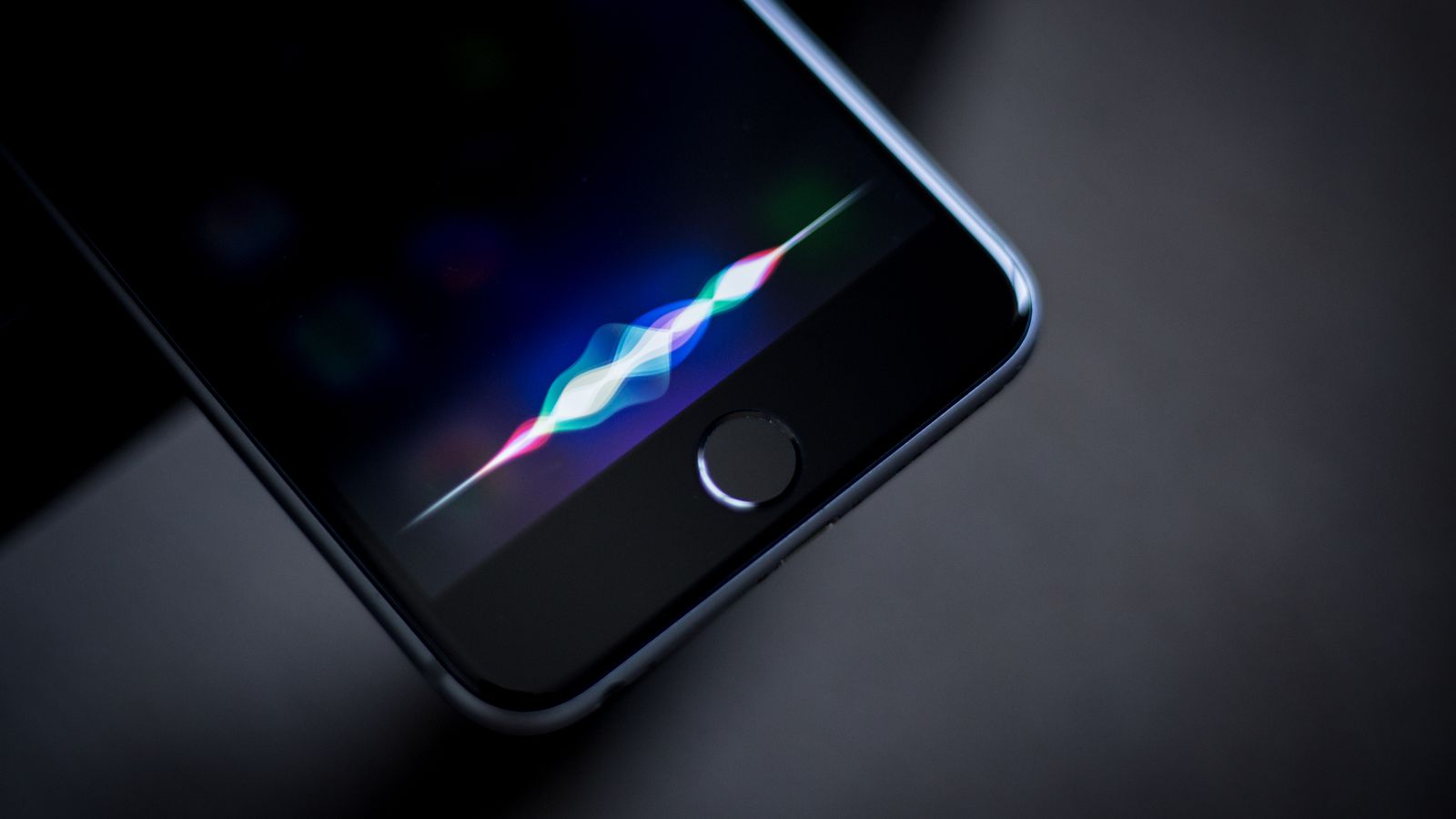
 

Siri is witty, but knows her limits!

Related image

Back in 1956, a man called John McCarthy coined the term AI for artificial intelligence. However it is only in recent years that we have personally witnessed the benefits of AI, and its mass scale adoption by larger enterprises. One of the things that has encouraged the use of AI is the need to understand data patterns, because companies want to know much more about their target audience and Ai allows them to gain useful insights into consumer behaviour.

There is much to be gained by understanding AI, including the fact that it is segmented into ‘weak’ and ‘strong’ sectors.

WEAK AI
Weak AI is also known as Narrow AI. This covers systems set up to accomplish simple tasks or solve specific problems. Weak AI works according to the rules that are set and is bound by it. However, just because it is labelled ‘weak’ doesn’t mean it is inferior: it is extremely good at the tasks it is made for. Siri is an example of ‘Weak AI. Siri is able t hold conversations, sometimes even quite witty ones, but essentially it operates in a predefined manner. And you can experience its ‘narrowness’ when you try to make it perform a task it is not programmed to do.

Company chatbots are similar. They respond appropriately when customers ask questions, and they are accurate. The AI is even capable of managing situations that are extremely complex, but the intelligence level is restricted to providing solutions to problems that are already programmed into the system.
STRONG AI
As you can imagine, ‘Strong AI’ has much more potential, because it is set up to try to mimic the human brain.  It is so powerful that the actions performed by the system are exactly similar to the actions and decisions of a human being. It also has the understanding power and consciousness.

However, the difficulty lies in defining intelligence accurately. It is almost impossible or highly difficult to determine success or set boundaries to intelligence as far as strong AI is concerned. And that is why people still prefer the ‘weak’ version, because it does not fully encompass intelligence, instead it focuses on completing a particular task it is assigned to complete. As a result it has become tremendously popular in the finance industry.
Finance and AI
The finance industry has benefited more than many by the introduction of AI. It is used in risk assessment, fraud detection, giving financial advice, investment trading, and finance management.

Artificial Intelligence can be used in processes that involve auditing financial transactions, and it can analyse complicated tax changes.

In the future, we may find companies basing business decisions on AI, as well as forecasting consumer behaviour and adapting a business to those changes at a much faster pace.

Artificial Intelligence is going to help people and businesses make smarter decisions, but as always we need to remain mindlful of finding the right balance between humans and machines.

Free phones – but NO privacy!

Image result for Free phones – but NO privacy!

When I spotted an article in Forbes by Thomas Brewster, I was immediately intrigued. The headline is U.S. Funds Program With Free Android Phones For The Poor — But With Permanent Chinese Malware. It surely must strike anyone reading it as a giving with one hand and taking away with the other gesture. So, I had to check out what it was about.

As I live outside the USA, I was not aware that low income households in the States have been able to get cheap cell service and even free smartphones via the U.S. government-funded Lifeline Assistance program. And there is one provider of this service called Assurance Wireless that offers a free Android device along with free data, texts and minutes. It sounds good on the face of it.

But according to security researchers at Malware Bytes there is a significant drawback to the distribution of this largesse. The Android phones come with preinstalled Chinese malware, which effectively opens up a backdoor onto the device and endangers the users’ private data. And, the researchers say that one of the types of malware is impossible to remove.

Malware Bytes informed Assurance Wireless about the issue. Assurance is a Virgin Mobile company, just as a matter of interest. So far Malware Bytes have not received a response from the service provider. So, users should be aware that their devices are vulnerable. Interestingly, after Forbes published the article a spokesperson for Sprint, which owns Virgin Mobile and Assurance Wireless, said: “We are aware of this issue and are in touch with the device manufacturer Unimax to understand the root cause. However, after our initial testing we do not believe the applications described in the media are malware.”

The FCC, which runs Lifeline Assistance, confirmed to Forbes that the law requires “its fund not be used by partner carriers for spending on devices.”

As a result questions are being asked. Senator Ron Wyden asked the FCC why these phones are being distributed to low-income citizens: “It is outrageous that taxpayer money may be going to companies providing insecure, malware-ridden phones to low-income families. I’ll be asking the FCC to ensure Americans that depend on Lifeline Assistance aren’t paying the price with their privacy and security.”

According to the Forbes article, the affected device is a UMX phone shipped by Assurance Wireless, and one of the bits of malware is the creation of a Chinese entity known as Adups. It basically auto-installs apps and the user has no way of controlling that. Furthermore Adups tools have been caught siphoning off private data in the past. This included the full-body of text messages, contact lists and call histories with full telephone numbers.

All this begs the question that Thomas Brewster asks – is privacy only for the rich?

How can Asset Intelligence improve cybersecurity?

CIOs are always looking for ways to improve network security. And according to a recent article by Louis Columbus in Forbes, they are “finding new ways to further improve network security by capitalizing on each IT assets’ intelligence.”

IT assets ideally need to capture real time data, as that is how organisations grow. CIOs and their teams, “are energized by the opportunity to create secured perimeterless networks that can flex in real-time as their businesses grow,” Columbus says, and “having a persistent connection to every device across an organizations’ constantly changing perimeter provides invaluable data for achieving this goal.”

What we are all aiming for is real-time, persistent connections to every device in a network, because that is the foundation of a strong endpoint security strategy. But how we achieve this?

1. Track lost or stolen devices within an organisation’s network and disable them.

2. Enable every endpoint to autonomously self-heal

3. Set the data foundation for achieving always-on persistence by tracking every devices’ unique attributes, identifiers, communication log history and more.

4. Have a real-time connection to every device on a perimeterless network.

5. Build more Asset Intelligence in an organisation, because the more they can predict and detect malware intrusion attempts, block them and restore any damage to any device on their perimeter.

6. Geofencing is a must-have for every organisation now, especially those with a global presence. IT and cybersecurity teams need to track device location, usage and compliance in real-time.

7. Automate customer and regulatory audits, as well as improve compliance by using Asset Intelligence. This will save time for the IT team.

8. Asset Intelligence creates cleaner data systems and this has a direct effect on the customer experience. As Columbus says, “Improving data hygiene is essential for IT to keep achieving their incentive plans and earning bonuses.”

The key thing to remember are ‘data hygiene’, because that is where the improvements to security are to be found. And the organisations that are most efficient at implementing this, will be the winners of pubic trust; a very important thing these days.