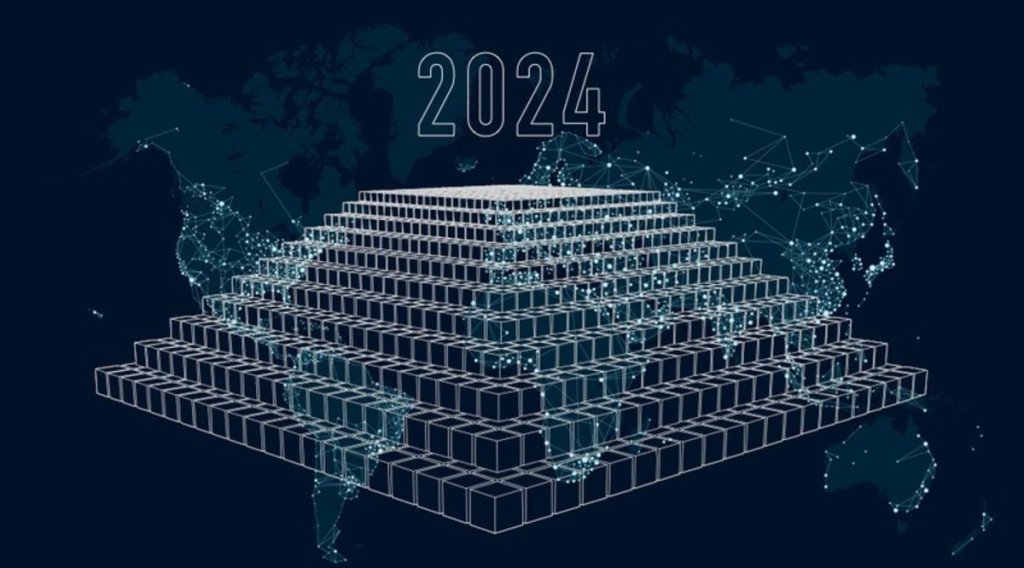
Navigating the Future: Top 10 Blockchain Trends in 2024

As we stand on the cusp of 2024, the blockchain landscape is poised for transformative shifts that promise to redefine the digital world. This article delves into the emerging trends that will shape the blockchain sphere over the next 12 months and beyond. From institutional adoption to regulatory evolution, we explore the key developments influencing the future of decentralized technology.

Trend #1: Enterprise Adoption Takes Center Stage

One of the most significant trends anticipated in 2024 is the acceleration of blockchain adoption by enterprises. Companies are recognizing the potential of blockchain to enhance efficiency, security, and transparency within their operations. The rise of Blockchain-as-a-Service (BaaS) platforms, offering cloud-based solutions for developing blockchain applications, is expected to further lower entry barriers, encouraging more businesses to integrate blockchain into their models.

Trend #2: Institutional Acceptance of Cryptocurrencies Gains Momentum

The institutional embrace of cryptocurrencies is gaining momentum, exemplified by BlackRock’s recent introduction of a Bitcoin spot ETF. Other major players, including WisdomTree and Invesco, are following suit with their own Bitcoin spot ETF applications. EDX Markets, backed by industry giants like Charles Schwab and Fidelity Digital Assets, launched its non-custodial exchange, highlighting institutional confidence in the potential of cryptocurrencies.

Trend #3: Wall Street Pioneers Asset Tokenization and Digital Transactions

Wall Street heavyweights, including JPMorgan Chase, Goldman Sachs, BlackRock, and Fidelity, are at the forefront of exploring asset tokenization and digital transactions. The transformative potential of blockchain technology in facilitating these developments is evident. Citigroup analysts project that tokenization could reach a staggering $10 trillion by 2030, encompassing private-sector securities, funds, central bank digital currencies, and stablecoins.

Trend #4: Decentralized Finance (DeFi) Shapes Future Industries

Decentralized Finance (DeFi) is expanding its influence beyond traditional finance, giving rise to new facets such as GameFi, SocialFi, and InsureTech. Blockchain’s programmability enables tailored financial tools and smart contracts that streamline operations and cut costs, particularly beneficial for SMEs and emerging markets. Various DeFi-driven technologies, from BusiFi to SocialFi, have the potential to redefine sectors, promoting efficiency, transparency, and innovation.

Trend #5: Central Bank Digital Currencies (CBDCs) as a Monetary Anchor

Central Bank Digital Currencies (CBDCs) are emerging as a crucial response to the rise of digital payments. Serving as a monetary anchor, CBDCs aim to preserve monetary singleness and shield monetary sovereignty. As digital finance tokenization gains traction, central banks are reassessing their tech infrastructure to accommodate these digital assets in wholesale transactions, fostering seamless integration into financial systems.

Trend #6: Blockchain Regulation Enters the New Normal

Growing concerns and challenges within the crypto ecosystem are prompting governments to establish comprehensive regulatory frameworks. The emphasis is on addressing social and environmental risks associated with cryptocurrencies, encouraging responsible and sustainable integration into the financial sector. Regulatory clarity is crucial to fostering a sustainable crypto future.

Trend #7: SEC Scrutiny on Cryptocurrency Exchanges Intensifies

The U.S. Securities and Exchange Commission (SEC) has intensified its enforcement efforts in the cryptocurrency domain, bringing lawsuits against major exchanges like Binance and Coinbase. Despite short-term uncertainties, increased scrutiny could pave the way for more standardized and transparent regulations, fostering a healthier dialogue between digital currencies and global financial regulation.

Trend #8: Addressing Technical Drawbacks and User Challenges

Blockchain technology faces inherent limitations, including inefficiencies, slow transactions, and high costs, leading to the ‘blockchain trilemma.’ Efforts to address these issues are giving rise to alternative solutions, such as off-chain transactions. However, challenges related to user-centric issues, like key management, remain significant roadblocks to widespread adoption.

Trend #9: Expanding Definition of ‘The Metaverse’ Driven by Business Innovation

The Metaverse is evolving beyond a virtual realm, offering new potential for businesses in areas like virtual real estate, digital fashion, global events, and gaming. Various Metaverse models, from MetaAca to MetaFash, are revolutionizing industries and creating a boundless marketplace for global entrepreneurs.

Trend #10: AI-Enabled Blockchain Convergence

The convergence of artificial intelligence (AI) and blockchain is set to disrupt multiple industries. AI’s influence on digital businesses, combined with blockchain’s distinctive aspects, creates unique opportunities for innovation. Businesses must develop comprehensive frameworks for the effective implementation of AI-enabled blockchain, overcoming integration obstacles and harnessing the potential for efficiency, transparency, and innovation.

Looking Ahead:

As we look toward 2024, the blockchain landscape is marked by these transformative trends. From the mainstream adoption by enterprises to the evolution of DeFi and the integration of AI, the future promises a dynamic and innovative blockchain ecosystem. Navigating the complexities and aligning with regulatory guidelines will be essential for industries and individuals alike as we continue to unlock the full potential.

Did you like this post? Do you have any feedback? Do you have some topics you’d like me to write about? Do you have any ideas on how I could make this better? I’d love your feedback!

Feel free to reach out to me on Twitter!

Unleashing the Potential: Finding Value in Generative AI for Financial Services

In the ever-evolving landscape of financial services, staying ahead requires innovation and a keen understanding of emerging technologies. Generative Artificial Intelligence (Generative AI) has emerged as a transformative force, offering unprecedented possibilities for the financial sector. In this article, we explore the profound impact of Generative AI on financial services, from personalized customer experiences to risk management and fraud detection.

Understanding Generative AI:

Generative AI refers to a class of artificial intelligence algorithms designed to generate content, often indistinguishable from content created by humans. It excels in tasks such as image and text generation, making it a versatile tool with applications across various industries. In financial services, the value of Generative AI becomes evident in its ability to streamline processes, enhance customer interactions, and mitigate risks.

Personalized Customer Experiences:

  1. Tailored Financial Advice: Generative AI can analyze vast amounts of customer data to generate personalized financial advice. This tailored approach helps clients make informed decisions, ensuring that financial recommendations align with individual goals and risk tolerances.
  2. Chatbot Interactions: Integrating Generative AI into chatbots enhances customer interactions. These AI-driven chatbots can provide real-time support, answer queries, and guide users through financial processes, improving overall customer satisfaction.

Risk Management and Fraud Detection:

  1. Anomaly Detection: Generative AI algorithms excel at recognizing patterns. In the financial sector, this capability is harnessed for anomaly detection, identifying irregularities in transactions and flagging potential fraudulent activities in real-time.
  2. Credit Scoring: Generative AI enhances credit scoring models by analyzing diverse data points. This allows for a more comprehensive evaluation of an individual’s creditworthiness, enabling financial institutions to make more accurate lending decisions.

Operational Efficiency:

  1. Automation of Repetitive Tasks: Generative AI can automate routine and repetitive tasks, freeing up human resources to focus on more complex and strategic activities. This efficiency gains can result in cost savings and improved operational performance.
  2. Natural Language Processing (NLP): Natural Language Processing powered by Generative AI enables financial institutions to process vast amounts of unstructured data from sources like news articles, social media, and financial reports. This aids in sentiment analysis and market trend predictions.

Regulatory Compliance:

  1. Automated Compliance Checks: Generative AI facilitates automated compliance checks by continuously monitoring regulatory changes. This ensures that financial institutions stay compliant with evolving regulations, reducing the risk of non-compliance penalties.
  2. Enhanced Anti-Money Laundering (AML) Measures: Generative AI contributes to more robust AML measures by identifying suspicious patterns and behaviors, allowing financial institutions
  3. to address potential money laundering activities proactively.

Generative AI is a catalyst for innovation in financial services, offering a spectrum of benefits ranging from personalized customer experiences to enhanced risk management and operational efficiency. As financial institutions continue to embrace digital transformation, the strategic integration of Generative AI will be pivotal in shaping the future of the industry. The evolving landscape presents both challenges and opportunities, and organizations that leverage the power of Generative AI stand poised to redefine the way financial services are delivered and experienced.

Did you like this post? Do you have any feedback? Do you have some topics you’d like me to write about? Do you have any ideas on how I could make this better? I’d love your feedback!

Feel free to reach out to me on Twitter!
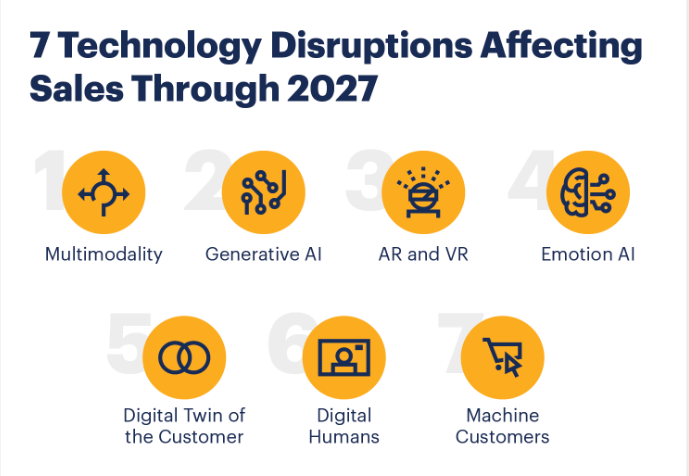
Navigating Tomorrow’s Sales Landscape: 7 Disruptive Technologies Set to Redefine Sales by 2027

In the fast-paced world of sales, staying ahead of the curve is crucial. As we look ahead to the next six years, several emerging technologies are poised to disrupt and revolutionize the sales landscape. From artificial intelligence to blockchain, these innovations promise to reshape the way businesses approach selling, creating new opportunities and challenges. Let’s delve into the seven key technologies set to make a significant impact on sales by 2027.

  1. Artificial Intelligence and Machine Learning: The integration of AI and machine learning is set to transform sales processes. From predictive analytics that forecast customer behavior to AI-driven chatbots providing real-time support, these technologies enhance efficiency, personalization, and overall customer experience.
  2. Augmented Reality (AR) and Virtual Reality (VR): AR and VR technologies are breaking down barriers in product demonstrations and virtual shopping experiences. Sales professionals can create immersive presentations, allowing customers to visualize products in their own space, ultimately influencing purchasing decisions.
  3. Blockchain in Sales: Blockchain’s decentralized and secure nature is revolutionizing transactions. Smart contracts streamline agreements, reduce fraud, and enhance trust between parties. In sales, blockchain ensures transparency in the supply chain, reducing complexities and mitigating risks.
  4. Internet of Things (IoT): The IoT is enabling smart, connected devices that offer valuable data insights. In sales, IoT devices can provide real-time information on product usage, allowing businesses to tailor their offerings and services to meet customer needs more effectively.
  5. Voice Technology: With the rising prevalence of virtual assistants and voice-activated devices, sales strategies are adapting to cater to voice searches and commands. Optimizing content and sales processes for voice technology is becoming imperative for reaching tech-savvy consumers.
  6. Predictive Analytics: Leveraging big data and advanced analytics, predictive analytics models forecast customer behaviors, preferences, and market trends. Sales teams armed with predictive insights can make informed decisions, personalize interactions, and proactively address customer needs.
  7. Robotic Process Automation (RPA): RPA streamlines repetitive tasks, allowing sales teams to focus on more complex, strategic activities. Automating mundane processes enhances productivity, reduces errors, and accelerates the sales cycle.

As we approach 2027, the convergence of these disruptive technologies will undoubtedly reshape the sales landscape. Adapting to these changes and integrating them strategically into sales processes will be paramount for businesses aiming to stay competitive in an ever-evolving marketplace. Embracing innovation and staying informed about these technological shifts will empower sales professionals to navigate the future successfully.

Did you like this post? Do you have any feedback? Do you have some topics you’d like me to write about? Do you have any ideas on how I could make this better? I’d love your feedback!

Feel free to reach out to me on Twitter!
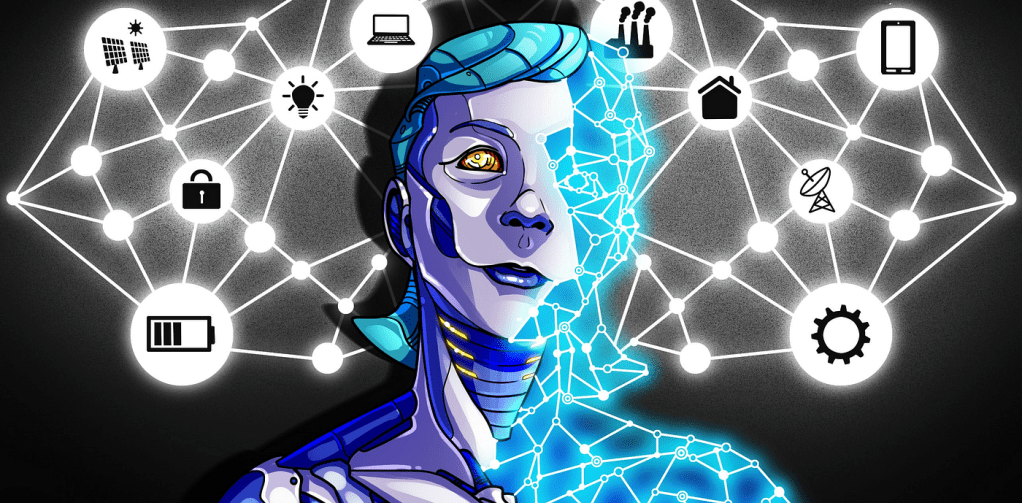
AI and Crypto Could Achieve So Much More Together

AI and crypto, two transformative technologies in their own right, have been making waves individually, but the fusion of these innovations holds the potential for groundbreaking developments that could reshape industries and redefine paradigms. This article will delve into the synergies between AI and crypto and explore the possibilities and potential they hold together.

The Intersection of AI and Crypto

AI’s Role in Crypto:

Artificial Intelligence, with its machine learning and predictive analytics, has found diverse applications within the crypto landscape:

  1. Trading and Analysis: AI algorithms analyze vast amounts of data to predict market trends, optimize trading strategies, and execute trades more efficiently.
  2. Fraud Detection: AI-driven systems detect fraudulent activities and enhance security within cryptocurrency transactions.
  3. Blockchain Optimization: AI contributes to enhancing blockchain systems by improving consensus mechanisms, scalability, and smart contract efficiency.

Crypto’s Impact on AI:

Cryptocurrencies and blockchain technology have influenced the evolution of AI:

  1. Decentralization and Data Privacy: Blockchain technology enables secure, decentralized data storage, preserving privacy and providing reliable data sources for AI algorithms.
  2. Tokenization and Incentives: Cryptocurrencies offer incentives, fostering the development of AI models and datasets, creating a new marketplace for data exchange.

Potential Collaborations and Synergies

Smart Contracts and AI Oracles:

AI-driven oracles in smart contracts could introduce dynamic, data-driven contracts that respond to real-world events. This fusion could optimize contract execution and reduce reliance on manual intervention.

Decentralized Autonomous Organizations (DAOs) and AI:

Integrating AI within DAOs could enhance decision-making processes and governance structures. AI could provide analytical insights to assist in decentralized decision-making within these organizations.

Predictive Analytics in Crypto Markets:

AI’s predictive capabilities could offer valuable insights in understanding and forecasting crypto market trends, enhancing trading strategies, risk management, and investment decisions.

Challenges and Ethical Considerations

Data Quality and Bias:

Ensuring high-quality data is crucial for AI models, and within the crypto space, data transparency and accuracy pose challenges. Addressing biases in cryptocurrency data is essential to avoid skewed predictions.

Regulatory and Security Concerns:

The fusion of AI and crypto raises regulatory challenges concerning security, privacy, and legal compliance. Balancing innovation with regulatory standards is crucial to navigate potential legal obstacles.

Ethical AI Usage:

AI applications within crypto, especially in trading and investment, must prioritize ethical considerations to prevent manipulative or exploitative practices.

Future Prospects and Innovations

AI-Driven Personalized Finance:

Tailored financial services utilizing AI could emerge within the crypto ecosystem, offering customized investment advice and personalized financial solutions.

Blockchain Interoperability and AI Integration:

Developments in interoperability protocols could facilitate the integration of various blockchains, enabling AI applications to function across multiple platforms.

Decentralized AI Networks:

Decentralized AI networks utilizing blockchain could offer secure, collaborative platforms for AI development, fostering collective innovation and data sharing.

The convergence of AI and crypto presents an exciting frontier for innovation, yet it demands careful considerations in terms of ethics, regulations, and technological advancements. While the amalgamation offers immense promise, navigating the complexities of these technologies will be essential in realizing their full potential. As both AI and crypto continue to evolve, the collaboration between these two disruptive technologies could herald a new era of innovation, transforming industries and empowering novel applications that could drive substantial societal and economic changes.

Did you like this post? Do you have any feedback? Do you have some topics you’d like me to write about? Do you have any ideas on how I could make this better? I’d love your feedback!

Feel free to reach out to me on Twitter!