$10 a Month in Bitcoin Could Change Your 2030

The Power of Small, Steady Investments

When most people think about investing in Bitcoin, they imagine big, risky bets — lump sums, wild swings, and sleepless nights. But the truth is, you don’t need to gamble your life savings to benefit from Bitcoin’s long-term potential.

In fact, you could start with as little as $10 a month — and by 2030, that small, steady habit could have a life-changing impact.

1. The Power of Dollar-Cost Averaging (DCA)

Dollar-cost averaging is a time-tested investment approach where you invest a fixed amount at regular intervals, regardless of the asset’s price.
This method removes emotion from investing — you buy through the highs and the lows, letting time and compounding work in your favor.

In Bitcoin’s case, DCA has historically been a powerful strategy because it turns volatility from a fear into an advantage. You’re not trying to “time the market”; you’re simply showing up, month after month.

2. Why $10 Matters More Than You Think

At $10 per month, you’re committing $120 a year. Over a decade, that’s $1,200 total invested — less than the cost of a daily coffee habit.

But Bitcoin’s historical performance changes the equation. While no future returns are guaranteed, Bitcoin’s compound annual growth rate (CAGR) since inception has been extraordinary, even accounting for deep drawdowns.

Let’s take a conservative example:
If Bitcoin grows at 20% CAGR from now until 2030 (much lower than its past average), your $1,200 total contributions could grow to several multiples of your original investment — without you ever making a large commitment.

3. Bitcoin’s Scarcity Advantage

Unlike fiat currency, Bitcoin has a fixed supply of 21 million coins. This scarcity is hardcoded into its protocol. As adoption increases and demand rises, supply cannot be inflated to meet it. That’s why long-term holders — whether they own thousands of dollars or just a few satoshis — share the same benefit of scarcity.

With micro-investing, you are essentially stacking small amounts of a finite asset before the rest of the world realizes its true value.

4. Benefits of Starting Small

  • Low Risk Entry — You’re not overexposed; small amounts keep your risk manageable.
  • Habit Formation — Regular investing builds discipline, which pays off in other financial areas.
  • Upside Exposure — Even small positions in high-growth assets can become meaningful over time.
  • Accessible to All — You don’t need to be wealthy to participate in the Bitcoin network.

5. The Bigger Picture: 2030 and Beyond

Bitcoin adoption is still in its early stages, with growing interest from institutional investors, nation-states, and global payment platforms. By 2030, it could play a central role in global finance.

If that happens, the price could reflect not just speculation, but deep, fundamental demand for a digital, borderless, inflation-resistant store of value.

The $10 a month you start today isn’t just an investment — it’s a ticket to participate in the future monetary system.

We tend to overestimate what we can do in a day, but underestimate what we can do in a decade.
Ten dollars a month won’t change your life overnight, but with patience, discipline, and the compounding effects of Bitcoin’s scarcity, it could be one of the smartest financial moves you ever make.

Small steps, big future.
Start stacking.

The Math Behind Bitcoin’s Security: Why Elliptic Curves Are a Genius Choice

In the world of cryptocurrencies, security is paramount. Bitcoin, the pioneering digital currency, relies on advanced cryptographic techniques to ensure the integrity and privacy of transactions. One of the foundational technologies behind Bitcoin’s security is Elliptic Curve Cryptography (ECC). In this post, I’ll explain what ECC is, why it’s crucial for Bitcoin, and how it might face challenges in the age of quantum computing.

What Is Elliptic Curve Cryptography?
ECC is a type of public-key cryptography based on the algebraic structure of elliptic curves over finite fields. It allows users to generate two keys:

  • A private key, which must remain secret.
  • A public key, derived from the private key and shared openly.

The security of ECC lies in the difficulty of solving the Elliptic Curve Discrete Logarithm Problem (ECDLP)—it’s computationally infeasible to determine the private key from the public key using classical computers. This makes ECC an efficient and secure choice for encryption and digital signatures.

How Does ECC Power Bitcoin?
Bitcoin uses a specific elliptic curve called secp256k1 to generate key pairs. Here’s how it works:

  1. A user creates a private key (a random 256-bit number).
  2. The private key is multiplied by a predefined point on the curve to produce a public key.
  3. The public key is hashed and encoded to create a Bitcoin address.

When sending Bitcoin, the sender signs the transaction with their private key. Others can verify the signature using the public key without ever knowing the private key. This ensures only the rightful owner can authorize transactions while allowing anyone to validate them.

Advantages of ECC
ECC stands out due to its efficiency and scalability:
Smaller Key Sizes A 256-bit ECC key provides the same level of security as a 3072-bit RSA key, reducing computational overhead.
Resource Efficiency ECC is ideal for devices with limited processing power, such as smartphones or IoT devices.
Future-Proofing While ECC is currently secure, researchers are actively exploring quantum-resistant algorithms to safeguard against future threats.

Quantum Computing: A Potential Threat
Quantum computers, if developed at scale, could break ECC using Shor’s algorithm, which efficiently solves problems like the ECDLP. If this happens, attackers could derive private keys from public keys, compromising Bitcoin’s security. However:

  • Practical quantum computers capable of breaking ECC are likely decades away.
  • Post-quantum cryptographic algorithms are being developed to ensure long-term security.

Conclusion
Elliptic Curve Cryptography plays a vital role in securing Bitcoin and other cryptocurrencies. Its combination of robust security and efficiency makes it a cornerstone of modern digital transactions. While quantum computing presents a theoretical challenge, ongoing advancements in cryptography will help protect systems like Bitcoin well into the future.

As we continue to innovate in blockchain and fintech, understanding the underlying technologies—like ECC—is essential for building trust and driving adoption. What do you think about the intersection of cryptography and blockchain? Share your thoughts in the comments!

Elliptic Curve Cryptography (ECC) is a public-key cryptographic system used in modern encryption methods, including Bitcoin. It relies on the mathematical properties of elliptic curves over finite fields and offers strong security with smaller key sizes compared to traditional algorithms like RSA. Bitcoin uses a specific curve called secp256k1 for generating private and public keys, ensuring secure transactions through digital signatures. While ECC is highly secure against classical computers, it could be vulnerable to quantum computing attacks in the future. However, researchers are already developing quantum-resistant algorithms to address this potential threat.

Institutional Adoption of Cryptocurrency: The Next Big Wave

The world of cryptocurrency has come a long way since the inception of Bitcoin. What was once considered a fringe movement for tech enthusiasts and cypherpunks has now entered the mainstream. The most recent crypto ownership survey by Finbold reveals that 10.2% of the global internet-using population owns some form of cryptocurrency. While retail adoption is noteworthy, what’s even more intriguing is the rising interest from institutions, particularly in the realm of Web3 and digital assets. In this article, we’ll explore the institutional adoption of cryptocurrencies, including trends, challenges, and what the future may hold.

Institutional Interest in Cryptocurrency

The rise of Web3, characterized by decentralization, privacy, and blockchain technology, has piqued the interest of institutional players, including Fortune 500 companies. According to a report by The Block, 52% of Fortune 500 companies have explored Web3 initiatives. While the “institutions are coming” narrative has been circulating for years, recent developments suggest a more tangible shift.

Bitcoin ETFs: A Game Changer?

One of the most optimistic developments is the filing of a Bitcoin ETF by BlackRock, a leading global investment manager. Despite previous rejections by the SEC, Bloomberg analysts predict a 65% chance of approval for this ETF. This application marks a significant step toward bridging the gap between traditional finance and the crypto space. A successful Bitcoin ETF could open the floodgates for institutional capital.

Crypto Assets Under Management (AUM) on the Rise

Cryptocurrencies are no longer just a curiosity; they are viewed as a legitimate asset class. Digital asset management review by CCData indicates that the total AUM for digital asset investment products reached $33.7 billion in July 2023, up from $22 billion a year ago. This increase is impressive, considering the challenges the crypto market faced, including the Terra collapse.

Bitcoin-based products dominate the institutional space, accounting for 71% of the market share. Ethereum-based products come second, constituting 22% of the market.

U.S. Dominance in AUM, Fueled by Grayscale

The U.S. has yet to approve a Bitcoin ETF, but institutional investors are showing a significant appetite for Bitcoin and Ethereum-based products. Over 70% of the capital in the U.S. flows through Grayscale, a crypto asset manager offering exposure to Bitcoin through the Grayscale Bitcoin Trust (GBTC). As of July 2023, GBTC’s AUM stood at $18.6 billion.

The recent narrowing of the GBTC discount, influenced by ETF applications, suggests growing institutional demand. When the discount narrows, it indicates increasing demand for the GBTC trust, indicating institutional accumulation.

Hedge Funds: Navigating Risk and Reward

Hedge funds, which experienced a challenging year in the crypto market in 2022, are cautiously optimistic about 2023. While the number of hedge funds investing in crypto assets dropped from 37% to 29%, 93% of them expect higher crypto market valuations in 2023 compared to the previous year. Hedge funds are also diversifying their investments beyond Bitcoin, exploring niche products and altcoins.

DeFi and the Gradual Shift

Decentralized Finance (DeFi) has gained traction, with traditional institutions like JPMorgan conducting DeFi transactions on public blockchains. The number of hedge funds using decentralized exchanges (DEXs) has been steadily increasing, with Uniswap, dydx, Curve, Sushiswap, and Pancakeswap among the top choices.

Family Offices: Growing Interest

Family offices are showing increased interest in digital assets, with 56% of them already investing in cryptocurrencies. While they currently allocate a small percentage of their wealth to digital assets, over 35% plan to increase their exposure in the future.

Bitcoin in the Boardroom

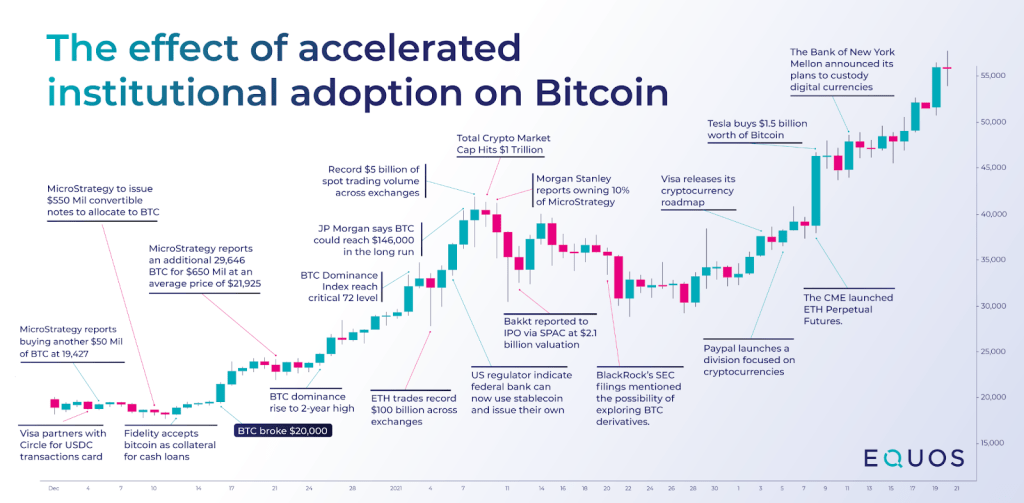
Publicly traded companies have also entered the crypto arena, with firms like Microstrategy, Tesla, and Coinbase investing in Bitcoin. Microstrategy, in particular, holds a substantial amount of Bitcoin, with its CEO, Michael Saylor, being a prominent Bitcoin advocate.

NFT Collections: Enhancing Digital Presence

NFTs are not only about art and collectibles; they offer a new way for institutions to engage with the digital realm. Nike, for instance, has partnered with EA Sports to integrate NFT-designed apparel into video games. Fortune 100 companies have generated $1.6 billion in secondary sales from digital collections.

The Awaited Bitcoin ETF

The question of whether the U.S. SEC will approve a Bitcoin ETF remains paramount. BlackRock’s application has sparked optimism, but past rejections cast a shadow of uncertainty. However, if approved, the ETF could significantly impact the crypto market, given BlackRock’s $9 trillion in AUM.

Major Hurdles in Institutional Adoption

Two major hurdles remain for institutional adoption: regulation and crypto custody. Regulatory uncertainty continues to challenge the industry, with evolving compliance costs. Custody remains a critical concern, as recent hacks highlight the importance of secure storage solutions.

Institutional adoption of cryptocurrencies is still in its early stages, with many opportunities and challenges ahead. As the regulatory landscape evolves and security measures strengthen, the institutional presence in the crypto space is expected to expand. The trends discussed in this article offer a glimpse into the future of finance, where traditional institutions and digital assets coexist and collaborate.

Did you like this post? Do you have any feedback? Do you have some topics you’d like me to write about? Do you have any ideas on how I could make this better? I’d love your feedback!

Feel free to reach out to me on Twitter!

Is there a Bitcoin bull cycle coming up?

There is no doubt that the SEC crackdown affected crypto and Bitcoin is not an exception. Bitcoin is already down by 15% from its all time highs in 2023. It enjoyed a high of about $31,000. Crypto exchanges such as Coinbase and Binance admit the SEC crackdown accelerated the sell off of bitcoin.

Even though bitcoin has dropped by 15%, it is still enjoying a 60% profit. This may be an indication there is a bitcoin bull cycle coming up. Some of the reasons to support this hypothesis include:

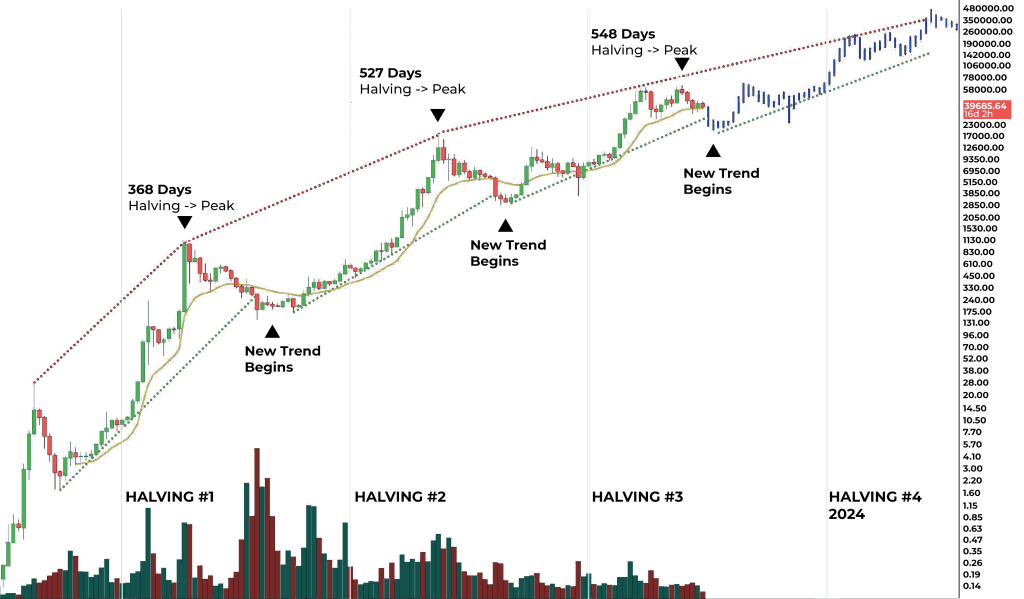
Bitcoin halving

This happens every four years whereby the coin supply rate is halved. The next bitcoin halving is set to happen in April 2024. The previous halvings happened in 2012, 2016 and 2020. In all the events, there was a BTC price rally that led to all time highs. Currently btc is high by 276% from the l;ast halving event in 2020. Current;y the market is working in anticipation of the next halving event.

BlackRock Bitcoin ETF

Blackrock has filed an application with the SEC for a bitcoin exchange traded fund. This will boost the reputation of BTC leading to an increased demand priori to the halving event.

It is highly likely that the SEC will approve BlackRock;s application. The investment firm has a good history when it comes to ETF records with the SEC. The SEC promised to respond to the firm by March 2024, which is a month before the halving.

According to Crypto Tea, an analyst, BlackRock was strategic in its application as it knew the supply will decrease and the demand increase. The investment firm wanted to capture the market before competition.

Rise in Bitcoin dominance

The recent SEC crackdown worked in favor of Bitcoin as there are many altcoins that were thrown out, especially those that were classified as unregistered securities. This increased bitcoin dominance to over 50%. The SEC recognizes altcoins as securities, which is not the case with Bitcoin. This made bitcoin be considered as a safe bet when compared to altcoins.

Michael Saylor from MicroStrategy has seen this coming as he predicted the SEc will push BTC market cap to 80% of the total crypto market. The move will eliminate any confusion and doubts from institutional investors.

Bitcoin bull flag

According to technical charts, bitcoins show a bull flag pattern in the long term, which suggests there will be an increasing continuation of its recovery rally.

The bull flag will get resolved once the price goes higher above its upper trendline. This will bring the bitcoin bull flag to near $35,500, which was a support level between May 2021 and May 2022.

To start a bull cycle, bitcoin will have to close above $35,500, as long as it remains lower than the previous bear market peaks.

Apart from the bull flag pattern, BTC price could be on the verge of a breakout in the inverse-head-and-shoulder(IH&S) pattern. This is a  bullish reversal pattern which can only be resolved when price breaks above the neckline and rises such that the distance between the neckline and the middle trough’s lowest point is the same.

If there will be a rebound from the IH&S neckline, BTC could rally up the prices by more than 60% towards $40,500.

Did you like this post? Do you have any feedback? Do you have some topics you’d like me to write about? Do you have any ideas on how I could make this better? I’d love your feedback!

Feel free to reach out to me on Twitter!