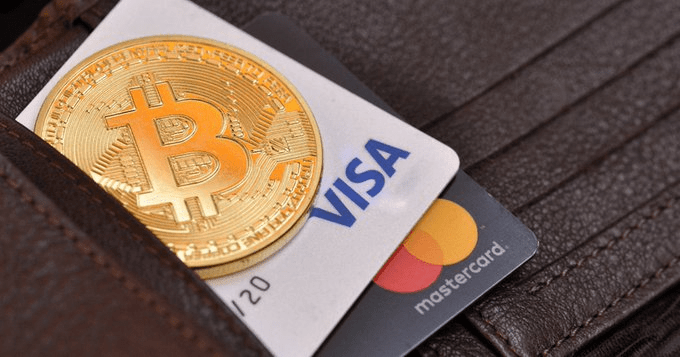
Bitcoin vs Gold: Only One Can Be the Future of Money

For thousands of years, gold has been the king of value. It built empires, backed currencies, and became the ultimate symbol of wealth. But times have changed. We’re living in a world that runs on Wi-Fi, not warships — and there’s a new challenger in town.

That challenger? Bitcoin.

The digital upstart that doesn’t shine, doesn’t rust, and doesn’t care about borders. It’s fast, global, and immune to the printing presses of central banks. And it’s here to take gold’s throne.

Gold: The Original Heavyweight

Let’s give credit where it’s due — gold has history. It’s rare, it’s beautiful, and it’s been trusted for centuries. But in today’s economy, gold feels a little… slow. You can’t email it, you can’t split it easily, and storing it safely costs money.

Meanwhile, the world has moved online — and digital money needs digital speed.

Bitcoin: The Rebel with a Cause

Bitcoin is what happens when you take gold’s best qualities — scarcity, trust, and independence — and upgrade them for the internet age. There will only ever be 21 million Bitcoins, and no government can change that.

It’s borderless, permissionless, and unstoppable. You can send millions of dollars in Bitcoin halfway across the world in minutes — no banks, no middlemen, no delays.

In a sense, Bitcoin is gold on turbo mode.

Old Money vs. Smart Money

Sure, gold has stood the test of time — but so did horse-drawn carriages before cars came along. Bitcoin is built for a generation that lives online. It’s programmable, trackable, and transparent. Every transaction sits on a public blockchain, meaning no hidden manipulation, no printing more when times get tough.

As governments keep printing fiat currency like there’s no tomorrow, people are waking up to a simple truth: scarcity equals value. Gold is scarce — but Bitcoin is digitally, verifiably scarce. That’s a game-changer.

“But Bitcoin is Too Volatile!”

So what? Every groundbreaking invention starts out bumpy. Remember the early internet? Dial-up modems and 10-minute page loads didn’t stop it from changing everything.

Bitcoin’s price swings aren’t a flaw — they’re growing pains. Each crash weeds out the weak hands, and each recovery brings in stronger believers.

The Future Has Logged On

Gold had a legendary run — it was money for the physical world. But Bitcoin is money for the digital world, and the digital world isn’t going anywhere.

In the end, this isn’t just about price — it’s about freedom, technology, and the future of value. Gold will always sparkle, but Bitcoin? It shines where gold can’t — in the digital economy that runs the modern world.

So if you’re betting on the future, remember this:
Gold was the past. Bitcoin is the future.

Mastercard to Enable Bitcoin Payments Across 150M+ Merchants Globally

In a major step toward mainstream cryptocurrency adoption, Mastercard has announced plans to enable Bitcoin payments across more than 150 million merchants worldwide. This marks one of the most significant integrations of digital assets into the traditional financial ecosystem to date.

A Milestone in Global Crypto Adoption

As one of the largest payment networks in the world, Mastercard’s move sends a clear signal: crypto is no longer fringe — it’s becoming fundamental.

By leveraging its existing infrastructure, Mastercard will allow merchants to accept Bitcoin payments with minimal friction. While customers will still pay in Bitcoin, transactions may be settled in fiat currencies via Mastercard’s backend partnerships, ensuring price stability and usability for businesses unfamiliar with crypto.

How It Works

This integration typically involves:

  • Custodial and conversion partners: Platforms like MoonPay, BitPay, or Paxos may be used to convert BTC to fiat in real-time.
  • POS & online support: Merchants don’t need to hold or manage crypto themselves — the heavy lifting is done via Mastercard’s partnered infrastructure.
  • Consumer-focused experience: End users can spend Bitcoin from their wallets or linked debit cards, seamlessly.

Why This Matters

  1. Access at Scale
    With Mastercard’s global merchant network, Bitcoin could be accepted at grocery stores, online retailers, restaurants, and more — totaling over 150 million points of sale.
  2. Bridging TradFi and DeFi
    This initiative reduces the gap between traditional finance (TradFi) and decentralized finance (DeFi), fostering more interoperability and consumer choice.
  3. Normalization of Crypto
    Regulatory clarity combined with corporate adoption from firms like Mastercard, BlackRock, and PayPal helps legitimize Bitcoin in the eyes of global consumers and institutions.

The Bigger Picture

This isn’t Mastercard’s first step into crypto. The company has previously:

  • Partnered with crypto exchanges and wallets
  • Explored blockchain analytics and compliance tools
  • Launched crypto-backed cards with various fintech startups

But enabling Bitcoin payments at mass scale could be the moment when crypto moves from speculation to real-world utility.

Looking Ahead

If successful, this initiative could pave the way for:

  • Native crypto payments without automatic conversion
  • Support for additional digital assets (ETH, stablecoins, etc.)
  • Stronger incentives for merchants to engage with Web3 ecosystems


Mastercard’s move to enable Bitcoin payments globally could be a turning point for crypto adoption. It not only adds utility to Bitcoin but also helps demystify digital assets for the average consumer.

Bitcoin is no longer just an investment — it’s becoming a payment standard.

#Bitcoin #Mastercard #CryptoAdoption #Payments #Fintech #DigitalAssets #BTC #GlobalCommerce

Craving the Struggle: Why Our Souls Demand Proof of Work in the AI Age

We live in a time when so much is given to us freely. Every thought can be answered with a query, every desire met with a click. The great machines of artificial intelligence anticipate our needs before we even articulate them. The era of frictionless existence is upon us. And yet, beneath the ease and abundance, a quiet emptiness lingers. The soul, it seems, still demands proof of work.

The concept of proof of work, borrowed from cryptography and blockchain, is a mechanism of validation through effort. It ensures that what is gained has been properly earned. Without it, there is no inherent value—only the illusion of worth. And while it has been used primarily in the digital realm, the idea resonates far beyond finance or computing. It touches something primal within us: the belief that struggle imbues meaning.

Throughout human history, suffering and effort have shaped our narratives. The hero earns glory through trials, the student gains wisdom through rigorous study, the lover proves devotion through patience and hardship. This is the fabric of our myths and lived experiences. The long walk home after a night spent with a dear friend. The quiet endurance of an artist refining their craft. The arduous journey of self-discovery. These are acts of proof, solidifying our presence in the world.

But today, artificial intelligence dissolves these old structures. It offers instant knowledge without study, artistic creation without skill, companionship without depth. We no longer need to experience the slow burn of becoming; we can simply summon results. In doing so, we risk severing our connection to the struggle that once defined us. What happens when effort is no longer required? When every mountain is flattened, every hardship automated away?

It is seductive to think that comfort is the pinnacle of progress. Yet we find, paradoxically, that the more seamless our lives become, the more dissatisfied we feel. We crave the hunger that makes food taste rich, the longing that makes love feel true. AI can synthesize beauty, but can it make us yearn? It can simulate challenge, but can it instill pride? It can tell us who we are, but can it help us become?

Perhaps, then, the antidote is deliberate resistance—a conscious refusal to surrender our proof of work. We must choose to struggle where we could coast, to create where we could consume, to embrace friction where we could seek ease. This is not a rejection of technology but an insistence on soul. To remain human, we must insist on effort. In doing so, we preserve the hunger, the striving, the proof that we have lived.

The Math Behind Bitcoin’s Security: Why Elliptic Curves Are a Genius Choice

In the world of cryptocurrencies, security is paramount. Bitcoin, the pioneering digital currency, relies on advanced cryptographic techniques to ensure the integrity and privacy of transactions. One of the foundational technologies behind Bitcoin’s security is Elliptic Curve Cryptography (ECC). In this post, I’ll explain what ECC is, why it’s crucial for Bitcoin, and how it might face challenges in the age of quantum computing.

What Is Elliptic Curve Cryptography?
ECC is a type of public-key cryptography based on the algebraic structure of elliptic curves over finite fields. It allows users to generate two keys:

  • A private key, which must remain secret.
  • A public key, derived from the private key and shared openly.

The security of ECC lies in the difficulty of solving the Elliptic Curve Discrete Logarithm Problem (ECDLP)—it’s computationally infeasible to determine the private key from the public key using classical computers. This makes ECC an efficient and secure choice for encryption and digital signatures.

How Does ECC Power Bitcoin?
Bitcoin uses a specific elliptic curve called secp256k1 to generate key pairs. Here’s how it works:

  1. A user creates a private key (a random 256-bit number).
  2. The private key is multiplied by a predefined point on the curve to produce a public key.
  3. The public key is hashed and encoded to create a Bitcoin address.

When sending Bitcoin, the sender signs the transaction with their private key. Others can verify the signature using the public key without ever knowing the private key. This ensures only the rightful owner can authorize transactions while allowing anyone to validate them.

Advantages of ECC
ECC stands out due to its efficiency and scalability:
Smaller Key Sizes A 256-bit ECC key provides the same level of security as a 3072-bit RSA key, reducing computational overhead.
Resource Efficiency ECC is ideal for devices with limited processing power, such as smartphones or IoT devices.
Future-Proofing While ECC is currently secure, researchers are actively exploring quantum-resistant algorithms to safeguard against future threats.

Quantum Computing: A Potential Threat
Quantum computers, if developed at scale, could break ECC using Shor’s algorithm, which efficiently solves problems like the ECDLP. If this happens, attackers could derive private keys from public keys, compromising Bitcoin’s security. However:

  • Practical quantum computers capable of breaking ECC are likely decades away.
  • Post-quantum cryptographic algorithms are being developed to ensure long-term security.

Conclusion
Elliptic Curve Cryptography plays a vital role in securing Bitcoin and other cryptocurrencies. Its combination of robust security and efficiency makes it a cornerstone of modern digital transactions. While quantum computing presents a theoretical challenge, ongoing advancements in cryptography will help protect systems like Bitcoin well into the future.

As we continue to innovate in blockchain and fintech, understanding the underlying technologies—like ECC—is essential for building trust and driving adoption. What do you think about the intersection of cryptography and blockchain? Share your thoughts in the comments!

Elliptic Curve Cryptography (ECC) is a public-key cryptographic system used in modern encryption methods, including Bitcoin. It relies on the mathematical properties of elliptic curves over finite fields and offers strong security with smaller key sizes compared to traditional algorithms like RSA. Bitcoin uses a specific curve called secp256k1 for generating private and public keys, ensuring secure transactions through digital signatures. While ECC is highly secure against classical computers, it could be vulnerable to quantum computing attacks in the future. However, researchers are already developing quantum-resistant algorithms to address this potential threat.