The 5G Conspiracy Theorists Making Money Out of Covid-19!

If you have been following social media during this pandemic, and it’s hard to avoid it, you may have noticed that conspiracy theories about the origins of the virus are multiplying like weeds.

The general consensus is that it leapt to humans from a bat, or a pangolin, but even the leading scientists have questioned what was initially assumed about Wuhan’s wet market as being the source.

But the conspiracy theorists aren’t content with that. It’s not exciting enough for them presumably, plus was there ever a better opportunity for them to jump on all the social media channels and announce the ‘truth’!

One of the most prevalent theories is that the virus is related to the rollout of 5G Internet technology. Apparently, while we are all in lockdown, new 5G towers are being installed while we’re not looking. That’s just one aspect of it. The other is that the 5G technology is responsible for spreading the virus worldwide?

How could technology do this? Well, according to the conspiracy, there is no virus. The images you have seen of people dying in hospital beds is part of one big hoax. Instead it is 5G technology that is causing the symptoms.

Another variation of the conspiracy theory asserts that radiation from 5G can weaken your immune system to the point that you are more easily infected by COVID-19. After all, the same people have been saying for months that 5G will basically fry your brain.

It’s hard to imagine, is it not, that all the medics, nurses and scientists have been colluding in an elaborate illusion, just to ensure that we think people are ill or dying from the virus?

The conspiracy theorists work from the rather basic principle that since Covid-19 started in China, and so did the 5G rollout, which apparently means 5G is the real source of the worst pandemic any of us have seen. Some have even tried to create timelines connecting the emergence of radio waves in 1916 as the precursor of the 1918 Spanish Flu pandemic, and to connect the introduction of 3G with SARS and 4G with swine flu, before we get to 5G.

Even some news broadcasters have pandered to the idea, showing maps of %G tower installations and claiming there are more Covid cases in these areas. However, this doesn’t support 5G as being the cause. There may be many other factors in those areas contributing to the number of infections, primary among them socio-economics and population density.

And in other fake news, somebody tried to claim that the new Bank of England £20 note features a 5G tower and a symbol for Covid-19. Apart form the Queen, it features the artist J.M.W. Turner. The ‘5G tower’ is actually Margate Lighthouse, a favourite place of the artist, and the so-called Covid symbol represents a staircase at Tate Britain, which houses many of Turner’s works. Just so we’ve cleared that one up.

That hasn’t stopped people from vandalising 5G towers and attacking telecoms workers in the UK and elsewhere. As Forbes contributor Bruce Y. Lee says, “In fact, these 5G-COVID-19 conspiracy theories has gotten so rampant that U.K. government officials actually have had to take time to discredit such theories, which is a wonderful use of time during a public health emergency.”

Making money from the 5G conspiracy

Of course, somebody is benefitting from the 5G conspiracy: Ryan Broderick at Buzzfeed says people are paying $350 for a USB stick that is a ‘bioshield’ against 5G. The vendor, Jacques Bauer, “falsely claims protects people from 5G radiation by converting it into beneficial radiation.” And there are others who have jumped on the same bandwagon, as Broderick rightly names and shames them.

It’s consumer abuse at any time, but while people are dying in the hundreds of thousands worldwide, it is utterly disgraceful to capitalise on people’s fear in this way. In the months to come, people will want answers about how this pandemic truly unfolded, and I’m willing to bet that the experts won’t say, “It was 5G.” However, like the anti-vaxxers (a lot of the 5G conspiracists belong in that camp as well), those who are convinced 5G caused Covid-19 will probably not go away. The best thing we can do is to ignore them.

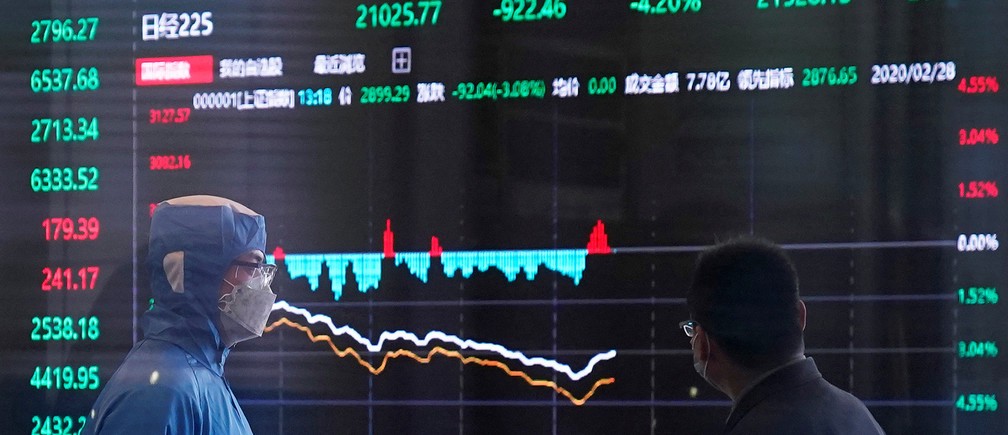
Covid-19 figures prompt stock market surge

It appears that Monday 6th April may be remembered as the day that the global stock markets resurged and investors heaved a sigh of relief. This turnaround is due to the fact that it seems the global pandemic is peaking in the worst-hit countries, such as Spain and Italy, giving investors the green light to start buying again.

According to the New York Times European stocks were trading 2 to 4 percent higher after a modest rally in Asia picked up steam later in the day. At the time of writing the New York exchange hadn’t opened, but Futures markets are predicting it will also see a good day today.

In Japan, the Nikkei 225 index rose 4.2 percent. South Korea’s Kospi index rose 3.9 percent. In Hong Kong, the Hang Seng Index was up 2.2 percent. Taiwan’s Taiex was up 1.6 percent.

However, oil prices, which usually rise when there’s good news, are not doing so well due to the continued argument between Russia and Saudi Arabia. Owing to the coronavirus epidemic, demand for oil has dropped precipitously. Saudi Arabia and OPEC proposed a deal that would trim oil production in response, but Russia declined to go along with it. So the battle continues.

A stress test for Europe

Another thing that came to light in today’s news is that European banking regulators had planned to stress test banks to see if they could withstand another major economic downturn. As it happens, they didn’t need to run any simulation, because the real thing came along in the form of the coronavirus Covid-19.

The New York Times said, “Government officials planned on running their test earlier this year, and it was meant to simulate a 4.3 percent decline in European economic output by 2022.” But now they are faced with an even worse ‘worst case’ scenario.

Some economists predict that Europe’s economy could drop by over 10% by June, and the continent’s central bankers are concerned that the crisis proofing that they put in place, won’t be sufficient to cope with what promises to be a global financial meltdown. It’s a worrying time, as European banks have never fully recovered from the last big crisis in 2008. And firms like BMW are already recording a massive drop in sales. The German carmaker announced sales had plunged by 20% in January to March 2020 and that is probably by now a conservative figure, as most countries hadn’t gone into lockdown until mid-to late March. In the UK, car dealers sold 200,000 cars fewer than they did in March 2019. It isn’t the only industry under stress, and many big companies will be looking to expand their existing lines of credit.

But, for the moment, we can take some pleasure in the fact that Covid-19 infections and deaths appear to be declining in the worst hit places, and that there is still investor enthusiasm for global stocks.

The Covid-19 Virus Has Just Reset The Global Economy!

President Trump claimed that the Covid-19 pandemic was “unforeseen”, or as Harvard’s Professor Jeffrey Frankel suggests, political leaders are seeing it as a ‘black swan’ event. That’s an event that nobody saw coming. The last one of these was the financial crash of 2008.

Perhaps countries’ responses might have been more organised had governments listened more carefully to leading epidemiologists who have been warning about the dangers of a global pandemic for decades. However, as with any event like this, hindsight is a wonderful thing. We are where we are, and we must deal with it.

There isn’t one person who cannot be aware of the effects that the coronavirus epidemic will have on the economy, because so many are already afraid of the future already due to the immediate loss of employment that came in the wake of each country’s lockdown restrictions. At the very beginning of Spain’s lockdown, unions said more than 100,000 people risked losing their jobs, and economists have warned that these temporary layoffs could become permanent. These figures refer to the big companies such as Seat, Iberia and Burger King, not the small businesses, such as bars and cafes, which have also been forced to close. And then there are the self-employed. This scenario is being replicated across Europe and in the USA.

Three scenes of impact

I believe there are three possible scenarios in relation to the economic impact:

Containment

This hasn’t happened. Economies would have had a better chance of staying stronger if we had managed to contain the infection rate to less than 500 per million. However, if you look at the average rate in the most affected countries, you are looking already at 1600 cases per million. So, it’s too late for that.

Government funding

Massive injections of emergency funding is another route. The USA is pouring an historic two trillion into the economy to shore up retail supply chains, and other countries are taking similar measures, mostly to ensure that its citizens have some income. However, there is a clear problem with this approach. Government loans will only work in the short term for businesses, for two or three months at most, and then businesses will have to let staff go. This will be fine if the economy can return to business as usual by the end of April perhaps, but if it goes on longer, there will be problems.

Herd immunity

Then there is the ‘herd immunity’ approach. The UK government suggested taking this approach when the first cases appeared, and allowing 60% of the country to become infected. They said it was what the science said, but the British people weren’t quite so keen on the idea, and it was only a matter of days before the British government stopped talking about herd immunity, and followed other countries’ actions. If a country followed the ‘herd immunity’ concept, it is likely that the crisis would continue into September/October, by which time a blanket of economic depression would have fallen over the entire world. Two-thirds of the population would be infected and the death toll would be enormous.

The economy would grind to a halt, and even a powerful economy like that of the USA wouldn’t be able to bail out businesses. The result would be a real life horror film, with social unrest, looting and crime at record heights due to unemployment. Hospitals would close their doors to all coronavirus patients, and uninfected people would fear those who were infected and violent hate acts would follow. The most vulnerable citizens, that is our elderly, would have to be moved to safe areas, while criminals would happily take advantage of the situation. Indeed, it would be like sunshine for them, as law enforcement resources would be focused on dealing with the social unrest arising from unemployment. If it sounds like one of those zombie apocalypse films that is because it is pretty close to one.

Currently we are all trying to stop the spread, but as you can see from the above scenarios, none of them guarantees us a return to the economic certainties we knew just a month ago. There will be many more predictions as the days and weeks pass: let’s hope they paint a brighter picture.

However, be warned: We are entering a new era that we might as well call ‘Global Elite Centralization’ and Covid-19 was the reset button that triggered it.

A List Of Fintech Firms Providing Free Technology During The Coronavirus Crisis

Coronavirus, or Covid-19, is preoccupying everyone at the moment, and in different ways. Businesses in almost every sector face a rough ride ahead, as they close offices in response to protecting employees health and responding to government instructions to stay at home and avoid contact with others.

Meanwhile, most of us still need money. We have to pay for food and online products, and for that we depend on bank services. And at this critical time, the more traditional banks have been receiving support from the fintechs, so that they can continue to support their customers.

According to Ron Shevlin writing for Forbes, the fintechs are “extending free, discounted, or accelerated deployment offers to financial institutions.”

So let’s see what some of them are doing.

Active.AI has a pre-built virtual assistant that can be quickly customized with answers specific to the institution. It is offering a 30-day free trial.

Agolo is providing customers with AI-generated summary feeds focusing on the impact of coronavirus on various sectors such asFinance, Energy, Media & Entertainment, Health Care, Info Technology, etc. It is offering these feeds for free on the web and via social media.

Agora Teen is an interesting fintech that specialises in offering white-label solutions for teenager bank accounts pre-opened by parents. It is offering free access to its products.

BillGO helps track, manage, and pay bills in one place and it is offering its Prism app free to help everyone stay on top of their money.

Brace is a borrower platform and it is helping borrowers to seamlessly apply for mortgage assistance in the event that the hardship is caused by COVID-19.

Digital Onboarding is a fintech offering its clients unlimited usage at no extra cost to help educate their customers/members on how to access money and utilise digital services without visiting a branch.

Similarly, Horizn works with financial institutions globally making sure both customers and employees understand and know how to bank digitally. It is providing a discounted short-term licence package of our cloud-based Customer Digital Platform and Digital Demos, and like other fintechs, it is accelerating deployment to get banks up and running within two weeks.

There are many other fintechs who are rallying around the financial sector and helping those institutions that need to react quickly to support customers. It’s a welcome move from fintechs and it can only help to boost confidence in digital banking once we come out the other side of this crisis.