Shaping the Next Frontier: Crypto Trends Set to Define 2024–2028

The crypto market has experienced exponential growth over the past decade, transforming from a niche concept to a trillion-dollar industry. As we embark on the second decade of crypto, the landscape is poised for further evolution. This article delves into the potential trends that will shape the crypto space from 2024 to 2028, covering institutional adoption, regulatory developments, technological enhancements, and the rise of new sectors like decentralized finance (DeFi) and Non-fungible Tokens (NFTs).

  1. Institutional Adoption of Crypto: Institutional interest in crypto has surged in recent years, and this trend is expected to intensify from 2024 to 2028. Major financial institutions, including banks, hedge funds, and pension funds, are entering the crypto space. This acceleration can be attributed to crypto gaining mainstream acceptance as a legitimate asset class. Regulated investment products like Bitcoin ETFs and futures contracts provide easier exposure, fostering portfolio diversification and attracting institutional investors seeking higher returns.

The anticipated institutional adoption aligns with the Rogers Technology Adoption Lifecycle, transitioning from early adopters to the early majority stage. This shift signifies a massive influx of capital from diverse institutions, contributing to the maturation of the crypto market.

2. Crypto Regulatory Trends: Regulatory developments will play a pivotal role in shaping the crypto landscape from 2024 to 2028. As the global crypto industry is projected to surpass $5 trillion by 2028, regulatory clarity is crucial. Anticipated trends include the establishment of global regulatory frameworks by entities such as the Basel Committee, IOSCO, and the FSB. These frameworks are expected to focus on standards for custody and asset management, consumer protection, and AML/counterterrorism financing regulations.

Moreover, jurisdiction-specific regulations will play a significant role, with countries taking varied approaches, ranging from complete bans to progressive embracing of crypto. The emergence of decentralized governance models will also gain prominence, reducing dependency on centralized regulators.

3. Technological Improvements, DeFi, and NFT Growth: The next four years are poised to witness significant technological advancements in scalability and interoperability solutions. Ethereum’s transition to sharding and the implementation of Layer 2 protocols will enhance transaction throughput, reducing fees and enabling micro-transactions at scale. Interoperability solutions like those offered by Polkadot and Cosmos will facilitate the seamless transfer of liquidity and assets across blockchains.

Simultaneously, the decentralized finance (DeFi) ecosystem is expected to witness substantial growth. The sector, already boasting over $60 billion in locked capital, is projected to reach over $497.9 billion in transaction value by 2032. DeFi’s expansion is attributed to its accessibility to global retail investors, transparent protocols, and censorship-resistant features.

The Non-fungible Token (NFT) market is set to experience a CAGR of 30.23% between 2023 and 2028, reaching a market size of USD 68.16 billion. NFTs are evolving beyond digital art collectibles to represent ownership of various virtual items across art, collectibles, gaming, and the metaverse. Interoperability protocols will facilitate the movement of NFTs across different virtual worlds, enhancing their utility.

As we navigate the crypto landscape from 2024 to 2028, the industry stands at the intersection of institutional adoption, regulatory evolution, technological innovation, and the growth of new sectors. While risks persist, the measured approach taken by institutions and regulators reflects a maturing industry. The true potential of crypto, underpinned by blockchain technology, is set to become increasingly mainstream, paving the way for a transformative decade ahead.

Did you like this post? Do you have any feedback? Do you have some topics you’d like me to write about? Do you have any ideas on how I could make this better? I’d love your feedback!

Feel free to reach out to me on Twitter!

AI and Crypto Could Achieve So Much More Together

AI and crypto, two transformative technologies in their own right, have been making waves individually, but the fusion of these innovations holds the potential for groundbreaking developments that could reshape industries and redefine paradigms. This article will delve into the synergies between AI and crypto and explore the possibilities and potential they hold together.

The Intersection of AI and Crypto

AI’s Role in Crypto:

Artificial Intelligence, with its machine learning and predictive analytics, has found diverse applications within the crypto landscape:

  1. Trading and Analysis: AI algorithms analyze vast amounts of data to predict market trends, optimize trading strategies, and execute trades more efficiently.
  2. Fraud Detection: AI-driven systems detect fraudulent activities and enhance security within cryptocurrency transactions.
  3. Blockchain Optimization: AI contributes to enhancing blockchain systems by improving consensus mechanisms, scalability, and smart contract efficiency.

Crypto’s Impact on AI:

Cryptocurrencies and blockchain technology have influenced the evolution of AI:

  1. Decentralization and Data Privacy: Blockchain technology enables secure, decentralized data storage, preserving privacy and providing reliable data sources for AI algorithms.
  2. Tokenization and Incentives: Cryptocurrencies offer incentives, fostering the development of AI models and datasets, creating a new marketplace for data exchange.

Potential Collaborations and Synergies

Smart Contracts and AI Oracles:

AI-driven oracles in smart contracts could introduce dynamic, data-driven contracts that respond to real-world events. This fusion could optimize contract execution and reduce reliance on manual intervention.

Decentralized Autonomous Organizations (DAOs) and AI:

Integrating AI within DAOs could enhance decision-making processes and governance structures. AI could provide analytical insights to assist in decentralized decision-making within these organizations.

Predictive Analytics in Crypto Markets:

AI’s predictive capabilities could offer valuable insights in understanding and forecasting crypto market trends, enhancing trading strategies, risk management, and investment decisions.

Challenges and Ethical Considerations

Data Quality and Bias:

Ensuring high-quality data is crucial for AI models, and within the crypto space, data transparency and accuracy pose challenges. Addressing biases in cryptocurrency data is essential to avoid skewed predictions.

Regulatory and Security Concerns:

The fusion of AI and crypto raises regulatory challenges concerning security, privacy, and legal compliance. Balancing innovation with regulatory standards is crucial to navigate potential legal obstacles.

Ethical AI Usage:

AI applications within crypto, especially in trading and investment, must prioritize ethical considerations to prevent manipulative or exploitative practices.

Future Prospects and Innovations

AI-Driven Personalized Finance:

Tailored financial services utilizing AI could emerge within the crypto ecosystem, offering customized investment advice and personalized financial solutions.

Blockchain Interoperability and AI Integration:

Developments in interoperability protocols could facilitate the integration of various blockchains, enabling AI applications to function across multiple platforms.

Decentralized AI Networks:

Decentralized AI networks utilizing blockchain could offer secure, collaborative platforms for AI development, fostering collective innovation and data sharing.

The convergence of AI and crypto presents an exciting frontier for innovation, yet it demands careful considerations in terms of ethics, regulations, and technological advancements. While the amalgamation offers immense promise, navigating the complexities of these technologies will be essential in realizing their full potential. As both AI and crypto continue to evolve, the collaboration between these two disruptive technologies could herald a new era of innovation, transforming industries and empowering novel applications that could drive substantial societal and economic changes.

Did you like this post? Do you have any feedback? Do you have some topics you’d like me to write about? Do you have any ideas on how I could make this better? I’d love your feedback!

Feel free to reach out to me on Twitter!

Crypto Was Something With a Soul Until It Was Not — But It Should Be So, Soon!

Cryptocurrency was born from a desire to redefine the financial world, putting the power of money back into the hands of individuals. Bitcoin, the pioneer of cryptocurrencies, was created in 2009 under the pseudonym Satoshi Nakamoto. Its whitepaper articulated a vision of a decentralized, peer-to-peer electronic cash system that would eliminate the need for trusted intermediaries, like banks. In its early days, cryptocurrency felt like something with a soul — a movement fueled by ideals of financial freedom, privacy, and transparency.

The Soul of Crypto: The Early Days

  1. Financial Inclusion: Crypto was perceived as a tool for financial inclusion, enabling individuals who were excluded from the traditional banking system to access and manage their money. This was particularly impactful in regions with limited access to banking services.
  2. Privacy and Security: Cryptocurrencies offered a degree of financial privacy and security that was unparalleled in the traditional financial system. Users had control over their funds and could make transactions without revealing their identity.
  3. Community-Driven Innovation: The early crypto community was characterized by passionate enthusiasts and developers who believed in the technology’s potential. They collaborated on open-source projects, creating a sense of camaraderie and shared purpose.
  4. Decentralization Ideals: The decentralization of control was a core principle. Unlike traditional financial systems where a few central entities held power, cryptocurrencies distributed power across a network of users.

The Erosion of Crypto’s Soul

Over the years, the crypto landscape has evolved, and with that evolution, some of its original ideals have eroded. Several factors have contributed to this change:

  1. Speculation and Hype: The explosive growth of cryptocurrencies in terms of valuation led to speculative trading, overshadowing their original purpose. The focus shifted from utility to profit.
  2. Regulatory Challenges: As governments and regulatory bodies grappled with the emergence of cryptocurrencies, concerns about illicit activities and financial stability led to increased oversight. This, in turn, led to the introduction of measures that conflicted with privacy and decentralization.
  3. Corporate Involvement: Large corporations and financial institutions have entered the crypto space, altering the dynamics of the ecosystem. While their involvement brings legitimacy, it also introduces centralization and commercial interests that sometimes run counter to the original ethos.
  4. Scams and Frauds: The unregulated nature of the crypto space has made it a breeding ground for scams and fraudulent schemes. Bad actors have exploited the lack of oversight, eroding trust.
  5. Environmental Concerns: The energy-intensive nature of some cryptocurrencies, particularly Bitcoin, has raised concerns about their environmental impact, which conflicts with the sustainability values some in the community hold.

Rekindling the Soul of Crypto

While the journey of cryptocurrency has seen a departure from some of its original ideals, there is still hope for rekindling its soul. Several actions can be taken to steer the industry back towards its roots:

  1. Education and Advocacy: Building awareness about the core principles of cryptocurrencies and the benefits they offer is crucial. Advocacy for privacy, decentralization, and financial inclusion can help shape the narrative.
  2. Community Initiatives: Engaging in community-driven projects that focus on the common good can reinvigorate the spirit of collaboration and shared purpose.
  3. Ethical Development: Developers and projects can prioritize ethics in their work, ensuring that their innovations align with the principles of transparency, fairness, and security.
  4. Regulatory Engagement: Collaborating with regulators and policymakers to establish sensible, balanced regulations can help bridge the gap between the crypto world and traditional finance.
  5. Environmental Responsibility: Efforts to make cryptocurrencies more eco-friendly, such as transitioning to proof-of-stake consensus mechanisms, can address environmental concerns.

Crypto was born with a soul, and its journey has been marked by both idealism and complexity. While it has experienced deviations from its original principles, it remains a transformative force. The crypto community has the power to reclaim the soul of cryptocurrency by advocating for its core values and making conscious choices that align with those values. A renewed focus on privacy, decentralization, and financial inclusion can help crypto return to its roots, fulfilling its potential as a powerful instrument of positive change in the financial world.

Did you like this post? Do you have any feedback? Do you have some topics you’d like me to write about? Do you have any ideas on how I could make this better? I’d love your feedback!

Feel free to reach out to me on Twitter!
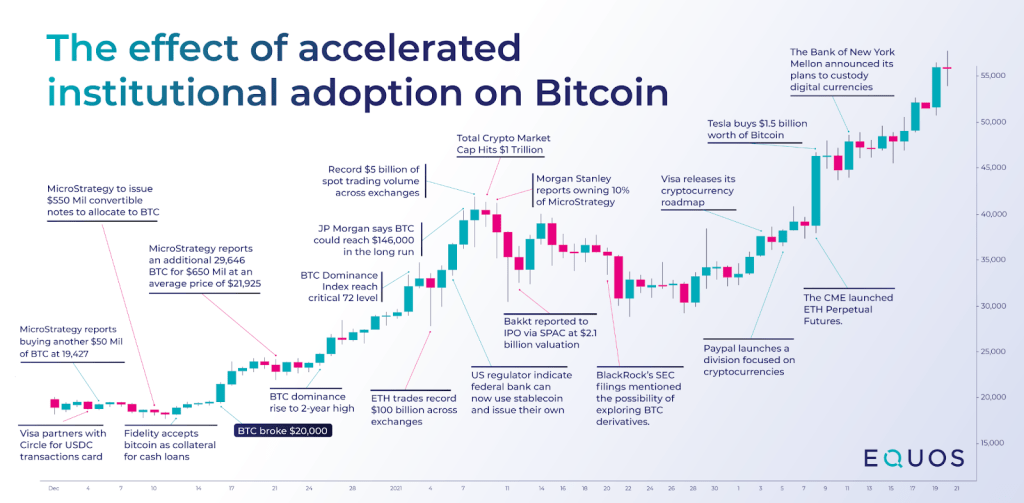
Institutional Adoption of Cryptocurrency: The Next Big Wave

The world of cryptocurrency has come a long way since the inception of Bitcoin. What was once considered a fringe movement for tech enthusiasts and cypherpunks has now entered the mainstream. The most recent crypto ownership survey by Finbold reveals that 10.2% of the global internet-using population owns some form of cryptocurrency. While retail adoption is noteworthy, what’s even more intriguing is the rising interest from institutions, particularly in the realm of Web3 and digital assets. In this article, we’ll explore the institutional adoption of cryptocurrencies, including trends, challenges, and what the future may hold.

Institutional Interest in Cryptocurrency

The rise of Web3, characterized by decentralization, privacy, and blockchain technology, has piqued the interest of institutional players, including Fortune 500 companies. According to a report by The Block, 52% of Fortune 500 companies have explored Web3 initiatives. While the “institutions are coming” narrative has been circulating for years, recent developments suggest a more tangible shift.

Bitcoin ETFs: A Game Changer?

One of the most optimistic developments is the filing of a Bitcoin ETF by BlackRock, a leading global investment manager. Despite previous rejections by the SEC, Bloomberg analysts predict a 65% chance of approval for this ETF. This application marks a significant step toward bridging the gap between traditional finance and the crypto space. A successful Bitcoin ETF could open the floodgates for institutional capital.

Crypto Assets Under Management (AUM) on the Rise

Cryptocurrencies are no longer just a curiosity; they are viewed as a legitimate asset class. Digital asset management review by CCData indicates that the total AUM for digital asset investment products reached $33.7 billion in July 2023, up from $22 billion a year ago. This increase is impressive, considering the challenges the crypto market faced, including the Terra collapse.

Bitcoin-based products dominate the institutional space, accounting for 71% of the market share. Ethereum-based products come second, constituting 22% of the market.

U.S. Dominance in AUM, Fueled by Grayscale

The U.S. has yet to approve a Bitcoin ETF, but institutional investors are showing a significant appetite for Bitcoin and Ethereum-based products. Over 70% of the capital in the U.S. flows through Grayscale, a crypto asset manager offering exposure to Bitcoin through the Grayscale Bitcoin Trust (GBTC). As of July 2023, GBTC’s AUM stood at $18.6 billion.

The recent narrowing of the GBTC discount, influenced by ETF applications, suggests growing institutional demand. When the discount narrows, it indicates increasing demand for the GBTC trust, indicating institutional accumulation.

Hedge Funds: Navigating Risk and Reward

Hedge funds, which experienced a challenging year in the crypto market in 2022, are cautiously optimistic about 2023. While the number of hedge funds investing in crypto assets dropped from 37% to 29%, 93% of them expect higher crypto market valuations in 2023 compared to the previous year. Hedge funds are also diversifying their investments beyond Bitcoin, exploring niche products and altcoins.

DeFi and the Gradual Shift

Decentralized Finance (DeFi) has gained traction, with traditional institutions like JPMorgan conducting DeFi transactions on public blockchains. The number of hedge funds using decentralized exchanges (DEXs) has been steadily increasing, with Uniswap, dydx, Curve, Sushiswap, and Pancakeswap among the top choices.

Family Offices: Growing Interest

Family offices are showing increased interest in digital assets, with 56% of them already investing in cryptocurrencies. While they currently allocate a small percentage of their wealth to digital assets, over 35% plan to increase their exposure in the future.

Bitcoin in the Boardroom

Publicly traded companies have also entered the crypto arena, with firms like Microstrategy, Tesla, and Coinbase investing in Bitcoin. Microstrategy, in particular, holds a substantial amount of Bitcoin, with its CEO, Michael Saylor, being a prominent Bitcoin advocate.

NFT Collections: Enhancing Digital Presence

NFTs are not only about art and collectibles; they offer a new way for institutions to engage with the digital realm. Nike, for instance, has partnered with EA Sports to integrate NFT-designed apparel into video games. Fortune 100 companies have generated $1.6 billion in secondary sales from digital collections.

The Awaited Bitcoin ETF

The question of whether the U.S. SEC will approve a Bitcoin ETF remains paramount. BlackRock’s application has sparked optimism, but past rejections cast a shadow of uncertainty. However, if approved, the ETF could significantly impact the crypto market, given BlackRock’s $9 trillion in AUM.

Major Hurdles in Institutional Adoption

Two major hurdles remain for institutional adoption: regulation and crypto custody. Regulatory uncertainty continues to challenge the industry, with evolving compliance costs. Custody remains a critical concern, as recent hacks highlight the importance of secure storage solutions.

Institutional adoption of cryptocurrencies is still in its early stages, with many opportunities and challenges ahead. As the regulatory landscape evolves and security measures strengthen, the institutional presence in the crypto space is expected to expand. The trends discussed in this article offer a glimpse into the future of finance, where traditional institutions and digital assets coexist and collaborate.

Did you like this post? Do you have any feedback? Do you have some topics you’d like me to write about? Do you have any ideas on how I could make this better? I’d love your feedback!

Feel free to reach out to me on Twitter!