How Satoshi changed world

As the global economy staggered, fell and got up again, an anonymous person, or group of people, named Satoshi Nakamoto came up with a surprising solution; a peer-to-peer electronic cash system, which became known as bitcoin. A small number of people saw its potential the minute they heard about it, but it has taken a much longer time to get the concept into the wider mainstream, and even now, there are as many doubters as believers, probably even more.

What some people have not grasped is that Satoshi created much more than a digital currency that could ‘protect’ the public from the greed of the big banking system that had brought much of the world to its knees — Satoshi solved a longstanding computing problem connected to data and networks, and that is just as important as whatever is happening to the bitcoin price.

Satoshi’s solution involved an infrastructure consisting of “blocks” of confirmed transactions, which when ordered chronologically formed a “chain.” And there we have it — the real Satoshi revolution — blockchain technology.

Bitcoin is just the first example of the use of blockchain, but it certainly hasn’t been the last. In the last two years, the number of blockchain-based projects, platforms and their accompanying digital assets, tokens or cryptocurrencies, call them what you will, have grown like daisies on a summer lawn. And the ecosystem is changing rapidly: one only has to look at what was happening in 2017 and compare it with 2018 to see that the blockchain world changes every month.

A change in crypto speak

As does the language used to describe it. The negative view of the mainstream media and the response of Facebook and Google to Initial Coin Offerings (ICOs) meant that marketers and writers started to avoid the use of the term “cryptocurrency,” and so “tokens”, “digital assets” and “digital currencies” became the preferred terms, so that the anti-crypto “police” wouldn’t spot what we were actually talking about. And now the term “blockchain” is apparently being dropped in favour of “distributed ledger technology” (DLT) because apparently blockchain has been over-hyped. It appears that some think that words have the power of a Cloak of Invisibility; only to find that there are more than a few people who can see right through it.

Project Crypto Fear

And even this language factor points to the importance of Satoshi’s revolutionary creation: things that are feared by the majority have to be presented in more palatable ways. The mainstream media has certainly pushed a Project Fear approach to crypto, and here is the reason: Satoshi’s blockchain takes away the power of a central authority. This is one of the reasons why the major financial institutions have been slow to get involved with it, and some governments have banned it, while others look at it with a raised eyebrow. But they can’t hold back the tide that is coming their way, which is why the World Economic Forum predicted even back in 2016 that 10% of global GDP would be stored on blockchains.

And in 2018 we have seen central banks, retail banks and financial regulators finally joining the blockchain sphere. They have to join the Satoshi revolution or face going the way of the dinosaurs.

Satoshi Nakamoto set in motion a world-changing technology, and bitcoin is only one small part of the story; it’s certainly not the entire revolution.
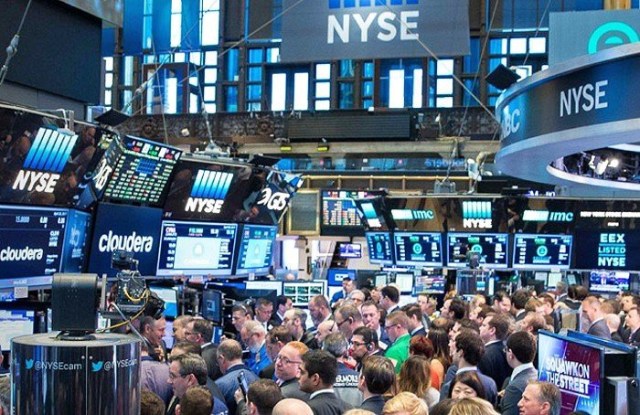
NYSE head backs digital currency survival

Good news for cryptocurrency supporters from the New York Stock Exchange (NYSE) chairman, Jeffrey Sprecher. This week he expressed his optimism about the survival of digital currencies as an asset class, according to one business news outlet.

Sprecher, who also happens to be CEO of Intercontinental Exchange (ICE) was speaking at the Consensus Invest conference. He told the audience about how he reacts to press headlines like “Will digital assets survive?” and said that his unequivocal answer is yes. However,, when it comes to price he suggested that the NYSE was “agnostic” about that, meaning that it has no bias about what might happen as regards that.

Coincidentally, and rather tellingly, Sprecher was joined on stage at the conference by his wife, Kelly Loeffler, who happens to be the CEO of Bakkt, a cryptocurrency platform. Bakkt also happens to be owned by ICE and will launch next year.

Loeffler talked about what Bakkt will be offering, including the Bitcoin futures contract, saying, ““the Bakkt futures contract will help Bitcoin traders establish a trusted price. Bitcoin now trades at different prices on different exchanges, many of which are unregulated.”

Indeed, the NYSE and its parent company have been quite proactive in the digital currency sphere, which is encouraging for others involved in it. ICE has already partnered with Blockstream, a blockchain tech company to provide the big Wall Street investors, including hedge funds, with what it calls “disciplined” BTC pricing. To do this, it said it would pull data from 15 major exchanges.

A few months after this, ICE then said it would offer traders contracts that would result in customers owning Bitcoin. At the time it said, “ICE has had conversations with other financial institutions about setting up a new operation through which banks can buy a contract, known as a swap, that will end with the customer owning Bitcoin the next day — with the backing and security of the exchange.”

And at the same time as this Sprecher has made a supportive statement on cryptocurrency, it has been announced that an Association for Digital Asset Management (ADAM) has been created to produce a “code of conduct” for the digital currency sector. Among ADAM’s founding members are the former NYSE CEO, Duncan Niederauer, Galaxy Digital, a crypto merchant bank, BTIG, a global financial services firm, fintech firm Paxos and GSR, a crypto liquidity solutions provider.

Even if the markets are struggling to find their level, it seems apparent that slowly but surely the financial world is coming around to the idea that cryptocurrencies are here to stay.

What’s the real value of China’s blockchain projects?

Although you may think that everything is equal on the blockchain, you’d be wrong. For example, there is a huge difference between the ways blockchain projects are valued in China compared with western countries.

David Li of Trinity explained why: “For the Chinese who are working on blockchain projects, the price of the underlying project means nothing to them — since they can’t own it. They are focused solely on the tech.”

As a result, trading in Chinese Yuan to bitcoin only amounts to 0.79% of the daily trade volume. That is pretty low for a country the size of China, but then its citizens have not had a way to directly trade Yuan to BTC since December 2013, and the impact is clear to see.

2013 was the year that mainland China stopped the traditional financial institutions from trading in bitcoin, but here’s an interesting fact; when the Chinese public was able to directly buy BTC the total crypto market cap rose by 881% in six months. And over the five years when they have not been able to participate directly, the market cap has risen by 1310%.

There is also something else to consider; the project that constitute the crypto market today are very different to five years ago. Also, the total market cap in 2013 was $15.7 billion, whereas in 2018 it is around $221 billion.

Radigan Carter also points out in one of a series of article on medium about the Chinese blockchain market: “just the four Chinese projects below in today’s Top 25 by market cap would have equaled 44% of the entire market capitalization of all blockchain projects in 2013.” Those projects are Tron, NEO, Binance and Vechain. Significantly for these projects most of their valuation comes from western investors, since Chinese people can’t put money into them, not even the people working on these projects are able to own any of the company they work for.

There are some questions to be asked about the Chinese market. First, since no Chinese citizens can buy into any projects, are the current valuations accurate? Second, would China want a more accurate valuation before it allows its people to buy into Chinese projects, and third, is it possible to establish the level of western institutional involvement in the Chinese blockchain market?

Trust your gut when trading crypto

As with just about everything else, the Internet offers a mountain of advice about trading cryptocurrency. There are trading experts with their own websites, YouTube channels where you can pick up tips in and plenty of other ways in which you’ll be bombarded with ideas if you do a Google search that says something like ‘How to trade crytpocurrency’.

You might find yourself following one or two of these ‘experts’, which may also mean you follow their trade strategies and this makes you feel safer and more expert yourself. But, is this rally the best way to go about it? In my experience it’s the wrong way, because it doesn’t encourage people to rely on their gut feelings and their personal view of the market.

By listening to your gut, I don’t mean basing your decisions on emotions. It’s not a case of waking up and thinking, ‘I feel good today, I think I’ll buy some bitcoin, sell some ethereum’; it is about using your intuition.

Analysing the market, which is extremely complex, will never bring you to the perfect trading sweet spot. Looking for patterns to base your trades on will eventually become self-defeating. Instead, simply gain experience and while you are doing that, your subconscious mind is storing away knowledge about the patterns that provide you with good results. Your intuition has access to this knowledge, whereas your conscious mind is blocked from directly accessing the subconscious.

But, using your intuition requires practice. Therefore, do trades on your own using your strategy, not one that has come from an expert you found online. In this way you’ll be able to follow where you’re right and wrong in your trading. You’ll also have a much greater feeling of achievement, because it was you who made a successful trade based on your own knowledge, not that of someone else.

I’d also add that making your own decisions keeps you closer to an assessment of risk that is right for you. Another person may have a completely different set of life circumstances, which means they assess risk differently. If you are going to take advice from others, be sure to follow channels that are more educational than directive, so you can learn the common patterns and indicators for yourself.

Finally, once you start a trading strategy, it pays to stick with it, because your first instinct is based on your intuition, so don’t second-guess yourself; that’s when trouble begins.