Unleashing the Potential: Finding Value in Generative AI for Financial Services

In the ever-evolving landscape of financial services, staying ahead requires innovation and a keen understanding of emerging technologies. Generative Artificial Intelligence (Generative AI) has emerged as a transformative force, offering unprecedented possibilities for the financial sector. In this article, we explore the profound impact of Generative AI on financial services, from personalized customer experiences to risk management and fraud detection.

Understanding Generative AI:

Generative AI refers to a class of artificial intelligence algorithms designed to generate content, often indistinguishable from content created by humans. It excels in tasks such as image and text generation, making it a versatile tool with applications across various industries. In financial services, the value of Generative AI becomes evident in its ability to streamline processes, enhance customer interactions, and mitigate risks.

Personalized Customer Experiences:

  1. Tailored Financial Advice: Generative AI can analyze vast amounts of customer data to generate personalized financial advice. This tailored approach helps clients make informed decisions, ensuring that financial recommendations align with individual goals and risk tolerances.
  2. Chatbot Interactions: Integrating Generative AI into chatbots enhances customer interactions. These AI-driven chatbots can provide real-time support, answer queries, and guide users through financial processes, improving overall customer satisfaction.

Risk Management and Fraud Detection:

  1. Anomaly Detection: Generative AI algorithms excel at recognizing patterns. In the financial sector, this capability is harnessed for anomaly detection, identifying irregularities in transactions and flagging potential fraudulent activities in real-time.
  2. Credit Scoring: Generative AI enhances credit scoring models by analyzing diverse data points. This allows for a more comprehensive evaluation of an individual’s creditworthiness, enabling financial institutions to make more accurate lending decisions.

Operational Efficiency:

  1. Automation of Repetitive Tasks: Generative AI can automate routine and repetitive tasks, freeing up human resources to focus on more complex and strategic activities. This efficiency gains can result in cost savings and improved operational performance.
  2. Natural Language Processing (NLP): Natural Language Processing powered by Generative AI enables financial institutions to process vast amounts of unstructured data from sources like news articles, social media, and financial reports. This aids in sentiment analysis and market trend predictions.

Regulatory Compliance:

  1. Automated Compliance Checks: Generative AI facilitates automated compliance checks by continuously monitoring regulatory changes. This ensures that financial institutions stay compliant with evolving regulations, reducing the risk of non-compliance penalties.
  2. Enhanced Anti-Money Laundering (AML) Measures: Generative AI contributes to more robust AML measures by identifying suspicious patterns and behaviors, allowing financial institutions
  3. to address potential money laundering activities proactively.

Generative AI is a catalyst for innovation in financial services, offering a spectrum of benefits ranging from personalized customer experiences to enhanced risk management and operational efficiency. As financial institutions continue to embrace digital transformation, the strategic integration of Generative AI will be pivotal in shaping the future of the industry. The evolving landscape presents both challenges and opportunities, and organizations that leverage the power of Generative AI stand poised to redefine the way financial services are delivered and experienced.

Did you like this post? Do you have any feedback? Do you have some topics you’d like me to write about? Do you have any ideas on how I could make this better? I’d love your feedback!

Feel free to reach out to me on Twitter!

Are we Staring at a FED-instigated credit crunch?

A credit crunch occurs when banks significantly reduce their lending to individuals and businesses, resulting in less economic growth because people are unable to borrow as much. Typically, banks reduce their lending when central banks raise interest rates. This is because banks borrow money based on short-term interest rates set by the central bank and lend out money based on longer-term interest rates determined by the free market. When long-term interest rates are high, banks make more profit. The larger the difference between short-term and long-term interest rates, the greater the bank’s profit. Consequently, a decrease in lending leads to an economic contraction, potentially causing a recession. It is worth noting that the yield curve inversion has been deepening since 2022.

The Federal Reserve (Fed) plays a crucial role in influencing banks and financial institutions. Its monetary policies can be stringent, which has a ripple effect on banks and financial bodies. Recently, the Fed raised interest rates, making loans more expensive. The Federal Reserve justified this action due to high inflation concerns.

Despite the Fed increasing interest rates, banks have continued to lend to individuals and businesses even though these loans are not profitable for them. Market participants are forward-looking and anticipate that the Federal Reserve will soon start lowering interest rates in response to the situation. The expectation is that lower short-term interest rates will turn the loans recently made by banks back into profitable ventures. However, this assumption depends on individuals not withdrawing their funds from their accounts due to perceived solvency problems. Banks rely on money from depositors to provide loans, and if all depositors simultaneously attempt to withdraw their money, it can lead to a bank collapse, as seen in the case of Silicon Valley Bank.

Prior to the pandemic, US banks were required to maintain 10% of funds, but since March 2020, the balance has been zero. Furthermore, banks have also suffered from a decline in asset value due to rising interest rates, leaving them with insufficient funds to sustain withdrawals. These factors contribute to the emergence of a banking crisis.

Effects of banking crisis

People are moving money from small and medium banks into big banks. This is because big banks are perceived to be too big to fail and have a guarantee of the federal reserve.

People have started scrutinizing the balance sheets of their banks. Any bank that comes across as weak has seen its stock sell off.

People with lots of money have started moving it into Investments that earn a higher interest rate than their savings accounts. This includes various forms of U.S government debt and money market funds which invest in U.S government debt.

The reason why the interest rates on savings accounts remain so low at most banks is because raising these interest rates would eat into their profits.

When the Federal Reserve System started raising the interest rates, big banks reported losing 500 billion dollars in deposits since the start of 2023. FED data suggests that total bank deposits have fallen by more than a trillion dollars since last year. Just a week after the first bank collapsed, the deposits in the money market fund increased by $120 billion.

Small banks stand at a higher risk as they are competing with deposits made to Treasury bonds and money market funds, which at the moment give more returns.Small and medium-sized banks and small and medium-sized businesses are the ones that are going to feel the credit crunch the most.

Credit crisis

A credit crisis happens when banks don’t trust the safe collateral they’re using for loans.

If small and medium-sized banks reduce their lending to small and medium-sized businesses, then they will have a harder time finding new clients and could lose existing ones. This would lower customer deposits, which would reduce lending even more causing yet more deposit flight. Small and medium-sized banks would have to sell their assets leading to a credit crisis.

Both credit crunch and credit crisis are affected by the high interest rates set by FED. If inflation comes down fast then the FED will lower interest rates and there will be no credit crunch or credit crisis if inflation stays high however then we will see a credit crunch in the second half of the year.

The current situation reflects elements of a potential FED-instigated credit crunch, with banks reducing lending, individuals moving funds to larger banks, and small businesses facing the highest risk. The outcome will depend on the Federal Reserve’s response to inflation and whether interest rates are lowered.

Did you like this post? Do you have any feedback? Do you have some topics you’d like me to write about? Do you have any ideas on how I could make this better? I’d love your feedback!

Feel free to reach out to me on Twitter!

Are we heading to a bank crisis in the US?

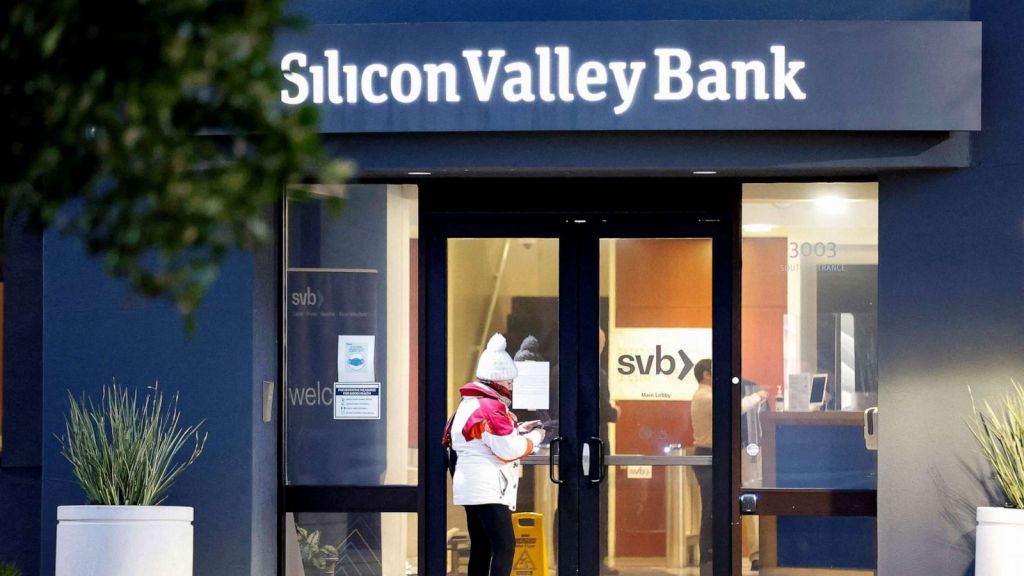
The fall of the Silicon Valley Bank came as a surprise to many. The Silicon Valley Bank is a 40-year-old bank in California that most venture-backed startups use. At its insolvency, it had about $209 billion in assets and was the 16th largest bank in the United States.

SVB is strong in the startup scene, and there are claims that it banked at least half of the US’s venture-backed startups.

They lured startups by offering attractive loans in return for these startups, using them as an exclusive bank. They had strong relationships with founders and VCs and offered them incentives such as attractive mortgage deals.

As is the policy, every bank must be insured. SVB was FDIC insured, but FDIC insurance only protects accounts that hold up to $250K. This did not work well for SVB as over 85% of the accounts had over $250K.

SVB faced massive growth as there was a spike in the number of deposits from 61 billion at the end of 2019 to 189 billion at the end of 2021. The increase in liquidity is due to fundraising avenues and different activities such as IPOs, venture capital investments, acquisitions, etc. That means SVB had many assets they needed to generate a return on. To generate a return while still investing in relatively safe assets, they decided to buy longer-dated securities such as treasury bonds and mortgage-backed securities. Unfortunately, this buying took place when rates were near record lows. By the end of 2022, SVB had over $120 billion in these securities versus only $74 billion in loans.

When the FED increased interest rates, it affected the VC landscape last year. There was less funding going to startups as the VC’s found it better to invest in bonds and government securities. This made deposits going to SVB decrease. This began a crisis as SVB had invested in long-term assets. SVB did not have interest rate hedges or proper risk management. Losses started piling up, and at the end of 2022, SVB had marked market losses on those securities over $15 billion, almost equivalent to its entire equity base of $16.2B. That means that if depositors want their money back, they will not have money.

They decided to compensate by making a share sale. When the news of the share sale went out, the stocks plunged. VCs then advised their companies to withdraw their funds from SVB. The startups and founders were in a scramble to withdraw funds.

Effect on Crypto

SVB collapse impacted Circle as Circle used them to bank the USDC stablecoin. UDSC is a fiat-backed stablecoin with an equivalent to the dollar. There were fears that it would fall off the hook. Circle announced that it has 3 billion out of its 40 billion reserves, about 8% of the amount.

A bank run?

There were fears that the SVB situation would lead to a bank run, as many banks have similar structures. There are many losses from fixed-income securities, which would affect their liquidity. For fear of a bank run, many started pulling funds from their accounts as no one was sure how fragile the US banking system was. The FDIC covers only 1.3% of their deposits, while the banking system has a total of $22 trillion. That means there were high chances of a bank run.

There are up to 65000 startups affected by SVB. If they cannot access funds, it may halt their operations, such as payrolls, making employees quit.

Unfortunately, bank runs do not discriminate on who the account holders are, and it may affect up to regional banks.

Increased interest rates have affected liquidity, leading to losses in bank balance sheets.

What does the future hold?

To rescue the situation, the FDIC and FED revealed working on a fund that will backstop deposits. The treasury Federal Reserve and the FDIC announced that they would be backstopping all the deposits at SVB so that customers could access their funds. This restored banking confidence and also helped Circle to recover. That was a brilliant move by the US government as there would be a wide-scale banking crisis.

The SVB crisis indicates that the fractional Reserve banking system is structurally unstable.

Did you like this post? Do you have any feedback? Do you have some topics you’d like me to write about? Do you have any ideas on how I could make this better? I’d love your feedback!

Feel free to reach out to me on Twitter!
Recession, Inflation, and Geopolitical risk: Key concerns for investors in 2023

JP Morgan’s 835 institutional clients participated in an e-trading survey. The survey was directed to those who use their e-trading services. This is the seventh year conducting the survey, and the clients were sampled from over 60 locations.

They discussed different issues that affect the investment space. They discussed issues such as AI vs blockchain, inflation vs recession, war, pandemic, etc. The survey is a great way to get institutional investors’ insights and the risks they foresee in the market.

Which developments the traders think are likely to shape the markets in 2023?

From the survey, the biggest concern is a recession at 30% of the respondents. 26% of the respondents said their biggest concern is inflation.19% mentioned geopolitical conflict, 14% said market and economy dislocation, 9% said government policy change while 1% of the respondents mentioned ESG/climate risk factors. Interestingly, no one mentioned the global pandemic as a source of concern.

The results are different from the ones last year. In 2022, inflation topped the list at 48%, then 13% cited market and economy dislocation, 13% mentioned global pandemic, 5% recession and 3% ESG/climate risk factors. Last year, geopolitical conflict was not a concern.

Recession

China plans to open up its economy, which will impact the global market. China opening up translates to more demand for global commodities. This will affect inflation as there will be more inflation for products on demand and their derivatives worldwide.

There will be increased demand for travel by the Chinese. This means more inflation for travel.

China opening up and many other factors make recession a big risk this year. A high recession will mean more damage to the economy.

Geopolitical conflict

Geopolitical conflict is a higher risk than last year. The war against Russi and Ukraine has been a big contributor. There are also cold war tensions between China and the US.

The dislocation between the market and the economy

There could be a situation in which stocks, bonds or crypto prices are likely not to reflect what is happening in the broader economy. Although the economic conditions seem to worsen, pricing does not reflect that. This is a risk for investors when it comes to capital allocation.

Government policy change

It was not a concern last year. It may be caused by changes in the US around the control of the House of Representatives. More market-friendly measures could mean more of a boost for the markets. This is a risk as it may lead to more gridlock, e.g. the US debt ceiling clash. If the US did not agree, it would affect the global financial market.

ESG/Climate risk factors

Climate change is no longer a real concern for investors as they feel there are more pressing issues to address.

Inflation

When investors were asked to compare inflation this year to last year, 44% of the investors said they see it going down this year, and 37% said it would level off. The different opinions were based on their location. Those in the UK and Europe have a different view on inflation than those in the US. The US believe inflation will come down this year.

Inflation expectations are important as the inflation data as the expectations can drive inflation higher.

What is the greatest daily trading challenge in 2023?

Investors believe that market volatility will be the biggest challenge to trading. From the survey, volatile markets were top at 46%, followed by liquidity availability at 22%, workflow efficiency at 9%, and others. The results differed from last year, as the biggest concern last year was the availability of liquidity.

Trading technology in 2023?

53% of traders believe AI/machine learning will be the most influential in trading in the next three years. This will be followed by API integration, blockchain and distributed ledger technology.

Top 3 Market structure concerns?

The main market structure concern is access to liquidity, followed by regulatory change and market fragmentation. Just like last year, access to liquidity was top of the list.

Trends in the electronic trading space or percentage of their trading volume will be through e-trading channels?

The respondents predict that crypto assets and digital coins will likely see the most growth in institutional electronic trading. These include API multi-dealer platforms and single-dealer platforms. This is significant as it shows that investors are increasingly moving their crypto trading activities to these more institutionalized Services.

Several large companies on Wall Street have started to open their e-trading technologies up for crypto-related trading, e.g. the Aladdin platform started offering Bitcoin Trading.

This will create more efficient and liquid markets, which helps to reduce volatility and improve price discovery. It is a positive force for institutional crypto adoption.

What describes your focus on crypto?

72% have no plans to trade crypto/digital coins, and 14% plan to start trading within five years. Only 8% were trading crypto/digital coins. It means less institutional money in the crypto space. Less activity may be due to regulatory scrutiny by the SEC.

Did you like this post? Do you have any feedback? Do you have some topics you’d like me to write about? Do you have any ideas on how I could make this better? I’d love your feedback!

Feel free to reach out to me on Twitter!