Can Banks Steal your Money? The rise of bank bail-ins.

The financial crisis in 2008 was a game-changer in the financial industry. The housing bubble’s collapse led to bankruptcy, which affected even Wallstreet.

The U.S. treasury came in to rescue wall street by giving over 200 billion dollars in loans to hundreds of financial institutions. Even though it was a good amount, it was insufficient as it accounted for only about 30% of the total cost of bailing out the entire Financial system, which is estimated to be 700 billion dollars. Wall Street speculation was to blame though only one person went to jail, Kareem Sarah. The SEC allegedly destroyed the evidence given as part of the investigation. The bank bailouts are why Satoshi Nakamoto created bitcoin.

Financial crisis solution – Bail-ins

Politicians had a plan for new regulations. An example is the Dodd-Frank Act.

According to the Dodd-Frank Act, derivatives claims come first in the event of a financial collapse. That means that in the event of a financial crisis, derivatives debt owed by big banks will be paid off before anything else. The difference is that these debts won’t be paid off by bailouts but by bail-ins.

A bailout is when a big bank receives money from someone else to pay back its debts, while a bail-in is when a big bank uses its clients’ money to pay back its debts. It means the bank will use your deposits in accounts or money you lent it to pay debts.

Dodd-Frank Act opened the door to allowing big Banks to use their client funds to bail in themselves in a financial crisis.

The people in power had been working on alternatives to bailouts since 2008. The urgency to develop an alternative to bailouts increased after the financial crisis started to affect Europe.

In mid-2012, the IMF published a paper advocating bail-ins as the ideal alternative to bailouts. It, however, needed a ground to test out the bail-ins.

Cyprus – the testing ground

Cyprus was one of the European countries hit the hardest by the financial crisis. By the end of 2012, Cyprus was desperate for a bailout. In early 2013, the IMF and the European Union bailed Cyprus for 10 billion euros. The IMF gave Cyprus multiple conditions; one was for Cyprus’s largest bank to execute the first-ever bail-in. Almost 50 percent of all bank account balances worth more than one hundred thousand Euros were seized.

The United States was the first to legalize bail-ins in 2010. The Dodd-Frank Act pushed the U.K. to follow suit in 2013. With the financial services act, the E.U. legalized bail-ins in 2016.

Bank Bail-in laws tend to vary from country to country. Although the laws may differ, they follow the same three rules, likely because of their Collective Conformity with the FSB. The three rules are:

  1. Bank bail-ins are only allowed for banks that are deemed to be domestically or globally important.

This rule pertains to those with the most assets under management. The FSB publishes a list of globally important banks every year. There are currently 30 globally systemically important banks, with JP Morgan being noted as the highest risk.

  • Bank bail-ins do not apply to bank balances below the deposit Insurance threshold.

In the U.S., the FDIC covers 250 000 deposits. In the U.K., the FSCS covers 85 000 pounds, and in the E.U., it’s 100 000 Euros with various insurers involved. Insurance funds in the U.S. and Europe are woefully underfunded, particularly when we factor in derivative claims.

Insurers don’t have enough money to cover all Bank deposits. In the case of the FDIC, its 2021 annual report suggests that it only has around 120 billion dollars in its Insurance Fund, which is low compared to the 19 trillion dollars of Bank deposits in the U.S.

  • The third rule of bank bail-ins states that you will be given some alternative asset in exchange for your lost deposits. Alternative assets are typically shares in the bank that you bailed out.

Even though bail-ins may be a good solution for banks and financial institutions, they may be inconvenient to end users. For instance, you could temporarily lose access to your funds during a bank bail-in. Banks could put limits on their hours of operations, payments, transfers, and limits on cash withdrawals until the bail-in process is complete.

Did you like this post? Do you have any feedback? Do you have some topics you’d like me to write about? Do you have any ideas on how I could make this better? I’d love your feedback!

Feel free to reach out to me on Twitter!

The Battle Between TradFi and DeFi

Heap of dollar bills eyeglasses and Bitcoin coins. Cryptocurrency analyzing concept

You may have seen numerous articles about decentralized finance (DeFi) and its claims that it will radically change the traditional finance (TradFi) sector. DeFi supporters state that there is a core need for an open, transparent, and secure financial system, and that TradFi simply doesn’t provide that. Essentially, DeFi positions itself as an alternative to the banking system we currently have.

One of the arguments for DeFi is that because it is a blockchain-based concept, it is outside of governmental and regulatory control. This has a strong appeal to those who are concerned about what we have learnt about personal data collection by commercial entities and governments.

DeFi answers the desire for data security and privacy. It also “leverages a set of progressive, agile tools to give control to users,” according to Stably. It also offers features that traditional finance can’t provide, and this makes it an attractive alternative to the current system.

But what are the real differences between DeFi and TradFi? There are three key differences:

  1. In DeFi the public blockchain is the source of trust, whereas in TradFi it is regulatory bodies that are the source of trust.
  2. DeFi is gaining traction because it is open and transparent, and there are fewer barriers to accessing it. The opposite is true of TradFi, especially in terms of the barriers to access, which leaves billions of people unbanked worldwide.
  3. TradFi has its hands tied by regulatory forces, which makes it extremely difficult for its institutions to act with the same agility as DeFi projects.

DeFi’s use cases

There are also three strong use cases for DeFi.

1. Banking

Unlike TradFi, DeFi projects are able to offer banking without borders. TradFi struggles with this, and as mentioned before, this has left billions globally without a banking service. DeFi’s use of blockchain technology overcomes that issue and allows people in developing countries and rmote areas with access to banking via their mobile phone.

2. Circumventing oppressive governments

Oppressive governments are prone to issuing bans and restrictions on financial movement. TradFi can’t offer solutions, but again, because DeFi uses the blockchain and associated tools, it is able to circumvent government restrictions and provide uncensored global financial services.

  • Creative finance

There is a level of creativity in DeFi projects in terms of developing new features and functions. In the past TradFi had a monopoly on financial products, but even those products associated with TradFi can be moved over onto the blockchain, giving DeFi another advantage.

Challenges to overcome

Naturally, while DeFi has advantages, it doesn’t have a clear home run. It also faces challenges.  The biggest one is not hard to identify, and you don’t need to even ask an expert: it is getting the general public to trust the idea of unregulated open-source code. Cryptocurrency doesn’t yet have mass adoption and there is widespread mistrust of it, which bleeds over into the DeFi sector by association. There are fears about hacks amongst other things. Indeed, the DeFi tech is still in its infancy, with much work to be done to make it more trustworthy for a wider audience beyond DeFi fans.

Ultimately, DeFi has a way to go, but it undoubtedly has potential, and certainly as a way to give more people access to banking services. If its works hard on scalability, security and liquidity, it has a real opportunity to replace TradFi.

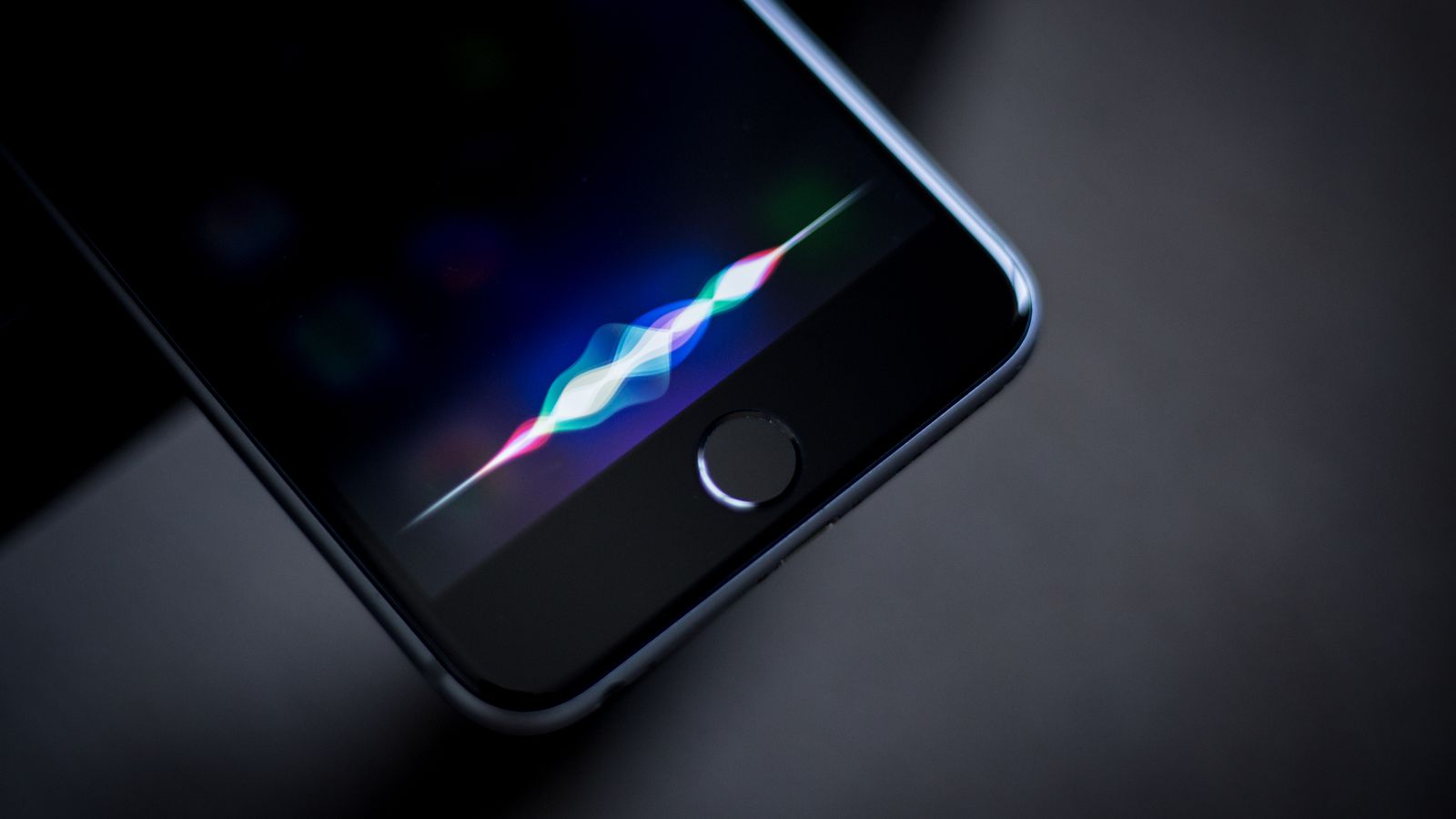
Siri is witty, but knows her limits!

Related image

Back in 1956, a man called John McCarthy coined the term AI for artificial intelligence. However it is only in recent years that we have personally witnessed the benefits of AI, and its mass scale adoption by larger enterprises. One of the things that has encouraged the use of AI is the need to understand data patterns, because companies want to know much more about their target audience and Ai allows them to gain useful insights into consumer behaviour.

There is much to be gained by understanding AI, including the fact that it is segmented into ‘weak’ and ‘strong’ sectors.

WEAK AI
Weak AI is also known as Narrow AI. This covers systems set up to accomplish simple tasks or solve specific problems. Weak AI works according to the rules that are set and is bound by it. However, just because it is labelled ‘weak’ doesn’t mean it is inferior: it is extremely good at the tasks it is made for. Siri is an example of ‘Weak AI. Siri is able t hold conversations, sometimes even quite witty ones, but essentially it operates in a predefined manner. And you can experience its ‘narrowness’ when you try to make it perform a task it is not programmed to do.

Company chatbots are similar. They respond appropriately when customers ask questions, and they are accurate. The AI is even capable of managing situations that are extremely complex, but the intelligence level is restricted to providing solutions to problems that are already programmed into the system.
STRONG AI
As you can imagine, ‘Strong AI’ has much more potential, because it is set up to try to mimic the human brain.  It is so powerful that the actions performed by the system are exactly similar to the actions and decisions of a human being. It also has the understanding power and consciousness.

However, the difficulty lies in defining intelligence accurately. It is almost impossible or highly difficult to determine success or set boundaries to intelligence as far as strong AI is concerned. And that is why people still prefer the ‘weak’ version, because it does not fully encompass intelligence, instead it focuses on completing a particular task it is assigned to complete. As a result it has become tremendously popular in the finance industry.
Finance and AI
The finance industry has benefited more than many by the introduction of AI. It is used in risk assessment, fraud detection, giving financial advice, investment trading, and finance management.

Artificial Intelligence can be used in processes that involve auditing financial transactions, and it can analyse complicated tax changes.

In the future, we may find companies basing business decisions on AI, as well as forecasting consumer behaviour and adapting a business to those changes at a much faster pace.

Artificial Intelligence is going to help people and businesses make smarter decisions, but as always we need to remain mindlful of finding the right balance between humans and machines.

The everyday uses of AI

When it comes to Artificial Intelligence (AI), many of the people I talk to think that it is either something that is coming in the future, or interest in it is limited to geeks. Some see it as a negative tool that will destroy employment for people. And they are surprised when I tell them that they are probably using AI in their everyday lives already — they just aren’t aware that something like a Google search is AI based. And those adverts you keep seeing on social media because one day last week you searched for ‘holidays in the Maldives’ — that’s all down to AI.

Here are some of the everyday uses of AI that you may not be aware of. They have been compiled by 12 experts from Forbes Technology Council.

1. Customer Service

Data analytics and AI help brands anticipate what their customers want and deliver more intelligent customer experiences — better than the old call centre one anyway.

2. Personalised Shopping

When you shop online and you visit a site and look at a product, you may find you suddenly get recommendations for similar products — that’s AI.

3. Protecting Finances

For credit card companies and banks, AI is indispensible, especially in detecting fraudulent activity on your account. It saves all of us from the pain.

4. Drive Safer

You don’t need a self-driving car to use AI. For example, lane-departure warnings, adaptive cruise control and automated emergency braking are all AI functions.

5. Improving Agriculture

Agriculture is an important element of our lives, because we all want and need to eat. AI is improving this important sector with the following examples: satellites scanning farm fields to monitor crop and soil health; machine learning models that track and predict environmental impacts, like droughts; and big data to differentiate between plants and weeds for pesticide control.

6. Our Trust in Information

Trust in information is one of the most critical issues of our current times. We are bombarded with images and articles that we just don’t know if they are telling the truth or not. Experts say that AI will change how we learn and the level of trust we place in information. AI will help us identify the deep fakes and all those methods of sharing ‘fake’ information, and that is very important.

The ways in which we use AI are growing all the time — and if you think you’re not using it, you almost certainly already are.