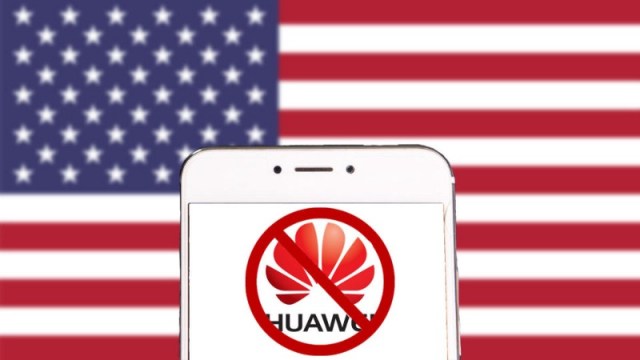
Should you give up your Huawei smartphone?

Hot on the heels of the US government putting Huawei on a blacklist, Google stepped in and announced it is blocking Huawei’s access to Android updates for apps and security features.

This is a blow to the Chinese smartphone and telecoms tech manufacturer, and creates a problem for Huawei phone owners.

Google is following the government policy prohibiting US firms to do business with Huawei. As a result Google has been forced to restrict the company’s access to the Google Play Store, which means that in the future users won’t be able to gain access to popular titles, nor to speedy security updates to the Android OS. This means Huawei will no longer be able to offer access to crucial Google apps, and will be severely limited in how quickly it can give users access to the latest versions of Android.

If you’re a Huawei phone owner you must be wondering what to do next. Well, there is some good news. According to TechRadar the “US Commerce Department has temporarily lifted the ban on American businesses working with Huawei — allowing software updates to continue on Huawei phones.”

This temporary licence rolls back the US government’s restrictions and will allow Google to continue working with Huawei, allowing the Chinese brand to keep using Android in the same manner as before until 19th August.

This is good news for Huawei, because it gives it more time to “prepare for the launch of its next handsets and develop the Android Q update for its current smartphones,” TechRadar reports.

However, whilst Huawei has given the impression that it is relatively unperturbed by the US government and Google’s actions, it still leaves it in a vulnerable position in the marketplace without full access to the Android operating system.

But it also gives Huawei more time to argue the case for not being on the US government’s blacklist and prove that it is not a danger to national security. The USA is not the only country that believes Huawei’s products may play a role in Chinese espionage, particularly with regard to building 5G systems. Japan, Australia and New Zealand have also banned the use of Huawei products for 5G, and others may follow.

But while the debate continues, Huawei smartphone owners may need to consider whether to continue using its phones, or change to another company. Interestingly, on the day the news about Google and Huawei was published, I noticed Apple was running a new ad campaign. Coincidence? It seems unlikely.

Is Google making the blockchain searchable?

I came across an interesting article on Forbes the other day by Michael del Castillo. He tells a story about data scientist Allen Day, a former Google employee, who while looking at some of the tools he developed there, saw something puzzling. What he saw was “a mysterious concerted usage of artificial intelligence on the blockchain for Ethereum.”

Day was able to look into its blockchain and see a “whole bunch” of “autonomous agents” moving funds around “in an automated fashion.” Although Day has no idea who created the AI, he suspects “they could be the agents of cryptocurrency exchanges trading among themselves in order to artificially inflate ether’s price.”

Day also remarked that he didn’t believe this was the work of a single exchange, but is rather a group effort. Part of Day’s job is anticipating demand for a product before it even exists, and in the light of what he has seen, he believes that making the blockchain more accessible is the next big thing.

Let’s not forget that Google made the Internet more usable, bringing it billions in revenue, and if Day is correct in his predictions it could have another major pay day by making the blockchain searchable. Del Castillo says if it does, “the world will know whether blockchain’s real usage is living up to its hype.”

Day has already been working on this with a team of open-source developers, who have been loading data for bitcoin and ethereum blockchains into Google’s big data analytics platform called BigQuery. And, with the help of lead developer Evgeny Medvedev, he created a suite of sophisticated software to search the data.

Day is hoping that his project, known as Blockchain ETL (extract, transform, load) will bring Google’s revenues from cloud computing services up to the level of Amazon and Microsoft. Google is some way behind both of them, but it will struggle to match Amazon’s revenues of $27 billion from cloud services, because Amazon has been in the blockchain game since 2018 with a suite of tools for building and managing distributed ledgers. And Microsoft got into the space in 2015, when it released tools for ethereum’s blockchain. These two companies are focused on making it easier to build blockchain apps, whereas Day wants to reveal how blockchains are actually being used, and by whom.

Day has been demonstrating how his Blockchain ETL could function by examining the hard fork that created bitcoin cash (BCH) from bitcoin. “I’m very interested to quantify what’s happening so that we can see where the legitimate use cases are for blockchain,” Day says. “Then we can move to the next use case and develop out what these technologies are really appropriate for.”

Day is now expanding beyond bitcoin and ethereum. Litecoin, zcash, dash, bitcoin cash, ethereum classic and dogecoin are being added to BigQuery.

It seems Google is waking up to blockchain and is now powering ahead by filing numerous patents related to the blockchain. The company is also encouraging its developers to build apps on the ethereum blockchain, and GV, Google’s investment division has made some investments in crypto-related startups.

Every search you make…is being watched

That moment when we all went out and bought smartphones was a game changer for our personal privacy as Tyler Elliott Bettilyon discusses on Medium.

We never imagined at the time how these expensive gadgets would impact on our lives; all we could see that they made our lives easier, but at what cost?

In China, surveillance apparatus is increasingly sophisticated. There is facial recognition technology connected to CCTV cameras and police officers will soon have cameras inside their sunglasses. There may also be drones disguised as birds. Worse still, Chinese citizens are being asked (demanded) to install software in their phones that tracks their downloads and if you’re Chinese and visit a site banned by the government, you lose points from your “social credit score.”

But that’s China, you’re probably thinking. This is a Communist regime that has always controlled how people act and think. It isn’t like that in more democratic countries. Unfortunately the response to that is, “Don’t be so sure.”

Take a look at the surveillance tools the USA has. The NSA’s PRISMprogramme collects masses of data about internet traffic — including yours! That’s why Edward Snowdon blew the whistle on it and revealed how the NSA might be breaking the rules of privacy.

And Europe is no more private. It also has an array of online surveillance tools that it uses in the name of ‘security’. And if you keep sending out the message that we are all in danger, then the citizens of Europe give governments a free pass to collect whatever data they want. They don’t consciously allow it; they passively accept it.

And, online censorship is on the rise as the world becomes more authoritarian. A 2017 report Freedom on the Net details how our freedoms are being curbed year after year. It says: “Nearly half of the 65 countries assessed in Freedom on the Net 2017 experienced declines during the coverage period, while just 13 made gains, most of them minor. Less than one-quarter of users reside in countries where the internet is designated Free, meaning there are no major obstacles to access, onerous restrictions on content, or serious violations of user rights in the form of unchecked surveillance or unjust repercussions for legitimate speech.”

But it isn’t just governments that are watching you; it’s Facebook, Google and the like who are analysing your every move in order to push adverts at you. The Cambridge Analytica scandal showed us how the data they collect can be ‘weaponised’ for political ends.

Perhaps you are very security conscious about your personal data and take all the recommended steps (and more) to protect yourself. But, the web has many vulnerable points you may pass through without your knowledge and that leaves you exposed. These include your friends keeping texts from you, photos of you taken by friends stored on Facebook and Google keeping track of your search history. Yes, you can turn Google tracking off — if you can actually find where to do that. However, ultimately the only way to stay secure is never to send your data via the internet. Or, get yourself a Tor browser. This is a system that attempts to hide source and destination IP addresses by using several proxies. And even then there are still vulnerabilities.

Finally, personal actions to protect our personal data will never be enough: it will require collective action to overcome the Big Brother machinations of the large agencies like the NSA. Bringing the issues to the attention of more internet users is vital to achieve this, then perhaps we can start to solve the problem and pack up our paranoia.