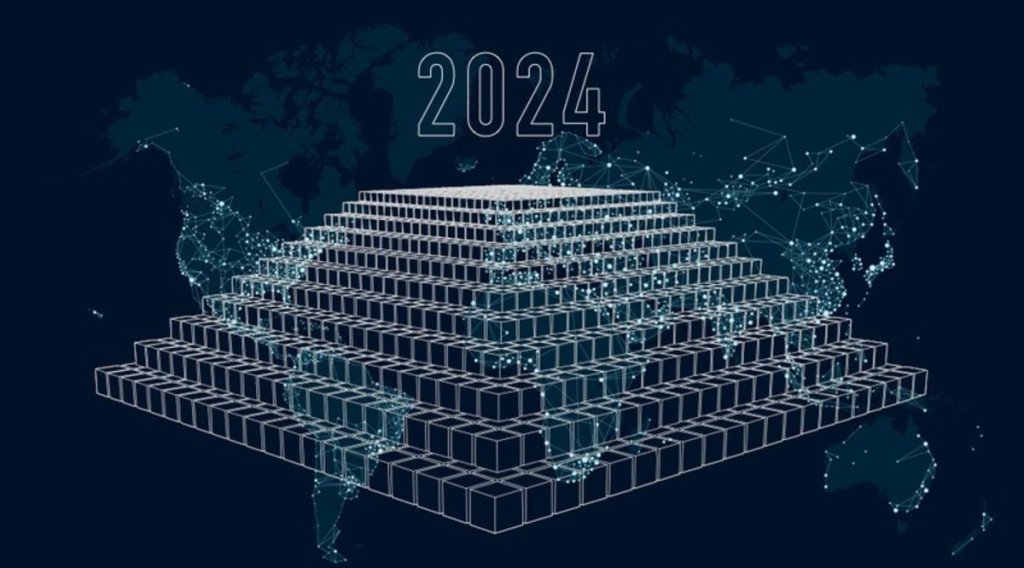
Navigating the Future: Top 10 Blockchain Trends in 2024

As we stand on the cusp of 2024, the blockchain landscape is poised for transformative shifts that promise to redefine the digital world. This article delves into the emerging trends that will shape the blockchain sphere over the next 12 months and beyond. From institutional adoption to regulatory evolution, we explore the key developments influencing the future of decentralized technology.

Trend #1: Enterprise Adoption Takes Center Stage

One of the most significant trends anticipated in 2024 is the acceleration of blockchain adoption by enterprises. Companies are recognizing the potential of blockchain to enhance efficiency, security, and transparency within their operations. The rise of Blockchain-as-a-Service (BaaS) platforms, offering cloud-based solutions for developing blockchain applications, is expected to further lower entry barriers, encouraging more businesses to integrate blockchain into their models.

Trend #2: Institutional Acceptance of Cryptocurrencies Gains Momentum

The institutional embrace of cryptocurrencies is gaining momentum, exemplified by BlackRock’s recent introduction of a Bitcoin spot ETF. Other major players, including WisdomTree and Invesco, are following suit with their own Bitcoin spot ETF applications. EDX Markets, backed by industry giants like Charles Schwab and Fidelity Digital Assets, launched its non-custodial exchange, highlighting institutional confidence in the potential of cryptocurrencies.

Trend #3: Wall Street Pioneers Asset Tokenization and Digital Transactions

Wall Street heavyweights, including JPMorgan Chase, Goldman Sachs, BlackRock, and Fidelity, are at the forefront of exploring asset tokenization and digital transactions. The transformative potential of blockchain technology in facilitating these developments is evident. Citigroup analysts project that tokenization could reach a staggering $10 trillion by 2030, encompassing private-sector securities, funds, central bank digital currencies, and stablecoins.

Trend #4: Decentralized Finance (DeFi) Shapes Future Industries

Decentralized Finance (DeFi) is expanding its influence beyond traditional finance, giving rise to new facets such as GameFi, SocialFi, and InsureTech. Blockchain’s programmability enables tailored financial tools and smart contracts that streamline operations and cut costs, particularly beneficial for SMEs and emerging markets. Various DeFi-driven technologies, from BusiFi to SocialFi, have the potential to redefine sectors, promoting efficiency, transparency, and innovation.

Trend #5: Central Bank Digital Currencies (CBDCs) as a Monetary Anchor

Central Bank Digital Currencies (CBDCs) are emerging as a crucial response to the rise of digital payments. Serving as a monetary anchor, CBDCs aim to preserve monetary singleness and shield monetary sovereignty. As digital finance tokenization gains traction, central banks are reassessing their tech infrastructure to accommodate these digital assets in wholesale transactions, fostering seamless integration into financial systems.

Trend #6: Blockchain Regulation Enters the New Normal

Growing concerns and challenges within the crypto ecosystem are prompting governments to establish comprehensive regulatory frameworks. The emphasis is on addressing social and environmental risks associated with cryptocurrencies, encouraging responsible and sustainable integration into the financial sector. Regulatory clarity is crucial to fostering a sustainable crypto future.

Trend #7: SEC Scrutiny on Cryptocurrency Exchanges Intensifies

The U.S. Securities and Exchange Commission (SEC) has intensified its enforcement efforts in the cryptocurrency domain, bringing lawsuits against major exchanges like Binance and Coinbase. Despite short-term uncertainties, increased scrutiny could pave the way for more standardized and transparent regulations, fostering a healthier dialogue between digital currencies and global financial regulation.

Trend #8: Addressing Technical Drawbacks and User Challenges

Blockchain technology faces inherent limitations, including inefficiencies, slow transactions, and high costs, leading to the ‘blockchain trilemma.’ Efforts to address these issues are giving rise to alternative solutions, such as off-chain transactions. However, challenges related to user-centric issues, like key management, remain significant roadblocks to widespread adoption.

Trend #9: Expanding Definition of ‘The Metaverse’ Driven by Business Innovation

The Metaverse is evolving beyond a virtual realm, offering new potential for businesses in areas like virtual real estate, digital fashion, global events, and gaming. Various Metaverse models, from MetaAca to MetaFash, are revolutionizing industries and creating a boundless marketplace for global entrepreneurs.

Trend #10: AI-Enabled Blockchain Convergence

The convergence of artificial intelligence (AI) and blockchain is set to disrupt multiple industries. AI’s influence on digital businesses, combined with blockchain’s distinctive aspects, creates unique opportunities for innovation. Businesses must develop comprehensive frameworks for the effective implementation of AI-enabled blockchain, overcoming integration obstacles and harnessing the potential for efficiency, transparency, and innovation.

Looking Ahead:

As we look toward 2024, the blockchain landscape is marked by these transformative trends. From the mainstream adoption by enterprises to the evolution of DeFi and the integration of AI, the future promises a dynamic and innovative blockchain ecosystem. Navigating the complexities and aligning with regulatory guidelines will be essential for industries and individuals alike as we continue to unlock the full potential.

Did you like this post? Do you have any feedback? Do you have some topics you’d like me to write about? Do you have any ideas on how I could make this better? I’d love your feedback!

Feel free to reach out to me on Twitter!

A Closer Look at the Crypto Regulation Proposed in the UK

The UK is considering introducing crypto regulation with the aim of protecting its consumers and promoting the growth of its economy. As the country strives to become a leading hub in the crypto industry, regulation is deemed necessary. Incidents such as the collapse of FTX have highlighted the urgency of regulation in this area. A clear and transparent regulatory framework will reduce the risks associated with crypto investments for consumers. The proposed regulation is still in the consultation stage and is expected to be finalized by the end of April.

.

Objectives of UK crypto regulation

The main policy objectives of doing the regulation include:

  • To encourage crypto regulation
  • Educate consumers about the risks associated with crypto investments
  • Preserve financial stability of the UK
  • Preserve market integrity of the UK

The proposed crypto regulations will be rolled out in two phases when they become law. Stablecoins will be addressed in the second phase, which will happen later in the year or early next year. At the moment, NFTs are not part of crypto regulation.

The UK has categorized crypto into different categories: Exchange cryptos, algorithmic tokens, governance tokens and fan tokens. Bitcoin and Ethereum fall under exchange tokens.

Initial governance method used

Crypto activities are currently not regulated by the Financial Conduct Authority (FCA). Decentralized finance makes it even harder to regulate, given its decentralized nature. Despite this, the UK introduced KYC and AML requirements for crypto exchanges in January 2020, requiring all exchanges to register with the FCA and subjecting violators to two years imprisonment. Many companies found the process lengthy and cumbersome, leading to some companies leaving the UK.

 Brief summary of the proposed  regulation

Crypto assets activities

They were the main target of the regulation. There is, however, one rule for all cryptos. This may be ridiculous as the crypto options are many. It would also be better if the regulation would be tailored according to risk. It is hard to tell the crypto activities occurring within Britain’s borders.

Crypto regulation will apply to crypto assets occurring within the UK. There is still the risk of UK citizens acquiring crypto from less regulated areas outside the UK.

As mentioned earlier, regulation of crypto assets will take place in two phases. The activities under phase two will include ICOs, crypto borrowing and lending, crypto custody services.

Decentralized coins such as Dai will not be subject to regulation. They will be treated as unbanked assets like BTC and ETH since they are unbanked. Dai may be affected since it is backed by USDC since it is a stablecoin requiring regulation. The UK is not planning to ban algorithmic stablecoins. Decentralized, algorithmic and NFTs are favored as the regulation only applies to cryptos not crypto coins and tokens. Regulations will come later.

Regulations related to new crypto

New crypto includes coins and tokens listed on exchanges and not necessarily creation of coins and tokens. According to the new requirements:

  • Investors are given accurate info
  • Investors are compensated if misled
  • Forging crypto offerings should be banned
  • Exchanges to do a due diligence on all cryptos they list and give detailed info to users
  • Exchanges act as issuers of crypto with no issuers such as BTC.

Cryptos already listed have not been addressed. It is unclear if they will be subject to the same disclosure rules.

 Regulations on Exchanges

Exchanges will be required to:

  • Be More liquid and be resilient
  • Be More transparent
  • Have Accurate on and off chain data

Exchanges will also need to do detailed data reporting, and establish a bankruptcy process.

Regulation on other crypto intermediaries such as market makers

They will need to address conflict of interest, sufficient liquidity, and detecting market manipulation. Generally, market makers have the same requirements as exchanges.

General market abuse requirements

In crypto there are many market abuse incidents that are not covered under financial regulation. The new regulation will control market abuse such as pump and dump schemes and market manipulation. Defaulters will face punitive action. The public will also be taught how to identify market manipulation.

Regulation of crypto borrowing and lending

Some exchanges such as FTX were using customer funds and illiquid tokens as collateral for loans because crypto lending and borrowing is not regulated. The new regulation will ensure risk disclosure, balance sheet disclosure, and clear user contracts.

Conclusion

The United Kingdom is currently undergoing the consultation phase for the proposed crypto regulation aimed at protecting consumers, boosting the economy, and maintaining the financial stability and market integrity of the country. The regulation will aim to educate consumers about the risks associated with crypto, provide accurate information to investors, and control market abuse. The new regulation will bring clarity to the crypto industry and enhance the UK’s position as a crypto hub. Overall, the proposed crypto regulation is a significant step forward for the UK in establishing a fair, transparent, and secure environment for the growth and development of the crypto industry.

Did you like this post? Do you have any feedback? Do you have some topics you’d like me to write about? Do you have any ideas on how I could make this better? I’d love your feedback!

Feel free to reach out to me on Twitter!

Foodverse: Eating in Web 3.0

Eating entails more than fulfilling our nutritional needs-it goes deeper than that. It is communal, enhances friendships and builds bonds.

Chinua Achebe, an African literary icon, said:

” When people gather together to eat, it is not because they do not have food in their houses. They gather to eat because it is good for kinsmen to eat together. “

This underscores the deep impact food has in building relationships and society at large. With the advent of the metaverse, it is inevitable that food will find its way into web 3.0. Large brands have already started experimenting with this. This primer will look at how we can consume food in the metaverse and what food brands are currently doing as they get into web 3.0.

FoodVerse:  What It Entails.

The foodverse can be defined as bringing food into the metaverse. Basically, it is having an experience of eating, whether real or virtual food, while experiencing the metaverse.

Firstly, brands can use the metaverse to enhance client-experience when ordering food. People are used to getting menus when ordering meals. The metaverse can help project these menus in ‘real life’ and help a client have a visual experience of the food they would like to order, how it will look like and even feel it before they make an order.

Secondly, friends can also meet together in a room and say have a drink or even share a meal while enjoying the immersive experience of the metaverse. For example, they can meet and have a meal while on a cruise ship, in the middle of a forest or attending a live session of their favorite band. This digital immersion enhances their relationship and creates an experience that is similar to real world events.

Thirdly, food brands can use NFTs to create rare products, such as wine, and produce them in limited quantities. They can then mint NFTs for these products and sell them to their consumers. These NFTs are a mark of genuine ownership and enhance the brand value of their companies. Collectors would love this. Consumers have the option of selling these NFTs on secondary markets or even create communities around them in the metaverse. Tokenizing food products also helps communities to feel ownership of the companies and their brands.

Finally, users of Metaverse platforms such as Sandbox can  also buy land , build their homes and invite friends over for meals. This will be a game changer as a user can invite multiple friends over from across the world and share virtual meals or drinks with them. Of course, there is still a long way to go before we bridge the divide between virtual and physical food especially when such diverse geographies are involved, but this would be a step in the right direction.

Notable Brands in the Foodverse

At the moment, virtual food may look like it has little value, however, in the long term, merging both the virtual and physical world is the direction to take. Companies are experimenting with instances where you order your food on the metaverse, get it delivered to you and you eat without necessarily leaving the experience. One notable brand doing this is Chipotle. They have partnered with Roblox to allow customers have an experience of virtual food. When customers make orders on the metaverse, they earn credits which they can later redeem for free food delivered to their houses. This shows how the physical and digital world can merge.

Other companies like Onerare are tokenizing the food experience by bringing food lovers and linking them up with celebrity chefs. They then create NFTs from the experience they get from preparing and sharing meals. All of this is done on the metaverse in a gamified manner.

McDonald’s is also planning to open restaurants in the metaverse. The company has already patented ten trademarks on the metaverse. It intends to leverage virtual experiences and enable customers order food from the metaverse and get them delivered to their houses. Customers can also get digital food for their avatars. Other food companies that have filed for trademarks as they seek to launch products in the metaverse are: Kraft Foods Group, In- N- Out Burger and Del Monte Foods.

Restaurants and food brands stand to benefit from getting into the foodverse. Firstly, getting into the foodverse helps these companies build customer relationship and engagement. Secondly, it also enhances brand awareness and can drive more consumers to their products. Finally, it offers an opportunity for restaurants to create multiple income streams.

Did you like this post? Do you have any feedback? Do you have some topics you’d like me to write about?Do you have any ideas how I could make this better? I’d love your feedback!

Feel free to reach out to me on Twitter!

Not Left Behind: The Fashion Industry Grand Entry into the Metaverse

From buying prime pieces of land, developing them and selling them for profit, playing games and earning income, to trading with digital cash and making money from the NFT market, endless possibilities abound in the Metaverse. Doubtlessly, the Metaverse will change multiple aspects of our lives, although it might take time to fully actualize the project.

The fashion industry hasn’t been left behind. In March this year, Tommy Hilfiger, Roberto Cavalli, and Etro hosted the world’s first runaway show on Decentraland. The four-day event also included virtual panel discussions, besides allowing fashion enthusiasts to shop around.

Notable Fashion Brands in the Metaverse

Like tech and gaming brands, there has been a surge in the number of fashion brands entering the Metaverse. Among them is Gucci, a leading luxury brand. The company teamed up with Roblox, a leader in the igaming space, to exhibit items like sunglasses, hats, and handbags in the form of avatars.

The 2-week exhibition was hosted on ‘Gucci Garden’, Gucci’s space on the Metaverse, enabling fashion and NFT enthusiasts to grab the brand’s virtual collectibles.

Founded in 1919, Balenciaga is known for revolutionizing the fashion space, particularly the women’s fashion industry. From high-end handbags to the popular Balenciaga crocs, the firm has frequently created a stir, drawing criticism and praise in equal measure.

The fashion house’s recent partnership with Fortnite, an online game, revealed its interest in Metaverse. The agreement will see Balenciaga-labeled items used as avatars across the game.

Also, Balenciaga promised to refashion three Fortnite avatars, which will see them clad in the Balenciaga creations. Meanwhile, the game allows for trading Balenciagas digital assets across the platform.

Pomp and circumstance marked Lois Vuitton’s 200th birthday. The unique event included the company kick-starting its metaverse journey and launching LOUIS THE GAME, a mobile game embedded with 30 NFTs.

The artwork, estimated at USD 69.3 million, was created in conjunction with Beeple (Michael Joseph Winkelmann), an esteemed NFT artist. However, the collage is solely for gaming purposes and, therefore, not available for trading in the NFT market.

Seizing the Moment

While critics cite different reasons for not buying into the Metaverse idea, the innovation is a voice to reckon with. After all, figures don’t lie. For instance, D&G NFT is said to have accrued $6 million. Similarly, Gucci, Nike, and Adidas, Nike have collectively amassed $137.5 million in the NFT market. It means that the entry of fashion into Metaverse is something whales as well as retail investors, have their eyes on. Rightfully so, this is an unstoppable wave.

Did you like this post? Do you have any feedback? Do you have some topics you’d like me to write about?

Do you have any ideas how I could make this better? I’d love your feedback!

Feel free to reach out to me on Twitter!