Why Google Is Scared Of OpenAI: Unveiling the Power Dynamics in AI Dominance

In the realm of artificial intelligence (AI), two giants stand at the forefront: Google and OpenAI. Both entities have made significant strides in advancing AI research and development, but recent developments suggest a growing tension between them. This article delves into the dynamics behind Google’s apprehension of OpenAI and explores the implications for the future of AI dominance.

  1. The Rise of OpenAI: OpenAI emerged on the scene in 2015 with a bold mission: to ensure that artificial general intelligence (AGI) benefits all of humanity. Founded by luminaries such as Elon Musk and Sam Altman, OpenAI quickly gained recognition for its cutting-edge research and groundbreaking achievements in AI.
  2. Google’s Dominance in AI: Google, on the other hand, has long been a powerhouse in AI. With resources, talent, and infrastructure at its disposal, Google has spearheaded numerous AI initiatives, including the development of TensorFlow, one of the most widely used AI frameworks.
  3. Collaboration Turned Competition: Initially, Google and OpenAI maintained a collaborative relationship, with Google providing funding and support for OpenAI’s research endeavors. However, as OpenAI’s capabilities grew, so did its ambitions, leading to a shift in the dynamics between the two entities.
  4. Breakthroughs and Rivalry: OpenAI’s breakthroughs in natural language processing (NLP), reinforcement learning, and other AI domains have put it in direct competition with Google. In particular, OpenAI’s GPT (Generative Pre-trained Transformer) models have garnered widespread acclaim for their remarkable language generation capabilities.
  5. Ethical Concerns and Autonomy: One factor driving Google’s apprehension of OpenAI is the latter’s commitment to ethical AI. OpenAI has adopted a cautious approach to AI development, emphasizing safety and transparency. This stands in contrast to Google’s more aggressive pursuit of AI applications, raising concerns about the potential consequences of unchecked AI advancement.
  6. Control Over AGI: At the heart of Google’s apprehension lies the race for AGI—the holy grail of AI research. Both Google and OpenAI recognize the transformative potential of AGI, but the question of who will ultimately wield control over this technology remains a point of contention.
  7. Strategic Moves and Defensive Measures: In response to OpenAI’s ascent, Google has taken strategic measures to safeguard its position in the AI landscape. This includes ramping up its own AI research efforts, acquiring AI startups, and exploring new avenues for AI innovation.
  8. Implications for the Future: The rivalry between Google and OpenAI underscores the high stakes involved in the pursuit of AI dominance. As these titans vie for supremacy, the trajectory of AI development and its impact on society hangs in the balance. The choices made by Google and OpenAI will shape the future of AI for generations to come.
  9. Collaboration or Confrontation: Despite the rivalry, there remains the potential for collaboration between Google and OpenAI. Both entities possess unique strengths and capabilities that could complement each other in advancing AI research and addressing pressing societal challenges.
  10. Conclusion: The rivalry between Google and OpenAI represents a microcosm of the broader dynamics shaping the AI landscape. As these two giants navigate the complexities of AI development, the world watches with bated breath, pondering the implications of their actions for the future of humanity.
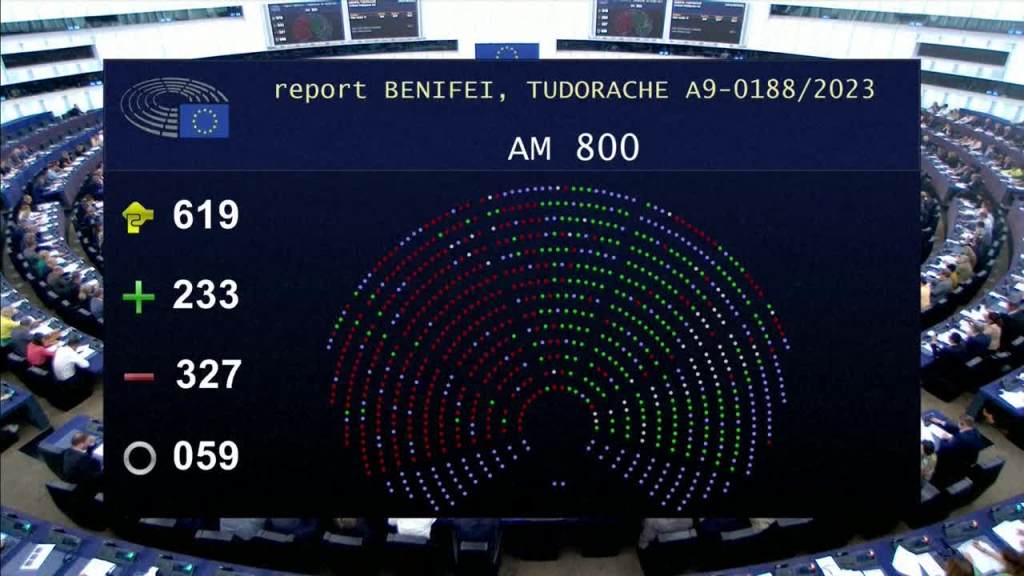
EU Moves Closer Towards AI Regulation

There is no doubt that AI is rapidly expanding its presence in various areas, prompting the EU to take decisive steps towards AI regulation. The EU AI Act was approved by the parliament on Wednesday,14th June and is expected to become law by the end of this year.

The EU AI Act will serve as a comprehensive guideline for the use of AI in the workplace, positioning the EU as one of the world leaders in AI regulation.

Recently, the EU voted to exempt draft language on generative AI regulation, bringing the new AI Act closer to becoming law. However, before it becomes a law, it needs approval from the main legislative branch. Given the EU’s history of prompt actions, there is optimism that the Act will soon gain legal status.

While the impending enactment of the act is a positive development, there have been concerns regarding the draft language of the regulation, particularly in areas like enhanced biometric surveillance, emotion recognition, predictive policy, and generative AI like ChatGPT.

Regarding generative AI, it is a broad and significant aspect that cannot be overlooked, as it can profoundly impact various aspects of society, including elections and decision-making.

The EU AI Act classifies AI applications into four categories based on risk: little or no risk, limited risk, high risk, and unacceptable risk. Examples of little or no risk applications include spam filters and game components, while limited risk applications encompass chatbots and minor face rules and guidelines. High-risk applications involve areas like transportation, employment, financial services, and other sectors impacting safety. Unacceptable risks refer to applications that threaten people’s rights, livelihoods, and safety.

According to the EU AI draft regulation, any organization or individual utilizing generated content must disclose it to the user. Although many companies and businesses are integrating AI into their systems, adhering to the regulation may present challenges.

The official proposal for the Act was made in April 2021 and has undergone several amendments since then. It is yet to undergo negotiation between the Parliament, European Commission, and the council of the European Union, with the final agreement expected by the end of the year.

The implications of the EU AI Act extend beyond Europe, with major AI companies like OpenAI, the creator of ChatGPT, expressing concerns about complying with the regulation. Companies like Google and Microsoft, which invest heavily in AI, have also shown signs of disapproval. However, the EU AI Act aims to mitigate the risks associated with AI to ensure that its benefits outweigh the adverse effects.

AI Limitations

As per the EU AI regulations, there are limitations on what AI can do, particularly in areas posing risks to people’s safety. These areas include:

● Biometric identification systems

● Biometric categorization systems using sensitive characteristics

● Predictive policing systems

● Emotion recognition systems in law enforcement, border management, the workplace, and educational institutions

● Untargeted scraping of facial images from the internet or CCTV footage to create facial recognition databases

High-Risk AI

According to the EU AI Act, high-risk AI is when AI poses a threat to people’s health, safety, fundamental rights, or the environment, such as using AI to influence voters and election outcomes.

To operate in the EU, AI companies must adhere to transparency requirements and take precautions to prevent generating illegal content. However, the use of copyrighted data may present challenges at present.

Did you like this post? Do you have any feedback? Do you have some topics you’d like me to write about? Do you have any ideas on how I could make this better? I’d love your feedback!

Feel free to reach out to me on Twitter!