
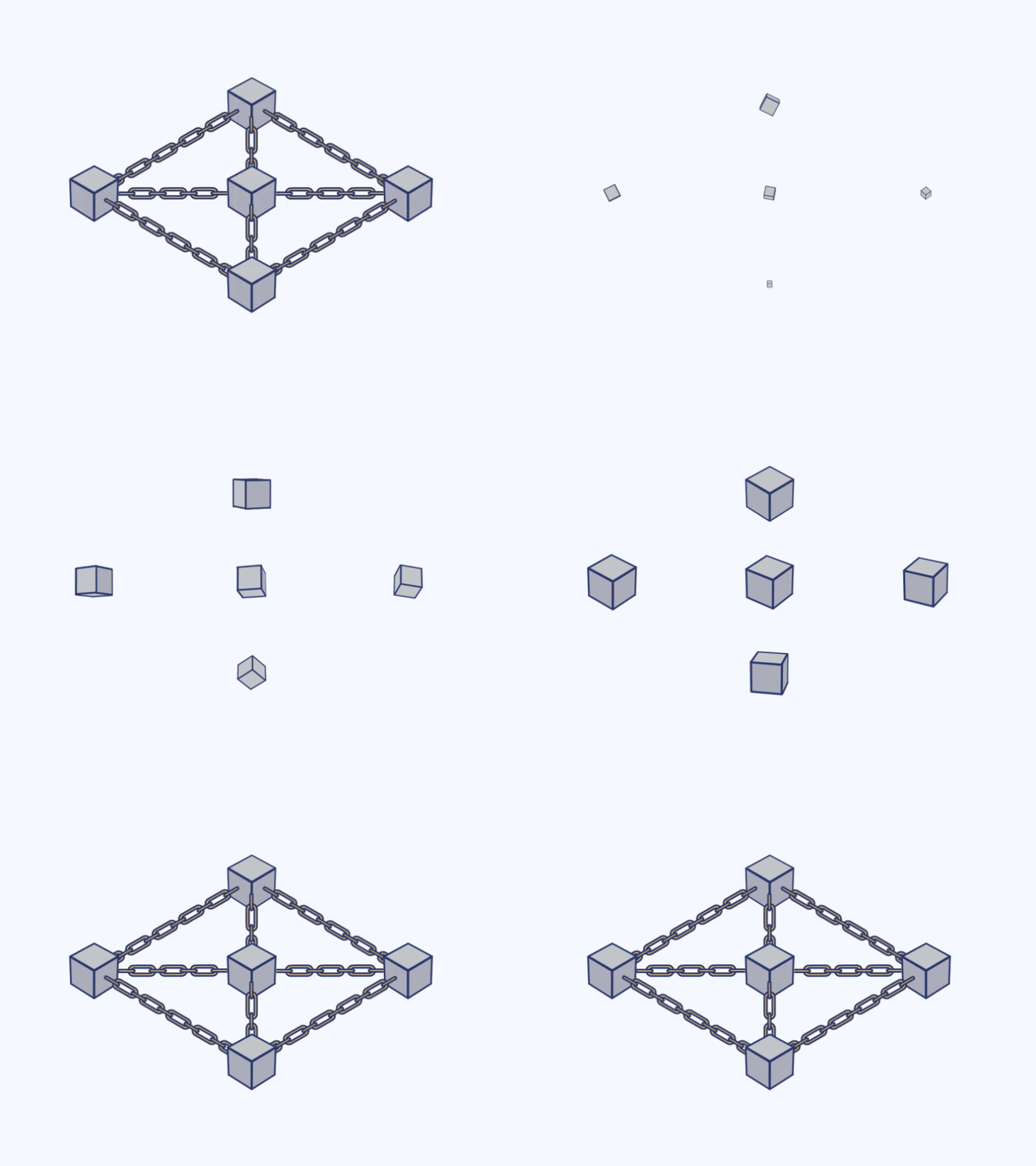
Blockchain technology is a transformative force that’s reshaping industries and sectors worldwide. At its core, a blockchain is a distributed, immutable ledger that records transactions. However, to address the growing complexity of various use cases and applications, blockchain technology has evolved to operate across multiple layers, often referred to as Layer 0, Layer 1, Layer 2, and Layer 3. This article provides an in-depth exploration of these blockchain layers and their significance in the world of decentralized technologies.
Layer 0: The Foundational Layer
Layer 0 is often considered the foundational layer, even though it’s not always explicitly named as such. This layer includes the physical infrastructure, such as the hardware and networking protocols, that underpins the blockchain network. Key elements of Layer 0 include:
- Consensus Mechanisms: Layer 0 defines how consensus is achieved among network participants. This encompasses various algorithms like Proof of Work (PoW), Proof of Stake (PoS), and more.
- Peer-to-Peer Networking: The communication protocols that enable nodes to interact, synchronize, and validate transactions are part of Layer 0.
- Cryptographic Security: The cryptographic techniques that secure data and transactions are a critical component of this layer.
- Physical Hardware: The actual servers, data centers, and mining equipment used in the network reside in Layer 0.
Layer 0 provides the infrastructure that supports the higher layers and ensures the integrity and security of the entire blockchain system.
Layer 1: The Blockchain Protocol Layer
Layer 1 is where the blockchain protocol itself resides. It’s the layer that most people think of when they hear the term “blockchain.” Each blockchain network, like Bitcoin, Ethereum, or others, operates within its unique Layer 1 protocol. Key features of Layer 1 include:
- Blockchain Data Structure: Layer 1 defines the structure of the blockchain, encompassing blocks, transactions, and the ledger itself.
- Consensus Rules: It sets the rules for validating and reaching consensus on transactions. For example, in Bitcoin, miners validate transactions through the PoW consensus algorithm.
- Cryptocurrency: Layer 1 defines the native cryptocurrency (e.g., Bitcoin, Ether) used within the network.
- Smart Contracts: Some Layer 1 blockchains, like Ethereum, support smart contracts, enabling decentralized applications (dApps).
Layer 1 is often where the blockchain’s decentralization and security features are most prominently featured. It’s where the actual ledger of transactions is stored and updated.
Layer 2: Scalability Solutions
Layer 2 solutions are built on top of Layer 1 to address its scalability limitations. As blockchain networks grow, they often face challenges related to slow transaction speeds and high fees. Layer 2 solutions aim to alleviate these issues. Key components of Layer 2 include:
- Sidechains: These are separate blockchains that can interact with the main Layer 1 blockchain, reducing congestion and enabling faster and cheaper transactions.
- Payment Channels: Payment channels like the Lightning Network for Bitcoin enable off-chain transactions, reducing the load on the Layer 1 blockchain.
- Plasma Chains: These are Layer 2 solutions that can handle a high volume of transactions, processing them off-chain and submitting summaries to the Layer 1 blockchain.
Layer 2 solutions enhance scalability, reduce transaction costs, and improve the overall efficiency of blockchain networks.
Layer 3: Application and Services Layer
Layer 3 is where the user-facing applications, services, and functionalities are developed. This layer includes dApps, DeFi platforms, NFT marketplaces, and any other service that interacts with the blockchain. Key features of Layer 3 include:
- Decentralized Applications (dApps): These are software applications that operate on the blockchain, offering various services and functionalities.
- DeFi Platforms: Decentralized Finance (DeFi) applications provide financial services such as lending, borrowing, and trading.
- NFT Marketplaces: Non-Fungible Token (NFT) marketplaces enable the creation, sale, and purchase of unique digital assets.
- Oracles: These provide real-world data to the blockchain, supporting smart contracts and dApps.
Layer 3 is the most visible and accessible part of the blockchain ecosystem, where end-users interact with the technology and its applications.
The Interconnected Blockchain Ecosystem
Each layer of the blockchain ecosystem is interconnected and relies on the layers beneath it. The foundational Layer 0 infrastructure supports the blockchain protocol at Layer 1, which, in turn, is essential for the operation of Layer 2 scalability solutions. Layer 3 applications and services interact with all underlying layers to provide users with a seamless experience.
Understanding these blockchain layers is crucial for grasping the complexity of decentralized technologies. It highlights how different components work together to create a secure, scalable, and user-friendly blockchain ecosystem. As blockchain technology continues to evolve, these layers will continue to adapt and expand, offering new possibilities and use cases for various industries and applications.
Did you like this post? Do you have any feedback? Do you have some topics you’d like me to write about? Do you have any ideas on how I could make this better? I’d love your feedback!
Feel free to reach out to me on Twitter!

 Mehran Muslimi