Silicon Valley Is Obsessed With the Wrong AI

The Problem: Pursuing the Wrong AI

In the heart of the tech world, the playbook by many of the leading players in Silicon Valley has increasingly focused on one major objective: building ever-larger, ever-“smarter” general-purpose AI systems. But a growing chorus of academics, researchers and insiders argue this is the wrong target.

1. The obsession with “general intelligence”

  • Large Language Models (LLMs) and other “broad” AI systems dominate innovation pipelines. As one commentary puts it: “Many hundreds of billions of dollars are currently being pumped into building generative AI models; it’s a race to achieve human-level intelligence. But not even the developers fully understand how their models work or agree exactly what AGI means.” ft.com+2hec.edu+2
  • One eminent figure, Michael Jordan (UC–Berkeley), warned: “This race to build the biggest LLM … is not feasible and is going to ruin us.” hec.edu
  • The outcome: huge sums of money deployed, but unclear definitions, unclear pathways, and unclear value propositions for many of these efforts.

2. The neglect of tangible, high-impact problems

  • Some analysts observe that while the flashy AI models capture headlines, less glamorous—but far more urgent—needs are being sidelined. For example, tackling climate modelling, healthcare optimisation, supply-chain resilience. One article states: “So, why the disconnect? … Venture capitalists often look for ‘moonshots’ … While valuable, this can lead to overlooking less flashy but equally impactful innovations.” Medium
  • Thus: the mismatch—between what is being funded and hyped vs. what social, economic and environmental problems urgently demand.

3. The hype machine & distorted incentives

  • Tech insiders are increasingly critical of the hype. A piece stated: “In the bustling corridors of Silicon Valley … AI’s promise is being drowned out by excessive hype … many entrepreneurs and executives are voicing a more tempered reality.” WebProNews
  • The incentives for investors and founders often favour scale, big numbers, large models—not necessarily societal benefit or practical utility.
  • Also: the culture of “move fast and break things” is alive in AI development, which may amplify risks rather than mitigate them. techcrunch.com+1

Why It Matters: The Stakes Are High

A. Mis-allocation of resources

When capital, talent and infrastructure pour into grandiose, long-term visions (e.g., AGI, human-level reasoning machines) rather than solving present-day needs, the opportunity cost is large. For example: the world may not get the AI tools it needs for public health, climate resilience, infrastructure optimisation.

B. The erosion of trust and legitimacy

The competitive hype around “super-intelligent” machines raises expectations that often go unmet. When the public or regulators see a gap between promise and delivery, trust in the entire field drains. One academic work warns of “solutionism” and “scale thinking” that can undermine genuine social change. arxiv.org+1
Also: ethical frameworks are being invoked but often violated. As one author wrote:

“Silicon Valley is knowingly violating ethical AI principles. Society can’t respond if we let disagreements poison the debate.” carnegiecouncil.org

C. Real-world consequences

  • The preoccupation with futuristic AI distracts from present risk management. For instance, issues such as data privacy, bias, algorithmic transparency are urgent but get less attention than “will AI become human-level?” questions.
  • Moreover, some communities within tech—especially those tied to rationalist / effective-altruist threads—report psychological harms, ideological cult-like dynamics and personal suffering linked to over-fetishising AI risk. moneycontrol.com
  • A deeper danger: by building systems for scalability, dominance or control (rather than for distributed benefit) we risk exacerbating inequalities, concentrating power, and embedding flawed assumptions about what AI should do. One piece titled “The Future of AI: A Horizon of Inequality and Control” highlights this risk. Worth

Key Facts (Bold for emphasis)

  • Hundreds of billions of dollars are being invested into generative AI models aiming for “AGI” (artificial general intelligence) even though the definition of AGI remains vague or disputed. ft.com
  • Not even the building teams fully understand how many of the large models operate or what “intelligence” really means in their context. ft.com+1
  • According to research, efforts grounded in “scale thinking”—the assumption that bigger models + more data = qualitative leap—are unlikely to achieve deep systemic change. arxiv.org
  • The term “AI” is increasingly used to sprinkle hype in investment pitches despite founders/investors often lacking clear grasp of what’s being built. Vanity Fair
  • Ethical AI frameworks are often bypassed or undermined in practice; serious debate and alignment across tech, policy, academia is fragmented, giving vested interests opportunity to dodge accountability. carnegiecouncil.org

The Underlying Mis‐Assumptions

1. Intelligence = general reasoning

The Valley ethos tends to treat “intelligence” as a monolithic target—machines that can reason, think, learn like humans—rather than many specialised tools that solve specific tasks. But specialised tools often yield more immediate, measurable value.

2. Bigger is automatically better

The faith in ever-larger models, more compute, more data is rooted in optimism that scale will produce qualitatively new capabilities. But critics say this is flawed: some architectures hit diminishing returns, and “depth” of reasoning is still lacking. thealgorithmicbridge.com+1

3. Tech will save everything

A grand narrative exists: deploy AI, transform humanity, fix all problems. But this “solutionism” often undervalues social, economic, institutional dimensions. The tech-centric view gives insufficient weight to human, policy and systemic factors. Worth+1


What a Better Approach Might Look Like

• Reprioritise meaningful problems

Shift some of the focus and resources toward real-world, high-impact outcomes: healthcare diagnostics, climate mitigation, efficient energy grids, education access.

• Emphasise clarity and specification over hype

Rather than saying “we will build AGI”, ask “what specific outcome do we want? How will we measure success? Who benefits and how?”

• Balance scale with embedment

Recognise that not all problems need massive global models; sometimes smaller, domain-specific, context-aware systems are more effective and ethical.

• Integrate ethics, governance and societal perspectives early

Ensure that technical design includes transparency, accountability, human-in-the-loop, deliberation over what the system should (and should not) do.

• Accept limitations and focus on augmentation

Rather than aiming for replacement of human reasoning, focus on AI as amplifier of human capabilities, especially in under-served domains.


Conclusion

The current trajectory of Silicon Valley’s AI obsession—large models, general reasoning, big scale—carries significant opportunity, but also significant risk. By continuing to chase the “wrong AI,” we risk misallocating massive resources, under-serving critical societal needs, and perpetuating a tech-centric hubris. The corrective is not to reject AI, but to refocus it: towards clear problems, measurable outcomes, human-centred design, and ethical embedment.
Only then can AI become the tool we need for impact, rather than the spectacle we fear.
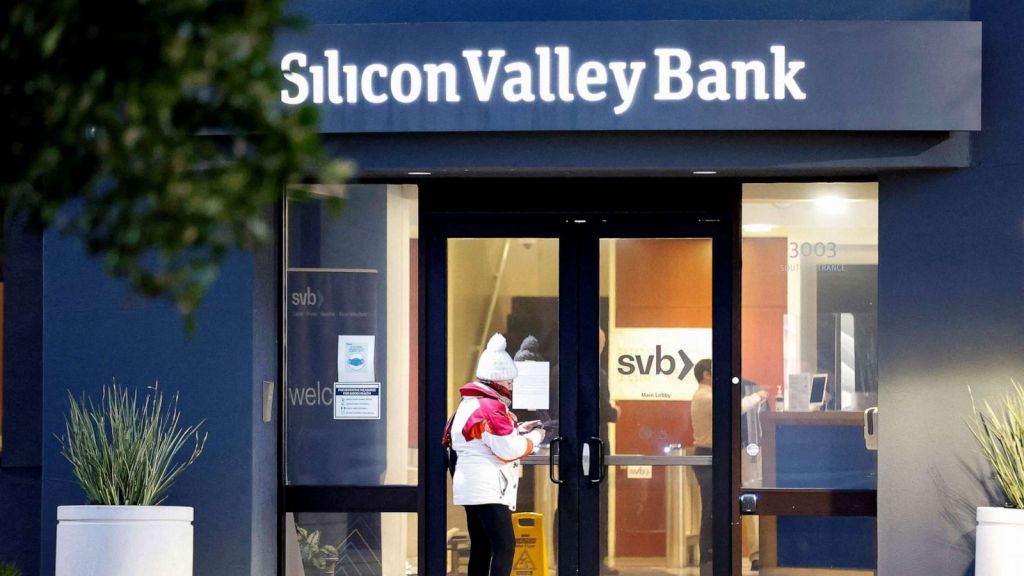

Are we heading to a bank crisis in the US?

The fall of the Silicon Valley Bank came as a surprise to many. The Silicon Valley Bank is a 40-year-old bank in California that most venture-backed startups use. At its insolvency, it had about $209 billion in assets and was the 16th largest bank in the United States.

SVB is strong in the startup scene, and there are claims that it banked at least half of the US’s venture-backed startups.

They lured startups by offering attractive loans in return for these startups, using them as an exclusive bank. They had strong relationships with founders and VCs and offered them incentives such as attractive mortgage deals.

As is the policy, every bank must be insured. SVB was FDIC insured, but FDIC insurance only protects accounts that hold up to $250K. This did not work well for SVB as over 85% of the accounts had over $250K.

SVB faced massive growth as there was a spike in the number of deposits from 61 billion at the end of 2019 to 189 billion at the end of 2021. The increase in liquidity is due to fundraising avenues and different activities such as IPOs, venture capital investments, acquisitions, etc. That means SVB had many assets they needed to generate a return on. To generate a return while still investing in relatively safe assets, they decided to buy longer-dated securities such as treasury bonds and mortgage-backed securities. Unfortunately, this buying took place when rates were near record lows. By the end of 2022, SVB had over $120 billion in these securities versus only $74 billion in loans.

When the FED increased interest rates, it affected the VC landscape last year. There was less funding going to startups as the VC’s found it better to invest in bonds and government securities. This made deposits going to SVB decrease. This began a crisis as SVB had invested in long-term assets. SVB did not have interest rate hedges or proper risk management. Losses started piling up, and at the end of 2022, SVB had marked market losses on those securities over $15 billion, almost equivalent to its entire equity base of $16.2B. That means that if depositors want their money back, they will not have money.

They decided to compensate by making a share sale. When the news of the share sale went out, the stocks plunged. VCs then advised their companies to withdraw their funds from SVB. The startups and founders were in a scramble to withdraw funds.

Effect on Crypto

SVB collapse impacted Circle as Circle used them to bank the USDC stablecoin. UDSC is a fiat-backed stablecoin with an equivalent to the dollar. There were fears that it would fall off the hook. Circle announced that it has 3 billion out of its 40 billion reserves, about 8% of the amount.

A bank run?

There were fears that the SVB situation would lead to a bank run, as many banks have similar structures. There are many losses from fixed-income securities, which would affect their liquidity. For fear of a bank run, many started pulling funds from their accounts as no one was sure how fragile the US banking system was. The FDIC covers only 1.3% of their deposits, while the banking system has a total of $22 trillion. That means there were high chances of a bank run.

There are up to 65000 startups affected by SVB. If they cannot access funds, it may halt their operations, such as payrolls, making employees quit.

Unfortunately, bank runs do not discriminate on who the account holders are, and it may affect up to regional banks.

Increased interest rates have affected liquidity, leading to losses in bank balance sheets.

What does the future hold?

To rescue the situation, the FDIC and FED revealed working on a fund that will backstop deposits. The treasury Federal Reserve and the FDIC announced that they would be backstopping all the deposits at SVB so that customers could access their funds. This restored banking confidence and also helped Circle to recover. That was a brilliant move by the US government as there would be a wide-scale banking crisis.

The SVB crisis indicates that the fractional Reserve banking system is structurally unstable.

Did you like this post? Do you have any feedback? Do you have some topics you’d like me to write about? Do you have any ideas on how I could make this better? I’d love your feedback!

Feel free to reach out to me on Twitter!

Could Silicon Valley be the Encryption Killer?

If you value your privacy online then you logically must also be a supporter of encryption. It frightens governments, because encryption prevents them from undertaking mass surveillance on all of our communications. For the longest time, Silicon Valley has been the defender of encryption, but Kalev Leetaruwriting for Forbes, believes that the one-time protector of our privacy may be taking another road and rolling back the protections that encryptions provides us with.

The reason behind this change of heart is not to help out governments: it is. Leetaru suggests, “for their own profit-minded needs to continue mining, monetising and manipulating their users.”

Encryption puts a dent in profits

Encryption is a way of securing Internet communications and keeping them away from the prying eyes of the ‘Deep State’ as well as cybercriminals. In the early days of Silicon Valley, encryption was “a value-add that had no impact on their own use of their users’ data.” Then came Edward Snowden and the Valley firms portrayed themselves as standing up against governments on behalf of their users. However, what was also happening was that they were “encouraging their users to share ever more intimate information to be mined.”

As Leetaru points out, “The movement from HTTP to HTTPS was an easy sell for the major internet companies,” simply because the cost of migrating from SSL certificates and all the other changes required, were all borne by the websites; not Silicon Valley. The only thing they had to pay for “was the added cryptographic computational cost, necessitating some additional hardware investment.”

And here is something important to consider in this debate: SSL only protected user communications in transit. The major Internet companies could still access user data in unencrypted form and use it to monetise their users.

What will Facebook do?

However, end-to-end encryption is a threat to these Silicon Valley companies and the cash they can make from our personal data. Look at Facebook and Whatsapp, which uses end-to-end encryption. Leetaru remarks that Facebook’s “entire existence is prefaced on the ability to mine its users’ most personal and private communications.” And you can bet that Facebook is looking at ways of working around the protections of the Whatsapp encryption in order to continue mining its users’ private communications.

Unfortunately, “the rise of end-to-end encryption is finally aligning the interests of both governments and Silicon Valley,” and while we see governments as the enemy of privacy; it is Silicon Valley that poses a threat in the name of profit.

Crypto businesses run away from USA

Image result for Crypto USA

The USA usually takes the lead on new technology: after all it is the land of Apple and Silicon Valley, not forgetting many innovations of the past. However, when it comes to crypto startups it appears to be driving them away, right into the arms of places like Switzerland. It is true that some of the large comaniy’s like Coinbase and Ripple Labs, who are past the startup stage, are US registered, though even Coinbase has spread its wings far beyond the United States.

Jeff Kauflin writing for Forbes recounts a very interesting story about a meeting between Republican congressman Warren Davidson and the CEO of a crypto startup in 2018. The CEO was trying to decide where to locate his company and said to the Congressman, “Look, it’s nothing personal. We just don’t trust that you guys are gonna get this done right. So we’re feeling kind of Swiss.” What he meant was that with all the uncertainty around regulations in the US, they were thinking of going to crypto-friendly Switzerland.

This uncertainty and the slowness of the US regulatory authorities are damaging everyone. As Kauflin says, “most companies that created digital tokens and sold them through ICOs assumed they wouldn’t be deemed securities.” However, once they realised that the regulators, the SEC being the main one, were thinking differently, they knew there was going to be a legal problem. This drove them away from considering locating startups in the USA.

To remedy this, Warren Davidson has introduced a new digital token bill, aimed at removing uncertainty and making the USA more appealing for crypto startups.

Caitlin Long, a former managing director at Morgan Stanley, when interviewed by Kauflin said: “Lawyers right and left were telling clients, ‘Don’t issue tokens to U.S. investors and don’t domicile in the U.S.’”

By contrast, last year Switzerland declared that some ICO tokens are not securities, which went down well with crypto entrepreneurs. So much so that about 420 crypto and blockchain startups are domiciled there. The USA has 2,100 startups, but it also has a population that is 40 times larger than that of Switzerland. Mathematics says that Switzerland is out-performing the USA as a location for technological innovation.

Davidson’s Token Taxonomy Act aims to amend the Securities Act of 1933 and the Securities and Exchange Act of 1934, “to get the regulatory certainty that I feel like the market needs.”

Under the new bill, some of the criteria for exemption from security status are: the blockchain platform the token runs on has already launched; the token’s supply can’t be controlled by a single person or group of people; once finalized, transactions can’t be altered by a single person or group of people; and the token “is not a representation of a financial interest in a company, including an ownership or debt interest or revenue share.”

If this Bill passes it will create a significant change in the US for startups and would ensure that innovation stays in the USA rather than running away to Europe.