6 Steps to hiring a great web developer

Building your brand online requires stylish web design and a website that works seamlessly. To achieve this you need a highly skilled web developer. At first, you may think that finding a great web developer will be an easy task, because there are so many developers available, but it isn’t as simple as that, as many have found out at great expense. So, here are six things you need to consider when you’re hiring a web developer.
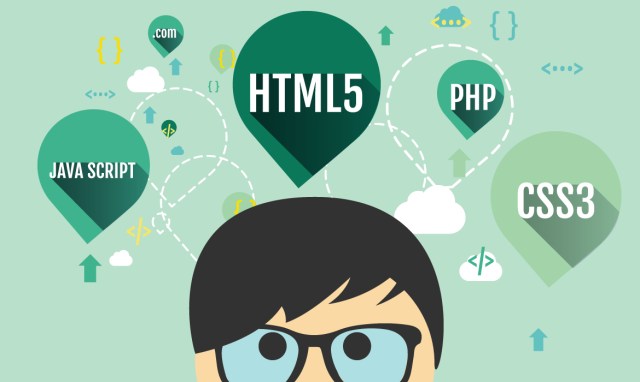
FullStack-Image

  1. What do you need the developer to do?

You need to decide what their task is first. Do you want them to work on the front end of your website or the back end? Or do you want them to do everything from A-Z? Front-end developers are more skilled in design; they code for ‘good looks’ with HTML and Javascript.  Whereas those who are better at back-end stuff, know all about databases and programming languages like PHP. The developers who can handle both are usually more expensive, but the upside of this is that there are no communication issues; you only have one person to talk to.

  1. Freelance or full-time employee?

There are plenty of freelancers available and this is a more flexible option. You can hire them on a per project basis, which is more economical than taking one on full-time.

  1. What’s your budget?

Website budgets vary greatly and the more complex the site, the more it will cost. Figure out your budget first and talk to the developer about what you can achieve with that. Also, be prepared to wait 12-16 weeks for a site to be completed, some may even take six months.

  1. Will you work well together?

When you are hiring a developer to work with you and your team you must consider how the person will get on in your company culture, even if they are freelance. Happy employees are more productive, so take time to assess the developer’s attitudes, enthusiasm and adaptability; it will save you time in the long run.

  1. What is their skillset?

You need to establish where they are strong and weak. Give them technical tests to complete, such as their proficiency in HTML, and ask questions like:

  • What are the benefits of using Javascript?
  • How do you devise a timeline for your projects?

Also ask to see their portfolio.

  1. Do they understand what you want?

The last step is essential because you need to be sure that you and the developer are on the same page. You should go over the following:

  • Reporting structure
  • Deadlines
  • Expectations
  • Tools
  • Payment

Hiring is always hard work, but it is worth the effort to get the right person, because that will pay off in the end in every way; in saving time and money and in building the brand that you really want. So, take the time to decide what you need first and then follow these steps to get the best web developer possible.


6 Ways Technology Has Changed The World

We speak about ‘technology’ in almost reverent tones and assign it a special role in the economy. Mostly we think of this as being the provision of electronic products, information and communications services and software in its many forms. However, this is a rather limited way to look at technology and we should broaden its definition to include everything that humans have ever invented, from the Stone Age axe to the self-driving car.

L2b4uTr

In many ways, the things we invent are a defining characteristic of being human. In some historic eras, we seem to invent at a faster pace – the Industrial Revolution is a good example of this – and the emergence of the Internet in the 90s appears to have ushered in another period in which we are working at speed to produce products that exploit the connectivity of the web to change society, business and the economy. Here is my selection of the top six ways in which new technology has changed all three sectors and the world.

Mobile communications

By the end of 2015, mobile phone penetration was 97% compared with about 10% in 2000. Internet access grew in parallel with this. These two factors led to the arrival of ecommerce, which has transformed retailing and the music industry to name just two business sectors. It has also radically changed the way humans interact with each other.

Global inequality

It also shows up inequalities in the world, with the developed world having above 80% access to the Internet compared with 34% for developing countries.

Since information is power, it is vital that the developing countries have greater access to connectivity and we are seeing that those places where they have managed to overcome the problems of poor communications networks are progressing faster than those who don’t.

It hasn’t increased productivity

Contrary to what you might expect, mobile phones and the Internet have not made us more productive. If you look at the USA, which is both the world’s largest economy and the leading producer of new technologies, you will notice that although productivity rose slightly after the launch of the web, it has now dropped again to around 1 per cent in the last 10 years. But in the 1960s it was at 3 per cent annually.

This seems surprising, but Robert Gordon of Northwestern University says that electricity, modern sewage, the telephone, radio, internal combustion engine, the car and aeroplane, all had a much bigger effect on productivity and society than the web and your mobile.

It divides the world

In addition to there being inequalities in access to information technology around the world, the new technologies have created other types of inequalities. There are the markets where a handful of people and businesses dominate the world economy – Microsoft and Bill Gates are examples of this. Globalisation is another product of the new technology and there has been a huge growth in financial trading thanks to online access.

Big Brother is watching

Global communications have raised the question of security in cyberspace and the use of ‘big data’ brings the question of our personal privacy to our attention. The amount of data about each one of us that is stored on computers is enormous compared to the pre-computer and Internet era. It has also changed the individual’s relationship with government and corporate entities, and in a way that not everyone is happy about. The sense that Big Brother is watching us has led to all kinds of fears about infringement of our rights.

The Fake News thing

And finally it has created a monster in politics that we are now referring to as ‘fake news’. Whilst our almost instant access to global information has many benefits, it has also spawned an online media presence that spews out hatred, lies and often just plain stupidity.

We can see that new technology has brought us many benefits, but we must always remain aware of its dangers as well. If we use it thoughtfully it will advance us; if we don’t pay attention to its adverse effects, it can potentially destroy us.