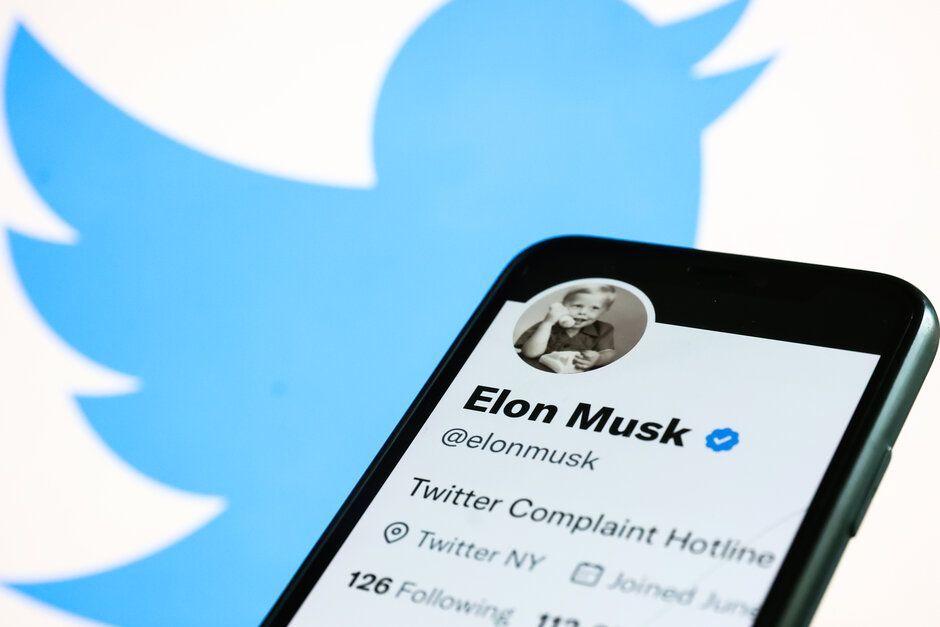
From Dogecoin to Twitter: The Making of the Everything App

Depending on whom you ask, Elon is either an egotistical villain or a savior. He is currently the world’s richest man, with a net worth of about 200 Billion. Well, with that kind of money it becomes easy to create products that have a direct impact on people’s daily lives- with huge repercussions.

Now, Elon is not your average billionaire. Most of the time, he has swayed the masses to his favor, much to the chagrin of big tech. This has turned him into somewhat of a cult, with a huge following and an enviable portfolio of companies that seek to upend conventional beliefs and corporations. From Neuralink to Space X , Tesla to the Boring Company, he is an entrepreneur who seeks to “disrupt” global order as he strives to achieve what may somewhat be thought to be impossible — until it’s done.

Twitter Acquisition and Association with Dogecoin

Elon’s recent acquisition of Twitter may not have come as a surprise, seeing the influence this app has on disseminating and sharing “truth”.

He offered to buy it at a ridiculously high rate ( USD 44 Billion)- perhaps an indication that he believed the app was worth a lot more. The buying process was initially marred by accusations and counter-accusations, until the deal finally went through at the end of October 2022. After purchasing it, he said that he intends to make Twitter the most accurate source of information across the world by empowering citizen journalism.

” It is important for the world to have a common digital square where a wide range of beliefs can be debated in a healthy
manner without resorting to violence” ,

he stated in a statement after the acquisition.

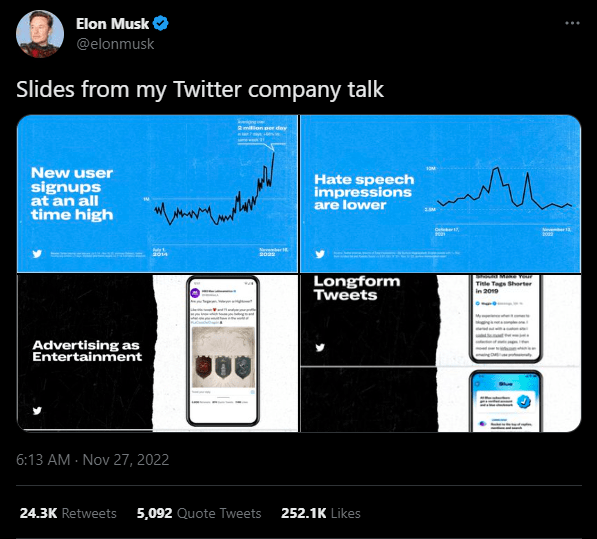
Recently, Elon shared screenshots of an internal meeting he had on Twitter- showing the progress of the platform and future plans that included introducing a payment system. This caused Dogecoin to rally and gained about 19% from the news. The relationship between Elon and Dogecoin isn’t new. From the time Elon bought Twitter, there were rumors that the company has been working on a development that would allow crypto payments, and the market interpreted this to mean Dogecoin would be the choice of crypto. Elon has also been posting dog-themed memes
on his account, perhaps confirming the widely held beliefs that indeed this may be the crypto that would most likely be adopted on the platform.

The Everything App

How he intends to promote global truth, we are yet to know, but one thing is for sure, he is on a mission to redefine this space and we are already seeing lots of resistance from Big tech — If recent rumors of Apple delisting Twitter from its App store are anything to go by. What we also know is that this acquisition may gel well with his desire to create an app that he once called the x app or the everything app- something similar to TenCent’s we chat or Alipay, but for the world.

Also called a super app, an everything app is an app where you can do everything without leaving the app. Think of it as a single app that contains all the digital services you may need-from chatting to booking a hotel,
even hailing a taxi, or making payments to your local store. These apps are dominant in the Asian region. In China, an app like Wechat is ubiquitous and essential for everyday use. More than a billion people have access to We chat in China and use it to do basically everything from paying bills to booking medical appointments. Other apps in Asia that have adopted this model are the Grab app in Malaysia and Singapore and the Line app in Japan.

Elon once mentioned that acquiring Twitter will accelerate the development of X or the everything app by at least three to five years.

We have already started seeing developments geared towards attaining this goal, especially with the launch of Twitter 2.0. It seems that Elon would like to ape the models of Wechat, Grab, and Line but this time scale it up for the global audience. So basically, the X app would be the same as Wechat, but for the world. If the recently shared screenshots on his Twitter page are anything to go by, then the new app will include video streaming, video chats, long texts, and payment platforms- building blocks for a diversified platform.
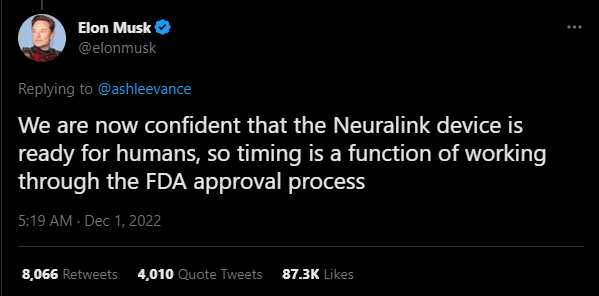
Add Neuralink to all this talk and the conversation on what this app may accomplish changes. Neuralink is a company owned by Elon that wants to implant coin-sized computer chips into human minds.

They recently stated that they are awaiting FDA approvals and will start trials for this in the next 6 months. So, maybe, Elon’s goal for the X app is to ultimately have it work as a computer- chip implanted in human brains and do “ everything”, if it could.
Challenges in Setting up the Everything App

As he pursues this goal, there are hurdles that have to be overcome. Firstly, he is not the only entrepreneur that wants to create this app.

Some companies have already tried this and achieved success (within their geographies). He is therefore bound to face stiff competition from these companies and other big tech companies that are working on this- Facebook is a good example. Facebook is striving to create a platform that will be a melting pot for all online services- from payments to interactions and even booking appointments. Other big tech companies that have also made forays into this domain are Google, Tiktok, and even Uber. Secondly,
most people, especially in the West, are not accustomed to this and may find it hard to adopt a single app that “does everything”. This may explain the modest success achieved by other big tech companies that have tried to launch this kind of app in America. Finally, regulatory hurdles may arise, especially if he were to incorporate crypto payment solutions.

Even with all these bottlenecks, Elon doe not shy away from a good fight. He has demonstrated time and again his ability to get into industries that are considered ‘impossible to penetrate and deliver game-changing products that reshape an entire industry. Wishing him away may not
be an efficient strategy. Savvy investors may try to get into some of the
companies/ solutions that would most likely be adopted into this trend.
Cryptocurrencies like Doge are a good buy at this stage.

It will most likely continue its upward trajectory for as long as Twitter intends to create a payment gateway. However, there is no guarantee that it will be X app’s currency of choice.

Did you like this post? Do you have any feedback? Do you have some topics you’d like me to write about?Do you have any ideas how I could make this better? I’d love your feedback!

Feel free to reach out to me on Twitter!
Twitter comes under fire from McAfee

John McAfee, the bitcoin buccaneer, has grabbed the headlines again this week, but this time it is in a good cause rather than a self-serving one.

Earlier this week Ryan Smith at CCN revealed that a scammer was impersonating John McAfee on Medium. He wrote, “The so-called “McAfee Crypto Extravaganza” promises mouth-watering 10x returns — if and only if — you deposit a small amount of Bitcoin or Ethereum in the attacker’s wallet first.”

CCN alerted McAfee’s wife Janice to the scam and she posted on Twitter that it was a fraud. It was clear that the scammer had gone to some lengths to create two cleverly crafted phishing sites and the fraudulent pages even go so far as to fake Bitcoin transactions and mimic BTC block explorers.

It wasn’t long before John McAfee stepped up to add his view of the situation, and he took aim at Twitter for what he sees as its lax approach to bitcoin scams.

McAfee told CCN: “This happens three or four times a day where people pretending to be me on various platforms, attempt to scam people using a variety of scams. On my Twitter account everyone of my tweets are peppered with comments from people pretending to be me and attempting to get people to send Bitcoin or Ethereum in exchange for a larger amount. I no longer bother to report them to Twitter because I never get a response.”

You can understand his anger and frustration. As Ryan Smith commented, “Twitter has the paradoxical reputation of being both incredibly resourceful and annoyingly frustrating. Influencers find it increasingly difficult to wade through the information swamp only to interact with their genuine followers.”

And as CCN reveals, scammers will even use Pope Francis for an “Official BTC Giveaway”. Although, if anyone believes the Pope is giving away bitcoin, perhaps they also think that the moon is made of green cheese.

Over a year ago, Jack Dorsey, a big bitcoin supporter and one of the co-founders of Twitter, promised he’d take action to reduce the problem. But as CCN says, the problem seems to have got even worse. CNBC Crypto Trader host Ran Neuner recently challenged Jack Dorsey to stop wasting resources on a new user interface and do something to stop the exploitation of novice crypto users on Twitter.

Twitter may still be the leader in short form content, as Ryan Smith points out, but should another platform emerge that is scam-free, then Twitter may find its sizable community of crypto followers deserting it for a safer harbour.

Elon Musk turns into Trump on Twitter

Elon Musk of Tesla fame has a knack for getting his name in the headlines. There is barely a week goes by when his name doesn’t appear in the media somewhere, whether it is the mainstream media or more niche sectors of the press. This week he has taken on the Wall Street Journal (WSJ), because he is fed up of journalists’ criticisms of Tesla.

As always, Musk launches his attacks on Twitter. This time he presented the WSJ and its columnist Holman Jenkins as “sock puppets for “big oil.” In one tweet he asked his followers: “Please support my campaign to rebrand WSJ as sock puppets emoji.”

Francois Asure at CCN finds it very odd that Musk should behave somewhat like Trump on Twitter, suggesting that surely as a creative genius, Musk can do better than hurl “Trump-style epithets” at such an esteemed institution. Asure was referring to the way in which Trump branded Hillary Clinton, “Crooked Hillary”, and he also called Kim Jong-Un “Little Rocket Man.” Presumably he didn’t call him that when he met him at their famous summit meeting.

Instead, Musk appears to be adopting Trump’s tactics with the WSJ, simply because he doesn’t think the paper gives him fair coverage. It sounds a lot like Trump’s ongoing battle with The New York Times, CNN and his other perceived media enemies that he is sure tell lies about him. It often comes across as childish petulance on trump’s part, and Musk’s response to this WSJarticle, “Tesla Can’t Stop Dreaming Big.” The introduction reads: “Elon Musk’s plans to turn Tesla into a dominant automobile player have become a liability instead of an asset.” It is a less than glowing account of Tesla and the upheavals within the company. It also questions Musk’s leadership style and the way in which he uses his personality –“erratic, bombastic and alternative” –to draw attention to his brands.

As Asure remarks, “For the CEO to use Twitter to communicate with shareholders is about as unusual as a U.S. president turning to the social media platform to craft a message.” And as he rightly points out, the way in which Musk courts media attention is always likely to lead to some negative reviews. It is not difficult to see why the WSJ cites Musk as a liability for Tesla; he positions himself as bigger than his car brand. If you stopped the average man in the street, I’d say it is likely that they know more about what Musk gets up to than the engineering or design of a Tesla model.

And why did he choose to use “big oil” as his idea of an insult? Simply because his fan base is into electric cars, and oil, a fossil fuel, is the nemesis of those who are environmentally conscious. The oil industry probably doesn’t love Elon Musk much either, but as Asure points out, the oil industry often gets a “free pass” in the press, whereas the Tesla story is much more entertaining for any journalist.

And Musk often makes big claims that he can’t follow through on, which is more grist for the media’s mill. But, the point of this whole story is to illustrate how social media has become the battleground for characters like Musk and Trump. When their backs are against the wall they hit out in tweet form. And it often backfires on them, because calling people names makes things personal that should be treated with gravitas and diplomacy. However, neither Trump nor Musk possesses much of these qualities. While Musk’s tweets are entertaining, as are Trump’s, he is in danger of allowing his game playing to obliterate his Tesla brand; just as Trump’s outbursts have lowered the tone of the Office of the President of the United States.

Jack Dorsey: the billionaire on a $1.40 salary

I’ve discovered something truly strange: Jack Dorsey, one of the co-founders of Twitter, takes home an annual salary of $1.40. Why this odd amount? Well, it is a nod to the original 140-character limit for a tweet. He would of course be within his rights to ask for $2.80, since Twitter expanded the maximum number of characters that can be used to 280.

Dorsey is, of course, known for being a billionaire, and Twitter generated a revenue of $909 million in the last quarter of 2018 alone. His SEC filing revealed: “As a testament to his commitment to and belief in Twitter’s long-term value creation potential, our CEO, Jack Dorsey, declined all compensation and benefits for 2015, 2016, and 2017, and in 2018 he declined all compensation and benefits other than a salary of $1.40.”

Why does Dorsey do it?

Gerelyn Terzo writing at CCN suggests it makes him and his company look good, and Terzo remarks, “His creativity to reflect the Twitter character limit is second-to-none.” But let’s not forget that in 2018 he offloaded a lot of stock. He sold 1.7 million shares from Square to net him $80 million after taxes. And by the way, he only takes home an annual salary of $2.75 from Square. This company, which makes devices for small businesses to accept credit card payment sin person, was struggling to become profitable, but in 2018 its stock climbed by 80%. And the majority of Dorsey’s fortune is tied up in Square equity. As Forbes reports, “Thanks largely to the run-up in the stock, he is now worth $1.9 billion more than at the start of the year. His net worth currently stands at $4.7 billion, with his 61 million shares of Square accounting for $3.9 billion.” By contrast, Dorsey hasn’t touched his Twitter shares this year and they surged by 50% in value in 2018, giving him a stake worth $600 million.

Dorsey isn’t alone

Dorsey isn’t the only billionaire who takes a nominal salary. Donald Trump donates his $400,000 presidential salary to different causes and Elon Musk never cashes in his annual salary of $45,936, which he is forced to accept under Californian law. Mark Zuckerberg of Facebook is paid $1 per annum, as is Evan Spiegel at Snap.

Bankers prefer big money

Significantly, banking CEOs, do not take the same approach as the founders of media and tech giants like Twitter and Facebook. They are firmly wedded to their eye-watering salaries, despite the banking crash of 2007. Swiss Bank UBS is currently under scrutiny for its CEO’s excessive salary of $14 million. But Jamie Dimon at JP Morgan Chase is paid $30 million per annum. No wonder that when the banker was in front of Congress last week, he was closely questioned about why some of the bank’s staff were finding it impossible to reach the end of the month without needing overdraft facilities. Katie Porter’s questioning of Dimon should have made him squirm, but his face didn’t move a single muscle as he responded to her questions with, “”I don’t know, I’d have to think about that.”

But the real question here is: are the likes of Jack Dorsey really the good guys, and the bankers the baddies? Perhaps it is their employees who can answer that question?