Generative AI and Extended Reality: A Transformative Partnership

Virtual and augmented reality technologies have been steadily advancing, but their fundamental mechanics have remained relatively unchanged over the decades. However, the recent rise of generative AI platforms, with ChatGPT at the forefront, signifies one of the most promising and complementary innovations for extended reality (XR) in a generation.

Generative AI, when combined with XR technology, has the potential to redefine our interactions with both real and digital environments, all from the screens of our smartphones. When working in synergy, these technologies can construct expansive and immersive worlds that feel more realistic than ever before.

The Emergence of Generative AI

Generative AI, exemplified by ChatGPT, has gained significant attention in recent months. Users are already harnessing this software to generate copious amounts of rich content based on concise prompts. But how exactly can generative AI and XR technologies form a symbiotic relationship that revolutionizes how we consume entertainment and work online? Let’s explore this transformative partnership.

How Generative AI Complements XR

To understand the potential synergy, let’s revisit what generative AI entails. While ChatGPT is the most prominent example today, generative AI technology has been rapidly evolving. It enables users to swiftly generate content based on specific inputs, spanning text, images, sounds, animations, 3D models, and various other forms of data.

Generative AI operates by employing neural networks to discern patterns and structures within existing data. This understanding of existing content empowers the software to create entirely new content. So, what does this mean for XR, particularly in cases involving expansive digital environments?

Limitless Possibilities for XR

Generative AI has the potential to usher in a new era for gaming where the creation of new levels becomes limitless. In general use, VR users would no longer be confined to predefined maps when exploring virtual worlds. Instead, AI would learn and understand the existing environments within a program, generating entirely new environments based on specific prompts.

We’re already witnessing the transformative impact of generative AI in enhancing XR. Major companies are adopting this technology to great effect. For example, in stable diffusion VR, artificial intelligence can create virtual reality worlds dynamically. This approach could bring substantial cost benefits to the video game industry, reducing development time and computational power requirements for expansive maps.

Popular games like Minecraft already employ generative AI to create randomly generated, unique worlds for players to explore. Text-based games like AI Dungeon rely heavily on AI algorithms to create new scenarios as players progress.

Empowering VR Creators

Generative AI isn’t just transforming user experiences; it’s also empowering content creators. Platforms like Roblox are leveraging generative AI to enable more creators to build in-game environments, even if they lack 3D modeling expertise. Roblox is enhancing its content creation services, making it easier for creators to construct immersive experiences. This democratization of content creation opens the door for more players to become creators themselves.

Challenges and Considerations

While the future of generative AI within XR holds immense promise, it’s not without its challenges and considerations. Prolonged exposure to XR environments, particularly for younger players, may raise health concerns. This could necessitate new guidelines for healthy playing times.

Building the Future of Reality with AI

Despite these challenges, the emergence of generative AI represents a watershed moment in the development of XR technology. It has the potential to not only construct VR worlds but also manage them, adapting and evolving environments based on user trends and behavior.

Whether AI is tasked with maintaining VR worlds mirroring Earth’s geological and meteorological conditions or crafting landscapes subject to fantastical and ever-changing scenarios, the possibilities are vast with generative AI at the helm.

In summary, as reality technology continues to mature, the emergence of generative AI is poised to be a pivotal moment for the industry. By creating entirely new environments and populating them with features, XR and generative AI form a formidable partnership that holds the key to the industry’s future. Together, they can redefine how we interact with digital and physical realities, opening up boundless opportunities for innovation and immersion.

Metaverse Unleashed: 6 Industries Embracing New Opportunities and Experiences

The metaverse is indeed reshaping customer and employee experiences across various industries. Gartner’s projection of 30% of companies having meta-ready products and services by 2026 highlights the growing momentum in this area. The convergence of technologies like AR, VR, and AI is driving transformative changes, simplifying business processes, enhancing decision-making, and revolutionizing customer interactions.

The metaverse allows companies to create immersive virtual experiences that go beyond traditional boundaries. Customers can now engage with products and services in virtual environments, opening up new avenues for customization, personalization, and exploration. From virtual shopping experiences and interactive gaming worlds to virtual classrooms and training simulations, the metaverse is redefining how we learn, work, and play.

While discussions on the social and legal implications of the metaverse are ongoing, its potential to turn virtual experiences into tangible products and create new business opportunities is undeniable. The metaverse offers a glimpse into a future where digital interactions blend seamlessly with our physical world, unlocking novel ways to connect, collaborate, and innovate.

As companies continue to embrace the metaverse, we can anticipate further advancements and exciting developments that will shape the future of industries and the way we experience products and services.

Here we explore six key industries:

  1. Gaming and Entertainment: The metaverse provides immersive gaming experiences, virtual reality (VR) worlds, and interactive social platforms, creating new avenues for game developers, content creators, and virtual events.
  2. Fashion and Retail: The metaverse offers virtual fashion experiences, digital clothing marketplaces, and virtual try-on technologies, allowing brands to engage with customers in innovative ways and explore virtual commerce.
  3. Education and Training: The metaverse enables virtual classrooms, interactive simulations, and virtual training programs, enhancing remote learning, professional development, and immersive skill-building experiences.
  4. Real Estate and Architecture: The metaverse allows for virtual property tours, architectural visualization, and collaborative design spaces, transforming the way properties are showcased, designed, and sold.
  5. Healthcare and Telemedicine: In the metaverse, virtual healthcare consultations, medical training simulations, and telemedicine services can provide access to remote healthcare, training, and patient experiences.
  6. Advertising and Marketing: The metaverse introduces new advertising formats, immersive brand experiences, and interactive product placements, creating unique opportunities for marketers to engage with audiences in virtual environments.

These industries are just a glimpse of the wide-ranging impact the metaverse can have. As the concept of the metaverse evolves, more industries are likely to explore and capitalize on the opportunities it presents.

Did you like this post? Do you have any feedback? Do you have some topics you’d like me to write about? Do you have any ideas on how I could make this better? I’d love your feedback!

Feel free to reach out to me on Twitter!

Virtual reality impact on cyber security

Virtual reality (VR) can have both positive and negative impacts on cybersecurity. Here are some ways in which VR can affect cybersecurity:

Positive Impacts:

1. Training and Education: VR can be used to train employees in cybersecurity by creating simulated environments where they can practice handling cyber attacks. This can help them become more familiar with the threats and learn how to respond in a safe, controlled environment.

2. Testing and Vulnerability Assessment: VR can also be used to test the security of systems and networks by simulating attacks and identifying vulnerabilities before they can be exploited by real-world hackers.

3. Secure Communication: VR can provide a secure platform for communication, especially for remote teams, as it can create an immersive virtual space where sensitive information can be shared without the risk of interception.

Negative Impacts:

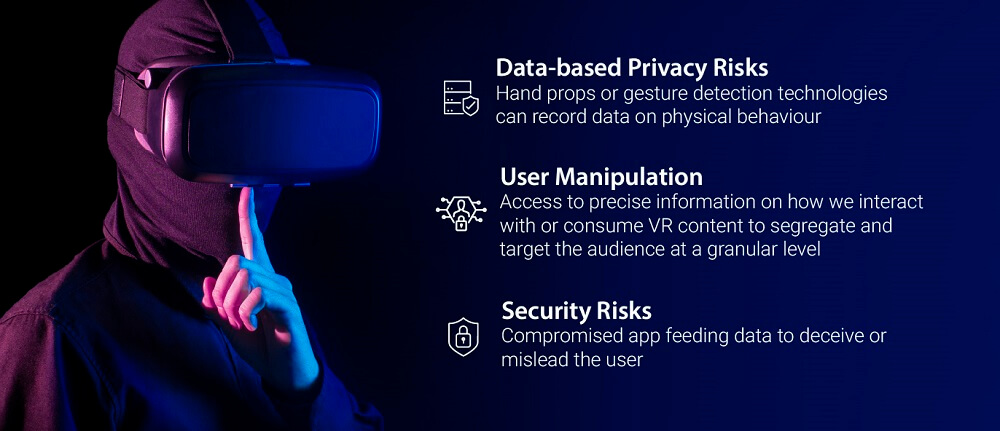
1. VR Malware: Hackers can exploit vulnerabilities in VR software and use it as a means of spreading malware to unsuspecting users, thereby compromising the security of the system.

2. Social Engineering: VR can also be used to conduct social engineering attacks, where hackers can manipulate users into revealing sensitive information or performing actions that can compromise the security of the system.

3. Physical Security: Since VR can create immersive and realistic environments, it can be used to conduct physical security breaches, where hackers can bypass physical security measures in the real world by manipulating the virtual environment.

In summary, while VR has the potential to enhance cybersecurity, it also poses new challenges that need to be addressed by cybersecurity experts to ensure that it does not become a new avenue for cyber attacks.

As virtual reality (VR) technology becomes more prevalent, it’s important to consider the potential cybersecurity threats that come with it. Here are some ways to defend against VR cybersecurity threats:

· Keep your VR software updated: Software updates often contain security patches that fix known vulnerabilities. Make sure your VR software is up-to-date to ensure the latest security fixes are in place.

· Use strong passwords: Protect your VR accounts with strong passwords that are unique and not easily guessable. Consider using a password manager to generate and store strong passwords.

· Be cautious of public Wi-Fi: Public Wi-Fi networks are often unsecured and can leave your device vulnerable to cyber attacks. Avoid using public Wi-Fi networks when accessing VR content that requires sensitive information.

· Use antivirus software: Install and regularly update antivirus software on your device to protect against malware and other cyber threats.

· Be wary of phishing scams: Cybercriminals can use VR to create realistic phishing attacks that may trick you into giving away sensitive information. Be cautious of any VR content that asks for personal or financial information.

· Use a VPN: A virtual private network (VPN) can help protect your online privacy and security by encrypting your internet connection and masking your IP address.

· Limit VR permissions: Only grant necessary permissions to VR apps and content. This will help prevent malicious apps from accessing sensitive information on your device.

· Educate yourself on VR cybersecurity: Stay informed about the latest VR cybersecurity threats and how to defend against them. This will help you stay one step ahead of cybercriminals and protect your device and personal information.

Did you like this post? Do you have any feedback? Do you have some topics you’d like me to write about? Do you have any ideas on how I could make this better? I’d love your feedback!

Feel free to reach out to me on Twitter!

A Functional Metaverse and the Future of Work

“Meta-optimists” are convinced that as we move into 2023, it will be a time when the Metaverse will gain acceptance and wide adoption. The Metaverse itself is composed of a cocktail of technologies that included blockchain, gaming, crypto, and VR. Indeed, Covid pandemic has confirmed that remote working is not just a possibility, but it is the future.. In this article, we state what working in the metaverse entails and the benefits of doing that.

Accessing the Metaverse

Getting into the Metaverse will require some headsets such as VR headsets and access to the internet. One can also access it using their desktop or mobile devices. Companies are working to develop solutions that can give one access to the metaverse without the need for a VR headset. Some innovations around this include the use of holograms to project images and avatars into real space. Meta is also working on special gloves that enable its users to have a sense of touch while in the metaverse

The Metaverse seeks to bring a paradigm shift in the way we interact. Avatars will be used to teleport from one location to another, with enhanced experiences giving you a feel of your surroundings. Employees can also pop into each other’s workstations for a quick chat and catch-up. You can navigate the metaverse, in the same manner, you do in the physical world. If you would like to have a chat or live call with a colleague, then your webcam is activated automatically. Once done with the call, the webcam turns off and you can proceed with your stroll. Companies have already started working on avatars that can move from one virtual company to another- mimicking the physical world.

An employee can choose an avatar that they can use to navigate the metaverse. One that will act as their digital twin. This digital twin will act as their representative in the metaverse, with emotions and a sense of touch. These digital twins can be assigned to perform mundane and recurring tasks. In the event that you are busy and would not have time to attend to certain obligations such as meetings and conference calls, you can send your digital twin to go and represent you in these meetings. This frees you up for other tasks.

Organizations can also set up areas where employees can go hang out and relax with experiences such as music and scenic views such as hills and forests. This is meant to boost employee productivity while in the metaverse.

There is also the option of making orders while in the metaverse. Employees can either order for virtual goods/food and get them delivered to their houses. You can be working on the metaverse, make an order on McDonalds and get the physical food delivered straight to your door without leaving the metaverse.

Employees also have the chance to create and customize their virtual environments in a way that is unique and suits their personality- spurring creativity. Virtual work spaces will not be similar to conventional office spaces. Each employee can have their unique work environment that can be changed intermittently with minimal cost. Companies can also offer trainings with ease from the metaverse and then deploy their staff into different virtual locations. Imagine a situation where you have 10 employees that need to be inducted into the company. Instead of hosting meetups and sending them writeups, a company can organize for a virtual tour while in the metaverse to take them through their work places, with the employees moving around in their avatars- ensuring have a detailed and first-hand experience of their workplace . We shouldn’t be shocked when we see companies created and operating purely on metaverses such Sandbox and have employees that report and work on different shifts just like in physical work environments. Such a scenario will cascade and affect different industries such as ecommerce and fashion as avatars will need different clothing to attend various occasions and office spaces will need to be spruced up.

.

Benefits of working in the Metaverse

Promotes equity

Being in the metaverse provides an equal playing field for all employees. You can work from anywhere and interact with ease. Additionally, having virtual work spaces ensures that staff have access to the same digital resources regardless of their physical location.

Working as an avatar may also help prevent workplace prejudices such as discrimination on skin color, gender or even accent. Imagine going to work as an avatar and choosing the skin color or gender you may want to identify as. It can also help during interview sessions as you may not be anxious because of your physical attributes.

An upgrade from conventional video conferencing

The metaverse will be an upgrade from the normal video conferencing calls such as zoom, skype and Google meet. It offers a richer, enhanced and more immersive experience. For example, if a company wants to test a new product or even open a new location, the CEO can take the employees on a virtual tour to this new location.

Enhances productivity

With the metaverse, company staff have the chance to work from anywhere- something that may have been hard to achieve with physical workspaces. For example, an employee may be working while immersed underwater in a submarine or even in space shuttle. This helps boost productivity as you can choose to work in an environment where you feel most at ease.

Better demarcation between work and Home

Working remotely is stressful. In most instances, employees cannot switch between being at work and at home. While working in the metaverse, it is easier for employees to demarcate between their home and work environments and can easily switch from one environment to another. You log in to your workspace in the metaverse environment and when you are done you can switch off and get back to the physical world.

Granted, we are still in the nascent stages of this technological development. However, companies, especially mega tech companies, are convinced that pivoting into the metaverse is worthwhile as the physical world is due for a digital twin. Companies like Facebook( Meta) and Microsoft have already started experimenting with the metaverse, spending billions on product development. It isn’t far-fetched to envisage that in the next few years, working in the metaverse will be the norm.

Did you like this post? Do you have any feedback? Do you have some topics you’d like me to write about?Do you have any ideas how I could make this better? I’d love your feedback!

Feel free to reach out to me on Twitter!