Generative AI and Extended Reality: A Transformative Partnership

Virtual and augmented reality technologies have been steadily advancing, but their fundamental mechanics have remained relatively unchanged over the decades. However, the recent rise of generative AI platforms, with ChatGPT at the forefront, signifies one of the most promising and complementary innovations for extended reality (XR) in a generation.

Generative AI, when combined with XR technology, has the potential to redefine our interactions with both real and digital environments, all from the screens of our smartphones. When working in synergy, these technologies can construct expansive and immersive worlds that feel more realistic than ever before.

The Emergence of Generative AI

Generative AI, exemplified by ChatGPT, has gained significant attention in recent months. Users are already harnessing this software to generate copious amounts of rich content based on concise prompts. But how exactly can generative AI and XR technologies form a symbiotic relationship that revolutionizes how we consume entertainment and work online? Let’s explore this transformative partnership.

How Generative AI Complements XR

To understand the potential synergy, let’s revisit what generative AI entails. While ChatGPT is the most prominent example today, generative AI technology has been rapidly evolving. It enables users to swiftly generate content based on specific inputs, spanning text, images, sounds, animations, 3D models, and various other forms of data.

Generative AI operates by employing neural networks to discern patterns and structures within existing data. This understanding of existing content empowers the software to create entirely new content. So, what does this mean for XR, particularly in cases involving expansive digital environments?

Limitless Possibilities for XR

Generative AI has the potential to usher in a new era for gaming where the creation of new levels becomes limitless. In general use, VR users would no longer be confined to predefined maps when exploring virtual worlds. Instead, AI would learn and understand the existing environments within a program, generating entirely new environments based on specific prompts.

We’re already witnessing the transformative impact of generative AI in enhancing XR. Major companies are adopting this technology to great effect. For example, in stable diffusion VR, artificial intelligence can create virtual reality worlds dynamically. This approach could bring substantial cost benefits to the video game industry, reducing development time and computational power requirements for expansive maps.

Popular games like Minecraft already employ generative AI to create randomly generated, unique worlds for players to explore. Text-based games like AI Dungeon rely heavily on AI algorithms to create new scenarios as players progress.

Empowering VR Creators

Generative AI isn’t just transforming user experiences; it’s also empowering content creators. Platforms like Roblox are leveraging generative AI to enable more creators to build in-game environments, even if they lack 3D modeling expertise. Roblox is enhancing its content creation services, making it easier for creators to construct immersive experiences. This democratization of content creation opens the door for more players to become creators themselves.

Challenges and Considerations

While the future of generative AI within XR holds immense promise, it’s not without its challenges and considerations. Prolonged exposure to XR environments, particularly for younger players, may raise health concerns. This could necessitate new guidelines for healthy playing times.

Building the Future of Reality with AI

Despite these challenges, the emergence of generative AI represents a watershed moment in the development of XR technology. It has the potential to not only construct VR worlds but also manage them, adapting and evolving environments based on user trends and behavior.

Whether AI is tasked with maintaining VR worlds mirroring Earth’s geological and meteorological conditions or crafting landscapes subject to fantastical and ever-changing scenarios, the possibilities are vast with generative AI at the helm.

In summary, as reality technology continues to mature, the emergence of generative AI is poised to be a pivotal moment for the industry. By creating entirely new environments and populating them with features, XR and generative AI form a formidable partnership that holds the key to the industry’s future. Together, they can redefine how we interact with digital and physical realities, opening up boundless opportunities for innovation and immersion.

What’s happening with the price of bitcoin?

Yesterday bitcoin was just over $7,000 and as I sat down to write today, it was over $8,000. Indeed, the altcoins like ETH, LTC and XRP had also risen significantly overnight. It’s remarkable to think that it is not that many weeks since bitcoin’s price was under $4,000 and now it has doubled.

It’s because of Facebook

The question everyone always wants the answer to is, “What is making bitcoin’s price surge like this?” Billy Bambrough attributes it in part to Facebook ramping up its plans for a token to rival bitcoin. He reported in one of his articles that Spencer Bogart, a partner at venture capital firm Blockchain Capital, said that Facebook’s plans had “lit a fire in the pants of every major [financial technology] and financial institution in the U.S.” Bogart also believes that Facebook’s move into the crypto arena “will be a catalyst for mainstream bitcoin and cryptocurrency adoption around the world, spurring other financial and technology companies to get into bitcoin and crypto.”

Relative strength index is up

Bambrough also says in another article: “Bitcoin’s relative strength index (RSI), used to identify the momentum behind asset prices, this week registered its highest value since the beginning of 2018 — shortly after bitcoin hit its all-time highs.”

What we have seen since bitcoin hit its massive high of $20,000 in December 2017, has been a lot of discontent with the crypto market and a stalling of adoption by major retailers. Still, the leading cryptocurrency always has its stalwart supporters, such as Mike Novogratz and other bitcoin bulls. Their price predictions, while not yet achieved, look a little more likely to happen than they did only a couple of months ago.

Bitcoin follows a pattern

Indeed, analysts from investment bank Canaccord Genuity said they expect bitcoin to rally hard over the next 24 months, potentially returning to its late 2017 highs. They believe that next year’s halving of bitcoin, which reduces the return to miners by 50%, could be one of the reasons that bitcoin’s price keeps pushing higher.

Canaccord’s analysts also noted that what we are seeing right now is “the striking similarity in bitcoin’s price action between 2011–2015 and 2015–2019.” What they are pointing to here is that bitcoin appears to have a four-year cycle, which is related to its halving that also happens in that same time period. They also predict that there may be “a slow climb back toward its all-time high of ~$20,000, theoretically reaching that level in March 2021.”

And there is one other thing happening at the moment that could be benefiting bitcoin’s price, and that is the US-China trade war over tariffs. While the digital assets market is soaring, the stock markets are falling, especially after China announced tariffs on American goods in a tit-for-tat reaction to Trump’s tariffs on Chinese products.

As ever, it is a combination of things that is contributing to the surge in bitcoin’s price, but it is hard to say which one of them is having the greatest effect.

Shining A Light On XRP Giveaway Scams

If you follow the money you’ll inevitably find people who want to steal it. Scammers have been targeting owners of XRP, Ripple’s native token, and this has been increasing since December 2018, according to Thomas Silkjaerwriting for Forbes.

What is a giveaway scam?

The term ‘giveaway scam’ is yet another new term to enter the crypto lexicon. Simply put, the term covers attempts to defraud people by convincing them that if they send funds to a project they will get more back than they put in, typically via an ‘airdrop’. The scammers usually impersonate the customer support element of exchanges or other websites, but more dangerously, they put up fake profiles on social media channels, such as Twitter, Facebook and Telegram, the latter being the preferred channel for crypto-related projects and especially ICOs. Vitalik Buterin, the Ethereum founder, has been very outspoken about these scams, and not least because his name has frequently been used by scammers to set up fake accounts.

How to report fake accounts

There is a way to report these fake accounts. Go to Bithomp and you can submit what you think is the “scam/fraud XRPL account”. Bithomp then investigates the accounts and if they find that they are fraudulent, they “add a warning to their block explorer service and expose the addresses via an API.”

How many XRP giveaway scams are there?

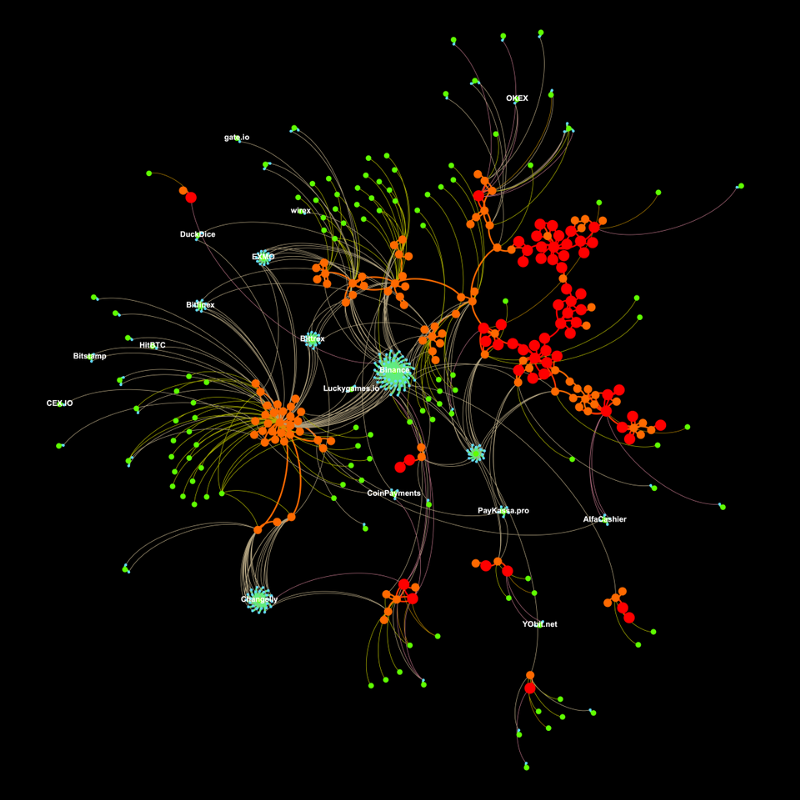
Silkjaer looked into the XRP ledger to see just how many ‘bad actors’ have been involved in this activity. He identified around 150 accounts connected to scammers or potential scammers. The number of payments received totalled 1,830 and the amount received 2.8 million XRP. He believes that there are just two major scam groups involved in giveaway scams, because “some payment destination tags have multiple relations, meaning that the same destination tag has been used by more than one account.”

A bit of advice

So, here is the standard advice if you believe that you may be being targeted by XRP scammers: If the offer seems too good to be true, it probably is. Don’t send funds to an unknown address, or at least be cautious.

Why Coinbase listing didn’t boost XRP price

There was a general feeling that when Coinbase announced it was listing XRP on its Coinbase Pro platform there would be a corresponding leap in the value of Ripple’s native token. There was some movement on the day of the announcement (25th February) with XRP shooting up by 10% in value, but that is about as exciting as it got.

Furthermore, when Coinbase then announced on 28th February that it was adding XRP to Coinbase.com, as well as the exchanges’s Android and iOS apps, the response was flat.

The analysts’ analysis

While crypto consumers might be somewhat surprised by this lack of activity, analysts were less so. According to crypto expert Charles Bovaird, writing at Forbes, several analysts were of the opinion that they had never expected anything else. Jeff Dorman, cofounder and head portfolio manager at Arca Funds told Bovaird: “I’m not surprised by the lack of price action for XRP. First, XRP has been plagued by negative press this year and as a result, the token has been lagging the broader market all year.”

Dorman also explained that the 10% rally on the 25th February had amounted to much more, because “those gains were quickly erased when the people who bought before the news sold into those buying after the news.”

Marouane Garcon, managing director of crypto-to-crypto derivatives platform Amulet, shares Dorman’s view. “I can’t say that I’m surprised by the lack of movement. Throughout this entire bear market news and public developments haven’t been able to spark any sort of uptrend.”

However, Garcon did explain what he thought would move XRP’s price — adoption. He said, “In XRP’s case, I think banks utilizing XRP in their daily operations is what’s going to move their market.”

Big announcements don’t always bear fruit for XRP

Joe DiPasquale, CEO of cryptocurrency fund of hedge funds BitBull Capital also claims that he and others have noticed something ‘interesting’ about XRP’s price movements: “We’ve noticed the market anticipate many of Ripple’s moves, resulting in what might seem as counter-intuitive pricing over major events,” he told Bovaird, adding, “For example, during both of their last two conferences, where they announced major business development deals, the price of the XRP token dropped.”

The crypto ecosystem is the ultimate decider

All the analysts seem to agree on another viewpoint, “the different digital currencies that make up the broader market tend to move in tandem.”

So, the reason Coinbase didn’t move XRP’s price upwards as much as might have been expected is down to Ripple also being subject to the waves within the larger crypto pricing ecosystem, and these don’t always work in harmony with big announcements.