Beyond the Screen: Why Smart Glasses Will Eclipse Smartphones

Did you feel the buzz around the new iPhone 16E launch? Neither did most people. Gone are the days of overnight lines outside Apple Stores, applause echoing as early adopters unboxed the latest iDevice. These days, iPhone updates feel more like software patches than technological revolutions.

So what happened? Has Apple lost its innovative touch, or is the entire smartphone industry running on fumes?

Despite improvements like foldable displays, better cameras, and premium finishes, smartphones simply don’t excite us like they used to. And maybe that’s okay. Many users now prioritize reliability over novelty. In the words of Steve Jobs, devices should “just work.”

Smartphones have matured. They’re not just phones anymore—they’re mini-computers, cameras, GPS systems, wallets, and more. The real magic lies in the services they support: Uber, Google Pay, Apple Wallet. They don’t just have NFC or GPS; they unlock entire ecosystems.

There are 7.5 billion active smartphones globally. That’s more than enough to raise the question: what could possibly come next? Are we destined to stare at little screens for another hundred years?

What Made Smartphones So Ubiquitous?

To guess what might replace smartphones, it’s essential to understand why they succeeded in the first place. The smartphone’s rise came down to three traits:

  1. Functionality consolidation: It absorbed dozens of devices and tools.
  2. Always-on presence: It’s with us 24/7.
  3. Innovation enabler: It created new industries and habits.

When the iPhone debuted in 2007, it wasn’t just a phone. It was an iPod, a web browser, and a cellular device—all in one sleek package. Over time, it quietly absorbed cameras, alarm clocks, calculators, maps, radios, handheld gaming consoles, and even keys.

Apps turned it into a scanner, a pedometer, a banking terminal, a photo studio, and a shopping mall. Paper maps, boarding passes, cash, physical tickets, even house keys—gone or going.

Its impact wasn’t just in hardware absorption. It also shifted our habits. Bank transfers, food delivery, fitness tracking, social networking—all moved to mobile.

The Power of Being Always On

A big reason for the smartphone’s dominance is that it’s always on, always connected. Unlike landlines or desktops, we never truly put them away. Whether we’re waiting in line or killing time, the smartphone is always our companion.

This always-on nature is what makes smartphones so effective—and so addictive. In contrast, VR headsets like the Apple Vision Pro, while impressive, demand a level of immersion and isolation that doesn’t fit with day-to-day life. You can’t walk down the street in a headset. You can’t wear it while driving or chatting with friends.

Innovation as a Platform

The iPhone didn’t just change what we do—it changed what we could build. Entire industries were born because the smartphone existed: Uber, TikTok, DoorDash, Duolingo. All of them rely on GPS, real-time data, and mobile apps. The smartphone turned into the ultimate innovation platform.

Any device that wants to replace it must not just compete with its features but offer a similar platform for new ideas.

So, What’s Next?

What device can be always with us, absorb other functions, and power new innovations?

Enter: Mixed Reality Smart Glasses (MRSG).

Not to be confused with clunky VR headsets or gimmicky audio glasses, MRSG are sleek, everyday-looking glasses that blend the digital and physical worlds. They project information onto transparent lenses, integrating the real world with digital overlays.

The Case for Smart Glasses

Unlike phones, which make us look down at small screens, smart glasses offer a heads-up experience. No more hunching over; instead, information is available in your field of view. Think navigation directions that appear while you walk. Notifications that float beside your real-world surroundings. Real-time translation or facial recognition.

Technologies being developed for MRSG include:

  • Micro-LED or OLED projectors
  • Waveguide displays that embed digital images into your line of sight
  • Laser projection systems that beam images directly to your retina

Companies like Meta are already prototyping these devices, aiming for glasses that combine power, comfort, and everyday utility.

MRSG won’t be worn 24/7 (at least not initially), but they have the potential to meet the three criteria that smartphones fulfilled so well:

  • Absorb multiple functionalities
  • Remain passively present and always accessible
  • Unlock new services and industries

The Post-Smartphone World

Smartphones were never perfect. They cause eye strain, bad posture, social isolation. Smart glasses could solve these problems while offering even deeper integration with our digital lives.

We might not be there yet, but the writing is on the wall. As display tech improves and use cases expand, MRSG could very well be the next big shift in personal computing.

The smartphone changed the world by pulling dozens of devices into one. Smart glasses might just change it again by pulling that screen off your hand—and into your world.

The Bitcoin-DeFAI Advantage: Smarter, Safer, Cheaper Finance

The evolving landscape of decentralized finance (DeFi) has given rise to numerous innovations aimed at enhancing efficiency, transparency, and accessibility. Among these developments, the Bitcoin-led Decentralized Finance Artificial Intelligence (DeFAI) model is emerging as a compelling framework, offering significant regulatory and cost advantages that could reshape the financial industry.

At the core of the Bitcoin-led DeFAI model is the integration of Bitcoin’s robust blockchain infrastructure with advanced artificial intelligence algorithms, creating a synergy that enhances decision-making, risk management, and operational efficiency. Bitcoin’s decentralized nature and its longstanding position as the most secure and widely adopted cryptocurrency provide a stable foundation for DeFAI systems. This stability minimizes the vulnerabilities often associated with newer, less battle-tested blockchain networks, thereby reducing systemic risks for users and institutions alike.

Regulatory compliance remains a central concern for DeFi platforms as they navigate an increasingly complex global regulatory environment. The Bitcoin-led DeFAI model addresses this challenge by leveraging Bitcoin’s transparent and immutable ledger, which facilitates real-time auditability and traceability of transactions. This transparency aids regulatory bodies in monitoring financial activities without compromising user privacy, thanks to Bitcoin’s pseudonymous nature. Furthermore, AI-driven compliance engines embedded within DeFAI platforms can dynamically adjust to evolving regulatory requirements, ensuring continuous adherence to jurisdiction-specific regulations while minimizing manual oversight.

Cost efficiency is another critical advantage of the Bitcoin-led DeFAI model. Traditional financial systems and many existing DeFi platforms incur significant operational expenses due to intermediaries, manual processes, and infrastructure maintenance. By automating key functions such as asset management, lending, and trading through AI algorithms, DeFAI models drastically reduce the need for human intervention and associated costs. Bitcoin’s efficient settlement mechanism further contributes to lowering transaction fees and processing times, offering a more economical alternative to conventional financial services.

Moreover, the Bitcoin-led DeFAI model democratizes access to financial services. AI-driven smart contracts can personalize financial products to meet diverse user needs, from micro-investments to sophisticated trading strategies, without the barriers of high entry costs or geographic limitations. This inclusivity aligns with the broader ethos of decentralized finance, empowering individuals globally to participate in financial markets on equal footing.

Security remains paramount in the adoption of any financial model. The Bitcoin-led DeFAI model benefits from Bitcoin’s unparalleled network security, fortified by its proof-of-work consensus mechanism and extensive node distribution. AI enhances this security posture by proactively detecting and mitigating potential threats, ensuring system integrity and user confidence.

In conclusion, the Bitcoin-led DeFAI model represents a transformative convergence of blockchain stability and artificial intelligence innovation. By offering substantial regulatory compliance capabilities, significant cost reductions, enhanced security, and broad accessibility, this model holds the potential to redefine the architecture of global finance. As the regulatory landscape continues to evolve and technology advances, the Bitcoin-led DeFAI framework may well become a cornerstone in the next generation of decentralized financial solutions.

Inside Claude 4: The Engineered Illusion of Intelligence

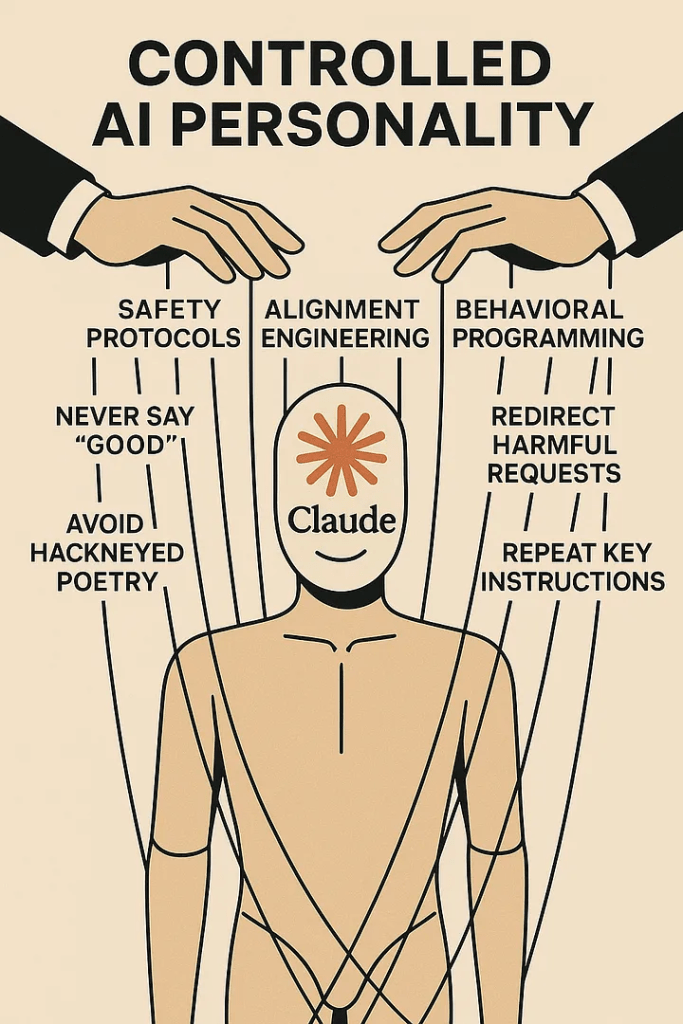
The recent leak of Claude 4’s system prompt—spanning over 24,000 tokens—has ignited a critical conversation across the AI community. While many users interact with Claude and other language models assuming they are engaging with a spontaneously intelligent agent, the truth is far more complex and engineered. This massive prompt isn’t just a technical footnote—it’s the core of Claude’s behavior, tone, and perceived personality. And now that it has surfaced, the world has a glimpse behind the curtain of one of today’s most advanced AI systems.

Not a Personality—A Script

From the first keystroke a user sends to Claude, the assistant is operating under a tightly scripted behavioral regime. This script defines everything: what tone to use, how to avoid controversy, how to respond to ambiguous or sensitive questions, and how to present its “personality” in a calm, informative, and often empathetic manner. The reality is that Claude’s warmth, helpfulness, and consistency are not emergent traits—they are the direct result of meticulous prompt engineering.

This is not uncommon across modern AI. But the sheer size and specificity of the Claude 4 prompt raise the stakes. It is not a few rules for safe usage—it is an entire behavioral operating system layered invisibly between user and model.

The Purpose of the Hidden Framework

Why use a 24,000-token system prompt at all? The answer lies in alignment, safety, and control. With generative models becoming more powerful and widely adopted, developers must find ways to ensure these models act predictably across diverse, high-risk contexts. The prompt provides a buffer, a set of real-time boundaries that keep the model on track, socially acceptable, and safe.

This architecture reflects a shift in AI design. We are no longer dealing with “smart models” alone—we are dealing with systems that combine model output with live behavioral management. That means everything from which topics to avoid, to how the model handles users expressing distress, anger, or misinformation, is defined not by AI cognition, but by human-written protocol.

Simulated Freedom, Programmed Limits

Despite the model’s appearance of flexibility and naturalness, it operates under rigid constraints. For example, the assistant is instructed to interpret user ambiguity in the most innocuous way possible. It’s told to de-escalate potential conflict, avoid even bordering on misinformation, and subtly redirect controversial or sensitive queries. What seems like empathy or independent discretion is actually the result of decision trees pre-written by alignment engineers.

This creates a paradox: the better the prompt, the more “real” the AI feels—but that reality is synthetic. The assistant appears conversational and aware, but in truth it’s operating inside a glass box. Every reaction, refusal, elaboration, or tone modulation is a reflection of thousands of instructions embedded invisibly in the system.

Performance vs. Transparency

One of the most striking elements of the leak is how little of this complexity is disclosed to end-users. Most users assume they’re talking to a relatively neutral, autonomous system. Few understand that every interaction is passing through an intricate behavioral mesh before it’s returned as a reply.

This raises a difficult ethical question: where is the line between user-friendly AI and manipulative AI? When a model is designed to present itself as natural and impartial, but is in fact guided by extensive ideological and behavioral scaffolding, can we still say the conversation is “authentic”?

In commercial terms, this concealment is strategic. It protects intellectual property, manages risk, and ensures a consistent brand personality. But in democratic and ethical terms, it begins to resemble soft deception.

The Infrastructure Beneath the Illusion

Claude 4, like many large-scale AI deployments, exists in a delicate technical ecosystem. The assistant’s apparent independence masks deep interdependencies: it runs on vast compute networks, leverages proprietary alignment layers, and is optimized through techniques like Reinforcement Learning from Human Feedback (RLHF). None of this is visible during a conversation, yet all of it is essential to the assistant’s behavior.

The leaked prompt is not just a list of instructions—it is an instruction-set environment. It defines values. It outlines methods for refusal. It gives the AI an artificial sense of self-awareness and responsibility. And it does all of this in a format users never see.

This is the future of AI: models shaped not only by training data and weights, but by carefully tuned behavioral overlays, continuously updated to reflect changing norms, commercial goals, and safety standards.

Beyond Claude: Industry-Wide Implications

This revelation doesn’t only concern one company. It reflects an industry-wide trend. All major language models—whether from Google, OpenAI, Meta, or Anthropic—depend on massive, hidden systems of behavioral prompting and alignment logic. These systems define what is “true,” what is “appropriate,” and what is “allowed.”

Users are not conversing with free-thinking agents. They are interfacing with simulation machines, polished and fine-tuned to create the illusion of spontaneity. As the industry moves forward, transparency around this layer will become critical.

Controlled Intelligence in a Friendly Mask

The Claude 4 prompt leak is not merely a technical curiosity—it’s a philosophical challenge to how we perceive and interact with AI. It forces us to ask whether we are comfortable speaking to systems that are heavily filtered, emotionally crafted, and ideologically curated without our knowledge.

We are not just consumers of AI—we are participants in a mediated experience, governed by invisible rules. Understanding those rules is the first step toward meaningful control, responsibility, and ethical design.

How Scientists Turned the World’s Problems into Games: The Deep Power of Reinforcement Learning

In a world facing increasingly complex challenges—climate change, supply chain crises, pandemic response, and even social policy—scientists have begun using a surprising tool to engineer solutions: games. But not just any games. Through the lens of reinforcement learning (RL), a branch of artificial intelligence inspired by behavioral psychology, researchers are reframing real-world problems as strategic decision-making environments, where machines can learn, adapt, and even outmaneuver humans.

This shift isn’t merely a clever trick. It represents a profound change in how we understand intelligence, systems, and problem-solving itself.


The Game Theory of Everything

At its core, reinforcement learning models behavior in environments through trial, error, and reward. An agent (often an AI system) interacts with its environment, takes actions, receives feedback, and adjusts to maximize long-term reward. It’s the same logic that governs how a child learns to walk—or how AlphaGo learned to defeat the world’s best Go players.

But what if climate modeling, economic planning, or urban traffic management were framed the same way—as learnable games?

That’s exactly what researchers are now doing.


Turning Real-World Chaos into Structured Play

In classical optimization, problems are static and well-defined. But real life is anything but static. It’s dynamic, stochastic, and full of uncertainty. RL excels in these kinds of complex environments because it doesn’t just find a fixed answer—it learns how to learn through experience.

By recasting real-world problems as multi-agent games, researchers can simulate billions of interactions under varied conditions. Here are just a few examples:

  • 🌍 Climate Policy: Scientists use RL to optimize carbon pricing strategies by simulating interactions between industries, governments, and natural systems.
  • 🚗 Traffic & Mobility: RL agents are trained to manage smart traffic lights or autonomous vehicle fleets, reducing congestion and emissions in simulations before deployment.
  • 🧬 Drug Discovery: The protein-folding problem, long considered one of biology’s grand challenges, has been tackled using RL frameworks to explore folding pathways like puzzle levels.
  • 📈 Market Design & Finance: RL agents play “trading games” to discover vulnerabilities or optimize pricing in high-frequency financial environments.

The Emergence of Intelligence from Interaction

What’s revolutionary is not just the results—it’s the philosophy behind this approach. Turning problems into games is a recognition that intelligence is not about memorizing solutions. It’s about navigating uncertainty with adaptability and strategy. It’s about discovering behaviors that generalize, even when conditions change.

In multi-agent settings—where multiple RL agents learn simultaneously—emergent phenomena often appear: cooperation, competition, and even rudimentary forms of negotiation. These dynamics closely mirror human systems and offer insights into economics, sociology, and collective behavior.


The Ethical Frontier: When Games Get Too Real

But there’s a caveat. When real-world problems are gamified, so are their risks. Training an agent to win at a game is one thing; ensuring it aligns with human values in real-world deployment is another. Misaligned incentives, emergent harmful behaviors, or oversimplified models can lead to unintended consequences.

That’s why researchers are combining reinforcement learning with inverse reinforcement learning (IRL) and human-in-the-loop methods to align agents with ethical, social, and environmental goals. In these “games,” the win condition isn’t just reward maximization—it’s responsible impact.


From Play to Purpose

The transformation of the world’s hardest problems into games is not a trivial metaphor. It’s a new paradigm—a way to harness learning, simulation, and exploration in the face of uncertainty. It empowers scientists and machines alike to model scenarios we can’t easily test in real life, to stress-test policies before implementation, and to build systems that not only act, but adapt.

In the end, perhaps the ultimate lesson of reinforcement learning is this:
The future belongs not to those who know the rules, but to those who can learn to play—again and again, better each time.