Hollywood pushes fake news to the masses about bitcoin

It would seem that nobody in Hollywood understands cryptocurrency, or Hollywood doesn’t care about what it says about cryptocurrencies, it just wants to make money, in dollars, not bitcoin.

Why am I talking about Hollywood? Because Hollywood has just released the film “Crypto” starring Kurt Russell, who you may remember from “Escape from New York,” “The Hateful Eight” and a whole host of other box office favourites. Or, perhaps you think of him as the husband of Goldie Hawn!

The film, which I have not seen yet as will only released in the US on 12th April, pushes a bitcoin for money laundering narrative. It is an approach that the mainstream media has been pushing to the public for some time. It’s the ‘only dodgy people use crypto’ story. It is a bit of a tired story as well, but that didn’t stop the scriptwriters from taking it up and running with it.

According to IMDB, “Crypto” is a crime thriller about a Wall Street banker who gets caught up in a global money-laundering conspiracy involving the Russian mafia and is described as a cyber-thriller. Well, that’s original; bad Russians yet again. And now bad Russians with bitcoin — even more dangerous! The movie’s tagline is “fear is the ultimate currency,” which gives us a further clue about what to expect.

Needless to say, and I have sympathy with this, the crypto-supporting community is not best pleased about the approach Hollywood has taken in this film; its members were hoping for something better. As Samantha Chang notes at CCN,“the trailer has been viewed more than 312,000 times in 24 hours — presumably by crypto fans who recognize that having Hollywood make a bitcoin-centric movie signals that crypto has become mainstream.”

Panned on YouTube by crypto community

They were so deeply disappointed that they have left numerous messages on YouTube, and as you may guess, they are not over-enthusiastic:

“Yes,… it’s here. The dumbest film ever made about something that the writers don’t understand.”

“Russia bad. Crypto bad. Smart people bad unless working for government. Thanks Hollywood, for yet another original plot.”

“I imagine there will be a ten minute tense standoff while they wait for the block chain to verify a transaction. Good times.”

“I like Kurt Russell but I wish I could give this more than one “thumbs down”. It is a movie written by people that do not understand crypto at all — just misinforming the masses.”

I have to agree with the last one, because that sums it up nicely. Great actors — lousy plotline. Try to do better Hollywood.

JP Morgan surprises us with a stablecoin

When JP Morgan announced the launch of its very own stablecoin, the industry was somewhat shocked. Was this not the big bank that loathed cryptocurrencies? The move got people excited, both in traditional banking and in the crypto community. But is the JPM Coin really as big a deal as everyone seems to think it is.

Naturally, the industry pricks up its ears when JP Morgan speaks, and any of its previous explorations of the blockchain have produced similar interest. As Ben Jessel, head of enterprise blockchain at Kadena remarks, “In the last few weeks, blockchain innovation managers’ phones across Wall Street investment banks have been ringing with executives inquiring about JP Morgan’s stablecoin and how they should be responding.”

That’s because enterprise blockchain technology has been the way that big companies have sought to harness blockchain technology to meet their needs as large organisations. JP Morgan’s move has made others question what to do next — is this the time to jump in and be first in the fast-follower line?

Initially, the JPM Coin seems exciting, because it suggests that Wall Street is beginning to “blur the lines between institutional banking and the brave new world of cryptocurrency,” as Jessel suggests. But the reality is not so simple.

Faster, cheaper settlements

JP Morgan’s stablecoin seeks to solve two problems in financial markets today: the expensive and inefficient process of settlement and the volatility involved in holding money in cryptocurrency. Settlement is expensive for banks for a number of reasons: first, payments are rarely made in real-time, which means that in many cases funds that should be paid are not actually made available until the end of the day. For the banks, this means billions of dollars can be tied up and can’t be used.

Blockchain speeds the process up, making the process less expensive for banks and reducing the liquidity trap, i.e. funds being tied up in the process of settlement.

JP Morgan’s stablecoin neatly connects the dots between the aspects of settlement and volatility management by providing digital cash that can be used and enabling the ability to redeem the coin at a stable rate. This may sound like a big deal, but in fact all it means is that any counterparty would be paid by JP Morgan issuing a digital certificate. At its most fundamental, JP Morgan is promising to credit the account of a user when presented with a digital certificate that has a redemption value of a dollar.

Having said all this, JP Morgan’s new ‘Coin’ is not an insignificant development. Don’t forget, this is an industry where they still use fax machines, so in that context, the JPM Coin is actually a pretty big deal.

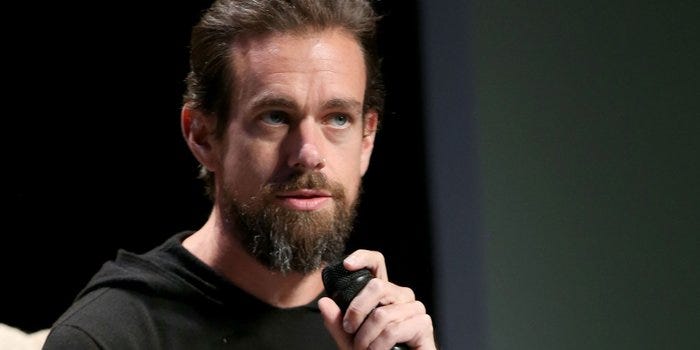
3 Reasons Jack Dorsey believes in a Bitcoin Revival

Jack Dorsey, the billionaire co-founder of Twitter and Square, is at least consistent in his support for Bitcoin. He has remained unwavering in his belief, surely earning him the title of ‘Bitcoin evangelist’.

It is hard to dismiss Dorsey’s view given that he is a successful entrepreneur, and his support for the leading cryptocurrency is music to the ears of those who share his views, but don’t have the public profile to share them with such a vast audience.

Recently Dorsey participated in a podcast, imaginatively called, “Tales from the Crypt” (perhaps they are also Edgar Allan Poe fans as it sounds like the title of one of his stories), where he talked about buying Bitcoin. He revealed that he “maximises the $10,000 Bitcoin purschase limit on Square Cash to acquire the leading cryptocurrency.” Square, in case you are unaware of it, is a payments platform with a Cash App that enables people to send money to others almost instantly. It has a merchant payment system as well and as it says on its website is, “We’re empowering the electrician to send invoices, setting up the food truck with a delivery option, helping the clothing boutique pay its employees, and giving the coffee chain capital for a second, third, and fourth location.”

What will fuel Bitcoin growth?

Since 1st March, Bitcoin has been showing growth, and another supporter of the cryptocurrency, Brian Kelly, CEO of BKCM, said he believed, “the so-called crypto winter is approaching its last phase and is slowing thawing.” Since he said this, within a week, the Bitcoin price rebounded to over $3,900 as the cryptocurrency market added $6 billion to its valuation.

Kelly explained to CNBC what was happening in terms of Bitcoin improving its fundamentals. “If you look at the number of addresses that have been created on the Bitcoin network, that’s up about 20 percent from the January lows, it’s apt highs at the levels we saw in the spring of 2018 when Bitcoin was well above $6,000. So Fundamentally, you’re starting to see improvement.

Some high profile investors and endowments have been dipping their toe into the space, add in that you’re talking about Fidelity coming out with custody this week and Jack you know, he understands the payment network.”

Kelly’s reference to Jack Dorsey brings me back to Jack’s views about what has happened. In one interview he listed the reasons for growth as “improved scalability through a second-layer scaling solution, the involvement of institutions such as Fidelity and ICE, and the overall increase in interest towards the asset class.”

Jack Dorsey’s 3 reasons for believing in Bitcoin growth

Those are the three reasons Dorsey sees a strong future for Bitcoin. And there is one other: Dorsey is also an investor in Lightning Labs and therefore has an interest in seeing the Lightning Network succeed. He has reaffirmed that Square, the $31 billion payments giant, will adopt the Lightning Network in the near-term and when it does, Dorsey could single-handedly push the adoption of the second-layer scaling solution.

Why Coinbase listing didn’t boost XRP price

There was a general feeling that when Coinbase announced it was listing XRP on its Coinbase Pro platform there would be a corresponding leap in the value of Ripple’s native token. There was some movement on the day of the announcement (25th February) with XRP shooting up by 10% in value, but that is about as exciting as it got.

Furthermore, when Coinbase then announced on 28th February that it was adding XRP to Coinbase.com, as well as the exchanges’s Android and iOS apps, the response was flat.

The analysts’ analysis

While crypto consumers might be somewhat surprised by this lack of activity, analysts were less so. According to crypto expert Charles Bovaird, writing at Forbes, several analysts were of the opinion that they had never expected anything else. Jeff Dorman, cofounder and head portfolio manager at Arca Funds told Bovaird: “I’m not surprised by the lack of price action for XRP. First, XRP has been plagued by negative press this year and as a result, the token has been lagging the broader market all year.”

Dorman also explained that the 10% rally on the 25th February had amounted to much more, because “those gains were quickly erased when the people who bought before the news sold into those buying after the news.”

Marouane Garcon, managing director of crypto-to-crypto derivatives platform Amulet, shares Dorman’s view. “I can’t say that I’m surprised by the lack of movement. Throughout this entire bear market news and public developments haven’t been able to spark any sort of uptrend.”

However, Garcon did explain what he thought would move XRP’s price — adoption. He said, “In XRP’s case, I think banks utilizing XRP in their daily operations is what’s going to move their market.”

Big announcements don’t always bear fruit for XRP

Joe DiPasquale, CEO of cryptocurrency fund of hedge funds BitBull Capital also claims that he and others have noticed something ‘interesting’ about XRP’s price movements: “We’ve noticed the market anticipate many of Ripple’s moves, resulting in what might seem as counter-intuitive pricing over major events,” he told Bovaird, adding, “For example, during both of their last two conferences, where they announced major business development deals, the price of the XRP token dropped.”

The crypto ecosystem is the ultimate decider

All the analysts seem to agree on another viewpoint, “the different digital currencies that make up the broader market tend to move in tandem.”

So, the reason Coinbase didn’t move XRP’s price upwards as much as might have been expected is down to Ripple also being subject to the waves within the larger crypto pricing ecosystem, and these don’t always work in harmony with big announcements.