
The Two Doors of Crypto Perception

You may have seen a photo of a dress circulating on social media last year. People were asked what colour the dress was. Some saw white and gold, some lilac and gold, and others saw blue and black. The post demonstrated that perception is not universal, and the same can be said about cryptocurrency and blockchain technology, which can be viewed through two lenses.

Data and code first

There are those who perceive the technology to be the most important aspect of this new space and the one that will outlast all other aspects. Some people see the blockchain as a gigantic network of global computers working on the decentralised principle. Most often these ‘believers’ are software designers and developers who are focused on code and data. They see lots of potential in the blockchain for implementing new forms of software with new capabilities. It offers them data storage that is resistant to censorship and is immutable. It can also be audited and the code can’t be changed once it’s in use. This is one group, but there is another.

New money

Another group perceives the technology as merely a tool that is necessary to create a new form of money. This group is more likely to be made up of people from backgrounds in economics and finance. They look at it from a perspective of the history of money and bring the idea that all forms of money have specific properties: resistant to forgery, secure, durable, measurable and divisible. So this group sees cryptocurrency as a new version of ‘sound money’. Some of them are sceptical about fiat currencies and aren’t fans of centrally controlled monetary policies. They see cryptocurrencies as a revolutionary new form of global money and the antidote to what they see as the questionable modern experiment of fiat currency.

The bigger picture

What does this leave us with? One group see crytpocurrency as the single useful purpose of the blockchain, while the other sees cryptocurrency as just one component in what the blockchain can do.

The ‘new money’ group actively buy cryptocurrencies and want to encourage mass adoption so the value of the coins increases. The blockchain-focused group is more enthusiastic about projects that experiment, add features, and explore the blockchain tradeoff-space.

But, what we can take away from this is that both views complement each other and one keeps the other in check. There is room for both perspectives and those working in the crypto space would do well to take a step back and take in a wider perspective that includes the views of both these groups to see exactly where the crypto space is heading.

Are ‘no fee’ exchanges becoming a trend?

An article in yesterday’s Fortune magazine alerted me to what may be an emerging trend. I’m talking about ‘no fee ‘ exchanges. The latest one to arrive on the scene is Voyager and it’s bringing the competition to RobinHood, which is the best-known exchange to day that doesn’t charge commission fees.

It is Uber-funded

Voyager has some big names behind it that are bound to give it plenty of publicity and create trust as well, unless you really dislike Uber, for example, because Oscar Salazar, the co-founder of Uber, and Philip Eytan, one of Uber’s biggest investors are Voyager’s founders. And you see what they did — they called it ‘Voyager’, this connecting the exchange with transport. The CEO is Stephen Ehrlich who came from his position as CEO and founder at Lightspeed Financial, a retail brokerage.

Will Voyager have the same power as Uber?

So, the focus is on no fee trading, and it’s interesting that Voyager has opted to join RobinHood in this niche market sector that aims to reduce the cost of trading cryptocurrencies. However, given the business background of Voyager’s investors it makes perfect sense. Uber disrupted the global taxi market (well, almost globally) and once it opened that market up there has been no going back. ‘Uber’ is so popular, it is probably a verb by now, as in “Are you Ubering tonight?” — just like “Google it!”

What is Voyager offering?

Initially, Voyager will list 15 cryptocurrencies, drawn from the list of the 25 best-performing networks, including bitcoin, ethereum and bitcoin cash, among others. The new CEO also told Fortune that it is considering listing tokens like XRP and Stellar’s lumens, because those aren’t listed on any major U.S. exchange. He also said, “If you see it being traded today by some of the most prominent players, we will definitely have those plus some.”

How will it make money if there are no fees? Ehrlich explained, “In lieu of trading fees, Voyager will make up the difference in revenue by beating the average price of the coins at the point in time we execute the trade.” Basically, Voyager believes it can consistently execute buy and sell orders at better prices than customers would often get by just visiting one exchange, such as Coinbase or Binance.

The platform goes into beta testing this week and an app should be available by late October and it also intends to add crypto news and analysis to help its customers make buy/sell decisions, as well as additional tools for the institutional investor segment to its platform.

Currently the team is hard at work securing licenses in a number of U.S. states including California, Massachusetts, Missouri, New Hampshire and Montana. Its goal is to operate in at least 40 U.S. states. Could this be the start of a ‘no fee’ exchange trend, or will Voyager simply make the space its own — just like Uber?

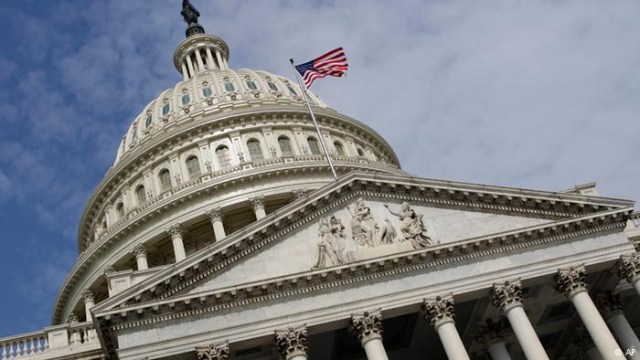
Is U.S. Congress clueless about crypto?

Last week the folks on Capitol Hill made a few headlines and stirred up a Twitter storm. Well, at least Congressman Brad Sherman, a Democrat from California did that with his statement that all crypto and mining should be banned, thus provoking the crypto community into meeting his remark with total outrage online. This was a unique event in itself as the crypto sphere is known for its sniping and clashes. However, Sherman brought them all together.

Whilst Brad Sherman’s message tended to dominate the press reports, for obvious reasons as it makes a good story, other headlines didn’t do much to instil any sense that Congress has finally understood what cryptocurrency and the blockchain world is all about. In fact, to some onlookers it appears as to be the case that Congress is more hostile to crypto now than it was five years ago. For

example, Federal Reserve Chairman Jerome Powell said cryptocurrencies are “great if you’re trying to hide or launder money,” at a separate hearing on the same day Sherman made his astonishing statement. Perhaps he didn’t notice that the FBI had indicted 12 Russians for trying to tamper with the U.S. elections and that the FBI achieved this by tracing the conspirators bitcoin transactions. So much for that argument Mr Powell!

Were things better in 2013?

Let’s remember that when Congress discussed crypto towards the end of 2013, Jennifer Shasky Calvery, then-director of the Financial Crimes Enforcement Network (FinCEN), told bitcoin exchanges and wallets to register with FinCEN and people took this a positive sign. In fact, as Coindesk points out, Calvery’s invitation boosted bitcoin’s price in December 2013 to just over $1,100.

Beyond the big headlines

Of course there is danger in focusing too much on big headlines from the Congress hearings and not looking into the progress that has been made. For instance, regulatory understanding has moved forward even if it hasn’t arrived at an end point that everyone is happy with. Law firms are heavily engaged with it and some staff at the SEC, the Commodity Futures Exchange Commission and other agencies are much more comfortable with the crypto industry than five years ago. In a massive bureaucracy things were never going to move at lightning speed.

And things will keep moving forward. Why? Because there are too many people and too much money engaged and invested in this industry for anyone in politics and policymaking to ignore it completely. In the end those who understand crypto and its potential will outnumber people like Sherman and Powell and we’ll have a Congress that isn’t so clueless.

Crypto is the people’s currency

There are a lot of people out there who are convinced that cryptocurrencies can never replace fiat money. However, I beg to differ and I see that serial entrepreneur Jeffrey Wernick is also more positive about crypto challenging fiat and has a few theories about why the world’s legacy finance system is faulty.

Wernick, who has invested in Airbnb and Uber, was talking to Business Insiderabout why he started investing in Bitcoin in 2009 and is somebody who can be considered as a leading investor in the crypto market. He believes that the fact that cryptocurrency is “people-oriented” and its decentralised nature, which “affords people equal access to operate under unanimously consented guidelines,” gives it a major advantage over the way fiat money is structured in the world.

He said:”So it’s a people’s currency, it’s defined by the people, and it’s defined by rules and a protocol that people trust. So it’s not like somebody says, if I need to have economic growth, I’m going to give this institution money, and they’re going to transmit it to a certain universe of people.”

It is vital to remember that when we look at ‘legacy finance’ and then to the developing economies where so many people are ‘unbanked’ that in the majority of cases politicians control the central bank of that country. What is the problem with this situation? Well, those politicians use the central bank as their personal bank account and have been known to embezzle huge amounts of money from their own nation, and nobody dares to stop them. There are countries that are vastly rich in natural resources, like Nigeria, yet the majority of its people live in unnecessary poverty. That’s one big problem with legacy finance and central banks.

The cryptocurrency ecosystem has the potential to reverse that situation. In the crypto sphere it is almost impossible for any one entity to control more than 50 percent of the network. Wernick explained his view of it: “Everybody has the same access to it at any point in time, just different units of it according to whatever their own personal budget constraints are. But nobody has privileged access to it, except, you could say, maybe the miners who pay to produce it and they take a business risk associated with it and anybody could choose to get into the mining business.”

Wernick has for some time supported the idea that the central banks should be accountable to the people, not to politicians, and it is easy to see why — the old ways do not benefit the many, they favour the few.