The importance of decentralization

blockchain-decentralize

If you cast your mind back to the early days of the Internet, many of the services were built on open protocols owned by the Internet community. Big platforms like Yahoo, Google and Amazon started during this era, and it meant that centralised platforms, like AOL, gradually lost their influence.

During the Internet’s second growth phase, which largely started in the mid-2000s, the big tech companies like Google, Apple, Facebook and Amazon built software and services that left open protocols trailing behind. The skyrocketing adoption of smartphones helped propel this as mobile apps started to dominate the way we used the Internet. And, even when people did access the open protocol that is the worldwide web, they usually did it through the medium of Google and Facebook etc.

On the one hand, people worldwide benefited from free access to cutting edge technology, but on the downside, startups couldn’t grow their Internet presence without worrying that one of the centralised platforms, like Google, would simply change the game plan and take away any chance of growing an audience and making a profit. This has stifled innovation and in many ways made the Internet less interesting. And, there is a global political aspect to the dominance of centralisation, which we have seen most clearly in the emergence of ‘fake news’ that has turned some social hubs into battlegrounds.

The third age of the Internet

And so we arrive at the third age of the Internet. And as Chris Dixon says in his incisive article on Medium, crypto-economic networks, which in turn owe their existence to the networks developed by Bitcoin and Ethereum, will enable its further evolution. Dixon says: “Cryptonetworks combine the best features of the first two Internet eras: community-governed, decentralized networks with capabilities that will eventually exceed those of the most advanced centralized services.”

The case for decentralisation

First let’s look at the problem with centralised platforms. They have a predictable modus operandi, such as a big drive to recruit users, adding third-party developers and media organisations, and as they grow, so does their power over users. Dixon quite rightly says that when they hit the top of the S curve, “their relationships with network participants change from positive-sum to zero-sum.” And for the third-party platforms, the game has changed from cooperation to competition. So, all the entrepreneurs n the third-party community start to shun the centralised platform.

Now enter the decentralised cryptonetworks. Dixon defines them as:  “networks built on top of the internet that 1) use consensus mechanisms such as blockchains to maintain and update state, 2) use cryptocurrencies (coins/tokens) to incentivize consensus participants (miners/validators) and other network participants.”

Cryptonetworks are also able to maintain a level of neutrality that the centralised platforms can’t offer, and don’t want to either. Plus participants and users are given a voice through the community governance of these decentralised networks. This is available, “both “on chain” (via the protocol) and “off chain” (via the social structures around the protocol). Participants can exit either by leaving the network and selling their coins, or in the extreme case by forking the protocol.”

To sum it up: cryptonetworks align network participants to work together toward a common goal — the growth of the network and the appreciation of the token. That’s why they just can’t keep Bitcoin and Ethereum down, no matter how much they try, because there is a community that believes in it.



Challenge to Ethereum smart contracts

It had to happen sooner or later; a new programming language for smart contracts has emerged to challenge Ethereum’s dominance in the market.

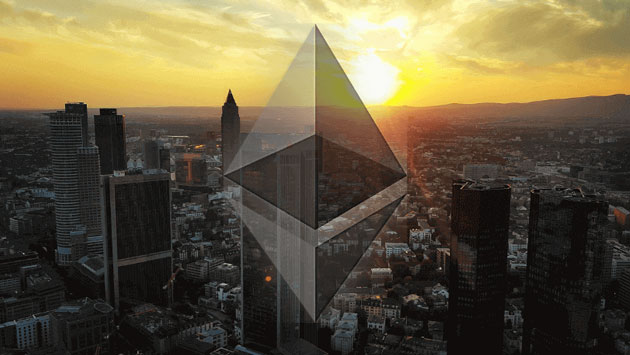
Ethereum-city

Ivy, the smart contract programming language developed by CHAIN, which is a blockchain development platform, will write smart contracts for Bitcoin’s blockchain. This might cause some upset for Ethereum, which is the platform everyone associates with smart contracts and the main system for ICOs, where it has something of a market monopoly.

CHAIN announced Ivy this week and explained that it has always been possible to write smart contracts on the Bitcoin blockchain, but that up until the arricval of Ivy, the Bitcoin Script was low level and had limited functionality. In its announcement, CHAIN said: “Bitcoin script development is considered somewhat esoteric,” and whilst some wallets, exchanges and payment platforms have used it successfully, it just wasn’t fit for purpose when it came to smart contracts.

Ivy by contrast is a much higher level language that make sit easier to write contracts for the Bitcoin network. CHAIN described it thus: “Ivy helps you write custom, SegWit-compatible Bitcoin addresses that enforce arbitrary combinations of conditions supported by the Bitcoin protocol including signature checks, hash commitments and timelocks.”

However, even Bitcoin developers are not convinced that this presents a threat to Ethereum. Jimmy Song told Cointelegraph: “Ivy makes SCRIPT easier to handle. It doesn’t change Bitcoin fundamentally, just makes coding it easier. ETH is Turing complete, which BTC cannot have without some sort of soft fork at a minimum. I don’t see the “smart contracting” ability of ETH as a “feature”, but more as a vulnerability. The attack surface on the ETH smart contracting platform is much greater. The fundamentals haven’t changed, this is more like a nice tool for developers.”

This is an interesting perspective, because it suggests that the Bitcoin blockchain still has a long way to go to catch up with Ethereum, However, there are those who are feeling more positive about Ivy, such as Matej Michalko, the CEO of Decent commented in Cointelegraph: “Ivy is an excellent example of the multifaceted development of blockchain products. Cross chain referencing is proliferating and it is on its way to dominate the ecosystem. Bitcoin can now be on par with Ethereum as a great smart contracts prototyping tool for a full range of Blockchain applications. Both platforms, however, remain fundamentally different in their architectures and market adoption. It remains to be seen what blockchain use cases and platforms are going to be adopted by masses. Scalability will be one of the decisive factors. 2018 is going to be a Blockchain year.”

Who will win the battle of the smart contracts? We will have to wait and see.

Global trade on the blockchain

Blockchain-as-chain

The global supply chain moves $64 trillion annually. It’s an unbelievably complex network and even small businesses are reliant on the logistics of this chain operating smoothly. In reality, the global trade network is a challenge for every business, regardless of size and anything that makes it more efficient is to be welcomed. Not only would more efficiency help businesses and their customers, it would also help the environment.

You might think that the information aspect of the Internet would have contributed to simplifying the global trade network, but it hasn’t. Add in the fact that the network has a vast number of intermediaries who establish trust between vendors, but don’t add value to the network, and the fact that it is usually up to humans to identify weaknesses in the supply chain and you can see that there is a lot of inefficiency already. However, there is a solution to this – the blockchain!

Blockchain and AI

If you combine the blockchain with artificial intelligence (AI) it is possible to build an autonomous and decentralised supply chain that can ‘think’ for itself. It would be able to identify areas of inefficiency and correct them. Some think this could be one of the most important developments in blockchain usage and the Blockchain Research Institute has commissioned a research study into the intersection of blockchain and supply chain management.

Don Tapscott, a founder and executive director at the Blockchain Research Institute has commented on the research study “Introducing Asset Chains” on LinkedIn Pulse and shared some of the high level conclusions with readers. The key points is: “Assets all over the world are extracted, designed, combined, transported, and sold every day through the supply chains that underpin global commerce.“ This system has not been overhauled for years and blockchain has the potential to decentralise these traditional supply chains. Add in AI and the Internet of Things and we can have a completely new approach to scaling the network.

Logistics on the blockchain

This new network would have the ability to self-regulate and adjust to improve efficiency. It would also be able to establish “machine trust.” And asset chains are an essential element of machine trust. As Tapscott says: “Asset chains provide a framework for machines to participate autonomously in supply chains and the markets they serve. They allow us to unlock the trading capability of machines without human intermediaries.”

That’s why some of the largest supply chain logistics firms are looking at blockchain to transform their operations. This will of course, give birth to a new group of companies providing these blockchain solutions. Tapscott cites the example of Sweetbridge, an Arizona-based firm that is, “leveraging the value of stranded, underutilized assets within those networks – like trucks or shipping containers – into more liquid tokens.” This means that a supply chain can basically fund itself.

This is an exciting way forward for the global trade network, and it is one in which human intermediaries will have fewer functions, making the entire supply chain less expensive, faster and more trustworthy thanks to cryptography and clever coding.


BTC is the new silver


1

You have probably read many articles saying that Bitcoin is the new gold. However, while this may yet prove to be true, at the moment it actually has more similarities with the silver market in the 1970s and 80s. This was a period that saw an extraordinary spike in silver trading for reasons that are remarkably like the activity around Bitcoin and a few other crypto currencies.

Forty years ago, the price of silver made it accessible to the average man on the street. Added to this, it didn’t have the kind of Wall St. or City of London elitism attached to it in the same way that gold has. These two situations encouraged the small investor to get into the silver market.

At least one experienced investor believes this is the same situation with the Bitcoin market. Mark Fisher, a renowned trader, says: “The reason people are so attracted to Bitcoin is because people want something that’s actually moved dramatically, that there’s no Wall Street to it. It’s the thing that every cab driver is talking about all day long.”

As he says, Bitcoin has attracted people who might not normally invest at all, partly because you can put in small, manageable amounts and because it is completely disconnected from big institutions and conventional investing. Anyone can get into it, from teens to grannies.

The decentralised nature of Bitcoin and all the other crypto currencies is what really appeals to many people. They like the fact that it doesn’t have any bureaucracy or rules surrounding it. Like silver in the 70s and 80s, Bitcoin feels like it was made for the people, not for the benefit of banks and other financial institutions.

And of course, the more popular Bitcoin becomes, the higher its price rises. In the last month or two we have seen phenomenal gains, much of this powered by mass adoption of Bitcoin in Asia. Now we are waiting to see what the big investors will do–they call them the ‘Wall St. Whales’ in Cointelegraph. Fisher predicts that when these guys get involved in the Bitcoin futures markets, which open next week, it is going to resemble the Wild West at the start. We will undoubtedly see some hugely volatile movements, but as long as there is movement, we know Bitcoin still lives and as investors we must hope the only way is up!